
Cold Frames for Cannabis Seedlings: Build and Vent
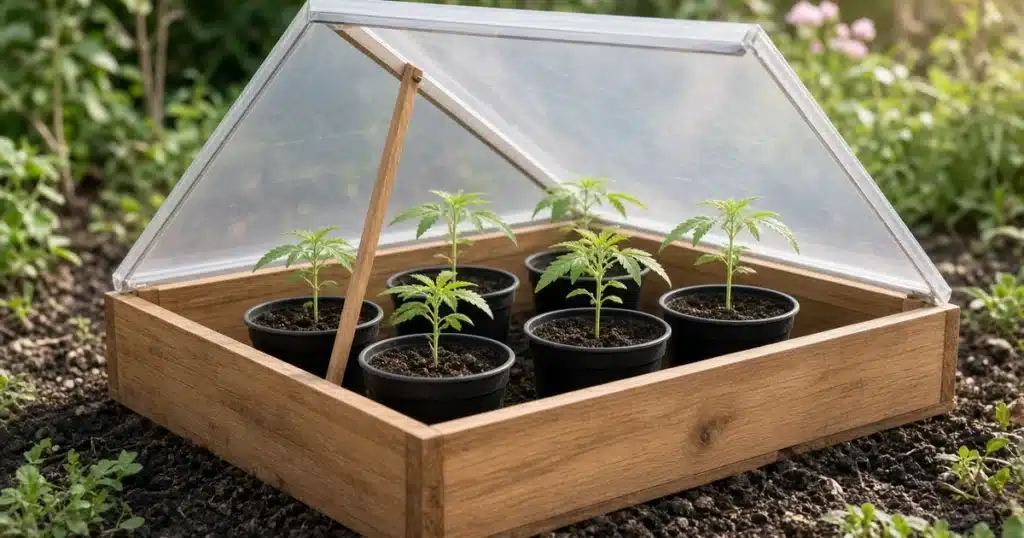
A cold frame for cannabis seedlings is a small, low-cost bridge between the windowsill and the garden. It catches the sun, holds a little warmth overnight and shields young plants from wind and rain while they toughen up. Iowa State University Extension describes it as a raised, bottomless box with a clear cover that acts much like a small greenhouse. You can build one in an afternoon from scrap lumber and an old window, but it only works if you manage the heat inside it every day.
What a cold frame can and cannot do
A cold frame has no heater. Iowa State Extension explains that the sun warms the ground and the frame during the day, and that stored heat radiates back at night to keep the inside warmer. University of Missouri Extension puts the gain in perspective. The inside of a cold frame is generally no more than 5 to 10 degrees warmer than the outside air. Covering it with a mat or blanket on cold nights adds only a few more degrees.
That modest boost is still useful. Iowa State Extension notes that cold frames can extend the season by two to four weeks in spring and fall, and that they protect plants from wind, rain, snow and ice. University of Missouri Extension lists hardening off seedlings as one of their main uses.
What a cold frame cannot do is turn a freezing night into a warm one. Cannabis is a warm-season plant, so think of the frame as a hardening and shelter space, not a way to plant outdoors weeks before the weather allows. For a heated, walk-in option, read about growing cannabis in a greenhouse.
Cold frame vs hotbed vs greenhouse
- Cold frame. Unheated, low, small. Relies only on the sun.
- Hotbed. University of Missouri Extension describes a hotbed as a heated cold frame, often warmed with electric soil cables. It gives warm-season plants an earlier start.
- Greenhouse. A larger, walk-in structure that can hold full-size plants and more equipment.
Sizing and building a cold frame
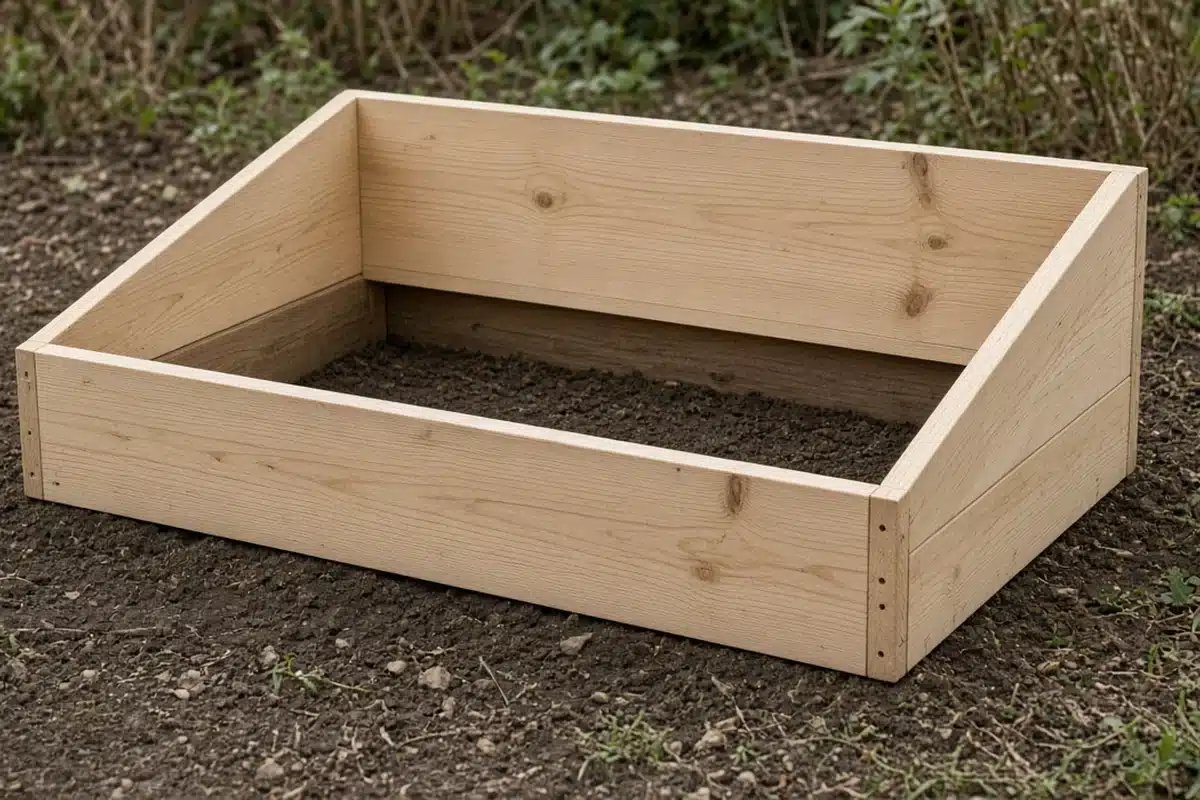
University of Missouri Extension describes the basic shape as a rectangular box with the back higher than the front, covered with a clear roof. Both sources favor reused materials.
- Size. Iowa State Extension advises keeping the frame no more than 3 feet deep so you can reach the back without climbing in. Often the size of your window or lid decides the rest.
- Slope. Iowa State Extension suggests about 12 inches high at the front and 18 inches at the back. University of Missouri Extension gives the same figures and a slope of about 1 inch per foot, which lets in more light and sheds rain.
- Sides. Wood is most common. Masonry, brick, plastic lumber or straw bales also work. University of Missouri Extension notes that 2-inch lumber lasts longer and insulates better than 1-inch boards.
- Lumber. Both sources warn against wood treated with creosote, and University of Missouri Extension adds pentachlorophenol, because fumes can build up in a closed frame and damage plants. Untreated wood can be painted white to reflect light and slow decay.
- Cover. Old storm windows, glass sash, rigid clear plastic, fiberglass or clear plastic film on a light frame all work. University of Missouri Extension notes that non-greenhouse film usually needs replacing every year and that a double layer with an air gap holds heat better.
- Hinges. Hinge the lid so it opens easily. Lightweight plastic lids must be hooked down so wind cannot lift them.
- Sealing. University of Missouri Extension notes that weather stripping at the joints helps hold heat.
Where to put the frame
Iowa State Extension recommends a spot over well-drained soil that does not flood or collect water, facing south for maximum sun. It suggests placing the north side near a house, garage or fence to reduce heat loss. University of Missouri Extension adds a north or northwest windbreak such as a building, hay bales, a tight fence or a hedge, with one firm rule. The windbreak should never shade the frame.
Put it close to the house. University of Missouri Extension observes that frames near the home get more attention, and Iowa State Extension notes that a nearby water source makes life easier. Daily checks are what make a cold frame work.
Venting: the daily job that matters most
More seedlings are lost to heat in a cold frame than to cold. Iowa State Extension warns that temperatures inside can change rapidly and that frames should be checked often, even on cloudy days, to keep plants from overheating.
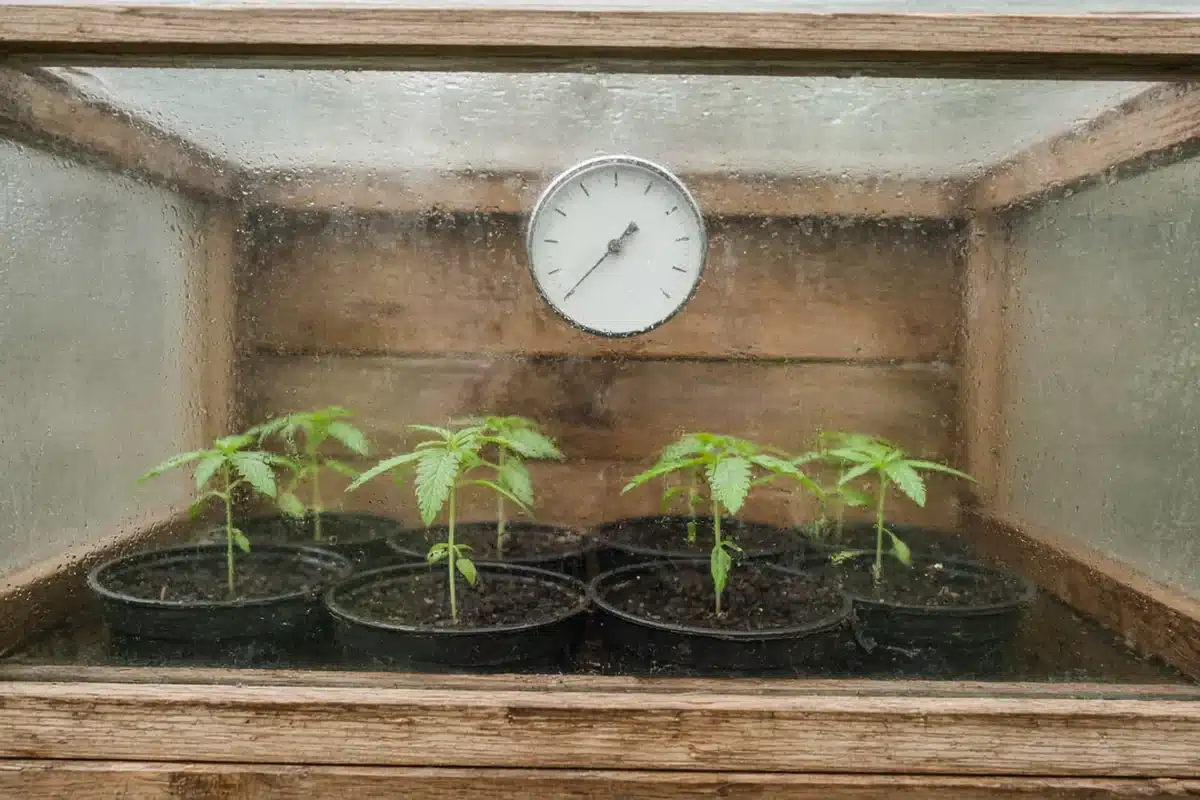
- Keep a thermometer inside the frame at plant height.
- Iowa State Extension advises raising the lid when the inside temperature climbs above 85 degrees F.
- Prop it with a board or dowel. Automatic openers that use wax or gas cylinders open and close the lid as temperatures change.
- University of Missouri Extension recommends opening the lid on the side away from the wind so gusts do not hit tender plants or lift the lid.
- On warm, sunny days the lid can be opened wide or removed.
- Close the lid before sunset, or as soon as excess heat is no longer a risk, to trap warmth for the night.
- On very cold nights, cover the closed frame with a mat, blanket or straw, and remove it when the weather clears.
How to harden off cannabis seedlings in a cold frame, step by step
Hardening off is the most useful job a cold frame does for a cannabis grower. University of Missouri Extension describes the method as gradually exposing plants to sun and wind by opening the lid wider and for longer each day.
- Move seedlings into the frame once they are well rooted and the outdoor nights are mild enough for a closed frame to protect them.
- For the first few days, keep the lid only slightly open during the day and closed at night.
- Open the lid wider and for longer each day.
- Leave it open at night once nights are no longer too cool.
- Remove the lid entirely for the final days before planting out.
- Keep the cover close by and replace it if a late cold snap is forecast.
Iowa State Extension points out the main advantage. Instead of carrying trays in and out every evening, you simply close the frame at night. Kind Seed Co spells out the full step-by-step routine in its post on hardening off cannabis seedlings.
Watering and care inside the frame
University of Missouri Extension advises watering early in the day so leaves dry before the frame is closed, and not opening the frame wide to water when it is below freezing outside. Let the surface dry between waterings but do not let plants wilt. It notes that plants may wilt briefly on a bright day after several cloudy ones, which does not always mean they need water.
The same source warns that a frame full of soft new growth attracts insects, so check plants closely every time you open the lid.
Troubleshooting
Seedlings look scorched or wilted on a sunny day. The frame overheated. Vent earlier, check at midday and consider an automatic opener.
Plants are stretched and pale. Light may be blocked. Clean the cover, make sure nothing shades the frame, and confirm it faces south.
Frost formed inside. A cold frame adds only a few degrees. Cover it at night, bring plants indoors when hard frost is forecast, then check frost damage on cannabis for what to do next.
Water pools inside. The site drains poorly. Move the frame or raise the base on a layer of coarse gravel, as University of Missouri Extension suggests.
The frame runs cold at dawn and hot by afternoon. Bank straw bales or mounds of soil around the outside of the frame. Iowa State Extension notes that this insulation helps moderate the temperature inside and reduces sharp swings.
Sources
- Iowa State University Extension and Outreach, Yard and Garden. All About Cold Frames. https://yardandgarden.extension.iastate.edu/how-to/all-about-cold-frames
- University of Missouri Extension. Building and Using Hotbeds and Cold Frames (G6965). https://extension.missouri.edu/publications/g6965
FAQ
How much warmer is a cold frame than outside?
Not much. University of Missouri Extension says a cold frame is generally no more than 5 to 10 degrees warmer than the outside air, and a mat or blanket on top adds only a few more degrees. It is a shelter for hardening off and mild nights, not a heater for freezing weather.
When should I open a cold frame?
Open it whenever the inside heats up. Iowa State Extension advises raising the lid once the inside temperature passes 85 degrees F and closing it before sunset to hold heat. Check even on cloudy days, because temperatures inside can rise quickly. A thermometer at plant height makes the decision easy.
What size should a cold frame be?
Keep it no more than about 3 feet deep so you can reach the back easily. Iowa State Extension suggests a front wall about 12 inches high and a back wall about 18 inches high. The length is flexible and is often set by the window or lid you have available.
Is a cold frame good for cannabis seedlings?
It is a good place to harden them off. Plants get gradual sun and wind while staying sheltered, and you close the lid at night instead of carrying trays indoors. Because a frame adds only a few degrees, keep cannabis seedlings indoors during cold snaps and plant out once nights stay mild.


