Harvesting Cannabis in Stages: Top Buds First
Quick answer: Harvesting cannabis in stages means cutting the largest top buds first and leaving the lower buds on the plant to keep developing. UVM Extension lists this as one of the standard ways to harvest hemp grown for flower. It makes sense when the top of the plant looks ready and the lower buds clearly do not. A single harvest is simpler and gets everything in at once, which matters when frost or wet weather is near.
What Is a Staggered Cannabis Harvest?
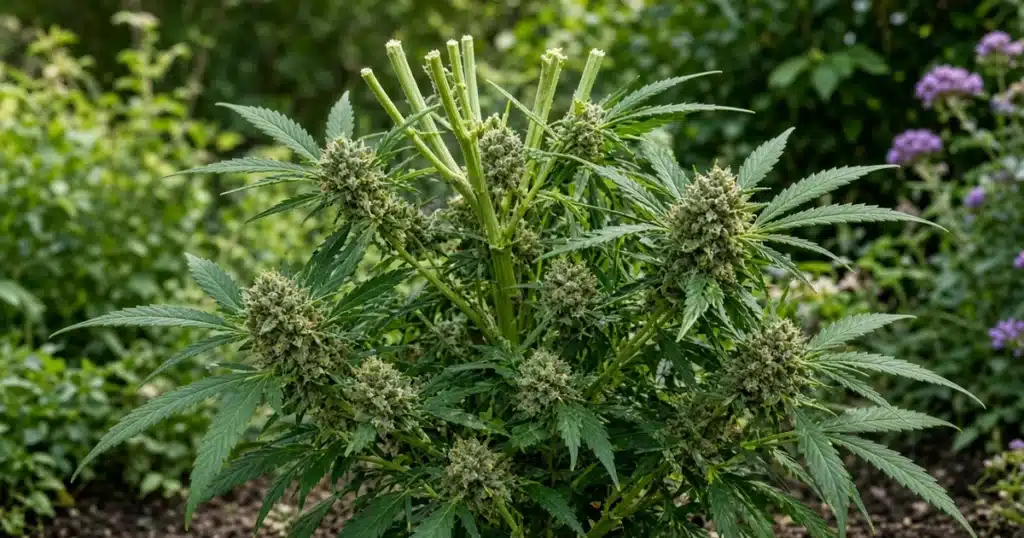
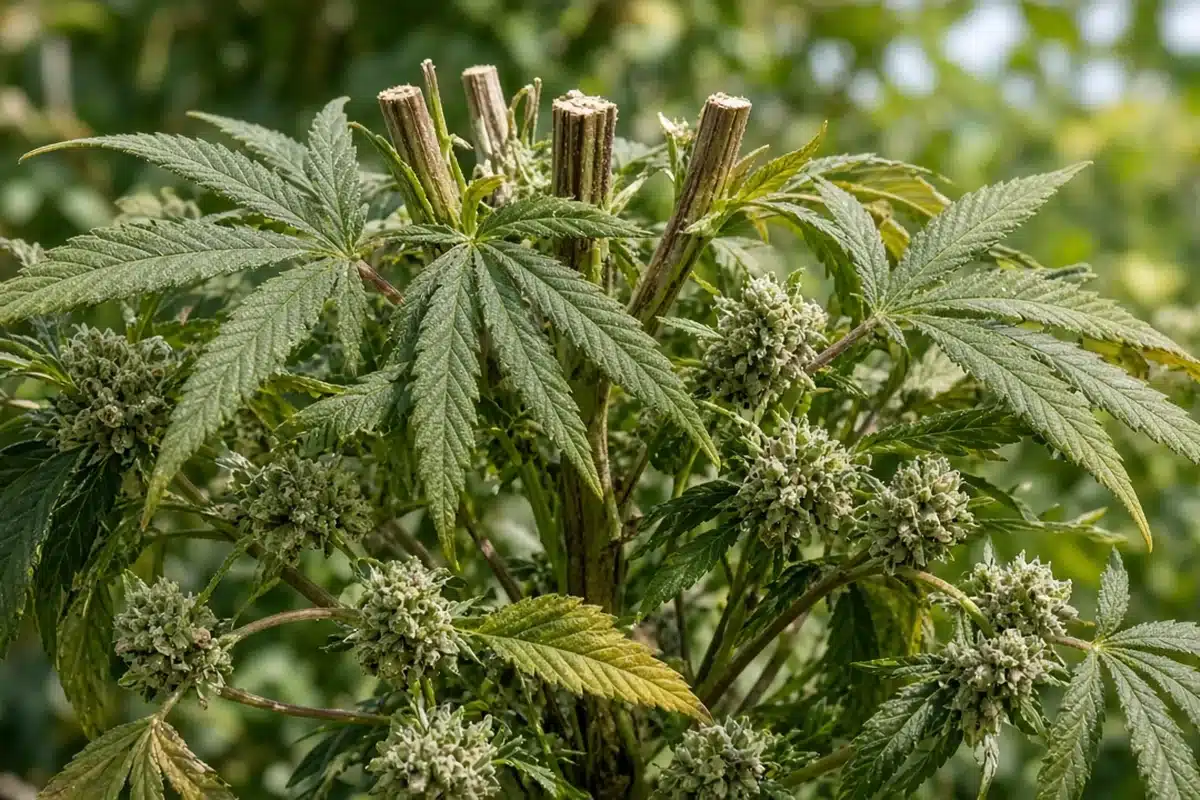
A staggered harvest splits one plant’s harvest into two or more cuts. You take the biggest, most mature buds at the top first. Then you come back for the lower buds later.
The method comes straight from hemp farming. The UVM Extension guide to hemp for flower production lists four forms a hemp harvest can take, depending on the drying setup and processing equipment:
- Whole plant harvest to hang dry
- Breaking the plant down into individual branches for drying
- Removing all flower buds for drying
- Several harvests that take the largest top buds first and leave the lower buds to keep developing
That last option is the staged harvest. UVM presents it as one choice among four, not as the best one. Hemp and the plants home growers raise are both Cannabis sativa, but UVM’s guide was written for farms.
The top buds in question are usually the main cola and the large colas near it. Our post on the cannabis main cola explains what that top bud is and how it forms.
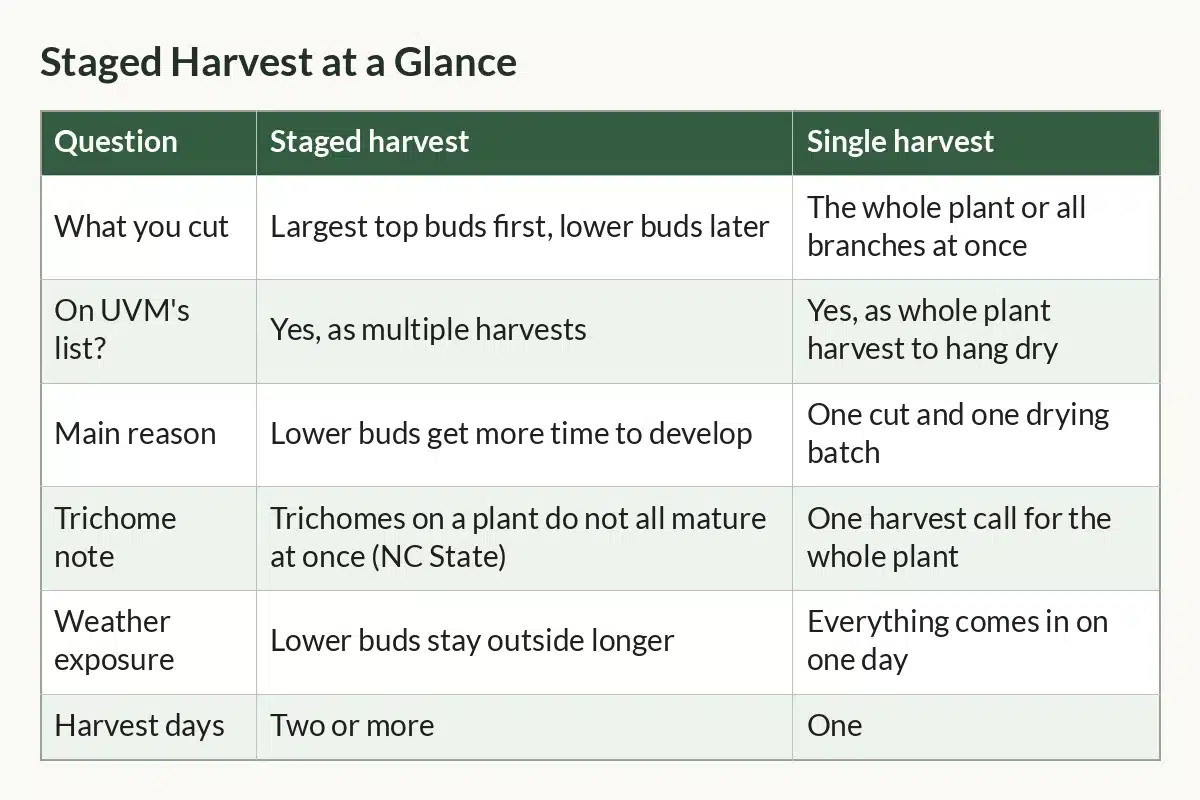
Staged Harvest at a Glance
| Question | Staged harvest | Single harvest |
|---|---|---|
| What you cut | Largest top buds first, lower buds later | The whole plant or all branches at once |
| On UVM’s list? | Yes, as multiple harvests | Yes, as whole plant harvest to hang dry |
| Main reason | Lower buds get more time to develop | One cut and one drying batch |
| Trichome note | Trichomes on a plant do not all mature at once (NC State) | One harvest call for the whole plant |
| Weather exposure | Lower buds stay outside longer | Everything comes in on one day |
| Harvest days | Two or more | One |
Why Top Buds Ripen First
The sources here do not explain the biology of why upper buds mature before lower ones. What they do support is that ripeness is uneven across a plant.
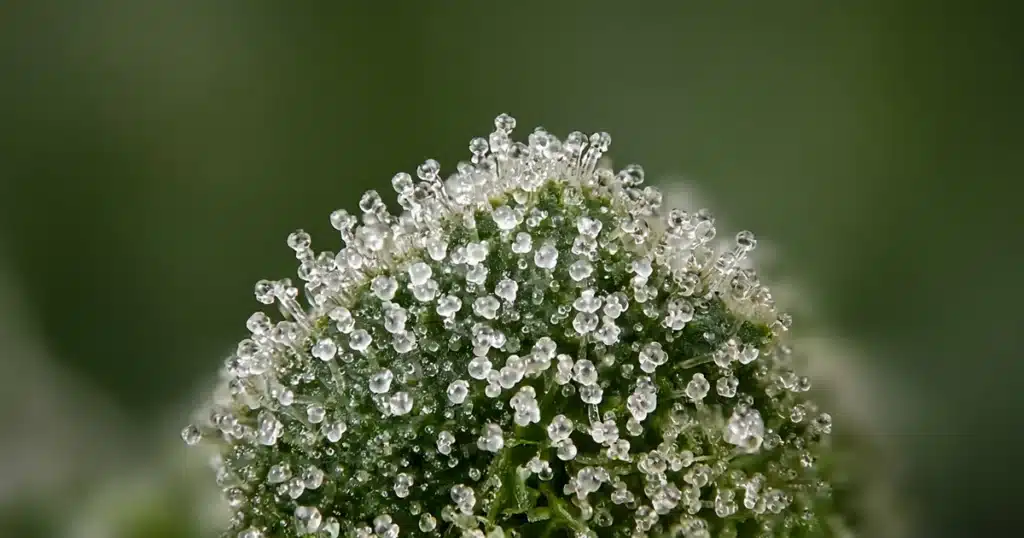
NC State Extension says trichomes start off clear, turn opaque white as they mature and then turn amber. If every trichome on a plant ripened together, it adds, cutting at opaque white would probably work. The trouble, it says, is that they do not all mature at once. Its best guess for a single harvest was to cut when 20 to 30 percent of the trichomes have turned amber.
UVM’s harvest list points the same way. Its staged option is there to take the largest top buds and give the lower buds time to develop further. That framing implies the lower buds still have growing to do when the top is ready. The 2022 Vermont report lists the cues it watches on each flower. Bracts begin to swell, pistils turn brown and trichomes go opaque and then amber. The Vermont team generally begins cutting when roughly nine in ten pistils have started to brown, together with those other signs. On a staged plant, you can read those cues on the top and bottom buds separately.
UVM also describes the trichome range. It says clear trichomes are underdeveloped and lack full resin, while amber trichomes are often fully developed but on the verge of breaking down. It notes that outdoor plants can show amber trichomes from intense sun exposure, so it advises close visual checks of trichomes. UVM also names russeting, when the white hairs on buds start to brown, as one of the first signs a bud is maturing. That change is its cue to start checking trichomes. Our cannabis trichomes 101 guide shows those stages up close.
Oregon State University Extension adds context on why the cut matters. It describes post harvest steps as aimed at preserving the structure of the trichomes on the flower. It does not cover staged harvests.
How to Harvest Cannabis in Stages
- Check the top buds first. Look at trichomes on the upper colas with magnification. UVM says trichomes should be easy to see at 60x. Our guide on whether your marijuana is ready for harvest covers all the readiness signs.
- Check the lower buds too. NC State says trichomes on a plant do not all mature at the same time. Compare the bottom of the plant with the top before you cut.
- Cut only the largest top buds. This is the core of UVM’s multiple harvest option.
- Dry the first batch right away. UVM says harvested material can be hung or trimmed down to buds, with good airflow and humidity control during drying. It suggests a series of fans running continuously so the air flow stays constant.
- Leave the lower buds in place. UVM’s stated goal is to allow further development of the lower buds.
- Recheck the lower buds often. Keep checking trichomes on the remaining buds, since UVM advises harvesting before trichome heads burst. UVM adds that cannabinoid testing can help time the harvest.
- Take the rest of the plant. Cut the lower buds once they look ready, or sooner if weather forces the call.
Plan your time. UVM says one person can need 6 hours or more to break down, trim and strip the buds from a whole plant, depending on how big the plant is. It puts the pace at roughly a quarter to half a pound of wet trimmed bud per hour. A staged harvest splits that work across more than one day.
When a Single Harvest Is Better
A single harvest is also on UVM’s list, as whole plant harvest to hang dry. Several situations favor it over a staged cut.
Frost is coming. The UVM Extension 2022 harvest date report says shorter days and frost risk are a major concern in the Northeast and other cooler or erratic weather regions. It says the risk of frost or pest losses can often hasten harvest. The same report concludes that getting some of the crop in matters more than letting storms or disease take the whole field.
Fall weather is wet. The UF/IFAS Extension hemp disease guide says gray mold is common on hemp in Florida because of high humidity, and that flower buds are the first to be blighted. Lower buds left outside in damp weather stay exposed longer.
The whole plant is ready at once. If the lower buds look as mature as the top, there is nothing to wait for.
You only have one harvest day. UVM’s labor numbers show that breaking down a whole plant takes hours. If you can’t come back, one cut is the practical choice.
Troubleshooting a Staged Harvest
The lower buds never seem to catch up. UVM frames the staged option as giving lower buds a chance for further development, not a promise of size. If they stop changing, take them anyway.
Amber trichomes appear on the top early. UVM notes that outdoor plants can show amber trichomes due to intense sun, so check trichomes closely before deciding the top is done.
A cold snap arrives between cuts. UVM says frost risk often hastens harvest in cooler regions. Bring in the remaining buds. In Vermont, UVM places most outdoor hemp harvests between the end of September and mid October, depending on variety, planting date and region.
Gray fuzz shows up on the lower buds. UF/IFAS says gray mold blights flower buds first in humid conditions. Harvest the rest of the plant without delay. UVM adds that gray mold spores travel on wind and insects and do best in moist, humid, warm conditions.
You’re unsure the top is ready. NC State’s single harvest guide was 20 to 30 percent amber trichomes. Use our readiness guide before the first cut.
Sources
- UVM Extension, Industrial Hemp for Flower Production: https://www.uvm.edu/d10-files/documents/2024-06/2020_Hemp_101.pdf
- NC State Extension, Hemp Harvest Timing and Drying: https://hemp.ces.ncsu.edu/hemp-harvest-timing-and-drying/
- Oregon State University Extension, Post harvest processing of hemp flowers: https://extension.oregonstate.edu/catalog/post-harvest-processing-hemp-flowers
- UVM Extension, 2022 Hemp Flower Harvest Date: https://www.uvm.edu/d10-files/documents/2024-08/2022_Hemp_Flower_Harvest_Date.pdf
- University of Florida IFAS Extension, PP379 Field Guide to Hemp Diseases: https://ask.ifas.ufl.edu/publication/PP379
FAQ
Is a staged harvest better than a single harvest?
UVM lists both as options. Staging gives lower buds more time, and a single harvest is simpler.
Why harvest the top buds first?
UVM's multiple harvest option removes the largest top buds and allows further development of lower buds.
How long should I wait between cuts?
The sources give no set gap. Watch the lower trichomes and cut when they look ready.
Does the whole plant ripen at the same time?
Not exactly. NC State says the trichomes on a plant do not all mature at the same time.
Can I stage an indoor harvest too?
The sources here come from outdoor hemp farming and don't address indoor plants. The same trichome checks still apply to any plant.