Hempy Bucket Cannabis: How to Build and Water One

What is a hempy bucket?
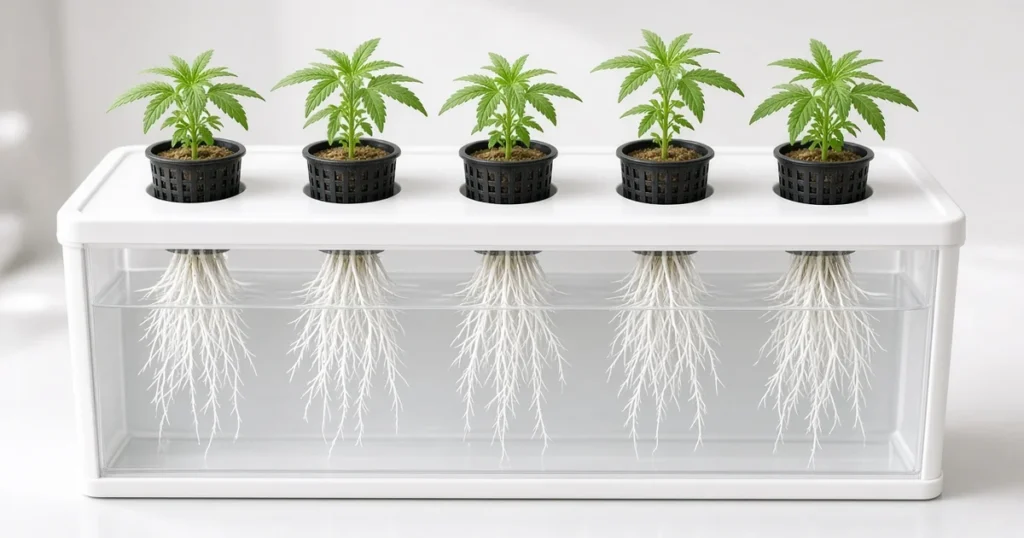
Hempy bucket cannabis grows start with a plain bucket that has one drain hole cut a few inches above the base. That leaves a small reservoir of water in the coarse bottom layer under the mix. That is the whole trick. There is no pump, no timer and no air stone.
The bottom few inches hold a pool of nutrient water after each feed. The roots grow down into that zone and drink from it between waterings. The mix above stays moist but not soaked, so the upper roots still get air.
Why growers call it passive hydro
Most growers fill a hempy bucket with perlite or a perlite blend. Perlite holds almost no nutrients of its own. All the plant’s food comes from the feed water you pour in. That is why growers call it passive hydro. It feeds the way a hydro system does, with no moving parts.
It suits small spaces and first grows. A hempy bucket costs little to build and forgives the odd missed watering better than a plain pot of soil.

How does the water reservoir work?
To see why a hempy bucket works, it helps to know what happens in any pot after watering.
Perched water table explained in plain words
Not all the water leaves a pot when it drains. A soaked layer of mix is left at the bottom. The scientific name for this is a perched water table. The Illinois Extension guide to container drainage options explains it simply. Water gathers in the soil just above a coarse layer until no air space is left. Extra water drains into the coarse layer below only after that.
The hempy bucket puts this effect to work on purpose. How high the saved water sits depends on the side hole. Everything below the hole stays wet. Everything above it drains and takes in air.
Does a drainage layer help?
The Illinois guide calls a gravel layer inside a pot a myth for better drainage. It says gravel does little to keep the soil above it from being soaked.
A 2025 PLOS One study looked at this question again. It is Rowe 2025 in PLOS One. It compared two depths and four materials of drainage layer in three potting mixes. For loamless organic mixes, almost all drainage layers cut water held in the pot. Most layers made no difference in loam based mixes. A layer of coarse sand about 60 mm deep worked best across all mixes.
For a hempy bucket, the lesson is simple. A coarse bottom zone changes where water sits. In a hempy you want that wet zone, and the side hole decides how deep it is.
What do you need to build one?
You need only a few parts. Most are at a hardware or garden store.
- Bucket. A 2 to 5 gallon opaque plastic bucket. Dark or solid colors keep light off the roots.
- Drill and bit. A drill with a bit about 3/8 to 1/2 inch wide.
- Coarse layer. Coarse perlite or clay pebbles for the bottom reservoir zone.
- Main mix. Straight perlite, or perlite blended with some coco or vermiculite.
- Saucer or tray. Something to catch the runoff from the side hole.
- Nutrients. A full hydro or salt based nutrient line, since the mix holds no food.
How to build a hempy bucket step by step
Building one takes about ten minutes.
- Mark the hole height. Measure 2 to 3 inches up from the bottom of the bucket on the outside. A smaller bucket needs a lower hole.
- Drill the hole. Drill one clean hole at that mark. Smooth any rough plastic edges.
- Fill the bottom with the coarse layer. Pour coarse perlite or clay pebbles to just above the hole height.
- Top up with the main mix. Fill the rest of the bucket with your perlite or blend. Leave an inch of space below the rim.
- Flush before planting. Pour plain water until it runs out of the side hole. This washes out dust and settles the mix.
- Plant. Set a rooted seedling or clone into the top layer and water it in with a mild feed.
Put the bucket on a tray or saucer. That keeps runoff off the floor. Empty that tray after each feed. A plant left standing in old runoff can pull salty water back up through the hole.
Bucket size matters for how often you feed. A 2 gallon bucket dries fast and suits small or autoflower plants. A 3 to 5 gallon bucket holds more water and suits larger photoperiod plants. Bigger buckets need fewer feeds but use more perlite.
How to water and feed a hempy bucket
Hempy buckets differ from soil most in how you feed them.
Feed to runoff each time
Every watering is a feed. Mix nutrients at your normal dose and pour slowly until some runs out of the side hole. That small runoff tells you the reservoir is full and fresh.
Young plants may need water every two or three days. In late flower, large plants may need it daily. Lift the bucket to judge. A heavy bucket still has water. A light one needs a feed. Our hydroponic cannabis feeding schedule gives dose guides by stage.
How runoff resets salts
Each feed pushes old water out of the side hole. That keeps salts from building up in the reservoir zone. Salts can collect at the bottom if you skip the runoff too long. A plain water feed every week or two clears the zone out further.
Keep an eye on the runoff itself. If it looks dark or smells off, the zone needs a flush. Runoff that is clear and odorless means the reservoir is fresh.
Hempy vs soil pots vs other hydro
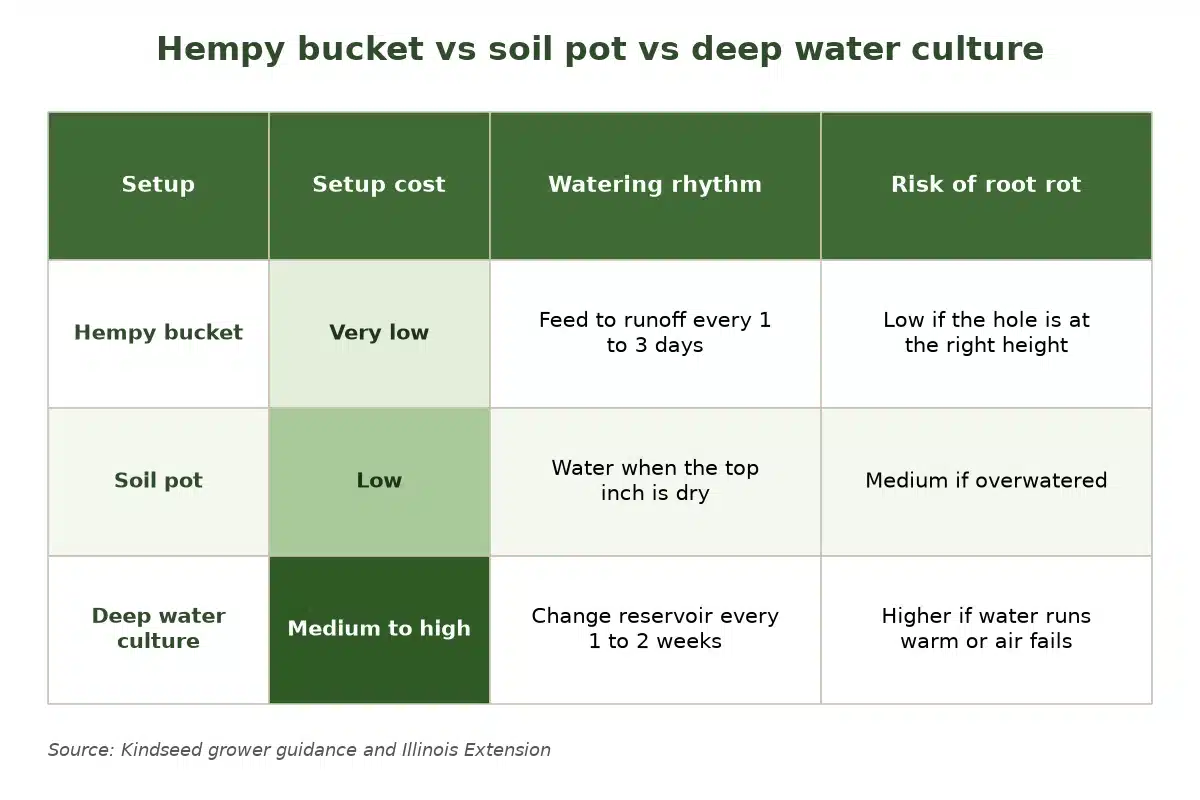
Here is how a hempy bucket compares with two common setups.
| Setup | Setup cost | Watering rhythm | Risk of root rot |
|---|---|---|---|
| Hempy bucket | Very low | Feed to runoff every 1 to 3 days | Low if the hole is at the right height |
| Soil pot | Low | Water when the top inch is dry | Medium if overwatered |
| Deep water culture | Medium to high | Change reservoir every 1 to 2 weeks | Higher if water runs warm or air fails |
Source for the table: Kind Seed Co grower guidance, with drainage behavior from the Illinois Extension guide above.
For more ways to grow without soil, read our guide to hydroponics in different mediums.
Troubleshooting a hempy bucket
Water height, salts or light cause most hempy problems.
- Drooping with a full reservoir. The roots may sit in water with too little air. Check that the hole is not set too high. Make sure the side hole is not blocked.
- Salt crust on top. White crust means salts are building. Feed to a little more runoff. Then give a plain water flush.
- Root rot smell. A sour or swampy smell means the bottom zone is stale. Flush with plain water and check that the bucket blocks light. Keep root zone water from running warm.
- Algae at the hole. Green growth near the hole means light is getting in. Cover the hole area or move to a darker bucket.
Our page on caring for your hydroponic system covers cleaning and upkeep in more depth.
Sources
- Illinois Extension, “Container Drainage Options”: https://extension.illinois.edu/container-gardens/container-drainage-options
- Rowe A, “Effect of drainage layers on water retention of potting media in containers”, PLOS One, 2025: https://pmc.ncbi.nlm.nih.gov/articles/PMC11856292/
FAQ
What is a hempy bucket?
A plain bucket with one drain hole a few inches above the base. Water pools below the hole and the mix above drains and takes in air.
How high should the hole be?
Most growers drill it 2 to 3 inches up from the bottom. Smaller buckets need a lower hole.
What mix goes in a hempy bucket?
Straight perlite or perlite blended with some coco or vermiculite, with coarse perlite or clay pebbles at the bottom.
How often do I water a hempy bucket?
Feed to a little runoff every one to three days. Large plants in late flower may need a feed every day.
Why does my hempy plant droop with a full reservoir?
The roots may have too little air. Check that the hole is not too high or blocked.