Gall Midges on Cannabis: Identification
The short answer
A gall midge is a tiny, delicate fly with long legs and antennae. The adults do little harm. Their larvae are tiny maggots that feed inside plant tissue. They may be white, yellow or orange, and they often cause swellings, distortion or dark damaged areas on stems.
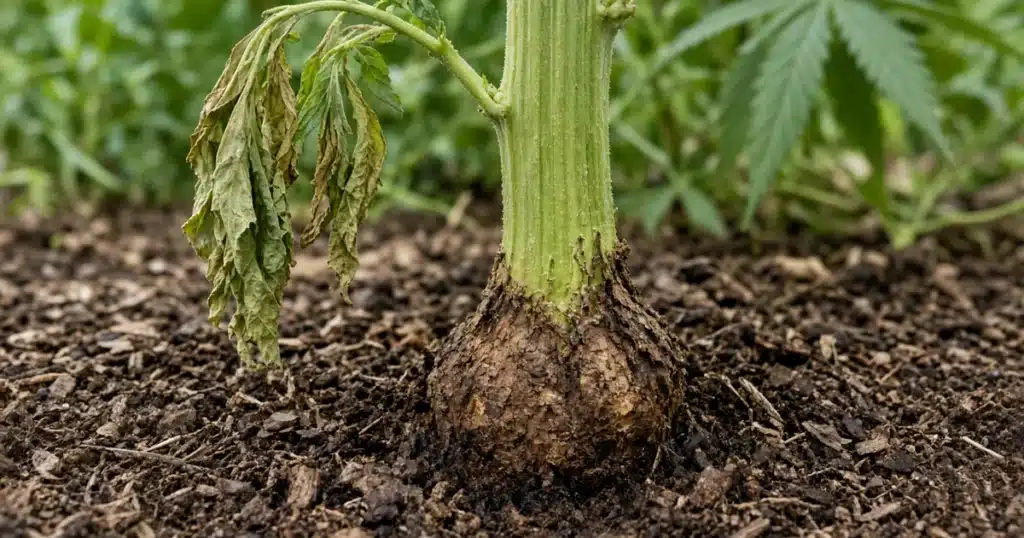
On cannabis, look for small orange or white larvae inside swollen or blackened stem tissue, distorted new growth and plants that wilt without a watering cause. Clip off and bag affected parts, and send a sample to your local extension office to confirm what you have.

What gall midges are
UC IPM explains that there are hundreds of gall midge species, also called gall gnats or gall flies. Each species feeds on just one host plant or a few related ones. Most species have several generations a year.
Not all midges are pests. UC IPM notes that some gall midge species are predators of small insects and mites and are beneficial. One is used to control aphids in gardens and greenhouses. A midge in the garden does not always mean trouble.
A note on cannabis
Published extension guidance on gall midges in cannabis is limited. The sources here describe gall midges on flowers, trees and soybean, not cannabis. Use them to learn what gall midges look like and how they behave. If you suspect midges on your plants, ask your local extension office to confirm the species.
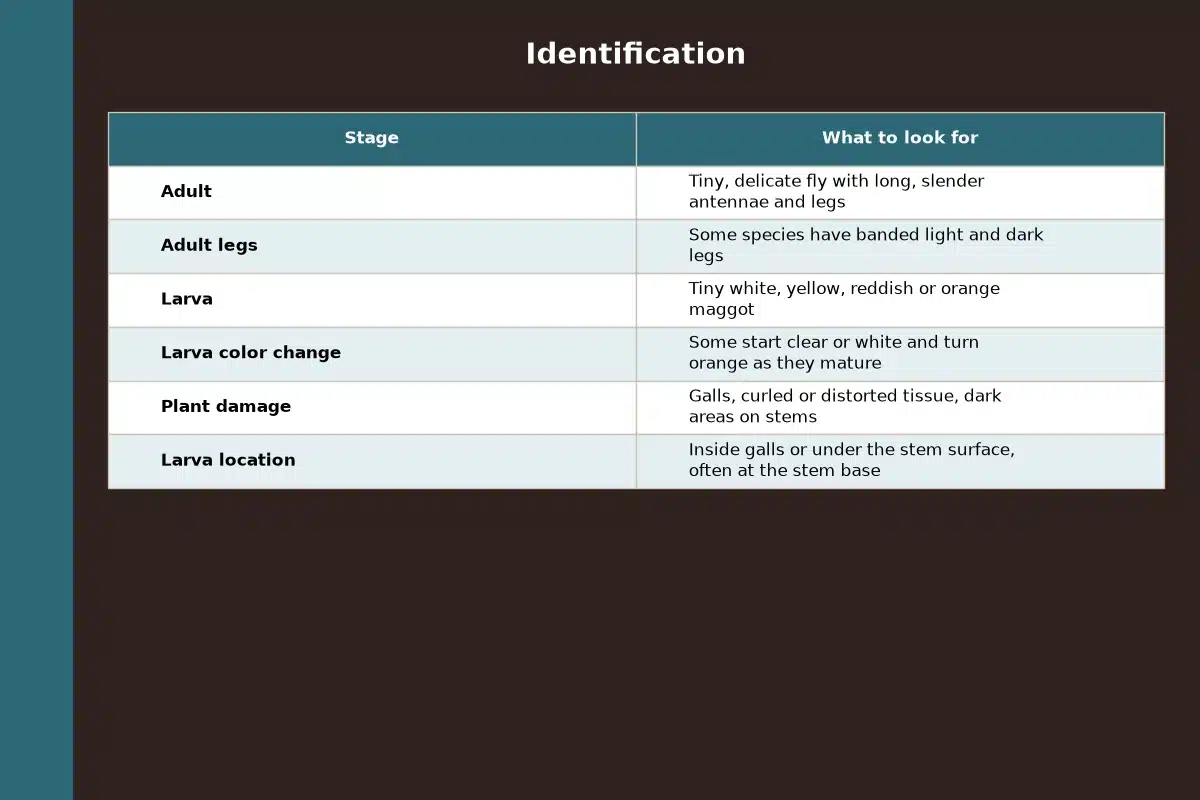
Identification
| Stage | What to look for |
|---|---|
| Adult | Tiny, delicate fly with long, slender antennae and legs |
| Adult legs | Some species have banded light and dark legs |
| Larva | Tiny white, yellow, reddish or orange maggot |
| Larva color change | Some start clear or white and turn orange as they mature |
| Plant damage | Galls, curled or distorted tissue, dark areas on stems |
| Larva location | Inside galls or under the stem surface, often at the stem base |
Source: Gall Midges, UC IPM, adult and larva identification and gall formation.
Signs on the plant
Swellings and galls
UC IPM explains that in gall forming species, larvae bore into plant tissue or cause tissue to swell into galls around them. The larvae feed inside.
Distorted growth
Where larvae feed, leaves or shoots may curl, twist or fail to open normally.
Blackened stem bases
University of Minnesota Extension describes soybean gall midge larvae under the stem surface at the base of plants. Feeding causes blackened areas at the base of the stem. Heavily infested stems turn deformed and brittle. They can break near the soil.
Wilting
UMN notes that injury from soybean gall midge can lead to stunting, wilting and plant death. A cannabis plant that wilts while the soil is moist and the roots look healthy may have damage at the stem base.
How to check a plant
- Look closely at the base of the stem near the soil.
- Check for dark, cracked or swollen areas.
- Gently peel back a small area of damaged outer stem.
- Use a hand lens to look for tiny white or orange larvae.
- Check distorted new growth and any swellings on stems or leaves.
- Look for tiny, long legged flies near plants at dusk.
- Take clear photos and note where and when you found them.
Look alikes
Several common problems can look like gall midge damage.
- Fungus gnats. Small dark flies around moist soil. Their larvae live in the soil, not inside stems.
- Root rot. Brown, mushy roots and wilting. The stem base may darken, but you will not find larvae inside.
- Stem damage from ties or wind. Cracks and scars with no larvae.
- Other boring insects. Larger larvae, often with clear tunnels in the stem.
- Predatory midge larvae. Small orange larvae feeding on aphids on leaves, not inside tissue.
Our guide to common cannabis growing problems covers other issues that cause wilting and distortion.
Not every midge is a pest. UC IPM notes that certain midges, such as Aphidoletes and Feltiella species, prey on small insects and mites. These are beneficial and help keep other pests in check. Check where the larvae are before you pull a plant. Pest larvae feed inside galls or plant tissue.
Life cycle
UMN describes soybean gall midge larvae overwintering in cocoons in the soil. Adults begin to emerge in June, and emergence can stretch into July. It suspects egg laying happens near the base of plants and notes that cracks and wounds in the stem may give larvae a way in. There are at least two generations a year in Minnesota.
Other species differ, but several generations a year is common for gall midges, according to UC IPM.
What to do
Remove affected parts
UC IPM advises clipping off galls and distorted plant parts as soon as you see them and removing them from the garden. Bag them rather than composting them.
Check the plant again a few days later. UC IPM notes that most gall midge species have several generations a year. After the first cleanup new galls can appear, so keep clipping as they show up.
Remove badly affected plants
UC IPM notes that if an infestation is severe, you may choose to remove the host plants. If the stem base is badly damaged, the plant may not recover.
Avoid stem wounds
Since UMN notes that cracks and wounds may give larvae a way in, handle stems with care. When you weed or cultivate, avoid scraping the stem base.
Insecticides
UC IPM states that gall midges are difficult to control with insecticides. UMN notes there are currently no management recommendations for soybean gall midge in Minnesota and that seed applied insecticides do not appear to work. Put your effort into early detection, removal and confirming the species.
Beneficial insects
In the garden, natural enemies may help with some pests. Our guide to the best bugs for a cannabis grow covers helpful insects.
UC IPM lists the chrysanthemum gall midge and the violet gall midge among pests of flowers. These show how each species tends to target one plant group. A midge found on a nearby ornamental may not be the one on your cannabis. Before you act on a guess, confirm the species.
Indoor and outdoor grows
Most gall midge reports come from outdoor plants and fields. Outdoor beds near other host plants face more risk because adults can fly in. Indoor grows are less likely to see them, but larvae can arrive in soil or on plants brought in from outside. Check new plants and bagged soil before they go into a tent. Keep outdoor tools and gloves out of indoor spaces.
Getting a confirmed ID
Gall midges are hard to identify by eye. Bag a sample of damaged stem with larvae inside, keep it cool and contact your local extension office. Many offices offer insect identification for home gardeners. A confirmed ID tells you what you are dealing with and how it behaves. Include photos of the plant and a note on when you first saw the damage.
After an outbreak
Keep an eye on the same beds next season. UMN notes that soybean gall midge infestations are most likely at field edges near last year’s crop. Rotate where you plant if you can, and check plants early in the season.
If a plant is struggling, our guide on how to revive sick cannabis plants covers next steps.
Troubleshooting
- Plant wilts with moist soil. Check the stem base for dark areas and larvae.
- Orange larvae on leaves near aphids. These may be beneficial predatory midges.
- Small flies around wet soil. These are more likely fungus gnats.
- Swellings on stems. Cut one open to look for larvae.
- Stem breaks near the soil. Check for brittle, damaged tissue.
Final thoughts
Gall midges are tiny flies whose larvae feed inside plant tissue. On cannabis, look for swellings, distortion and dark stem bases with small orange or white larvae inside. Remove affected parts and get a confirmed ID from your extension office. Kind Seed Co has more pest guides for home growers.
Sources
- UC IPM, Gall Midges
- University of Minnesota Extension, Soybean gall midge in Minnesota soybean
FAQ
What is a gall midge?
A tiny, delicate fly whose larvae feed inside plant tissue and can cause galls or distortion.
What do gall midge larvae look like?
Tiny white, yellow, reddish or orange maggots, often found inside galls or stems.
Are all gall midges pests?
No. Some species prey on aphids and other small pests and are helpful.
How can I tell gall midges from fungus gnats?
Fungus gnat larvae live in soil. Gall midge larvae feed inside plant tissue.
What should I do if I find gall midges?
Clip off and bag affected parts and send a sample to your local extension office.