Eggshells for Cannabis: Do They Add Calcium?
What do eggshells add to cannabis soil?
Eggshells for cannabis sound like a free calcium feed, and the shells are almost all calcium carbonate. But they break down so slowly that they do little for a cannabis plant in a single grow. That is the short answer. The longer answer explains why and when they can still be useful.
Calcium carbonate share
An eggshell is mostly mineral. A 2021 study looked at eggshells from 222 bird species. It notes that calcium carbonate is believed to make up about 98 percent of the shell for most species. The rest is a thin layer of organic material. That study is McClelland and colleagues 2021 in the Journal of the Royal Society Interface.
So on paper, eggshells look like a rich calcium source. The problem is how fast that calcium becomes available.
Liming effect vs feeding effect
Garden lime is made of the same compound, calcium carbonate. In soil it slowly reacts and raises pH. That is a liming effect. Feeding a plant a quick dose of calcium is a different thing.
Think of eggshells as a slow soil conditioner, not a plant food. Over many months they may nudge pH upward. A plant that needs calcium this week will not be fixed by them.
Most garden soils already hold some calcium. The guide notes that most soils in its region already hold plenty of calcium for garden plants. Plenty of cannabis growers begin with a bagged mix that already has lime. In those cases, extra calcium from shells adds little.
There is a small but real organic film inside a shell. Soil organisms feed on it. So eggshells have a modest place in a living soil or compost system. The calcium itself still arrives late. To learn what calcium does in the plant, read our page on calcium and cannabis plants.
How fast do eggshells break down?
Slowly. Very slowly. That is the main reason eggshells disappoint many growers.
Minnesota Extension finding on slow breakdown
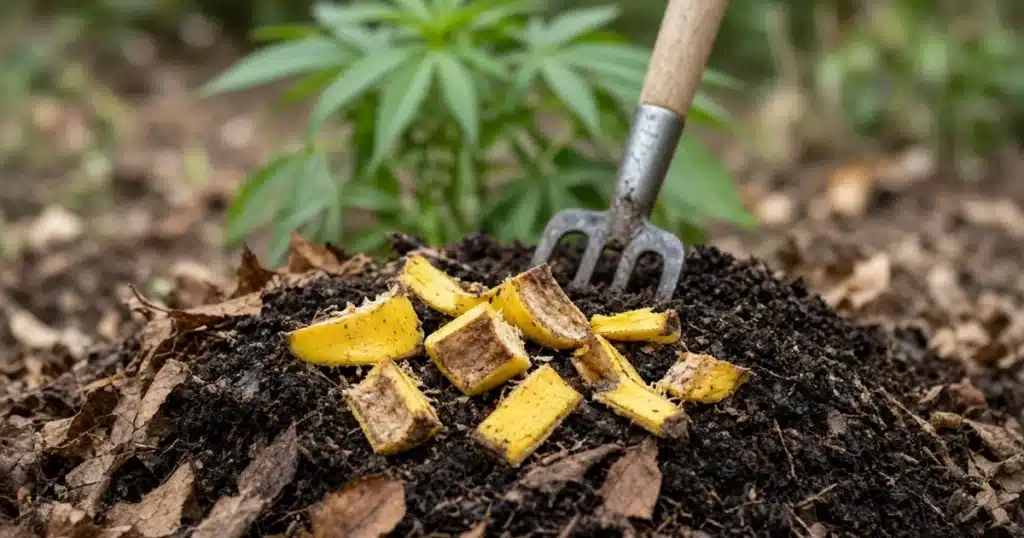
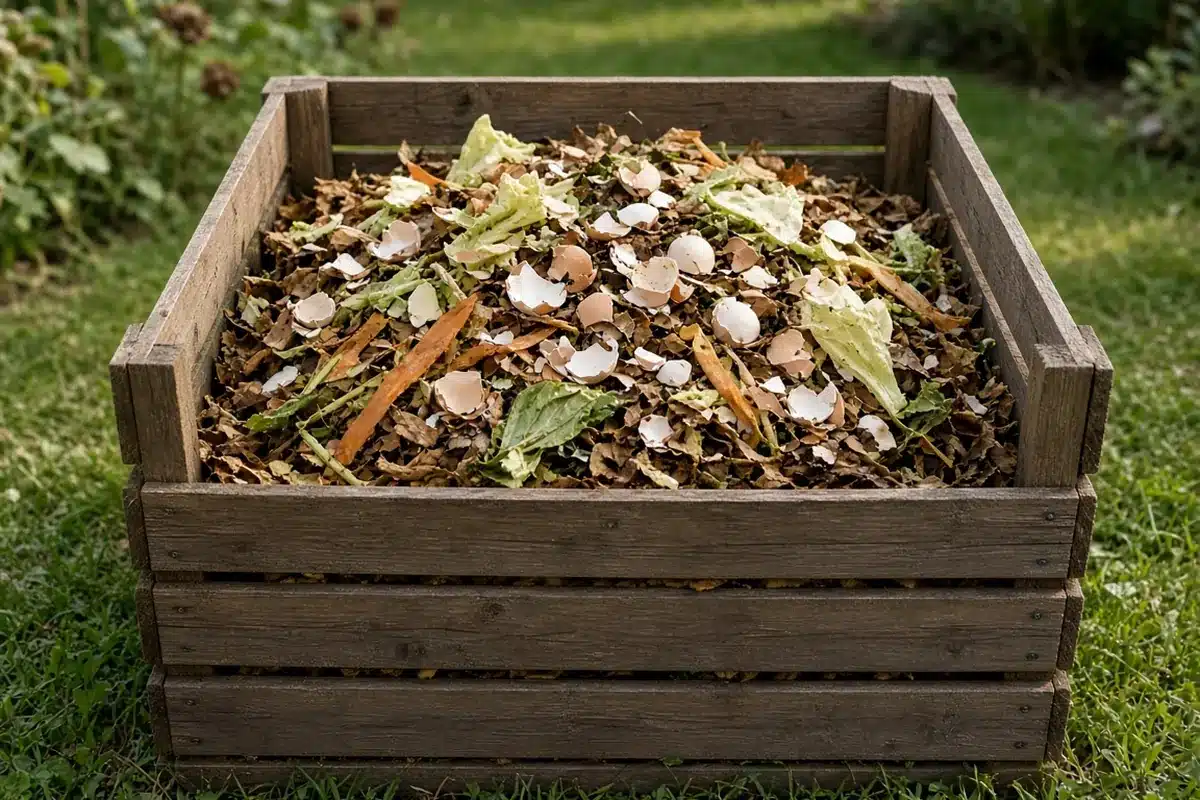
The University of Minnesota Extension soil health guide looks at common kitchen additions to garden soil. It notes that eggshells do not decompose very quickly in compost. It says the same is true when you add them straight to garden soil. Even when soil needs calcium, eggshells generally decompose too slowly to be effective.
The guide also notes a plus side. Eggshells will not harm your soil or plants. They add organic material for soil organisms. Its verdict is that you may as well put them in the compost.
Particle size
Size changes everything. The guide notes that the smaller the pieces are, the faster they decompose. Large shell pieces break down very slowly in a bed. Coarse flakes break down a little faster. A fine powder, close to flour, offers the most surface area and reacts fastest.
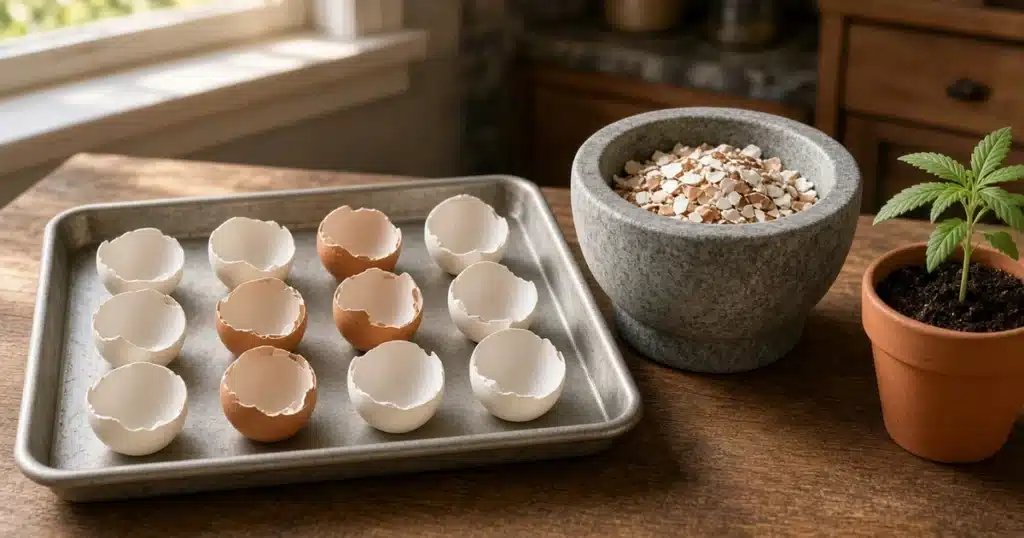
Want to use eggshells anyway? Grind them as fine as you can. A coffee grinder or a mortar and pestle works well. Crushing by hand leaves pieces too large to matter in one season.
Time matters as much as size. Mix the powder into a bed in fall. It then has months to react before spring planting. Powder added at transplant has only weeks. If you use shells, plan ahead and think of them as a slow input for next season rather than this one.
Eggshells vs other calcium sources
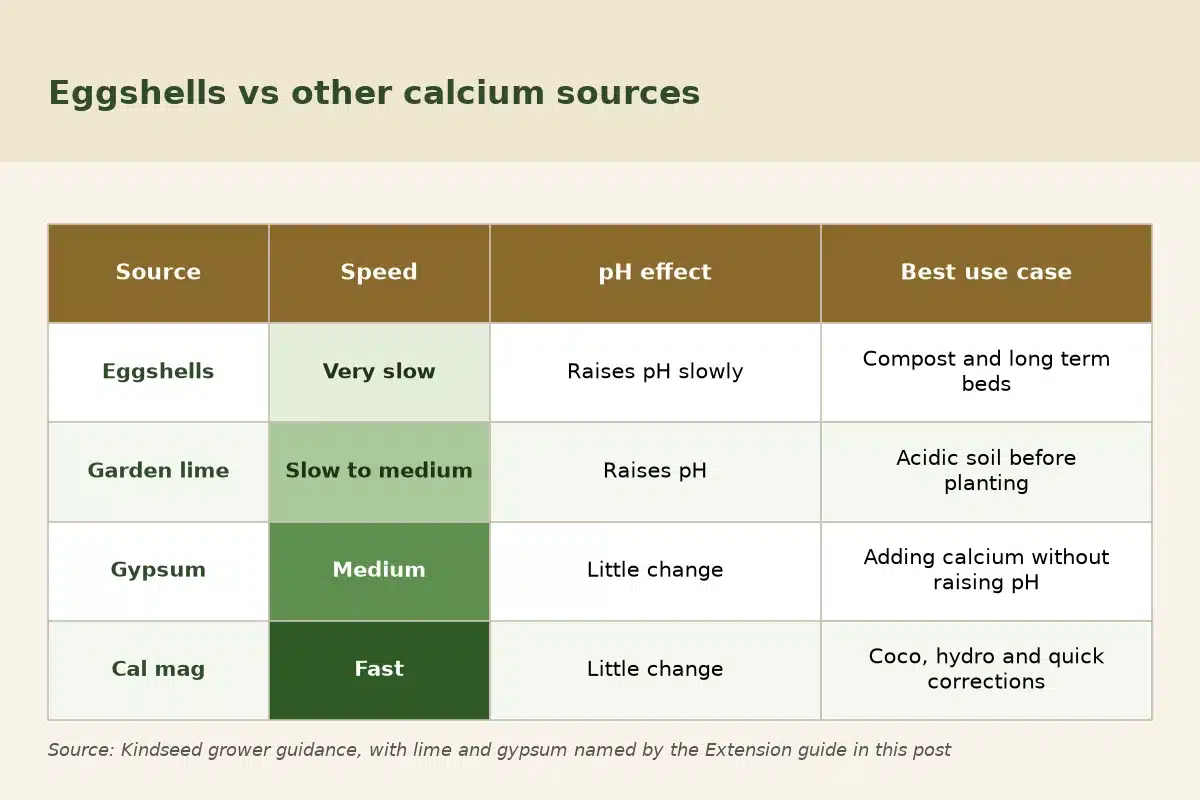
Eggshells are one of several ways to add calcium. Here is how they compare.
| Source | Speed | pH effect | Best use case |
|---|---|---|---|
| Eggshells | Very slow | Raises pH slowly | Compost and long term beds |
| Garden lime | Slow to medium | Raises pH | Acidic soil before planting |
| Gypsum | Medium | Little change | Adding calcium without raising pH |
| Cal mag | Fast | Little change | Coco, hydro and quick corrections |
Source for the table: the guide above names agricultural lime and gypsum as good calcium sources. Speed and use notes are Kind Seed Co grower guidance.
For soil that truly lacks calcium, garden lime and gypsum work better. The guide advises a soil analysis before applying either. For fast help in coco or hydro, a cal mag product works best. Our guide to cal mag for cannabis explains how to use it.
Cost is worth a thought too. Eggshells are free, but they take time to clean, dry and grind. Garden lime or gypsum is cheap by the bag and spreads evenly. For most growers, shells make sense only as part of a compost habit they already keep. They are a way to waste less, not a shortcut to better plants.
How to prepare eggshells if you use them
If you still want to recycle eggshells into your garden, prepare them well. Clean, fine shells work best.
- Rinse. Rinse each shell under water to remove leftover egg. Raw egg left inside can smell and draw pests.
- Dry. Spread the shells on a tray and let them air dry for a day or two.
- Bake. Bake the dry shells at a low oven heat for about 10 minutes. This dries them fully and makes them brittle.
- Grind fine. Grind the shells into a powder with a coffee grinder or blender. Aim for flour fine.
- Mix into compost. Add the powder to your compost pile or work it into a bed months ahead of planting.
Store the powder in a dry, sealed jar until you use it. Damp powder clumps and is harder to spread.
Use a light hand. A few tablespoons of powder mixed through a large compost pile is plenty. Spread shells thin through organic matter. Soil life can work on them there. A thick layer on top of a pot does little and can crust over.
When should you not rely on eggshells?
Eggshells have a place, but some grows need something else.
Coco and hydro
In coco coir and hydro, nutrients need to dissolve right away. Eggshells do not dissolve in water in any useful way. Shell bits in a reservoir or coco pot add little calcium and can clog drippers or pumps. Use a liquid nutrient line with calcium built in.
Peat based mixes in small pots are another weak spot. They hold less soil to buffer pH swings. Shells may raise pH there faster than you expect over a long grow.
When a fast fix is needed
If a plant shows signs of a calcium problem, eggshells will not act in time. See our guide on how to fix calcium deficiency in cannabis plants for faster steps.
Troubleshooting eggshell use
Most problems with eggshells come from size, cleanliness or pot size.
- Shells still whole after months. The pieces are too large. Grind future batches into powder. Move whole pieces to the compost pile.
- Pests drawn to unrinsed shells. Leftover egg draws flies and rodents. Rinse, dry and bake shells before use.
- pH creeping up in a small pot. Calcium carbonate raises pH over time. A small pot has little soil to buffer that change. Check runoff pH and cut back on shells in containers. For calcium deficiency itself, use the guides linked above.
Eggshells are a fine way to recycle kitchen scraps into compost. They are not a calcium plan for a single cannabis grow. Pair them with a real nutrient program and keep your expectations modest.
Sources
- McClelland S C and colleagues, “How much calcium to shell out? Eggshell calcium carbonate content is greater in birds with thinner shells, larger clutches and longer lifespans”, Journal of the Royal Society Interface, 2021: https://pmc.ncbi.nlm.nih.gov/articles/PMC8479367/
- University of Minnesota Extension, guide on coffee grounds, eggshells and Epsom salts: https://extension.umn.edu/manage-soil-nutrients/coffee-grounds-eggshells-epsom-salts
FAQ
Do eggshells add calcium to cannabis?
They are almost all calcium carbonate, but they break down too slowly to help much in a single grow.
How long do eggshells take to break down?
Large pieces break down very slowly. Fine powder breaks down fastest.
Can I use eggshells in coco or hydro?
No. They do not dissolve in water in a useful way and can clog drippers or pumps.
What is a faster calcium source?
Garden lime and gypsum work in soil. Cal mag products work fastest in coco and hydro.
How should I prepare eggshells?
Rinse, dry, bake briefly, grind to powder and mix into compost months ahead of planting.