
Herbicide Drift Damage on Cannabis: Signs and Recovery
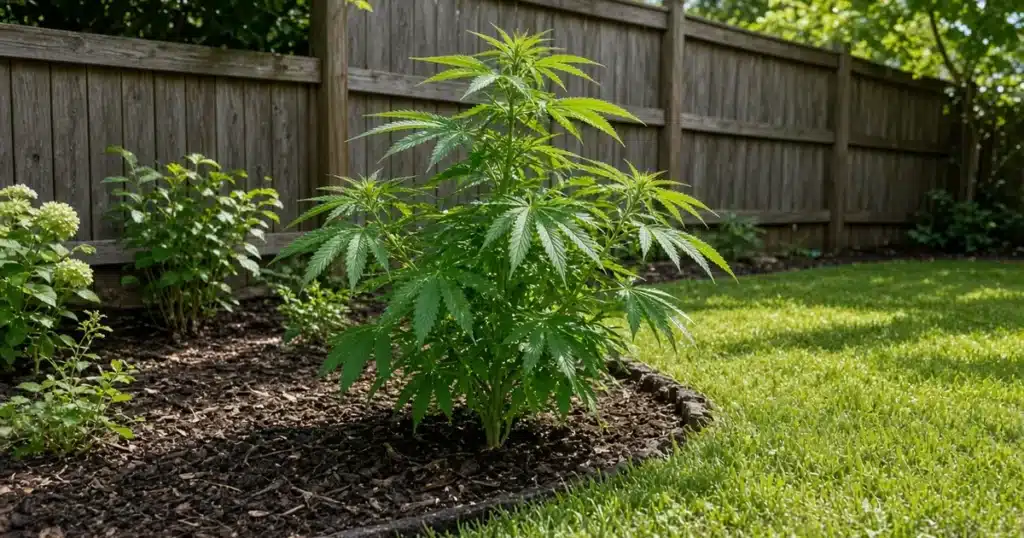
Cupped, twisted new growth on an outdoor cannabis plant can send a grower hunting for pests or a missing nutrient. Sometimes the cause came from over the fence. Herbicide drift happens when weed killer sprayed on a nearby lawn, roadside or field moves through the air and lands on plants it was never meant to touch. University of Minnesota Extension notes that fruit, vegetable and ornamental plants can all be injured this way, and that the signs depend on both the herbicide and the plant. Four topics follow: recognizing drift injury, telling it apart from look-similar problems, what recovery looks like and how to lower the risk next season.
How weed killer ends up on your plants
University of Minnesota Extension explains that drift happens when herbicides move through the air as droplets or vapor during an application. Drift is most likely during very windy conditions, and also during very still conditions of less than 3 mph. Any herbicide can drift if it is applied under the wrong conditions.
The second route is vapor. University of Minnesota Extension notes that some common lawn weed killers belong to a group called growth regulator herbicides, and that these tend to evaporate. Under the right conditions they can turn to vapor in the hours or days after application and move through the air. This is called volatilization, and spraying these products during or just before hot, dry weather raises the risk. So damage can show up even if nobody sprayed on a windy day.
University of Maryland Extension adds that herbicides can drift many feet from where they were applied. A garden does not need to share a property line with a sprayed lawn to be affected.
Non-selective weed killers, which kill a wide range of plants, can also injure garden plants when they are applied very close to them, especially in wind, according to University of Minnesota Extension.
Signs of growth regulator injury
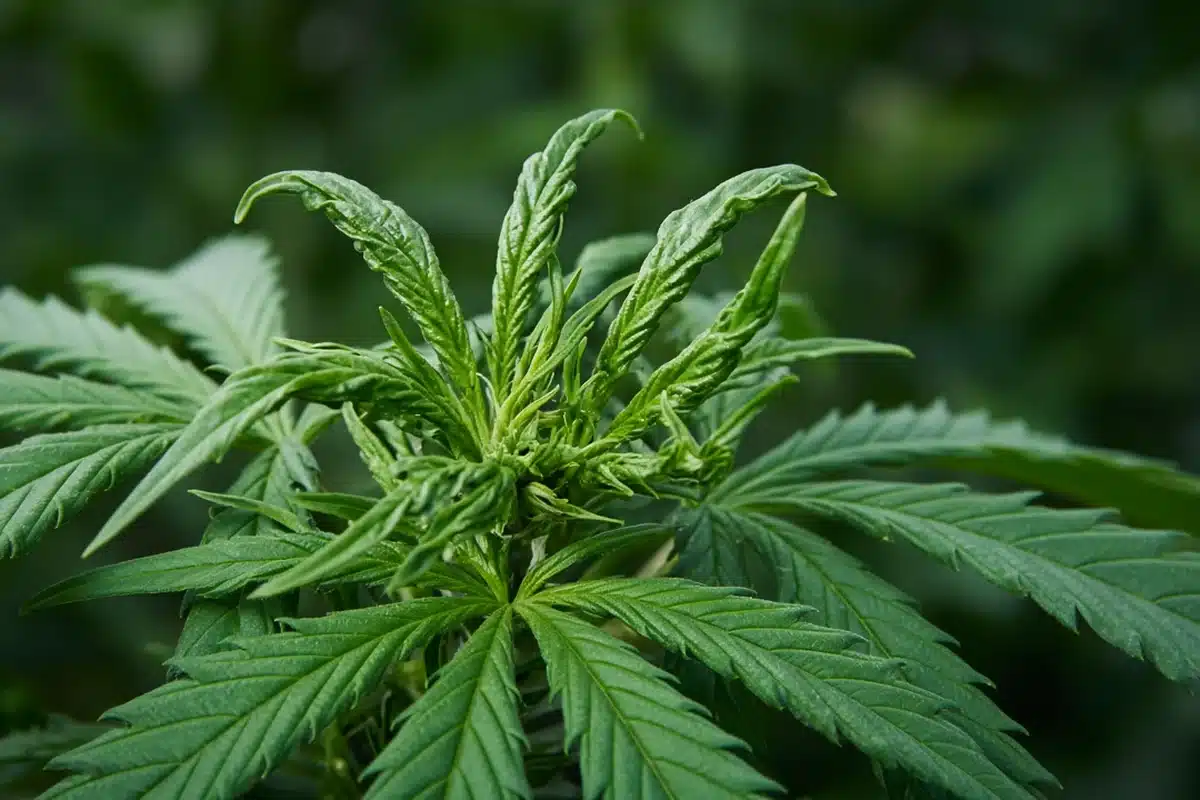
Growth regulator herbicides cause distortion. University of Maryland Extension describes twisted and bent shoots and leaf stems, and leaves that become twisted, curled and strappy and stay small. The injury shows on the youngest leaves. The same page lists another herbicide type that causes dwarfed, distorted or discolored foliage.
University of Minnesota Extension describes similar patterns across many crops:
- New leaves that are deformed and stunted, sometimes with heavily serrated edges.
- Leaves that curl inward because the middle of the leaf grows faster than the edges.
- Leaves that curl, twist and wilt.
- Leaf distortion and stunting in vegetables, which can lead to plant death in severe cases.
University of Minnesota Extension lists peppers, tomatoes, eggplant and beans among the vegetables most sensitive to this group. Cannabis is not on those lists, so growers should treat its exact sensitivity as unknown and watch new growth closely after any nearby spraying. Leaves on a cannabis plant are already serrated and divided, so compare suspect growth with older, healthy leaves on the same plant rather than with a picture of another crop.
Signs of non-selective herbicide injury
Non-selective products look different. University of Minnesota Extension describes yellow or white discoloration between the leaf veins, often worse at the outer edges of the leaf and moving inward. New leaves that emerge after exposure may be distorted and thin.
University of Maryland Extension notes that plants exposed to this type may stop growing, stay green for several days, develop yellow leaves and then turn a uniform brown. Leaf distortion and bleached or dead spots can occur. Signs may not appear for 7 to 10 days after exposure, which makes it easy to miss the connection to a spray event.
University of Minnesota Extension also notes that damage can appear on new spring growth from drift that happened the previous year on perennial plants. That matters less for an annual crop like cannabis, but it is a reminder that timing can be confusing.
How to check whether drift is the cause
University of Maryland Extension suggests suspecting herbicide injury when:
- More than one type of plant is affected.
- Damage appears only on one portion of the plant or plants.
- Other causes, such as nutrient deficiencies, air pollution, insects, diseases or viruses, have been ruled out.
To work through it at home, use these steps:
- Note when you first saw the damage and work back from that date. Ask whether lawns, roadsides or fields nearby were sprayed in the past few weeks. University of Minnesota Extension advises considering whether herbicides were recently sprayed nearby.
- Walk the whole garden. Look at tomatoes, peppers, beans and other sensitive plants, and at the side of each plant that faces the likely source.
- Check whether the damage is on new growth only. Growth regulator injury shows on the youngest leaves.
- Look under leaves and along stems with a hand lens for insects or mites.
- Take dated photos from the same spots every few days so you can see whether new growth is coming in normal.
University of Maryland Extension notes that lab testing of tissue and soil for herbicide residue is impractical and costly for home growers, so careful observation is the main tool.

Problems that look like drift
University of Minnesota Extension lists several look-similar causes.
Nutrient deficiency can cause yellow leaves. Nitrogen deficiency yellows the oldest leaves, while potassium deficiency yellows the leaf margins. If a deficiency is the cause, signs are usually spread evenly through the area and nearby plants are affected in a similar way. Drift tends to be patchier and one-sided.
Insect and mite feeding can also fool you. Spider mites leave yellow-brown flecks that might be mistaken for non-selective herbicide injury. If insects are present, close inspection of all parts of the plant, including leaf undersides, should turn them up.
Viruses that cause mottled, uneven discoloration can be mistaken for growth regulator injury, and University of Minnesota Extension suggests sending a sample to a plant disease clinic for testing when you see these signs.
For other reasons cannabis leaves curl, including heat and watering, check plant leaves curling upwards.
What recovery looks like
Recovery depends on how much drift reached the plant and on the plant itself. University of Minnesota Extension notes that sensitive plants do not always die from growth regulator drift and may show stress for several weeks before growing normally again. In one case it describes, peppers and tomatoes were damaged 1 to 2 weeks after a neighbor’s lawn application, were stunted and took several weeks to begin growing normally. Some plants recover within days or weeks of light injury, while large amounts of drift can kill or partly kill a plant.
University of Maryland Extension is less hopeful for tomatoes, noting they rarely outgrow injury from one common growth regulator product and rarely recover from non-selective exposure. Its advice is to remove and replant if there is time in the season.
For a cannabis plant, a practical recovery plan looks like this:
- Keep up steady watering and normal care so the plant can push new growth.
- Do not try to fix the damage with extra fertilizer. The cause is not a nutrient shortage.
- Leave damaged leaves in place for now so you can judge whether new growth is clean.
- Watch the next few sets of leaves. If they come in normal, the plant is recovering.
- If new growth keeps coming in twisted after several weeks and there is still time in your season, consider starting a replacement plant.
These care steps are general guidance, because the Extension advice gives no cannabis-specific recovery times.
Lowering the risk next season
University of Minnesota Extension recommends minimizing herbicide use and using non-chemical weed control to reduce the risk of drift. If you need weed control around your plot, non-chemical options are covered in the Kind Seed Co article on weed control in outdoor cannabis.
Talk to neighbors. University of Minnesota Extension suggests telling neighbors who spray their lawns about your garden and asking them to avoid spraying in windy or hot, dry conditions. If you hire a lawn care company, let them know about your sensitive plants. Its advice is to avoid spraying growth regulator products during or just before hot, dry, windy or completely still weather. It also notes Iowa State University research suggesting that watering a lawn after these products are applied may cut the chance of vapor drift.
Troubleshooting suspected drift
Only the newest leaves are twisted. This fits growth regulator injury. Keep the plant growing and watch whether the next leaves come in normal.
Damage is worse on one side of the plant. Drift often comes from one direction. Check what lies upwind on that side.
All plants in the bed are yellowing evenly. This points more toward a nutrient problem than drift, according to University of Minnesota Extension.
Yellow flecks plus fine webbing on leaf undersides. Look for mites before blaming herbicide.
Plants yellow and then brown over a week or two with no insects present. This fits non-selective injury. Record the timing and nearby spraying, and plan a replacement if the season allows.
Sources
- University of Minnesota Extension. Herbicide injury on garden plants. https://extension.umn.edu/garden-and-home/yard-and-garden/gardening-in-minnesota/herbicide-injury-on-garden-plants
- University of Maryland Extension. Herbicide Damage on Vegetables. https://www.extension.umd.edu/resource/herbicide-damage-vegetables
FAQ
What does herbicide drift damage look like on cannabis?
Growth regulator weed killers cause twisted, cupped or strappy new leaves that stay small, often on one side of the plant. Non-selective weed killers cause yellow or white areas between veins, then browning. University of Maryland Extension notes signs of non-selective injury may take 7 to 10 days to appear after exposure.
Can a cannabis plant recover from herbicide drift?
Often, if the exposure was light. University of Minnesota Extension notes sensitive plants may show stress for several weeks before growing normally again, while heavy drift can kill plants. Keep care steady, skip extra fertilizer and watch new growth. If new leaves keep coming in distorted, consider a replacement plant.
How can I tell drift from a nutrient deficiency?
Look at the pattern. University of Minnesota Extension notes that deficiencies usually affect plants evenly across an area, with nitrogen yellowing older leaves first. Drift tends to be patchy, one-sided and focused on new growth. Ask whether anything nearby was sprayed in the weeks before the damage appeared, and check for insects too.
How do I protect my garden from a neighbor's weed killer?
Talk to your neighbors. University of Minnesota Extension suggests asking them to avoid spraying in windy, very still or hot, dry weather, and telling any lawn care company about your sensitive plants. Using less herbicide yourself and choosing non-chemical weed control also lowers the risk to your own plants.


