
Weed Control in Outdoor Cannabis: Keep Beds Clean
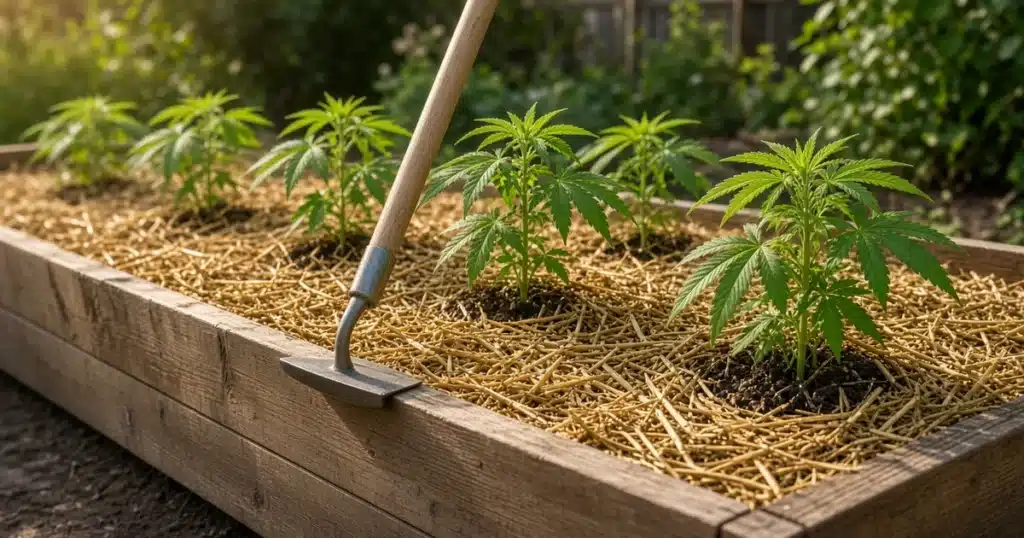
Weed control in an outdoor cannabis garden matters most in the first few weeks after planting. Weeds compete for sunlight, water and nutrients, and some release natural compounds that slow the growth of plants around them, according to Oregon State University Extension. Once cannabis plants are large and shading the soil, a few weeds do little harm. While the plants are small, the same weeds can hold them back for the rest of the season. Most of the work happens before planting, and a home garden rarely needs anything stronger than a hoe, mulch and your hands.
When do weeds do the most damage?
Researchers call it the critical weed-free period. It is the stretch early in the season when keeping a crop clean protects yield. Oregon State University Extension, summarizing hemp trials from several US regions, says weed competition reduces growth and bud production, and that keeping plants weed-free while they establish is especially important for bud yield.
There is no single number that fits every garden. The same publication says the length depends on the weed species, the weather and the cultivar. As a general guide, it advises keeping hemp fields weed-free for at least two weeks while plants establish. It adds three cases that need longer:
- Aggressive weeds such as puncturevine and yellow nutsedge.
- Slow-growing or smaller cultivars that take longer to shade the ground.
- Plants started from seed in the bed rather than transplanted, which need a substantially longer clean period.
For a home grower, that points to a simple habit. Keep beds clean for the first several weeks, and longer if you direct-sow or grow compact plants.

How do you prepare a bed before planting?
The best weed control happens before the first plant goes in.
- Remove perennial weeds first. University of California Statewide IPM Program advises digging out perennial weeds, roots and all, before planting. Weeds with rhizomes or tubers, such as bindweed and nutsedge, are hard to fix later.
- Use a stale seedbed. Prepare the bed as if you were planting, then water it and wait. Oregon State University Extension explains that weed seeds in the top 1 to 2 inches germinate, usually within a week. Kill the seedlings by shallow hoeing or flaming, then repeat if time allows.
- Keep cultivation shallow. UC IPM recommends shallow cultivation, under 1 inch deep, when removing the flushes. It says repeating the water, sprout and remove cycle two or three times greatly reduces annual weed pressure.
- Do not dig again. After the last flush, plant with as little soil disturbance as possible. Oregon State University Extension notes that turning the soil brings new weed seeds to the surface.
- Check what you bring in. UC IPM warns that weeds often arrive in soil amendments, potting mix and transplant pots. Pull any weeds from transplant pots before planting.
If a bed has a bad weed history and you have a hot summer to spare, solarizing it under clear plastic the year before is another option. UC IPM says 4 to 6 weeks of covering during the hottest months controls many annual weeds.
How do you control weeds after planting?
Hand weeding. UC IPM says frequent removal of weeds while they are small and before they set seed rapidly reduces the number of annual weeds over time. Weeding has to be repeated often until plants are established. Pull weeds after rain or watering, when roots slide out more easily.
Hoeing. Use a sharp hoe to slice weeds just below the surface. UC IPM warns against deep tilling, which brings buried seeds up where they germinate, and notes that cultivation can damage shallow roots. Stay a few inches back from the stem of each plant.
Mulch. Mulch blocks the light weed seeds need to sprout. UC IPM suggests keeping coarse organic mulch about 3 to 4 inches deep, and fine-textured mulch at about 2 inches because it packs tightly. Deeper than 4 inches can keep the soil too wet and short of oxygen. Still choosing a material? Weigh the options in mulch for cannabis on the Kind Seed Co blog.
Landscape fabric and plastic. Fabric lets air and water through and lasts years, but UC IPM says it suits permanent plantings rather than beds that are replanted every season. Solid black plastic gives excellent annual weed control but restricts air and water movement.
Spacing and drip irrigation. UC IPM points out that drip lines put water at the plants instead of on bare soil between them, so fewer weeds sprout in the gaps. Planting so the canopy closes sooner also shades out late weeds.
What changes through the season?
| Stage | Main weed task |
|---|---|
| Before planting | Remove perennials, run 2 or 3 stale seedbed flushes |
| First weeks after planting | Weed often, keep beds fully clean |
| Mid season | Spot weed, top up mulch, stop weeds going to seed |
| Late season and after harvest | Pull anything flowering, plant a cover crop |

Table note: summary of Oregon State University Extension EM 9560 and UC IPM Pest Notes 7441.
Early season. This is the critical window. Check beds every few days and remove seedlings before they root deeply. Time planting with when to plant cannabis seeds outdoors so plants grow fast and cover the soil sooner.
Mid season. Once plants shade most of the bed, weeds matter less for yield. The goal shifts to stopping weeds from setting seed, since every weed that drops seed adds to next year’s work. UC IPM stresses removing weeds before they flower.
Late season and after harvest. Keep pulling anything that flowers. Oregon State University Extension suggests a winter cover crop such as cereal rye, noting that a single-species cover often produces more biomass and suppresses weeds better than a mix. See cover crops for cannabis for how to plant one.
How do you keep new weeds out?
Oregon State University Extension lists the main ways new weeds arrive: wind-blown seed, animals, dirty tools and weedy seed or soil. Simple sanitation helps:
- Clean tools, tillers and boots after working a weedy area.
- Keep weeds along fences and paths from going to seed.
- Use composted amendments, since proper composting kills most weed seeds.
- Keep notes on where problem weeds show up each year.
What if weeds keep coming back?
Weeds sprouting in the mulch itself. UC IPM explains that mulch that is too fine, too thick or partly rotted stays wet and becomes a seedbed. It suggests a coarse mulch with pieces about 1/4 to 3/4 inch and low water-holding capacity. Rake or top up the layer with fresh material.
The same perennial returns in one spot. That usually means roots or tubers are still in the soil. Dig with a narrow tool to lift the whole root, and repeat each time new shoots show. UC IPM notes that nutsedge can push through most fabrics and many mulches.
Weeds along paths and edges. Wind-borne seed from groundsel, prickly lettuce and sowthistle lands easily on bare soil. Mow or trim edges before those weeds flower.
Small weeds on open ground between plants. UC IPM describes flaming young broadleaf weeds with a small propane unit, using just 2 to 5 seconds of heat rather than burning them to the ground. Keep the flame well away from your plants, dry mulch and anything flammable. In small beds, a hoe is often faster.
Do home growers need herbicides?
Usually not. UC IPM says home gardeners using hand weeding and mulch should not need herbicides in most cases. Oregon State University Extension adds that hemp has very few registered herbicide options, and none for organic production. UC IPM also warns that herbicides can injure desirable plants nearby, so prevention, mulch and hand removal are the safer path.
What are the common mistakes?
- Waiting until weeds are large before the first weeding.
- Tilling deeply right before planting, which wakes up a new flush of buried seed.
- Letting a few weeds flower and seed in late summer.
- Using fine mulch too thick so it stays wet and weeds sprout in it.
- Bringing in uncomposted manure or weedy topsoil.
- Hoeing too close to the stem and cutting shallow roots.
- Ignoring nutsedge or bindweed until they spread.
Sources
- Oregon State University Extension. Weed competition and the critical weed-free period in hemp (EM 9560). https://extension.oregonstate.edu/catalog/em-9560-weed-competition-critical-weed-free-period-hemp
- University of California Statewide IPM Program. Pest Notes: Weed Management in Landscapes (Publication 7441). https://ipm.ucanr.edu/PMG/PESTNOTES/pn7441.html
- University of California Statewide IPM Program. Pest Notes: Soil Solarization for Gardens and Landscapes (Publication 74145). https://ipm.ucanr.edu/PMG/PESTNOTES/pn74145.html
FAQ
How long should a cannabis bed stay weed-free after planting?
Oregon State University Extension suggests at least two weeks as a general guide for hemp, with longer periods for aggressive weeds, small or slow cultivars and direct-seeded plants. In a home garden, aim to keep beds clean for the first several weeks, until the plants shade most of the soil.
What is a stale seedbed?
It is a bed prepared for planting but left unplanted so weed seeds near the surface sprout first. You water, wait about a week for seedlings, then kill them with shallow hoeing or flame. Repeating this two or three times before planting greatly reduces annual weeds, according to UC IPM.
Is mulch enough to control weeds?
Mulch handles most annual weeds by blocking light, but it rarely stops perennials such as nutsedge or bindweed. UC IPM suggests coarse mulch about 3 to 4 inches deep. Pair it with hand weeding of anything that pokes through, and remove perennial weeds before you mulch.
Should I till to get rid of weeds?
Shallow cultivation helps, but deep tilling usually makes things worse. UC IPM explains that deep tilling brings buried weed seeds to the surface, where they germinate. Keep cultivation under about 1 inch for weed flushes, and disturb the soil as little as possible once the bed is planted.


