
Using a Hole Saw for Net Cups: Matching the Hole to the Cup Rim
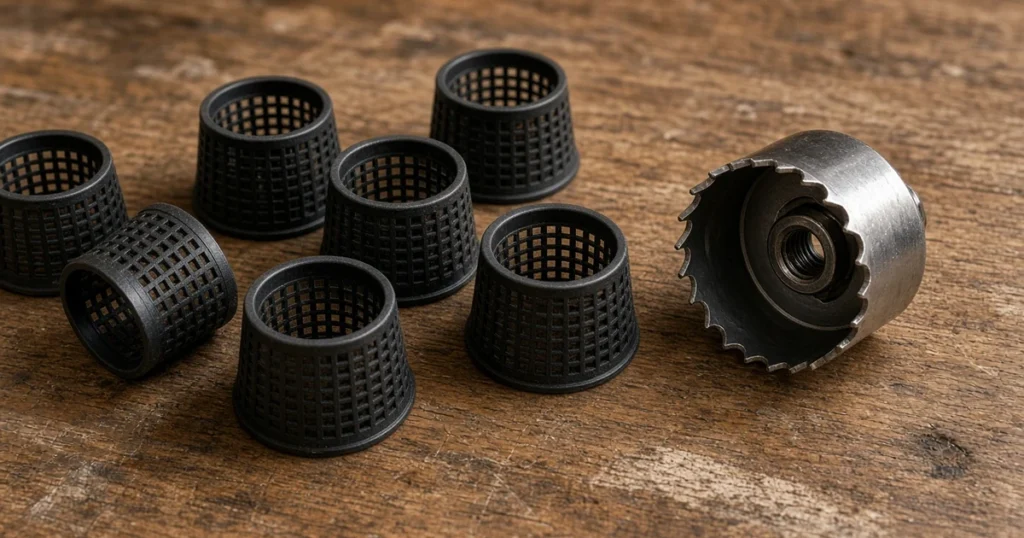
A hole saw for net cups cuts round openings in a reservoir lid or foam raft so each cup drops in plus hangs by its rim. None of the sources here gives net cup or hole saw sizes, so the notes below give a way to measure plus the Extension figures on spacing.
The short answer
Measure the net cup just below its rim, then pick a hole saw that matches that width so the rim rests on the lid. Virginia Cooperative Extension notes lettuce rafts usually space plants 8 inches apart. University of Illinois Extension lists root darkness to avoid algae, so cups should fill every hole.
How do you measure a net cup?
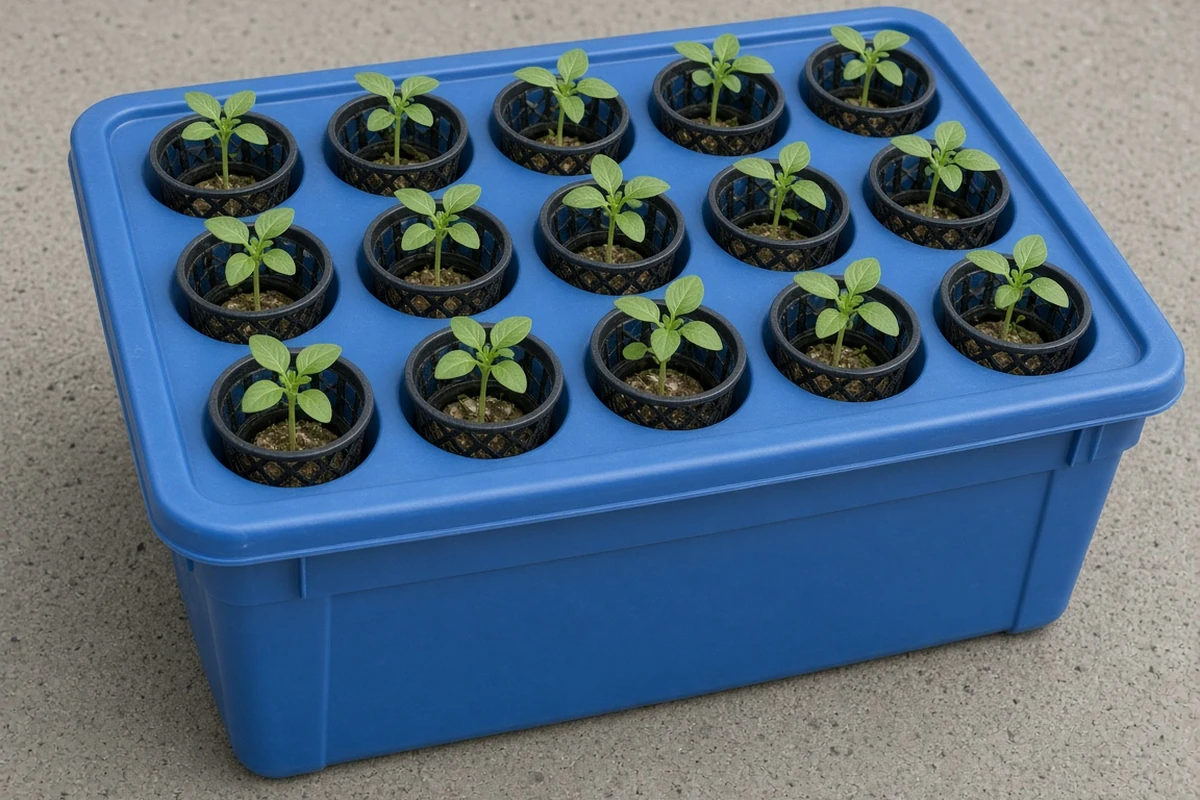
Net pots hold plants above the solution. Oregon State University Extension lists net pots among DWC materials. UC Master Gardeners describe plants supported by a floating platform or net pots with their roots reaching into the solution.
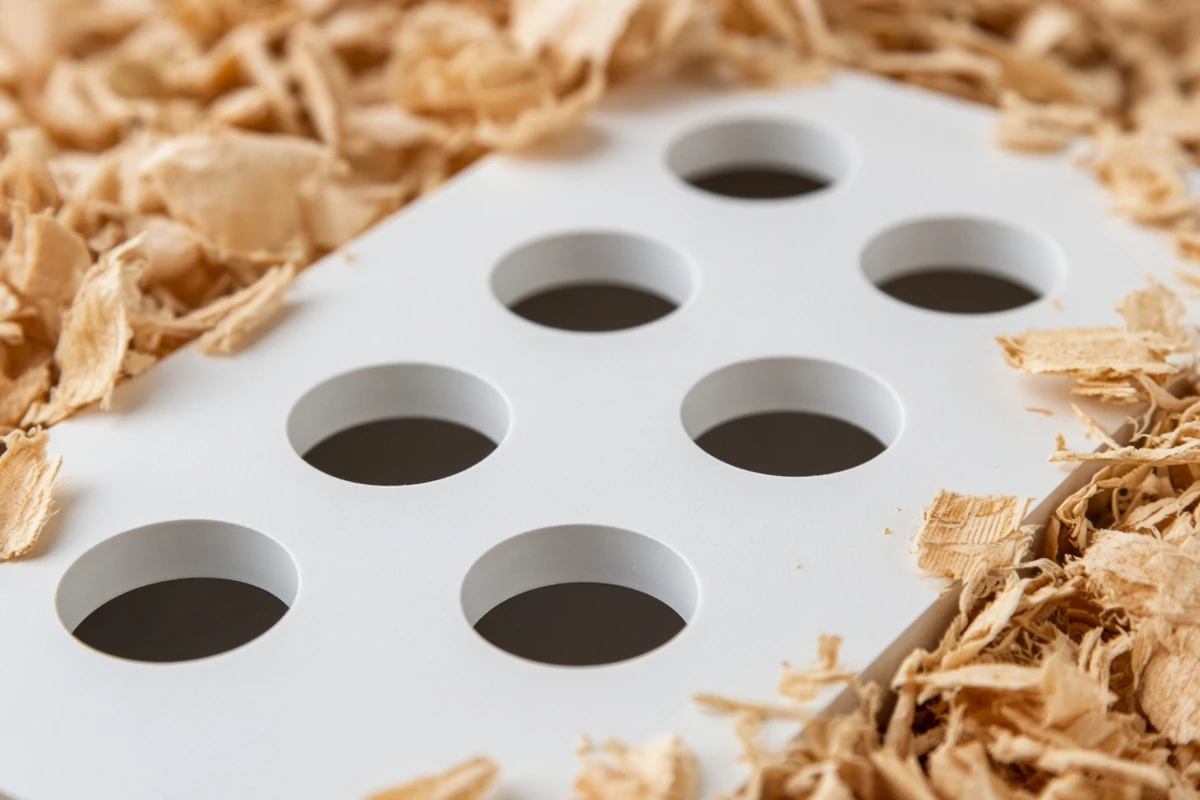
The rim decides the fit. Measure the outside of the cup body just below the rim. A hole that width lets the body pass while the rim sits on top of the lid.
How far apart should holes go?
Virginia Cooperative Extension notes raft plant spaces depend on the density a crop needs. Lettuce rafts usually space plants 8 inches apart. Growers can make rafts from insulation boards from a home improvement store, cutting or drilling custom plant spaces.
| Item | Figure or note | Source |
|---|---|---|
| Lettuce spacing | 8 inches apart | Virginia |
| Raft board | Insulation board, cut or drilled | Virginia |
| Cup role | Holds plant over solution | UC Master Gardeners |
| Root needs | Aeration plus darkness | Illinois |
| Materials | Net pots, air pump, stone | Oregon State |
Source: Virginia Cooperative Extension plus University of Illinois Extension.
How tight should the hole be?
Virginia Cooperative Extension advises care when cutting insulation boards, since some shed small flakes. A clean hole sized to the cup body limits loose edges. University of Illinois Extension lists root darkness to avoid algae growth, so a snug fit plus a filled hole limits light on the water.
How to: step by step
- Measure the cup body just below the rim.
- Pick a hole saw that matches that width.
- Mark hole centers 8 inches apart for lettuce.
- Cut each hole slowly through the lid or board.
- Brush loose flakes away from the cut edges.
- Drop in the cups plus check that rims rest flat.
Troubleshooting
Cup drops through: hole too wide. Pick a smaller saw that matches the cup body.
Flakes in the water: cut foam edges. Virginia notes some boards shed flakes when cut.
Green water: light at open holes. Illinois lists root darkness to avoid algae.
For more on root media see hydroponic in different mediums plus caring for your hydroponic system. Read aquarium water for cannabis. Kind Seed Co also stocks cannabis seeds.
Sources
- Hydroponic production of edible crops: deep water culture (DWC) systems (SPES-464), Virginia Cooperative Extension
- Hydro hints: deep water culture (EM 9455), Oregon State University Extension
- Hydroponics for the home gardener, UC Master Gardeners of Orange County
- Home hydroponics handouts, University of Illinois Extension
FAQ
How far apart should net cup holes be?
Virginia Cooperative Extension notes lettuce rafts usually have plant spaces 8 inches apart. It adds that spacing depends on the density a given crop needs, so larger plants call for wider gaps between holes in the lid or raft board.
What holds plants in a DWC system?
UC Master Gardeners note plants in deep water culture are held by a floating platform or net pots, with roots reaching straight into the nutrient solution. Oregon State University Extension lists net pots among the materials for a DWC build.
Can insulation board work as a raft?
Virginia Cooperative Extension notes growers can make rafts from insulation boards bought at a home improvement store. Plant spaces can be cut out or drilled. It advises care, since some boards shed small flakes into the water.
Why should every hole hold a cup?
University of Illinois Extension lists root darkness to avoid algae growth as a need of hydroponic roots. An empty hole lets light reach the solution. Fill unused holes with a spare cup or cover them so the water stays dark.
What else does a DWC lid build need?
Oregon State University Extension lists an air pump, air tubing, an air stone, a plastic container plus net pots as DWC materials. The lid with its cut holes sits on the container while the air stone runs in the solution below.



