
Monsoon Season Care for Outdoor Cannabis in the Southwest
The short answer
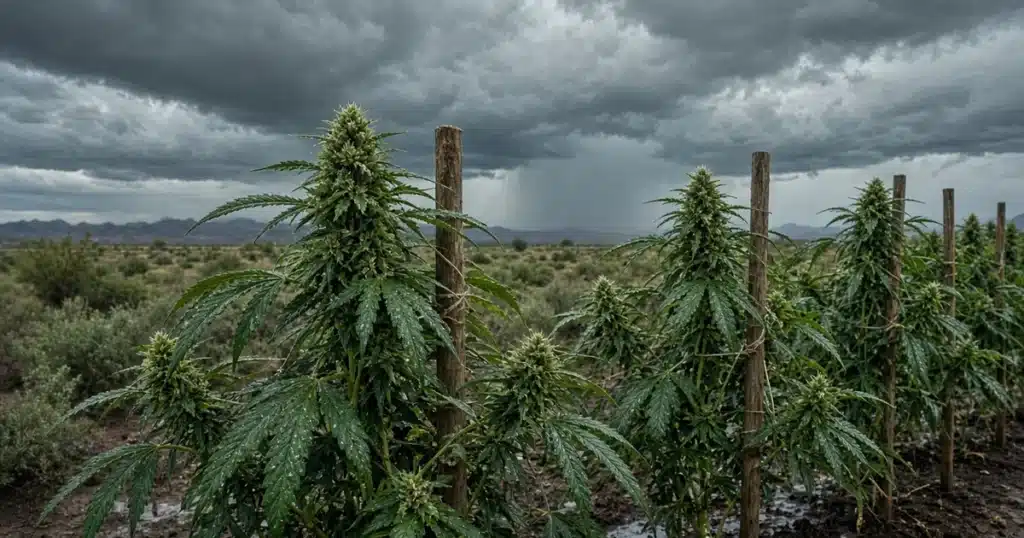
In the desert Southwest, monsoon season brings sudden storms with high winds, heavy rain and flash floods. It usually starts in early July. For outdoor cannabis, the main monsoon garden tips are simple. Stake and tie plants before storms arrive, clear drainage so beds do not flood, cut back watering when rain falls and check plants after every storm.
Thin crowded growth so wind and air can pass through. Keep mulch in place and clear standing water. As humid weeks run into flowering, watch closely for mold.
What the monsoon brings
The University of Arizona Cooperative Extension July guide for Pima County notes that monsoon season brings intense storms with damaging winds. It also notes that monsoon rains have started in early July in recent years.
The University of Arizona Water Resources Research Center lists the hazards: microbursts, high winds, flash flooding and lightning. For a cannabis grower, that means snapped branches, toppled plants, flooded beds and long stretches of humid air.
Before the storms
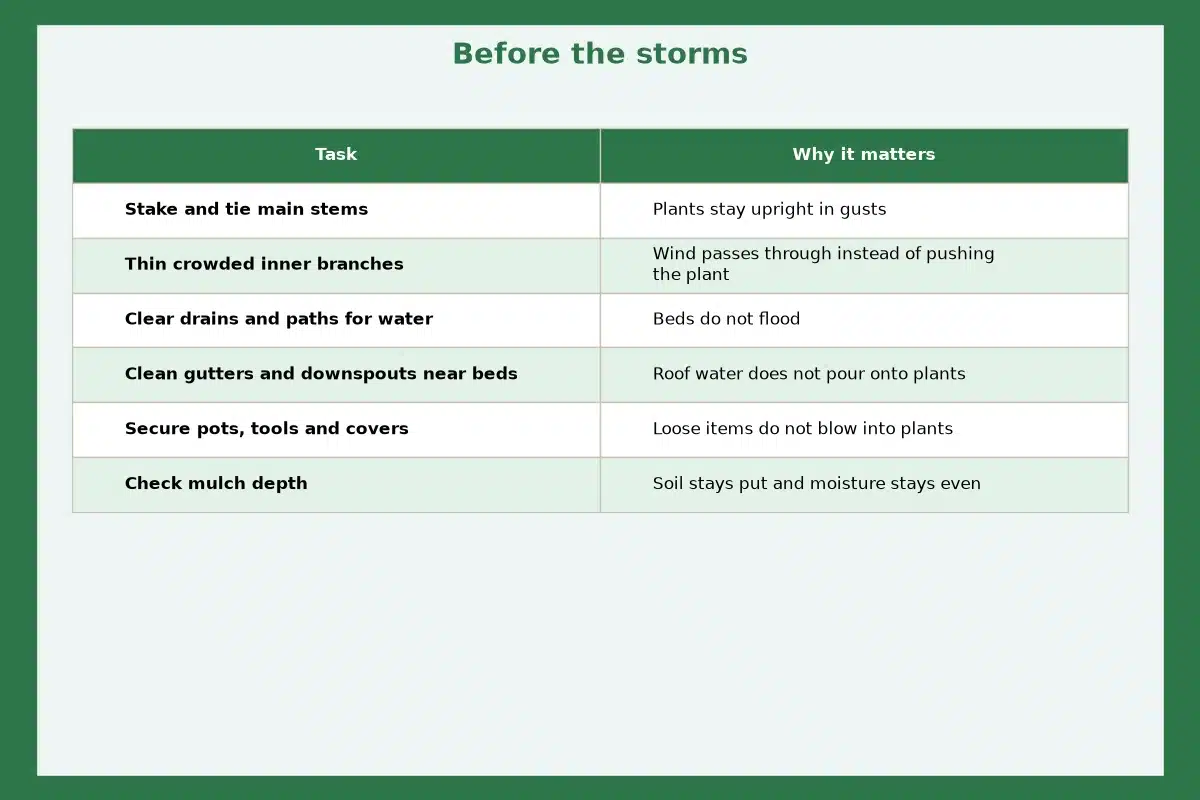
| Task | Why it matters |
|---|---|
| Stake and tie main stems | Plants stay upright in gusts |
| Thin crowded inner branches | Wind passes through instead of pushing the plant |
| Clear drains and paths for water | Beds do not flood |
| Clean gutters and downspouts near beds | Roof water does not pour onto plants |
| Secure pots, tools and covers | Loose items do not blow into plants |
| Check mulch depth | Soil stays put and moisture stays even |
Source: Preventing Monsoon Damage: A Checklist, University of Arizona Water Resources Research Center, drainage, gutters and securing loose items.
Trees near the garden deserve a look too. WRRC suggests trimming weak or dead limbs and removing dead wood before the season.
Staking and support
Plants with heavy canopies catch the most wind. The UA July guide notes that trees with very heavy canopies are more likely to be damaged and may need some thinning of inner branches to reduce the sail effect. Large cannabis plants act the same way.
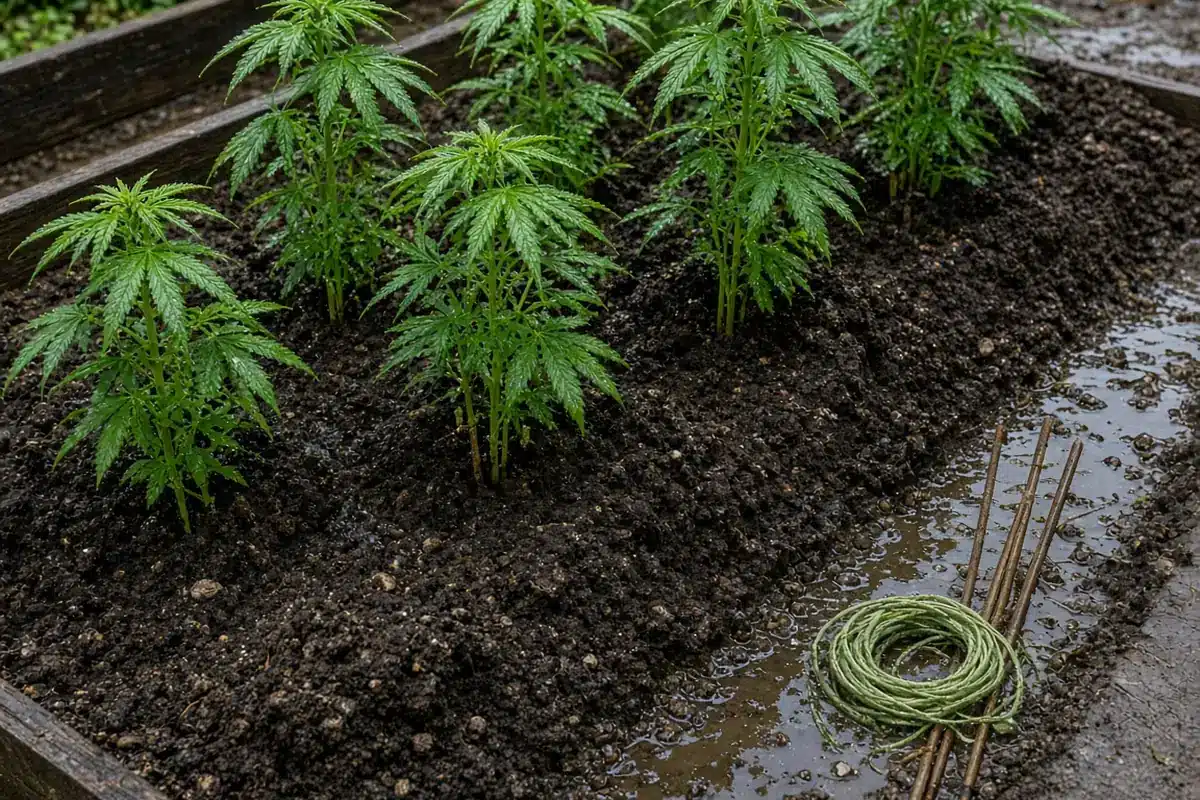
- Drive a sturdy stake beside the main stem, deep into firm soil.
- Tie the stem to the stake with soft ties in a loose figure eight.
- Add a cage or ring for side branches.
- Thin a few crowded inner branches so wind can pass.
- Check ties after each storm and loosen any that cut in.
Drainage
Heavy rain can turn a bed into a pond in minutes. Roots that sit in water for long run short of air.
- Clear paths so water flows away from beds.
- Raise beds or mound soil in low spots.
- Point downspouts away from plants.
- Keep containers off the ground on bricks or stands.
- Know which parts of your yard flood first.
WRRC suggests clearing storm drains and drainage paths so water flows away from your home. The same idea keeps beds from flooding.
Watering during monsoon
The UA July guide advises adjusting watering because monsoon rain can add to or replace your planned watering. Check soil before you water. After a good storm, beds may need nothing for days.
- Feel the soil a few inches down before watering.
- Turn off timers after heavy rain.
- Keep watering on dry, hot days between storms.
- Water early in the morning.
The UA guide also suggests considering rainwater harvesting and watching how water flows in your yard during storms.
Pots and containers
Containers face their own monsoon risks. Tall pots blow over in gusts. Pots without good drainage fill with water.
- Group pots together near a wall or fence for shelter.
- Tie tall plants in pots to a fixed support.
- Check that drain holes are clear before storms.
- Set pots on bricks so water drains away.
- Move small pots under cover when a storm is coming.
Fabric pots drain fast. They dry quickly between storms. Plastic pots stay wet longer, so check them after heavy rain.
Feeding during monsoon
Heavy rain washes nutrients down through the soil, mostly in sandy beds and containers. After a run of storms, plants may look paler. Rather than adding more feed right after rain, wait until the soil dries a little, then feed at your normal rate. A light top dressing of compost can help replace what washes away.
Storm alerts
Monsoon storms can build fast in the afternoon. Watch local weather alerts during the season. When a storm is coming, take a few minutes to check ties, move loose items and close up covers. A quick walk before the storm saves time cleaning up after it.
Mulch
The UA July guide recommends spreading about 3 inches of mulch under plants and keeping it a few inches from the main stem. On hot days mulch slows evaporation. In heavy rain it keeps soil from washing away.
Standing water
The UA guide warns that standing water in saucers can breed mosquitoes. Empty saucers after storms or skip them outdoors. Tip out buckets, trays and covers that collect rain.
Heat between storms
Monsoon weeks still bring very hot days. The UA guide suggests gardening in the early morning or late evening. On the hottest days, afternoon shade can help plants. Our guide to shade cloth for cannabis covers how to set it up.
Humidity and mold
Humid weeks raise the risk of mold, especially once plants start to flower. Dense buds hold water after rain.
- Thin leaves in the center of the plant to let air move.
- Gently shake water off plants after storms.
- Check the inside of dense buds for gray or brown spots.
- Remove any moldy material right away and bag it.
If storms keep coming near harvest time, our guide to harvesting cannabis in the rain covers your options.
After each storm
- Walk the garden once it is safe.
- Check stakes and ties.
- Lift and tie any leaning plants.
- Cut off snapped branches with clean pruners.
- Clear debris from beds and paths.
- Look for standing water and drain it.
- Check buds for damage or mold.
WRRC suggests a full walk around within 24 to 48 hours of a storm. Look for leaks and hidden moisture, since both can lead to mold. Take photos of any damage to sheds, fences or covers in case you file an insurance claim.
Covers and shelters
Late in the season some growers set up a simple frame over plants to keep the worst rain off buds. Any cover must be anchored well. A loose cover can turn into a sail and pull plants over.
Safety first
WRRC reminds people never to walk in moving floodwater and to stay clear of washes during storms. Wait for lightning to pass before you go out. Plants can wait. Your safety comes first.
Electric gear needs extra care in wet weather. WRRC advises keeping electrical tools and equipment at least 10 feet away from wet surfaces. It also says not to use electric yard tools while it is raining or when the ground is wet. Stay away from downed power lines and report them.
Planning for next year
Note which parts of the garden flooded, which plants snapped and where wind hit hardest. Our guide to growing cannabis in different climates covers picking plants and timing for your region.
Troubleshooting
- A plant toppled. Stand it up, firm the soil and stake it.
- A branch split. Tape it or cut it below the break.
- Leaves look yellow after rain. Roots may be waterlogged. Improve drainage.
- Gray spots inside buds. Remove the affected material and improve airflow.
- Soil washed off roots. Add soil and mulch around the base.
- Mosquitoes everywhere. Empty standing water in saucers and trays.
Final thoughts
Monsoon season can be hard on outdoor cannabis, but a little prep goes a long way. Stake plants, clear drainage, adjust watering, keep mulch in place and check plants after each storm. Kind Seed Co has more outdoor growing guides for home growers.
Sources
- University of Arizona Cooperative Extension, July Monthly Gardening Guide for Pima County
- University of Arizona Water Resources Research Center, Preventing Monsoon Damage: A Checklist
FAQ
When does monsoon season start in the Southwest?
In recent years, monsoon rains in southern Arizona have started in early July.
How do I protect cannabis plants from monsoon winds?
Stake and tie main stems, add cages for branches and thin crowded inner growth.
Should I water during monsoon season?
Check the soil first. Rain may cover your plants for days, but keep watering on dry days.
How do I stop beds from flooding?
Clear paths for water, raise low beds and point downspouts away from plants.
What should I check after a storm?
Stakes, ties, broken branches, standing water and buds for mold.


