
Peat Moss for Cannabis: Water Holding and Liming
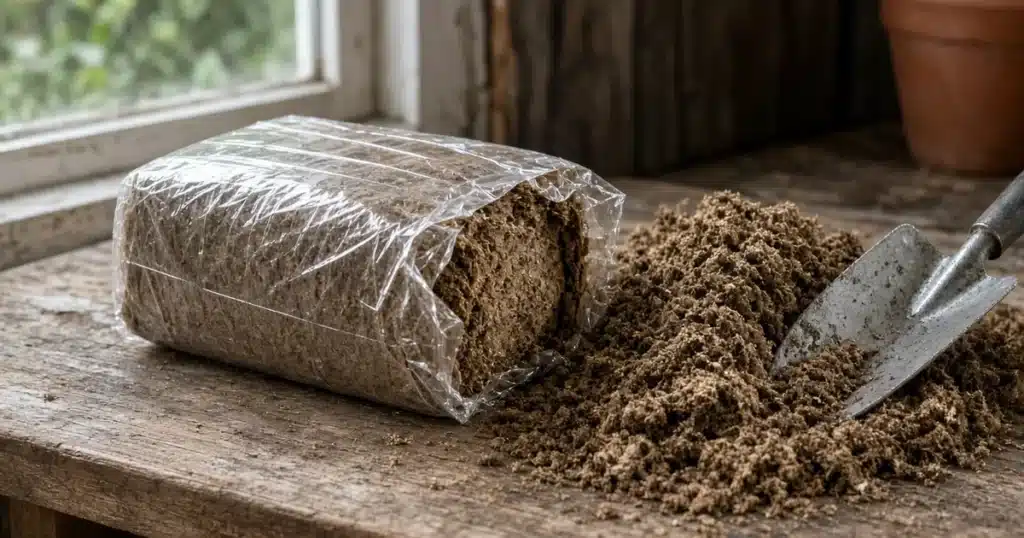
Sphagnum peat moss is a common base in potting mixes because it is light and holds a lot of water. It is also very acidic, far more so than coir, according to University of Arkansas Extension. That is why peat mixes include lime, and dry peat can be hard to rewet.
What Is Sphagnum Peat Moss?
University of Arkansas Extension says moss peat, usually called peat moss, is the most common type used in horticulture and comes mostly from sphagnum moss. It is light tan to brown, lightweight, high in water-holding capacity and very acidic. It is sold in compressed bales that expand 50% to 100% when fluffed (Arkansas Extension). For other bases, see indoor soil.
Why Does Peat Hold So Much Water?
Arkansas Extension describes peat as high in moisture-holding capacity, and says most recipes add it to raise water holding or reduce weight. The catch is that dry peat is hydrophobic and resists wetting, so some products include a wetting agent (Arkansas Extension). The acidity figures are in the chart below. Our guide to pH basics explains why root-zone acidity matters.
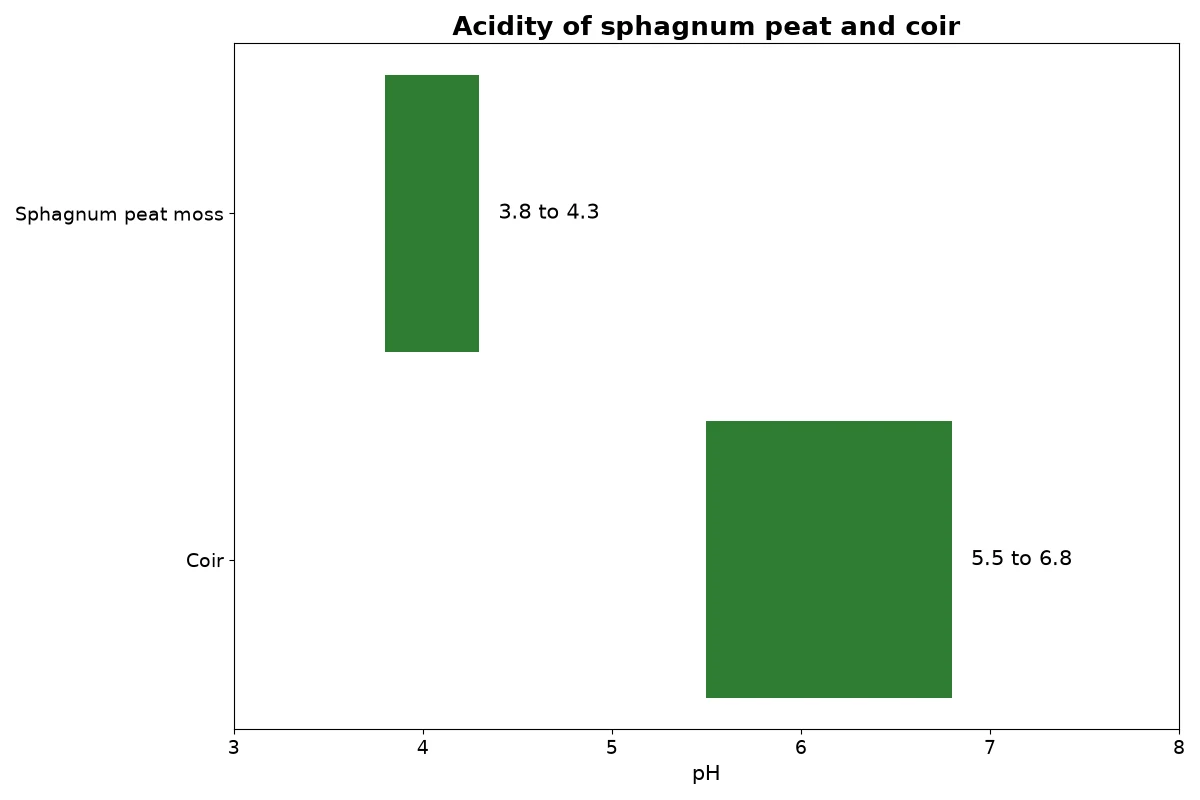
Source: University of Arkansas Extension FSA6097 (container production media, not cannabis studies).
Data for this chart:
| Material | pH range | Other properties | Source |
|---|---|---|---|
| Sphagnum peat moss | 3.8 to 4.3 | Lightweight. High water holding. Hydrophobic when dry | Arkansas FSA6097 |
| Coir | 5.5 to 6.8 | Holds up to nine times its weight in water | Arkansas FSA6097 |
Is Peat or Coco Better for Cannabis?
They behave differently. Arkansas Extension says coir is much less acidic than peat, can hold up to nine times its weight in water and contains some phosphorus and potassium. It also advises checking coir for soluble salts, sodium and chloride (Arkansas Extension). For the coir side, see coco coir.
Why Do Peat Mixes Need Lime?
Because peat is so acidic, mix recipes add lime. Arkansas Extension’s example, Cornell Peat-lite Mix A, combines 0.5 yd peat and 0.5 yd coarse vermiculite with 5 to 10 lb dolomitic limestone per cubic yard, plus fertilizer and a wetting agent (Arkansas Extension). This is one example, not a recipe for every mix. Lime and wetting agents are products. Check the product label and local rules.
Sources
The sources below give general garden or container guidance rather than studying cannabis. Their findings are reported as results for those settings.
Kind Seed Co worked from the Arkansas guide above, and these peat notes are general growing information.
FAQ
Why is dry peat hard to rewet?
Arkansas Extension says peat moss is inherently hydrophobic, meaning it repels water, and that wetting up is a significant problem. Some suppliers sell peat with a wetting agent already added. If yours has none, the guide suggests adding one or using hot water to speed up wetting.
Is peat moss the same as sphagnum moss?
Not quite. Arkansas Extension says sphagnum moss, or top moss, is the young residue or live part of the plant and is used for shipping, propagation or lining baskets. Peat moss is the older, partly decomposed material that comes mostly from sphagnum and is used in potting mixes.
How much peat goes in a potting mix?
Arkansas Extension says most recipes call for peat on a volume basis, giving 50% peat moss and 50% perlite as an example. Its Cornell Peat-lite Mix A uses half peat and half coarse vermiculite. The right share depends on the other ingredients and how much water you want held.
What is Cornell Peat-lite Mix A?
It is a soilless mix that Arkansas Extension gives as an example recipe. Per cubic yard it uses 0.5 yd peat moss, 0.5 yd coarse vermiculite, 0.5 lb triple superphosphate, 5 to 10 lb dolomitic limestone, 1 lb calcium or potassium nitrate, trace elements and a wetting agent.


