
Growing Cannabis in Clay Soil: Drainage and Amending
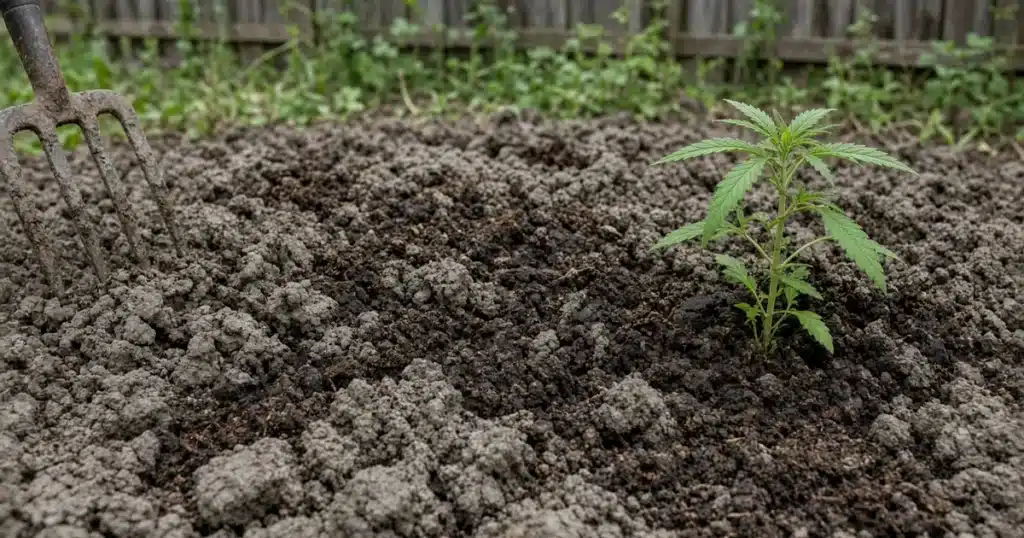
Clay soil holds a lot of water, but it drains slowly, which can leave cannabis roots short of air after heavy rain or watering. Maryland Extension puts clay loam infiltration at about 0.1 to 0.3 inches per hour, against 0.75 to 1.0 for coarse sand. Extension guides advise adding organic matter, not sand.
How Slowly Does Clay Soil Drain?
Slowly. University of Maryland Extension lists clay loam at 0.10 to 0.30 inches per hour, the lowest of the textures in its table, against 0.75 to 1.00 for coarse sand (Maryland Extension). Oregon State explains why. The spaces between clay particles are extremely small, so water and air move through them slowly, and much of the water clay stores cannot be extracted by roots (Oregon State EC 1561).
Does Adding Sand Fix Clay Soil?
No. Oregon State says sand worked into clay gives clay particles a surface to stick to, and the result is a concrete-like mixture that can be harder to manage than the original clay (Oregon State EC 1561). Illinois Extension adds that a real change would take roughly a 1:1 ratio of sand to clay, which means a lot of sand, and calls organic matter far more practical (Illinois Extension). For general site prep, see our page on outdoor soil.
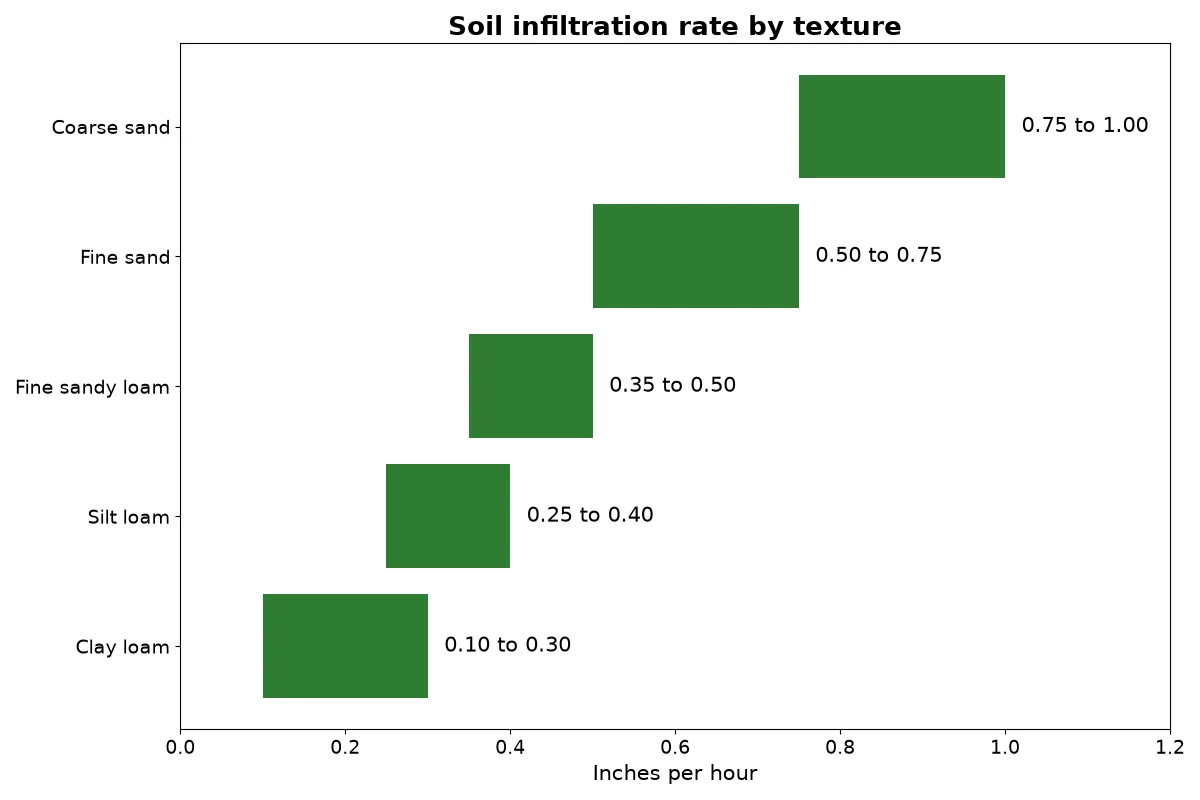
Source: University of Maryland Extension, Table C-3 (general soil guidance, not a cannabis study).
Data for this chart:
| Soil texture | Infiltration rate (in/hr) | Source |
|---|---|---|
| Coarse sand | 0.75 to 1.00 | Maryland Extension C-3 |
| Fine sand | 0.50 to 0.75 | Maryland Extension C-3 |
| Fine sandy loam | 0.35 to 0.50 | Maryland Extension C-3 |
| Silt loam | 0.25 to 0.40 | Maryland Extension C-3 |
| Clay loam | 0.10 to 0.30 | Maryland Extension C-3 |
What Organic Matter Helps Clay Soil?
Illinois Extension names compost as the best bet, with wood mulch, composted manure, shredded leaves and cover crops as other sources (Illinois Extension). Oregon State says organic matter improves the soil’s ability to accept and store water, and that soil organisms feeding on it release sticky substances that bind particles into crumbs and pores (Oregon State EC 1561). A surface layer of mulch also cuts evaporation.
What Are the Signs of Poor Soil Drainage?
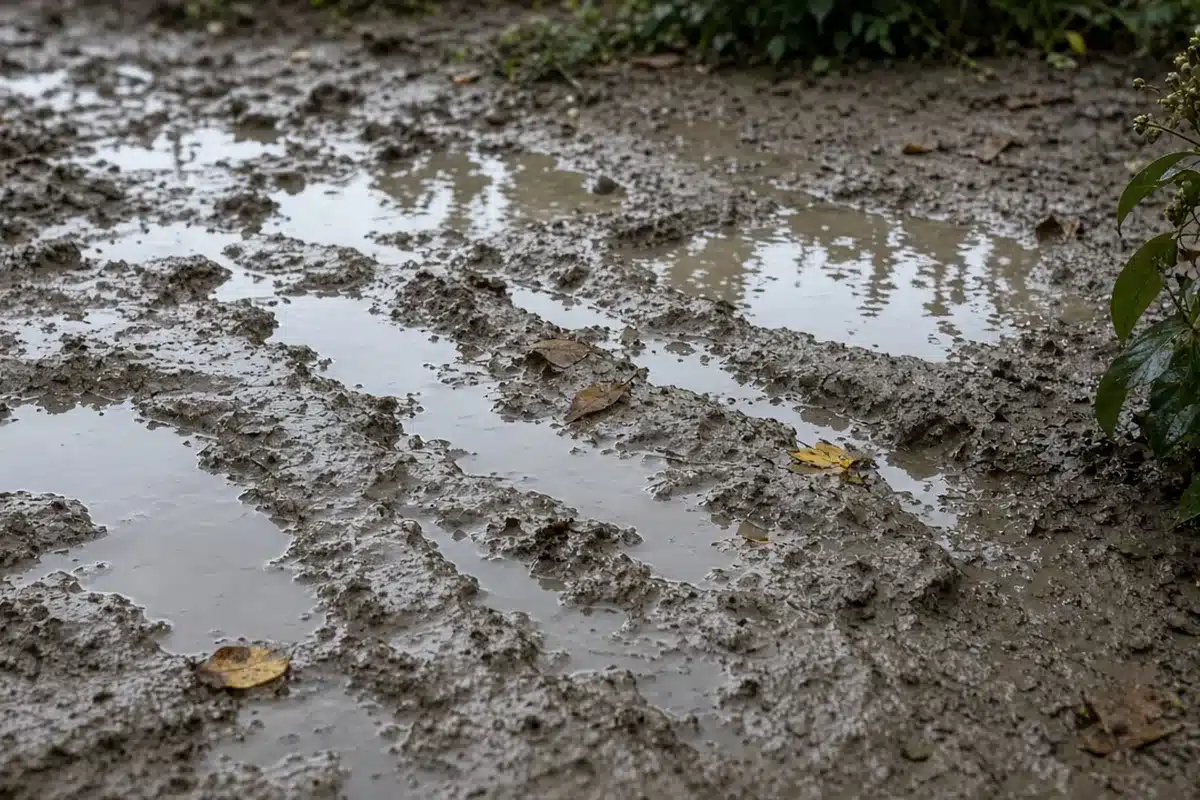
Oregon State lists symptoms of poor soil physical condition, including soil that dries and cracks in summer, holes that are hard to dig whether wet or dry, and water that pools on the surface and drains slowly or runs off (Oregon State EC 1561). Clay soils also stay wet longer than other soil types (Illinois Extension). A lab test can confirm texture, see our soil testing guide.
Sources
Some sources below studied hemp or other crops, or give general garden guidance, rather than studying drug-type cannabis. Their findings are reported as results for those crops or settings.
- University of Maryland Extension Table C-3: Soil Infiltration Rates Based on Soil Texture (PDF)
- Oregon State University Extension EC 1561: Improving Garden Soils with Organic Matter (PDF)
- University of Illinois Extension: Does Sand Improve Clay Soil Drainage?
Extension soil guidance shaped this clay page, and Kind Seed Co keeps it at the level of general growing information.
FAQ
Does sand fix clay soil?
No. Oregon State Extension says sand worked into clay creates a concrete-like mixture that can be more difficult to manage than the original clay, and that no amount of sand will turn a clay loam into a sandy loam. Illinois Extension recommends organic matter such as compost instead.
Why does clay soil drain so slowly?
Clay particles are tiny and flat. Oregon State says the finest sand grain is more than 1,000 times wider than the largest clay particle, so the spaces between clay particles are extremely small and water and air move through them slowly. Illinois Extension adds that clay stacks into a very tight soil.
Does clay soil hold water for roots?
It holds a lot, but not all of it is usable. Oregon State Extension says soils high in clay can store a great deal of water, but much of it cannot be extracted by plant roots. Clay is also less permeable to air, which is why waterlogged clay can stress roots.
Should you amend only the planting hole in clay?
Oregon State Extension advises against it for tree and shrub plantings. If only the hole is heavily amended, it works like a large pot. Roots grow quickly through the amended soil but struggle to penetrate the hard soil around it, and water drains slowly out of the hole. Amending a wider area is generally better.


