Quantum Board vs Bar LED: Form Factor, Coverage and Heat
The short answer
In the quantum board vs bar LED choice, boards pack LEDs onto one flat panel, while bar fixtures spread LEDs across several strips. Bars often give more even coverage over wide spaces and spread heat across a larger frame. Boards are compact and simple to hang. Compare the light map at your hanging height, not the shape.
Both designs use the same kinds of diodes. The real differences come from how those diodes are laid out and how far they sit from the plants.
How do quantum boards and bars differ?
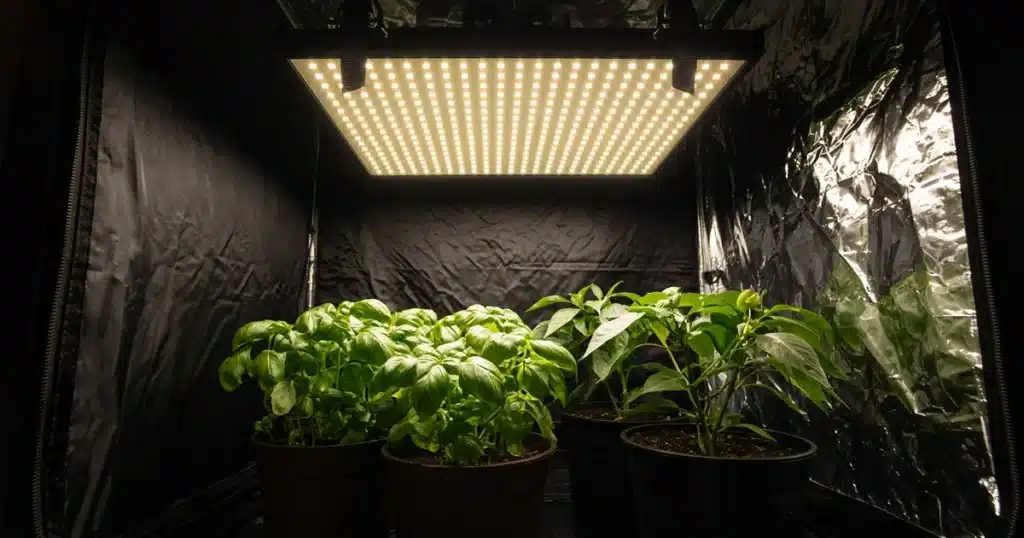
A quantum board is a single flat circuit board covered in small LEDs. A driver powers it, and a heat sink or the board itself sheds heat. Boards are often square or rectangular and hang from a few points.
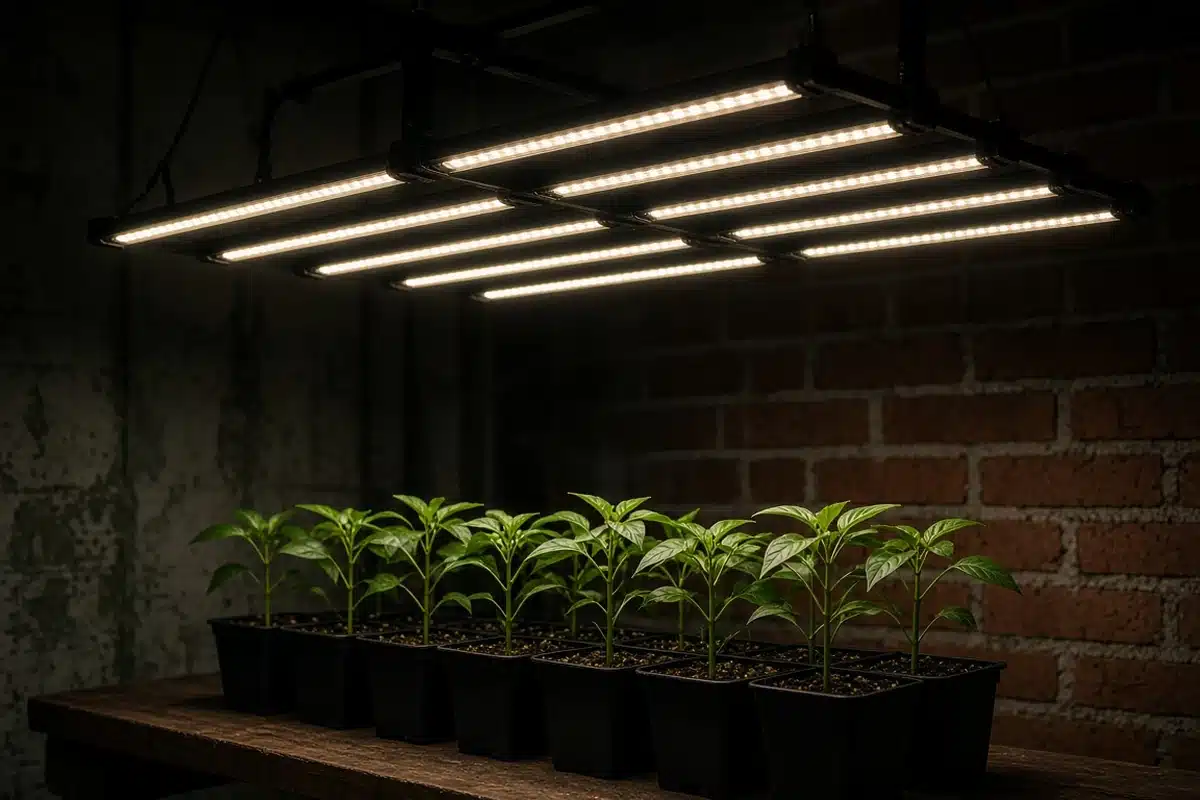
A bar fixture splits the LEDs into several long, narrow strips. The strips attach to a frame with gaps between them, and some bar fixtures fold for shipping. Others let you move bars closer or farther apart.
The University of Missouri Extension guide to understanding grow lights explains the basics of light quality and quantity. It covers the key terms growers see on spec sheets, such as PPF and PPFD. These numbers matter more than the shape of the fixture.
Which gives more even coverage?
Coverage means how evenly light falls across the canopy. A fixture can put out plenty of total light yet leave dim corners.
A single board concentrates diodes in the middle. At close range, the center of the canopy gets more light than the edges. Raising the board spreads light wider but lowers intensity.
Bars spread diodes across a wider area. Light overlaps from several strips, so edges and corners can come closer to the center reading.
The Resource Innovation Institute lighting guide stresses uniformity in commercial grows. It recommends using light maps that show PPFD at many points across the canopy. A good map shows the average and the range from lowest to highest.
Ask for the maker’s light map at the height you plan to hang the fixture. Compare center and edge numbers, not the peak.
| Feature | Board | Bars |
|---|---|---|
| Layout | One flat panel | Several strips on a frame |
| Light spread | Brighter center at close range | More even across wide areas |
| Heat | Concentrated in one area | Spread across the frame |
| Shape fit | Square spaces and small tents | Wide or long spaces |
| What to compare | Light map at hanging height | Light map at hanging height |
Sources: Resource Innovation Institute, University of Missouri Extension, University of Vermont Extension.
How do heat and size compare?
Every LED turns part of its power into heat. How that heat leaves the fixture depends on the design.
A board concentrates heat in one area. A large heat sink or good airflow above the board cools it.
Bars spread heat across a wider frame with open gaps between strips. Gaps between strips can help heat move up and away from the fixture.
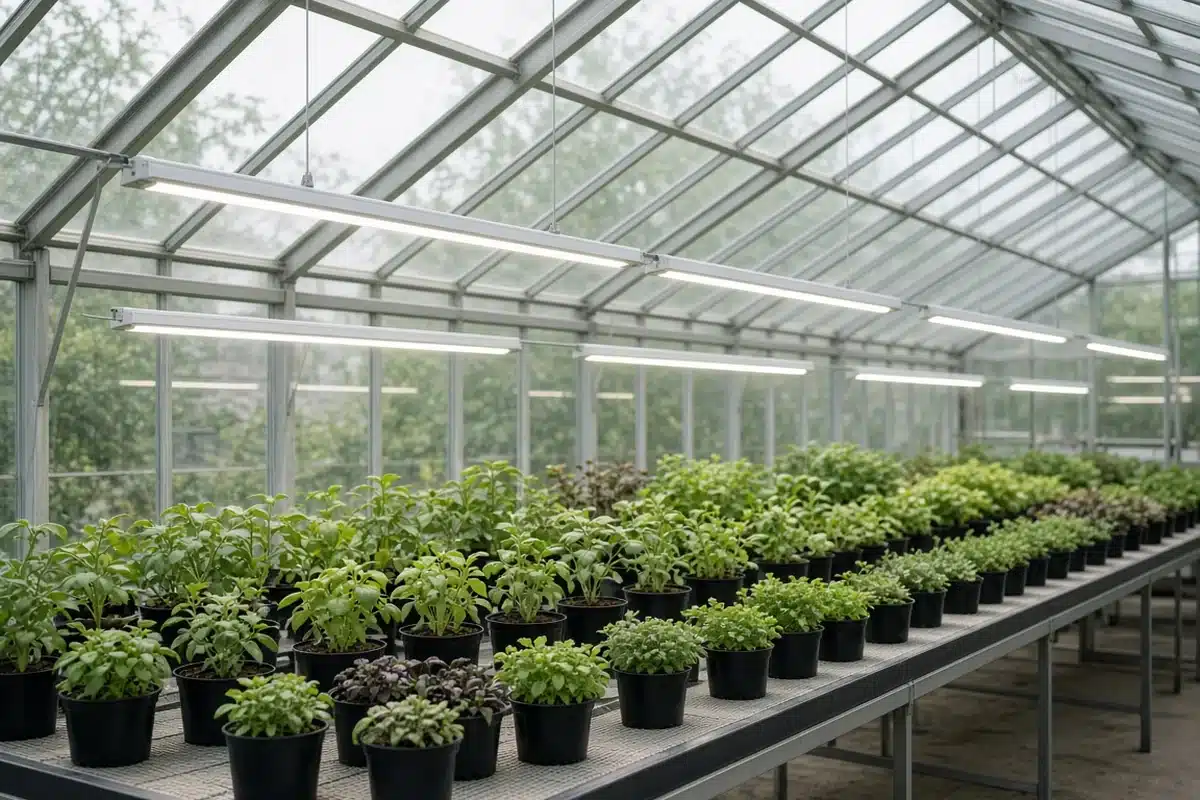
Size matters for the space. A board fits small square tents well. Bars suit wide and long spaces where a single panel would leave edges dim.
Weight matters too, since large bar fixtures can be heavy. Check the hanging points and the rating of your supports before you buy. Our post on grow light watts per square foot covers sizing light to space.
What else should you check?
The University of Vermont Extension tips for choosing grow lights suggest looking at efficacy, measured in micromoles per joule. This measures how much photosynthetically active light a fixture produces per watt.
Both boards and bars can rate well or poorly on efficacy. It depends on the diodes and the driver, not the layout.
Look at the spectrum, the warranty and whether the driver dims. Dimming lets you lower output for seedlings and raise it as plants grow.
Our guide to choosing the right LED lights for your grow walks through these specs in more depth.
How to: step by step
- Measure your grow space.
- Ask for the maker’s light map at your hanging height.
- Compare edge and center readings.
- Check fixture weight and hanging points.
- Consider how heat will move in your space.
- Pick the design that covers your area evenly.
Which suits shelves and small tents?
Shelves are shallow, so the light hangs close to the plants. At close range, a single board can leave a bright center and dim edges.
Thin bars or strips often suit shelves better. Several strips across the shelf spread light evenly at short distances.
Small square tents suit boards well. A board sized to the tent covers it evenly at a moderate height.
Our post on grow lights for cannabis compares light types for different spaces.
Troubleshooting
Hot spot in the center. The board is too low. Raise it or add bars.
Dim corners. Coverage is narrow. Choose wider bars or add side lighting.
Heat buildup. Your airflow is limited. Add a fan above the fixture.
Uneven growth across the canopy. Light falls unevenly. Recheck the light map and hanger height.
Fixture sags. Your supports are too weak. Add hanging points.
Shape is only part of the choice. Kind Seed Co carries cannabis seeds for growers setting up a new indoor space.
Sources
- Lighting for controlled environment agriculture, best practices guide, Resource Innovation Institute, Lighting for controlled environment agriculture
- Controlled environment agriculture: understanding grow lights (G6987), University of Missouri Extension, Controlled environment agriculture
- Tips for choosing grow lights, University of Vermont Extension, Tips for choosing grow lights
FAQ
Are bar lights always better?
No. Bars often spread light more evenly in wide spaces, but a good board can cover a small square tent well.
Do boards and bars use the same LEDs?
Often yes. Many use similar white diodes. Layout, driver and heat design make the difference.
Which is better for shelves?
Bars or strips usually suit shallow shelves better because they spread light evenly at close range.
Does form factor affect efficiency?
Efficiency depends mostly on the diodes and driver. Compare micromoles per joule on each spec sheet.
How high should the light hang?
Follow the maker's light map. Pick the height that gives even light at the level your plants need.