Soil Crusting and Cannabis Seedlings: Prevent It
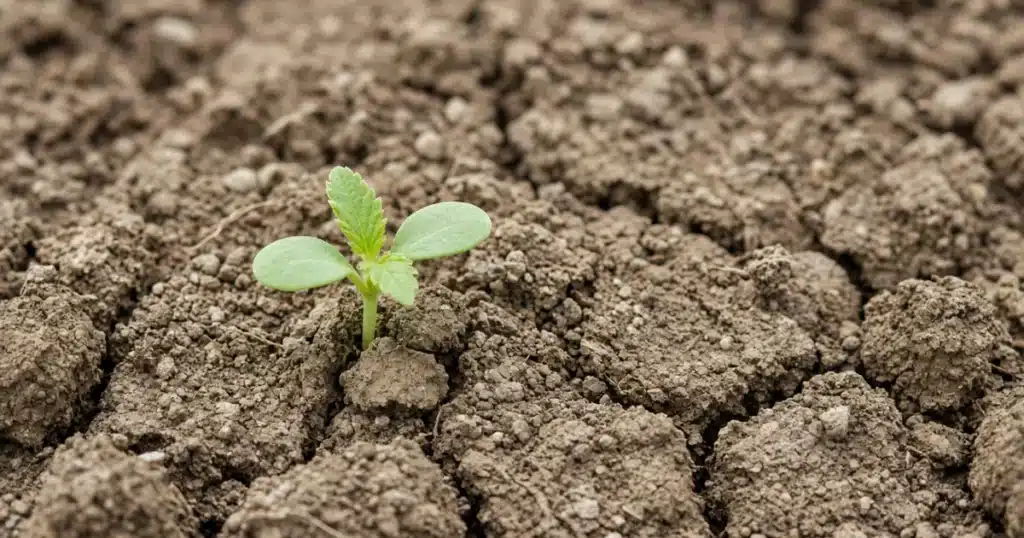
You sowed seeds outdoors, watered them in and waited. Then a heavy rain came through, the sun came out and the bed dried into a smooth, hard shell. Days later, only a few seedlings have made it up, and some are bent sideways under a lid of soil. That hard shell is a soil crust, and it is one of the most common reasons direct sown seeds fail to come up evenly.
Crusting is a surface problem. It happens in the top fraction of an inch, at exactly the moment a seedling needs to push into the light. The good news is that it is predictable and largely preventable. The steps that follow explain how crusts form, how to sow and cover seeds so they emerge before a crust sets, and what to do if one has already formed over your row.
What a soil crust is
Penn State Extension describes several kinds of soil crusts. Chemical crusts form from salt on soils in dry regions. Biological crusts are formed mainly by algae, mosses, lichens and similar organisms where ponded water stands and retreats. Physical crusts come from the breakdown of the soil surface itself, and these are the kind most home growers deal with.
Physical crusts come in two types:
- Structural crusts form when surface aggregates fall apart under the force of raindrops or irrigation water. Penn State Extension notes they usually have a very thin skin on top of a thicker washed in layer up to one inch thick.
- Depositional crusts form where runoff carries fine particles and drops them in low spots. These can grow thicker as layers of clay and silt settle on top of each other.
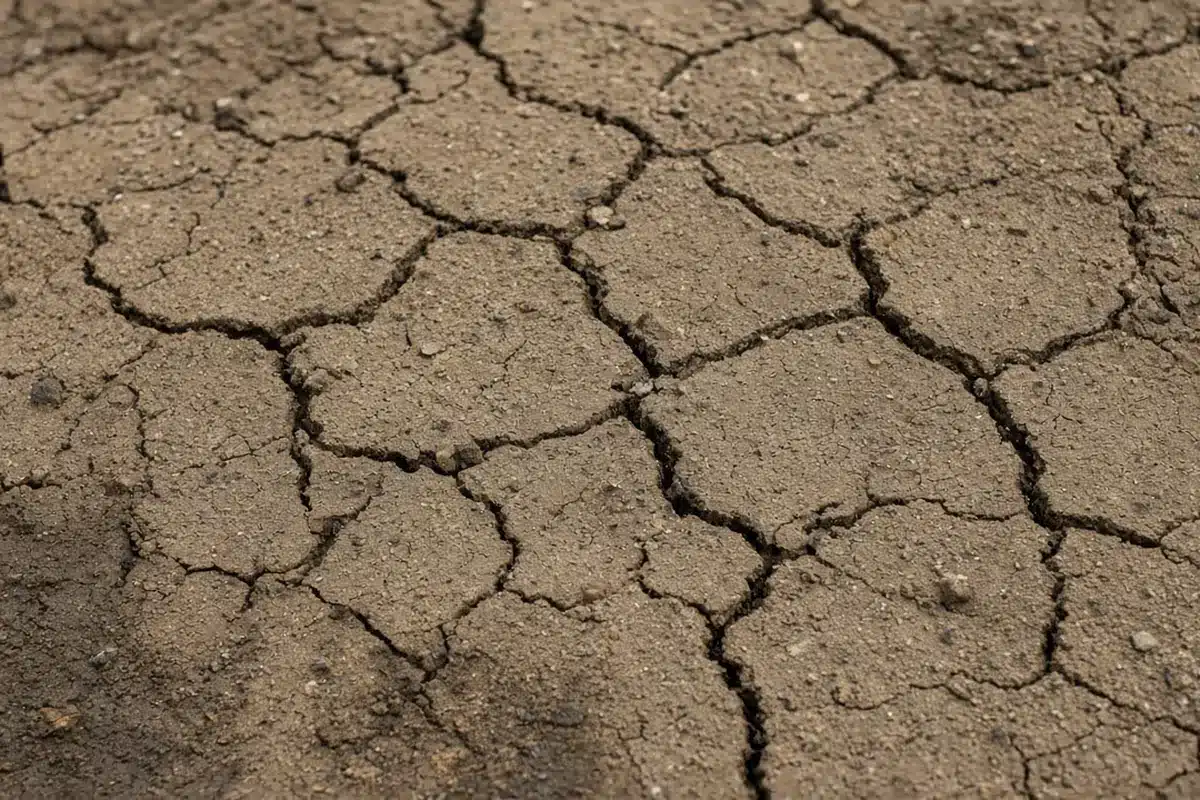
Penn State Extension explains that a structural crust can be only tenths of an inch thick, yet it dries into a cemented layer with low permeability and high strength. That thin layer is enough to hold a seedling down.
Why crusts form after rain
Two things drive crusting: the force of the water hitting the soil and the soil’s own structure. Penn State Extension notes that heavy, intense rain carries a lot of energy because of large drops and a high rate of fall. Irrigation systems differ too, because the size of the drops reaching the soil varies from one setup to another.
The soil matters even more. When the surface is weakly aggregated, Penn State Extension explains, the impact of drops makes the aggregates fall apart, and the fine particles fill the pores between larger particles. When that layer dries, it sets hard. Penn State Extension also notes that the problem tends to be worse in spring after freezing and thawing cycles break down surface aggregates.
Bare soil is the most exposed. With nothing on the surface to absorb the impact, every drop hits the soil directly.
How a crust affects seedlings and soil
Penn State Extension lists a long chain of effects. Crusting lowers the rate at which water soaks in, reduces soil moisture, increases runoff and reduces groundwater recharge. It adds that water may move through a crust a hundred or even a thousand times more slowly than through the soil below it. Water can run off the surface while the soil under the crust is still dry.
For seedlings, two effects stand out. Penn State Extension notes that gas exchange between the air and the soil is inhibited, and that seedlings must exert great strength to push through the crust. It adds that crusting can slow or completely stop seedling emergence.
A crust is different from compaction deeper in the bed, though the two can show up together. Compaction below the surface is a separate subject, explained in soil compaction in cannabis beds. A crust is the thin top layer, and it can form even in a bed that is loose underneath.
Sowing so seedlings can get through
How you sow and cover seeds has a direct effect on whether a crust becomes a problem. University of Maryland Extension gives practical steps for direct sowing in rows:
- Make a shallow furrow by dragging a stick, tool handle or narrow hoe through the soil.
- Drop the seeds into the furrow by hand.
- Cover larger seeds with half an inch to one inch of soil, or as the seed packet recommends.
- Gently tamp the soil with your hand or a tool so the seed makes good contact with the soil.
Depth matters for crusting. University of Maryland Extension offers a rule of thumb of sowing seeds at a depth about two times their width, and sowing deeper in light sandy soils and shallower in heavier clay soils. Penn State Extension advises avoiding deep planting in soil that tends to crust, so the seedling can emerge before a crust forms again.
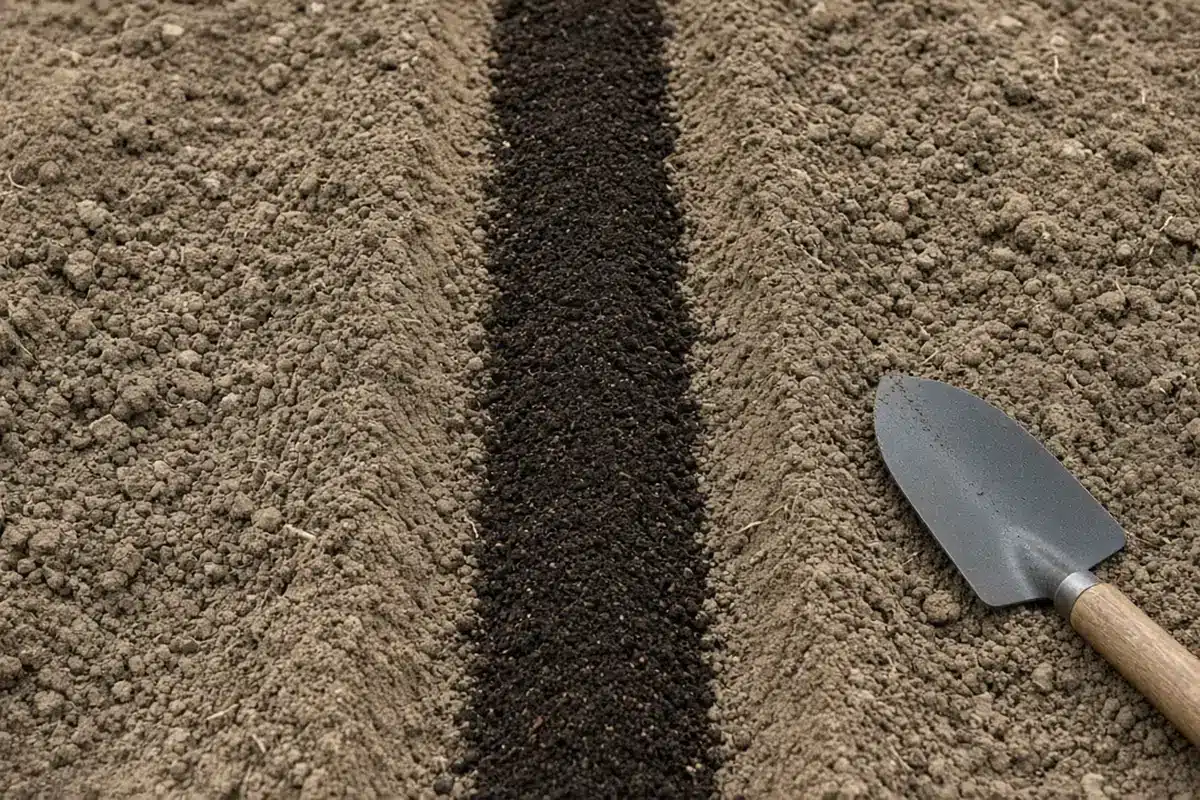
The best tool for a crust prone bed is the material you put over the seed. University of Maryland Extension suggests that with cloddy or crusty soils, you apply a narrow strip of fine compost or vermiculite over the row after the seeds are planted. It explains that this helps hold soil moisture and reduce crusting, which makes it easier for germinating seedlings to push through.
Timing the sow
Penn State Extension advises against very early planting in crust prone soil, so a crust does not have time to form above the seedlings before they emerge. University of Maryland Extension adds that soil temperature has a major effect on how fast seeds germinate, and that cold spring soil slows things down.
Faster emergence means less time for a rain to seal the surface over a seed. Waiting until the soil is warm enough for quick germination is one of the simplest ways to reduce crust trouble. For outdoor sowing dates, Kind Seed Co has a timing guide in when to plant cannabis seeds outdoors.
Keep the surface covered
Penn State Extension’s first recommendation for preventing crusts is to protect the soil from raindrop impact by keeping it covered. For a home bed, that can mean leaving some plant residue or a light mulch on the surface between rows, while keeping the seed row itself covered only with fine material that a seedling can push through.
University of Maryland Extension also suggests covering a newly sown area with row cover material to speed germination and protect seeds from animals. A light cover also softens the impact of rain on the surface below it. Check under the cover daily for signs of germination.
Build a surface that resists crusting
The long term fix is better soil structure at the surface. Penn State Extension recommends increasing organic matter in the very top of the soil, for example with compost, cover crops and crop residues. It also notes that dense root systems make soil less prone to crusting and that limiting tillage helps.
Soil life plays a part too. Penn State Extension notes that earthworms burrow through moist crusts and leave casts on the surface that resist breaking down. If you do work the soil, it advises leaving the surface rough with as much residue cover as possible rather than raking it smooth and fine. A very fine, smooth seedbed looks neat, but it is often the first to seal over after a hard rain.
Breaking a crust that has already formed
If a crust has already formed over your seed row, Penn State Extension notes that it needs to be broken up. On a farm that is done with special equipment. In a home bed, the same idea applies on a small scale:
- Wait until the surface is slightly moist, not wet and not bone dry.
- Lightly scratch the crust over the row with a hand tool. Scratch only the surface and stop short of emerging seedlings.
- Work between emerging seedlings, not on top of them.
- Water gently afterward with a fine spray so you do not reseal the surface.
Penn State Extension also notes that seeds planted close together can push through a crust by joint force. Sowing a few seeds per spot and thinning later gives the row more pushing power. University of Maryland Extension explains that thinning extra seedlings after germination prevents crowded plants from stunting each other.
Troubleshooting
Seedlings are coming up bent or sideways. A crust is likely holding them down. Gently scratch only the surface near them, keeping clear of the stems, and water with a fine spray.
Water puddles and runs off the bed. The surface may have sealed. Break the crust lightly and add a cover of residue or mulch between rows.
Only a few seeds came up after a heavy rain. Check whether a hard layer formed over the row. Resow with a strip of fine compost or vermiculite over the seeds.
The crust comes back after every rain. The surface needs more structure. Build organic matter in the top of the soil over time and keep bare soil covered.
The bed is loose on top but hard below. That is compaction, not crusting. Handle it as a separate problem.
Sources
- Penn State Extension. Soil Crusting. https://extension.psu.edu/soil-crusting/
- University of Maryland Extension. Sowing Vegetable Seeds Outdoors. https://www.extension.umd.edu/resource/sowing-vegetable-seeds-outdoors
FAQ
What causes soil crusting?
Penn State Extension explains that crusts form when rain or irrigation breaks down weak surface aggregates and fine particles fill the pores. When that thin layer dries, it hardens with low permeability. Heavy rain, bare soil and freeze and thaw cycles in spring all make crusting more likely, especially on a smooth, fine seedbed.
How do I stop a crust over my seed row?
Cover the seeds with a narrow strip of fine compost or vermiculite after planting. University of Maryland Extension notes this helps hold moisture and reduce crusting so seedlings can push through. Avoid sowing too deep, wait for warm soil for fast emergence, and keep the soil surface between rows covered.
Can seedlings break through a soil crust?
Some can, but it takes effort, and many fail. Penn State Extension notes that seedlings must exert great strength to push through a crust and that crusting can slow or completely stop emergence. Sowing a few seeds together helps because they can push through by joint force. Thin extras after they come up.
How do I break up a crust without hurting seedlings?
Wait until the surface is slightly moist, then scratch the crust very lightly between and around emerging seedlings with a small hand tool. Penn State Extension notes a crust needs to be broken up once it forms. Water afterward with a fine, gentle spray so the surface does not seal over again.