
Soil Compaction in the Garden: Fix Cannabis Beds
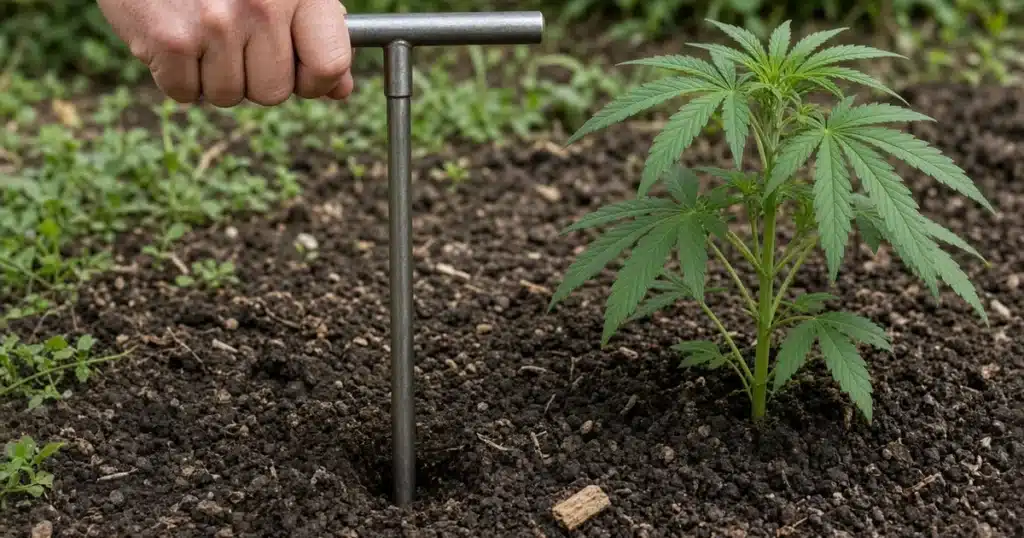
Soil compaction in a garden bed is easy to miss and hard to fix once plants are in the ground. Compacted soil has had its pore space squeezed out, so there is less room for air and water around the roots. Cannabis planted into a compacted bed often looks stunted, drains poorly after rain and dries out unevenly in heat, even when feeding and watering seem right. Below, you will learn what compaction is, how to test for it with simple tools, what causes it, and how to loosen and protect beds before and during the season.
What is soil compaction?
University of Delaware Cooperative Extension explains that about half of a healthy soil is pore space, with the other half made up of mineral particles and organic matter. Those pores let air and water move around the particles and give roots and soil organisms room to live. In compacted soil, the particles are pressed together so tightly that the space for air and water is greatly reduced.
Penn State Extension describes the most direct effect of compaction as a rise in bulk density, the weight of dry soil in a given volume. Bulk density is reported in grams per cubic centimeter (g/cm3). The higher it climbs, the less pore space is left, and past a certain point root growth is restricted.
Why does compaction matter for cannabis roots?
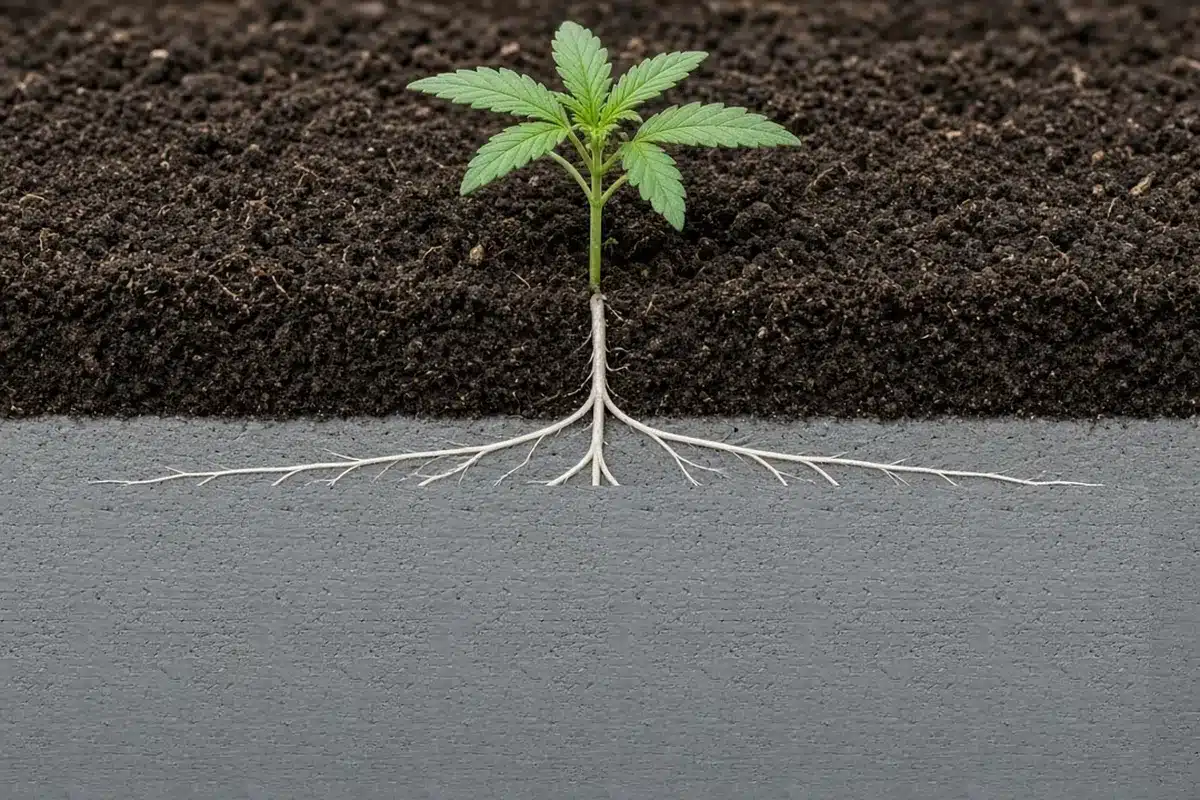
Roots need both oxygen and room to push through the soil. Penn State Extension notes that research suggests most plant roots need more than 10 percent air-filled porosity to thrive, and that compaction cuts the number of days the soil meets that level. It also reports that in packed soil, root growth falls steadily as penetration resistance rises from 100 psi and stops completely at about 300 psi. In real beds, roots tend to crowd into cracks and the looser zones above or beside a compacted layer.
University of Delaware Extension adds the drainage side. With little pore space, water cannot percolate, so it pools on the surface or runs off. When the soil does fill with water, there is no room for oxygen, which slows plant growth and the organisms that break down organic matter.
| Soil texture | Ideal bulk density (g/cm3) | Restricts root growth (g/cm3) |
|---|---|---|
| Sand, loamy sand | Under 1.60 | Over 1.80 |
| Sandy loam, loam | Under 1.40 | Over 1.80 |
| Silt, silt loam | Under 1.30 | Over 1.75 |
| Silty clay loam | Under 1.40 | Over 1.65 |
| Clay | Under 1.10 | Over 1.47 |
Source: Penn State Extension, Effects of Soil Compaction, citing the USDA Soil Quality Test Kit Guide (general crops, not cannabis-specific).
What are the signs of compacted soil?
University of Delaware Extension lists several indicators. Other site problems can cause the same signs, so look for more than one:
- Roots that are stubby, twisted or enlarged, or taproots that turn and grow sideways.
- Standing water after rain or irrigation.
- Soil that is hard to dig whether wet or dry.
- Plants that are stunted, with discolored leaves and signs of drought stress.
- A thin crust on the surface that sheds water instead of soaking it up.
If plants wilt quickly in heat yet the soil a few inches down stays soggy, compaction is a likely suspect. Too much water can look similar, so rule it out with overwatering cannabis before deciding.
How do you test for compaction?
University of Delaware Extension says the easiest home test is to push a soil probe or a hollow metal pipe into the soil. If it barely goes in, the soil is compacted. Soil scientists use a penetrometer for a measured reading.
- Wait until the soil is evenly moist but not wet, a day or two after rain or watering.
- Push a probe, long screwdriver or thin metal rod straight down by hand at several spots in the bed.
- Note the depth where it suddenly gets hard to push. A sudden stop a few inches down often marks a compacted layer.
- Dig a small hole with a spade where the rod stopped and look at the soil. Dense, platy layers and few roots or worm holes point to compaction.
- Compare with a spot in the yard that is never walked on.
This test pairs well with a chemical soil test. The nutrient and pH side is handled in soil testing for cannabis.
What causes compaction in garden beds?
University of Delaware Extension names four main causes:
- Foot and vehicle traffic. Walking across beds, mowing paths and parking on soil all press it down.
- Rain on bare soil. Raindrops break up the surface and form a crust that blocks water.
- Too much tillage. Tilling speeds the breakdown of the organic matter that resists compaction and can damage soil structure, especially when the soil is wet. Repeated tilling at one depth can form a hard plow pan just below.
- Natural processes. Clay soils compact more easily because their particles are very small.
Penn State Extension adds a caution about tillage. Tilling compacted soil makes it more likely to compact again. It also notes that untilled soils often show higher bulk density than freshly tilled ones, yet can still be better for roots because of more organic matter and biological activity.
How do you fix compacted soil, step by step?
- Work the soil only at the right moisture. University of Delaware Extension advises against digging soil that holds its shape when squeezed into a ball, because moist soil compacts most easily.
- Break up the compacted layer once. Loosen the bed with a garden fork or spade to below the depth where your probe stopped. Lift and crack the soil rather than turning it to powder.
- Add organic matter as you loosen. University of Delaware Extension calls compost one of the best ways to combat compaction, because soil organisms drawn to it create new pore space. For severe compaction it suggests large amounts, about 25 percent of the existing soil by weight for sandy loam and up to 50 percent for clay, worked in to 18 inches.
- Skip sand as a quick fix. The same extension sheet warns that inorganic amendments need at least 75 percent more material by weight to help, and that adding too little sand to clay can make things worse.
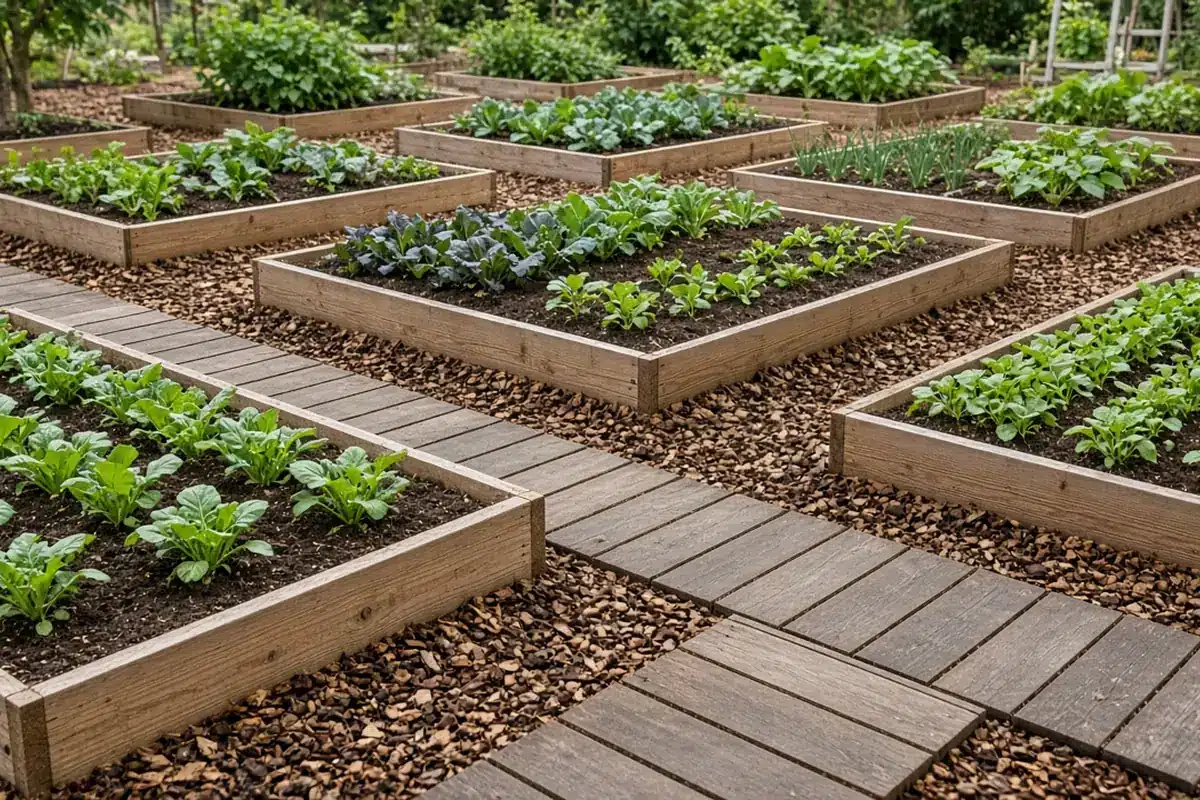
- Mark permanent paths. Keep all foot traffic on paths and off growing areas from then on.
- Cover the surface. University of Delaware Extension notes that 2 to 3 inches of mulch or a living groundcover helps prevent crusting. Materials to try are compared in mulch for cannabis.
How do you prevent compaction from coming back?
Prevention is easier than repair. Keep beds narrow enough to reach the middle from a path, so you never need to step in. A width you can reach across from both sides works well. University of Delaware Extension suggests that where traffic is unavoidable, lay down planks, permeable fabric topped with gravel, or a mulch layer of 6 inches or more to spread the load.
Limit tilling to what the bed actually needs. Once a bed has been loosened and amended, light surface work and fresh mulch each season usually keep it open. In colder parts of the US, University of Delaware Extension notes that freeze and thaw cycles can help loosen shallow compaction over winter, though they do little for deep layers.
What changes by stage?
Before planting. This is the best time to test and fix compaction, since you can work the whole bed without harming roots. Do the heavy loosening here.
Transplanting. Dig a planting hole wider than the root ball and loosen its sides so roots are not trapped in a smooth-walled pocket. Handling the root ball itself is part of transplanting cannabis plants.
Vegetative growth. Stay off the root zone, especially after rain. If water pools, gently loosen the surface around the plant with a hand fork without cutting deep roots.
Flowering and harvest. Heavy plants and frequent visits pack paths. Use boards on wet days to protect the soil for next season.
After harvest. Retest with a probe, add organic matter and mulch the bed for winter.
What are common mistakes?
- Digging or tilling wet soil.
- Walking across beds to reach plants.
- Tilling every year at the same depth.
- Leaving soil bare between seasons.
- Mixing a little sand into clay.
- Blaming nutrients for stunting when the real issue is dense soil.
A raised path system and a yearly probe test are a simple way to keep track. Kind Seed Co goes further into in-ground growing with the best soil for growing outdoors.
Sources
- Penn State Extension. Effects of Soil Compaction. https://extension.psu.edu/effects-of-soil-compaction/
- University of Delaware Cooperative Extension. Combating Soil Compaction. https://www.udel.edu/academics/colleges/canr/cooperative-extension/fact-sheets/combating-soil-compaction/
FAQ
How do I know if my garden soil is compacted?
Push a metal probe, rod or long screwdriver into evenly moist soil. If it stops suddenly a few inches down or barely goes in, the soil is likely compacted. Other signs include standing water, soil that is hard to dig, and roots that are stubby or grow sideways.
Can I fix compacted soil after planting cannabis?
Only partly. You can gently loosen the surface with a hand fork, add mulch and stay off the root zone. Deep loosening near established plants cuts roots and causes stress. For lasting results, do the heavy loosening and add organic matter before planting or after harvest.
Does adding sand fix compacted clay soil?
Usually not. University of Delaware Extension warns that inorganic materials need at least 75 percent more material by weight to help, and adding less can make the soil worse. Organic matter such as compost works better, because it supports soil organisms that open new pore space over time.
Should I till my cannabis bed every year?
Not necessarily. Penn State Extension notes that tilling compacted soil makes it more likely to compact again, and frequent tilling breaks down organic matter. Loosen once to fix a compacted layer, then use paths, mulch and light surface work to keep the bed open in later seasons.


