
Common Stalk Borer in Cannabis: Signs and Control
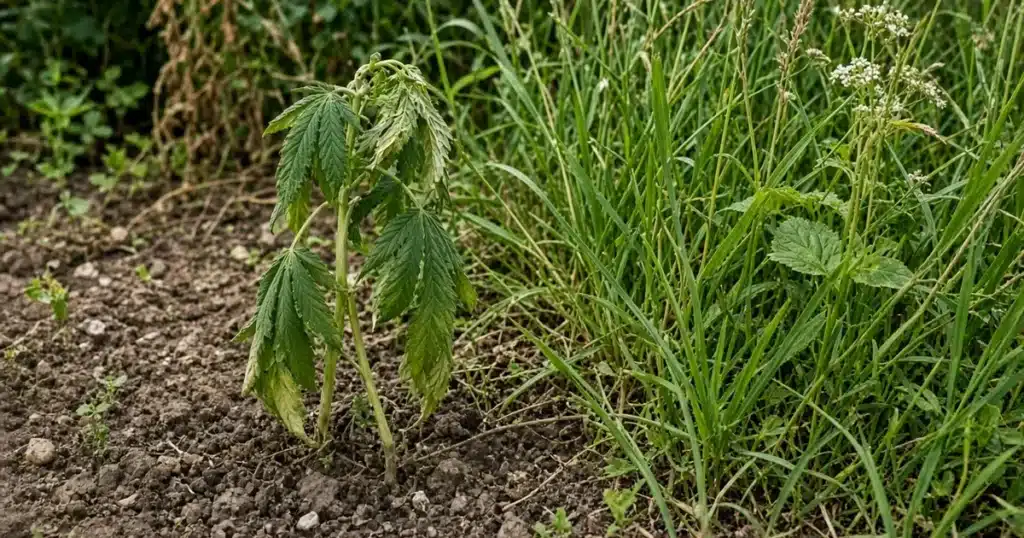
A plant that looked fine yesterday can droop overnight for no clear reason. The soil is moist, the leaves show no spots and nothing is chewing the foliage. When one stem or one whole young plant suddenly wilts in early summer, look closely at the stalk for a small hole. The culprit may be the common stalk borer, a caterpillar that lives inside plant stems and does its damage where you cannot see it.
What the common stalk borer is, how it reaches a garden bed, how to check a wilting plant and what you can realistically do about it all come up in turn. The short version is that prevention matters far more than rescue, and most of that prevention happens at the grassy edges around your garden rather than on the plants themselves.
What the common stalk borer looks like
The University of Maine Cooperative Extension identifies the common stalk borer as Papaipema nebris, a moth in the family Noctuidae that is native to North America. The adult is a moth, but the damage comes from the larval stage. The larva is called a borer because it chews into the stalk of a plant and then tunnels through it.
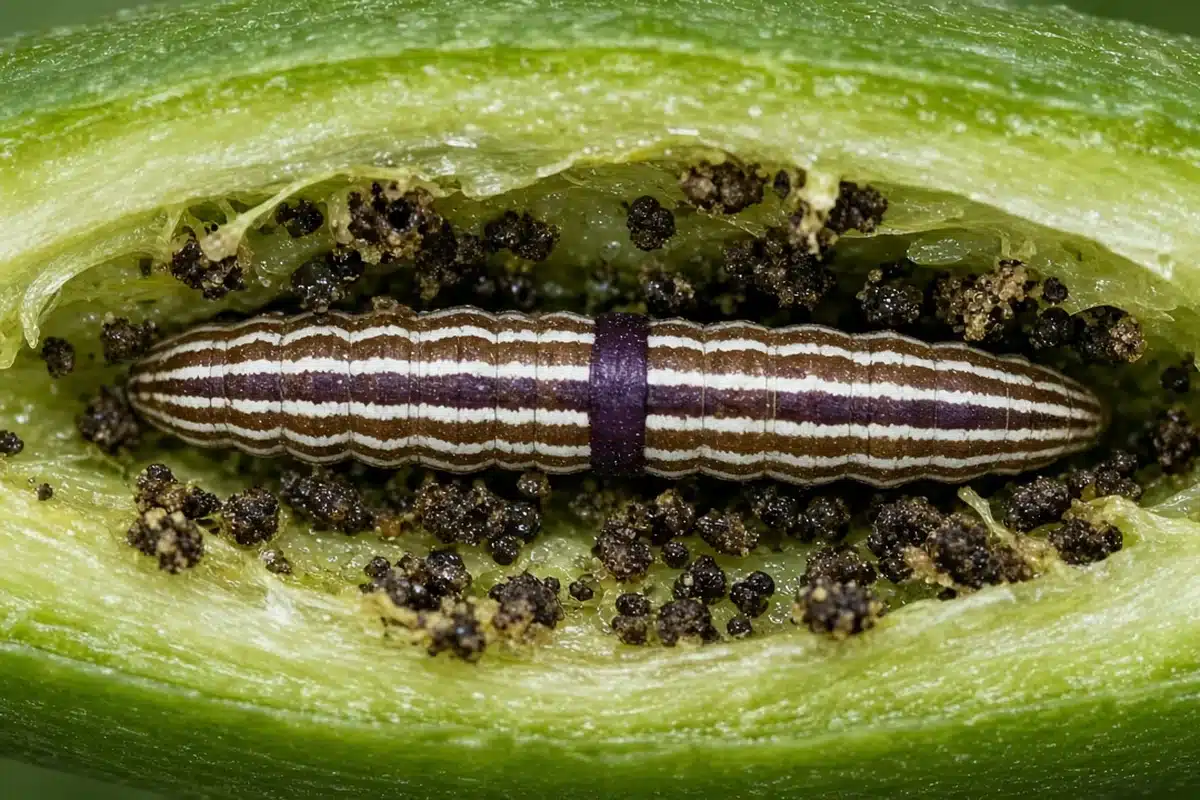
Iowa State University Extension describes the larva as a slender caterpillar with purple and white stripes. It is found tunneling inside the stems of a wide variety of plants. That range is not an exaggeration. The University of Maine notes that it is known to attack 176 different plant species, and that it is particularly fond of large plants with whorled leaves such as corn.
Iowa State Extension adds that it is most often found inside the stalk of giant ragweed, and that it is also a pest of tomatoes, corn and other garden plants. Cannabis is not named in either source, but a soft green stem growing next to a weedy edge fits the kind of host this caterpillar moves into, so it is worth knowing the signs.
How it differs from other stem borers
Not every caterpillar in a stem is the same insect, and the right response depends on which one you have. The common stalk borer is a separate species from the borer profiled in European corn borer in hemp. The striped pattern described above is the main clue for the common stalk borer.
The bigger difference for a home grower is where the insect comes from. The common stalk borer starts its life in grasses and weeds and then moves into nearby plants. That makes the borders of your garden the key place to manage it. If you find a caterpillar you cannot match to either description, take clear photos and compare them with an extension fact sheet before you decide on a plan.
The life cycle, season by season
Iowa State Extension lays out a simple yearly pattern:
- In fall, the adult moth lays eggs on grasses and weeds.
- The eggs hatch very early the next spring.
- The young larvae bore into grass stems and feed there.
- During mid to late June, the larvae grow too large for grass stems and move to larger plant stems nearby.
- A borer may stay in one plant, or it may outgrow that stem and move to another host.
This timing explains why damage tends to show up in early summer and why plants close to grassy borders are hit first. It also explains why fall work in and around the garden has such a big payoff. Eggs laid in fall on weeds and grass are where next year’s borers come from.
Signs of stalk borer damage
The University of Maine notes that plants damaged by the common stalk borer are usually stunted, misshapen or both. It adds that the damage can be severe enough to kill a plant, especially when the borer has tunneled into the stalk at soil level.
Look for these signs on a plant that is struggling:
- A single stem or the whole top of a young plant wilts while the soil is still moist.
- A small round hole sits in the side of the stem.
- Growth above the damaged point is stunted or bent.
- The problem shows up first on plants near tall grass, weeds or the lawn edge.
Iowa State Extension gives a hard truth about timing. By the time stalk borer injury is noticed, it is usually too late to save an infested plant. That does not mean you should ignore it, but it does mean that checking plants near grassy borders often in early summer gives you the best chance to act.
How to check and treat a wilting plant
Iowa State Extension states that there is no effective control for borers that are already inside a stem. It also states that insecticide sprays or dusts used in the garden are not effective against this pest. The caterpillar is protected inside the stalk, so anything applied to the outside never reaches it.
What can work is removing the borer by hand. Iowa State Extension notes that plants can sometimes be saved by slicing open the stem and taking the borer out. Here is how to approach it at home:
- Find the entry hole and look for the soft or hollow section of stem above and below it.
- Use a clean, sharp blade to make a short cut along the length of the stem, not across it.
- Open the cut gently and look for the striped caterpillar inside the tunnel.
- Remove the caterpillar and destroy it.
- Support the slit stem with a stake and watch it for recovery.
- Watch the plant over the next several days to see whether new growth recovers.
This works best on thicker stems where a lengthwise cut leaves enough healthy tissue. On a very young plant with a thin stem, the damage may already be too great. Be realistic and focus your effort where the plant has a fair chance.
When to remove the plant
Iowa State Extension advises treating wilted plants as a source of more borer problems, and it recommends removing and destroying them. A badly damaged plant may still hold a larva that will move on to another host, so leaving it in place can spread the problem.
If a plant has collapsed at the base, has a hollow main stalk or shows damage at soil level, removal is usually the better choice. Bag or dispose of it away from the garden rather than leaving it in a pile at the edge of the bed. Then inspect neighboring plants closely, especially the ones nearest the same grassy border.
Cut off the supply: weeds and grass edges
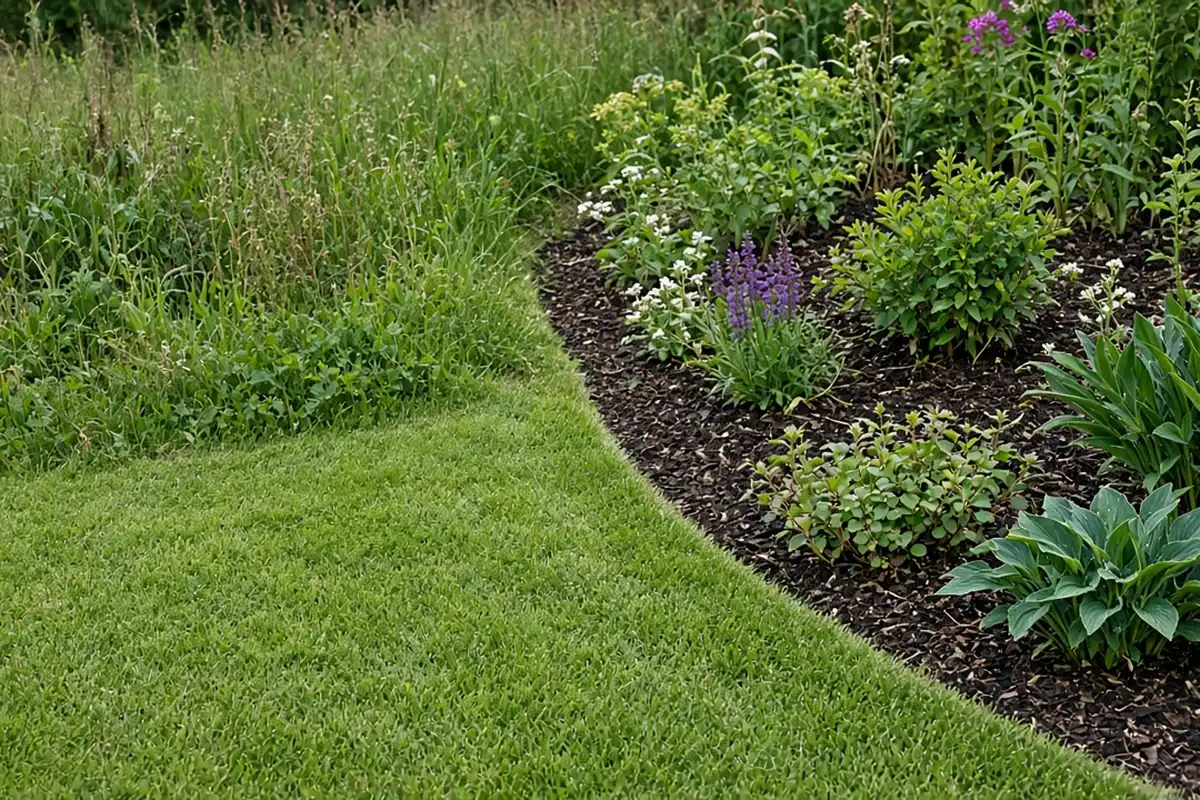
Iowa State Extension calls weed control the best suggestion for this pest. It advises keeping weeds and tall grasses controlled and mowed around gardens and flowers, especially in the fall. This removes the sites that attract adult moths and young borers.
A simple plan for the area around your bed:
- Keep a mowed strip of short grass between the garden and any tall grass or weedy ground.
- Pull or cut broadleaf weeds near the bed before they grow large stems.
- Pay special attention to fall, when the moths lay eggs on grasses and weeds.
- Clear weedy corners, fence lines and ditch edges that border the garden.
- Repeat the same routine each year, since the life cycle starts over every fall.
This is ordinary garden housekeeping, but for this insect it is the main tool. The fewer egg sites near your plants, the fewer young borers there are to move in when they outgrow grass stems in early summer.
Where it lives in the US
The University of Maine describes the range of the common stalk borer as southern Canada, throughout the eastern United States east of the Rockies, and south to the Gulf of Mexico. Growers inside that range who have weedy or grassy ground near their garden have the most reason to watch for it. Growers outside that range can still use the same checks if they find a striped caterpillar in a stem.
Keep the rest of the garden in balance
Sprays do not reach this caterpillar inside the stem, so there is little to gain from spraying, and broad sprays can harm the insects that help you with other pests. A garden with plenty of natural enemies is easier to manage overall. Kind Seed Co names the helpers worth keeping around in the best bugs for a cannabis grow. Clean edges, steady scouting and quick removal of wilted plants are a better use of your time than any treatment on the leaves.
Troubleshooting
One plant wilts in moist soil in early summer. Check the stem for a small hole near the base or in the middle of the stalk. If you find one, try the lengthwise cut and remove the borer.
Several plants along one side of the bed are struggling. Look at what borders that side. Tall grass, weeds or an unmowed edge nearby points to the common stalk borer moving in from those hosts.
You cut the stem and find a tunnel but no caterpillar. The borer may have already moved to another plant. Inspect nearby plants for fresh holes and support the damaged stem.
The plant wilts again after you removed the borer. The tunnel may have damaged too much of the stem. If the plant does not recover after a few days, remove it and focus on the healthy plants nearby.
The problem comes back every year. The egg sites are still nearby. Keep grass and weeds mowed and controlled around the garden, especially in fall, and widen the mowed strip if you can.
Sources
- Iowa State University Extension and Outreach, Yard and Garden. Common Stalk Borer. https://yardandgarden.extension.iastate.edu/encyclopedia/common-stalk-borer
- University of Maine Cooperative Extension, Home and Garden IPM. Common Stalk Borer. https://extension.umaine.edu/home-and-garden-ipm/fact-sheets/common-name-listing/common-stalk-borer/
FAQ
What does a common stalk borer look like?
A slender caterpillar with purple and white stripes, found tunneling inside plant stems. The adult is a moth native to North America. University of Maine Extension notes it attacks 176 plant species and favors large plants with whorled leaves, so a soft stem near weeds or tall grass is a likely place to find it.
Can I spray to kill stalk borers?
Spraying does not help once the caterpillar is inside the stem. Iowa State Extension states that insecticide sprays or dusts used in the garden are not effective against this pest. The better options are slicing the stem lengthwise to remove the borer by hand and keeping nearby weeds and grass controlled to remove egg sites.
How can I save a plant with a stalk borer?
Find the entry hole, make a short lengthwise cut with a clean blade, and remove the caterpillar from its tunnel. Support the slit stem with a stake. Iowa State Extension notes this can sometimes save a plant, but it adds that injury is often noticed too late, so check plants early.
How do I prevent stalk borers next year?
Control weeds and tall grasses around the garden and keep them mowed, especially in fall. Iowa State Extension explains that the moth lays its eggs on grasses and weeds in fall, and young larvae start in grass stems in spring. Fewer egg sites near the bed means fewer borers moving into your plants in early summer.


