
Fall Garden Cleanup After Your Cannabis Harvest

The harvest is hanging to dry and the season feels finished. The bed it came from is not. Stalks, roots, fallen leaves and the odd weed are still out there, and what you do with them over the next few weeks shapes how next season starts. A careful fall cleanup is one of the cheapest ways to give next year’s plants a clean start.
South Dakota State University Extension puts the reason plainly. Diseased plants left over the winter can provide fungal or bacterial spores waiting to infect your new plants. Here is a practical cleanup for an in-ground cannabis bed: what to pull, how to sort healthy from diseased material, how to handle tools and stakes, and how to leave the soil for winter.
Why cleanup matters for next season
University of Missouri Extension explains that many plant pathogens survive the winter in old plants and plant debris left in the garden. Removing that material reduces the chance of certain diseases building up over the years. It also reduces the chance that healthy plants get infected early in the season.
That early timing is the key point. The University of Missouri notes that some diseases naturally show up late in the season and are not much of a problem on older plants. The same diseases can be devastating on young plants if the pathogens are already present early. SDSU Extension adds that spores can overwinter and infect new plants much earlier than if the disease had to move in with the weather or with insects.
In other words, a bed left messy over winter can give next year’s seedlings a disease problem that would otherwise not have arrived until late summer.
Start with a walk through the bed
SDSU Extension suggests starting cleanup with a walk through the garden to find anything missed earlier. For a cannabis bed, use that walk to take stock:
- Note which plants had leaf spots, mold, wilting or other problems this season.
- Mark any plants that died early or looked stunted.
- Look for weeds that grew up around the base of plants.
- Collect stakes, ties, labels and any netting still in the bed.
- Check for fallen leaves and plant matter caught under the remaining stalks.
Writing this down helps. A simple list of which spots had trouble guides both cleanup and next year’s planting plan.
Pull diseased plants, roots and all
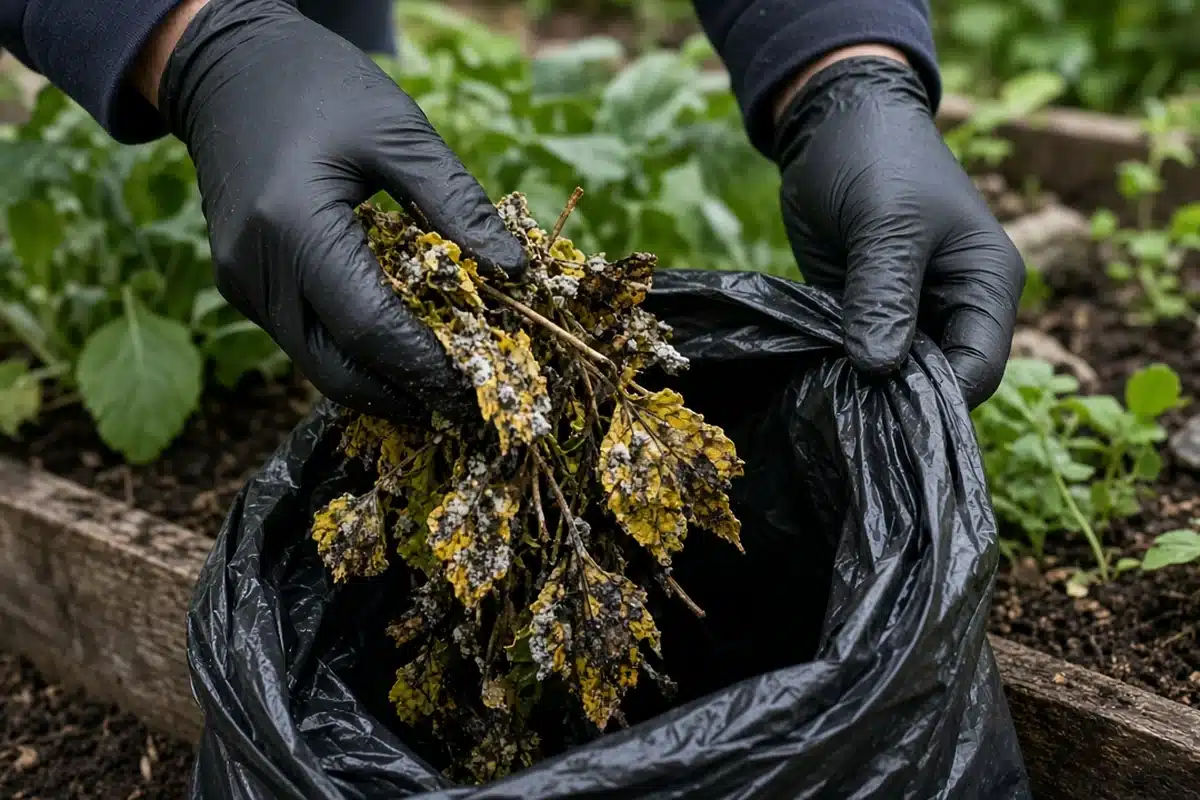
SDSU Extension advises removing any plants that had diseases, roots and all, and bagging them for the trash. It notes that powdery mildew spores can overwinter on soil protected by leaves that fall and stay in place over winter. So clear fallen leaves from under diseased plants as well.
The University of Missouri makes an important point about where diseased material goes. It advises against adding debris from diseased plants to a compost pile, because the temperatures reached in a pile are often not high enough to kill the pathogens. It suggests burying diseased plant debris away from the garden instead. Either way, the goal is the same: get it out of the bed and away from next year’s plants.
How to handle diseased plants step by step:
- Cut or pull the plant, then dig out the main root mass.
- Rake up fallen leaves and plant matter from under it.
- Bag the material right away so spores are not scattered across the bed.
- Put the bags in the trash or bury the material well away from the garden.
- Clean your hands and tools before moving on to healthy plants.
SDSU Extension also advises never saving seed from diseased plants. The University of Missouri gives the same advice for any garden where disease is present.
What to do with healthy plant material
Healthy stalks and leaves are a different story. SDSU Extension notes that plants without disease are valuable organic matter for next year. It suggests pulling them, chopping them into smaller pieces and spreading them over the garden to break down over winter, or composting them for use next season.
Cannabis stalks are tough and fibrous, so chop them small if you plan to leave them on the bed. If you saved fan leaves and trim from the harvest itself, Kind Seed Co suggests ways to use them in what to do with leftover fan leaves and trim. Keep healthy material and diseased material in separate piles so nothing gets mixed up.
Clear weeds while you are at it
The University of Missouri lists weed control as part of disease prevention. It explains that certain plant pathogens can grow on weeds and spread to garden plants, and that some weeds attract insects that carry diseases, especially viral diseases.
Fall is a good time to clear weeds from the bed and its edges before they set seed or shelter pests over winter. Pull them out with roots where you can. Do not leave weed piles at the edge of the garden, where they can harbor the same problems you are trying to remove.
Clean tools, stakes and supports
The University of Missouri recommends removing, destroying or disinfesting support structures such as wooden stakes and poles used in the garden. Stakes and cages that held up diseased plants can carry problems into next season if they are put away dirty.
It also notes that garden tools can be disinfested by washing them with detergent. Washing removes soil and clinging fungi or bacteria, and the detergent removes some virus from the tools. Here is a simple routine:
- Scrub soil off pruners, shovels and hand tools.
- Wash them with detergent and water, then rinse and dry.
- Clean stakes and cages that supported diseased plants, or discard damaged wooden stakes.
- Store everything dry and off the ground for winter.
If you also grew in containers this year, pots and trays are handled in cleaning and disinfecting pots for cannabis.
Cover the soil for winter
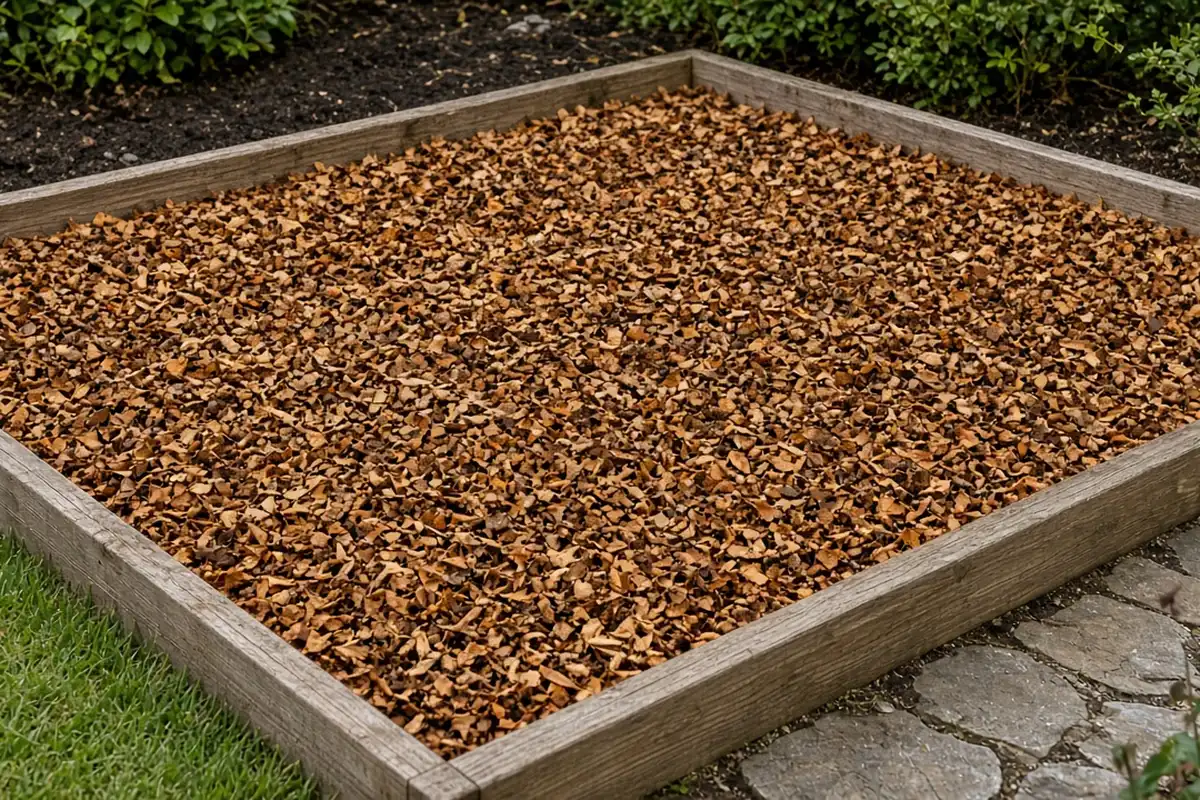
Bare soil over winter is exposed to rain, wind and erosion. SDSU Extension notes that leaves are good organic matter. Whole leaves can be layered on the soil and pulled back in spring to let the soil warm and dry, and the half broken down leaves can then be used as mulch after planting. Leaves can also be chopped with a mower and spread, and SDSU Extension notes that chopped leaves break down faster and may not need to be raked off in spring.
SDSU Extension adds a tip for dry years. Following a drought, water the garden thoroughly before putting down mulch. Only use leaves from healthy plants and trees for this. Leaves from plants that had disease belong with the bagged debris.
To till or not to till
SDSU Extension calls fall tilling a personal decision. It notes that tilling can help heavy clay soil by mixing in organic material and speeding improvement. If your soil already has good tilth and feels loose and soft, it says you do not need to till in fall, and organic matter can be spread on top or worked in with a hoe or fork.
SDSU Extension warns that over tilling breaks soil into very small pieces, removes air spaces and causes compaction. Many gardeners have given up tilling and are pleased with the results. If your bed is already tight, soil compaction in cannabis beds explains how to tell and what helps.
Plan where next year’s plants go
The University of Missouri recommends rotating garden areas so closely related plants are not grown in the same spot year after year. It explains that moving related plants lessens the chance of disease build up, especially for pathogens that survive in the soil. Its rule of thumb is to avoid returning to the same area for at least three years, though it notes this will not stop diseases with long lived resting spores.
SDSU Extension adds that if plants were confirmed to have a soil borne disease, you may need to move your garden to a different area. Use the notes from your fall walk to decide where next year’s plants go. Spots that had trouble this season are the first to move away from.
Troubleshooting
You are not sure whether a plant was diseased. Treat it as diseased. Bag it with the roots and keep it out of the compost.
The compost pile already has diseased material in it. The University of Missouri notes that pile temperatures often do not kill pathogens. Keep that compost away from next year’s bed or remove the affected material.
Leaves keep blowing back onto the bed from diseased areas. Rake them up again and bag them. Lay a cover of healthy leaves or mulch afterward.
The soil is too wet to work. Wait. Working wet soil can cause compaction. Spread cover material on top instead of digging.
The same disease returned in the same spot. Move next year’s plants to a different area and keep good notes on where problems appear.
Sources
- South Dakota State University Extension. Fall Vegetable Garden Cleanup. https://extension.sdstate.edu/fall-vegetable-garden-cleanup
- University of Missouri Extension. G6202, Disease Prevention in Home Vegetable Gardens. https://extension.missouri.edu/publications/g6202
FAQ
Should I remove cannabis plants from the garden in fall?
Yes, especially any that had disease. South Dakota State Extension advises removing diseased plants roots and all and bagging them for the trash, since spores can overwinter and infect new plants early. Healthy plants can be chopped and spread on the bed or composted for use the next season.
Can I compost diseased plant material?
It is better not to. University of Missouri Extension notes that a compost pile often does not get hot enough to kill plant pathogens. It suggests burying diseased debris away from the garden instead, while South Dakota State Extension suggests bagging it for the trash. Keep healthy and diseased material in separate piles.
Should I till my garden in the fall?
It depends on your soil. South Dakota State Extension says fall tilling can help heavy clay by mixing in organic material, but loose soil with good tilth does not need it. It warns that over tilling removes air spaces and causes compaction, so spread material on top when you can.
What should I do with garden tools after the season?
Scrub off soil and wash tools with detergent. University of Missouri Extension notes that washing removes soil and clinging fungi or bacteria, and detergent removes some virus. It also advises cleaning, disinfesting or discarding stakes and poles that held diseased plants. Store everything dry for winter.


