
Soil Moisture Meters For Cannabis: How To Read Them Right
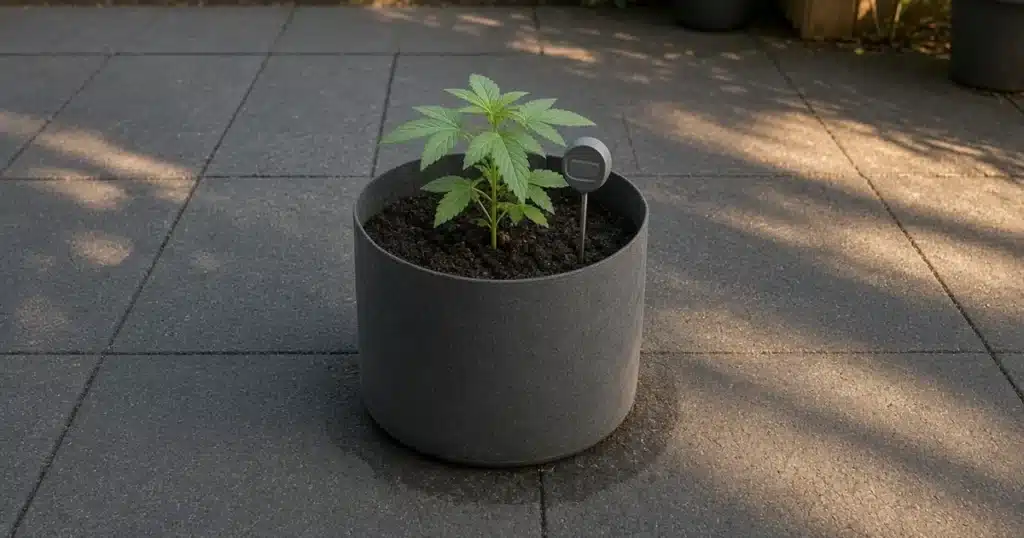
Quick answer: Soil moisture meters for cannabis estimate how wet the root zone is. Push the probe into the active root zone, about halfway between the stem and the pot edge, and read it alongside a finger check. Simple probe meters are good at showing wetter or drier, but salts, fertilizer and soil type can throw off the exact number.
What Does a Soil Moisture Meter Measure?
A soil moisture meter estimates how wet the root zone is right now. It does not replace a watering schedule on its own, and it does not tell you how much solution to pour. It is a quick read of wetter versus drier soil at the depth of the probe.
Compare the meter reading with the feel of the mix and the weight of the pot. For when and how much to water, read our guide to watering marijuana plants.
Think of the dial as a comparison tool inside one mix and one pot size. A reading that means moist in peat can mean something else in coco. Calibrate by feel in your own media before you trust the bands alone.
Root depth changes as plants grow. A shallow reading that worked early on may sit above the new root mass later. Move the tip deeper as the plant fills the pot.
Never use a meter as an excuse to ignore drainage. Empty standing water from the saucer before you take a reading. For signs that a pot is getting too much water, read about overwatering cannabis.
Types of Soil Moisture Meters for Cannabis
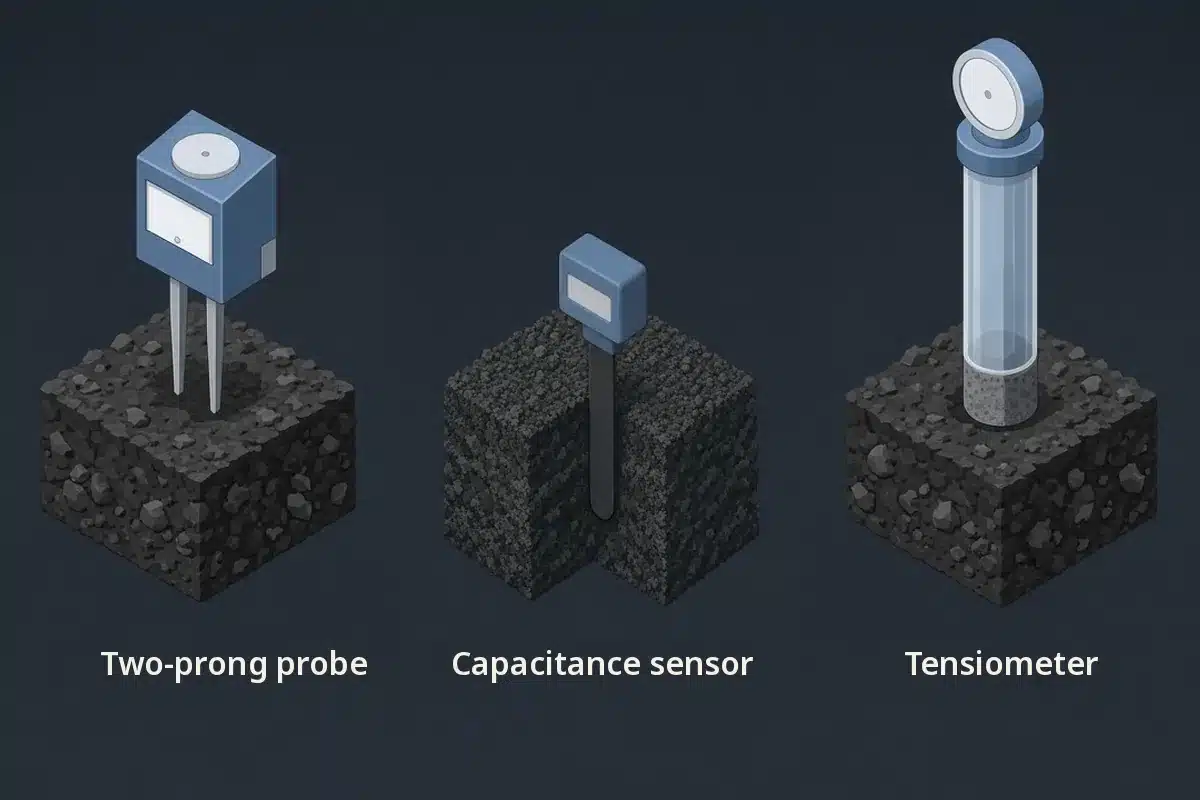
Home growers usually see three styles. A simple two-prong probe meter reads between two metal tips and shows wetter or drier on a dial. UF/IFAS Extension describes a capacitance sensor as reading the dielectric properties of the soil around a probe, and a tensiometer as a sealed water-filled tube with a ceramic cup that measures soil water tension.
Pick one style and learn it. Switching between probes without learning each mix only adds noise. Capacitance and tensiometer tools shine in beds where you want trends over days, while a simple probe shines for quick pot checks.
Tensiometers need a good seal in the soil and occasional refilling with water. If the tube loses contact, the gauge lies. Probe meters need clean tips more than they need calibration fluids.
Firewood and drywall meters use scales for those materials, not for growing media.
How to Use a Moisture Meter in Cannabis Pots
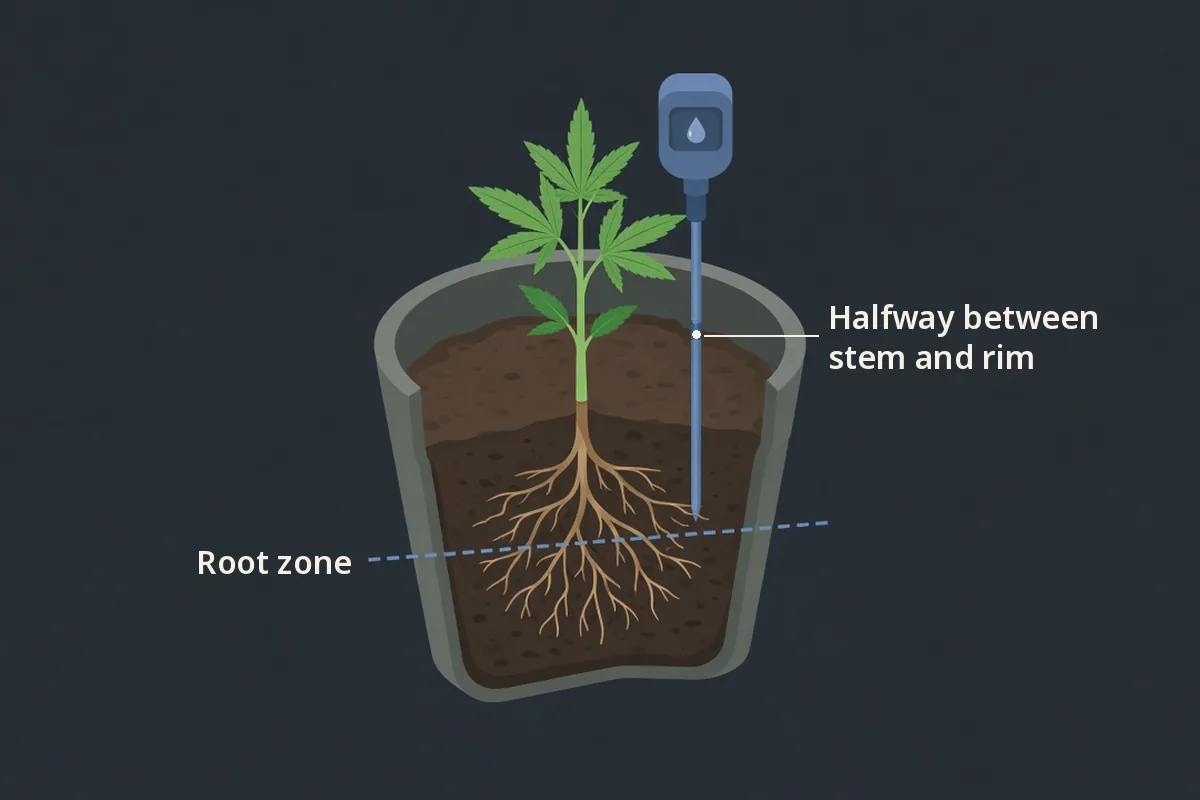
Push the probe into the active root zone, about halfway between the stem and the pot wall, to mid-depth. Utah State University Extension advises placing sensors in the root zone of the crop. A reading from the bone-dry crust on top will always look dry even when roots sit in wet mix below.
Take the reading, then confirm with a finger in the same zone and with the weight of the pot. Wipe the probe clean before you move to the next plant.
Take two readings on opposite sides of a large pot when roots fill the volume. One dry pocket next to the wall does not mean the whole root ball is dry. Average what you feel and what the dial shows.
Water, wait for the mix to equalize for a short time, then read. A probe jabbed into a dry pocket right after a pour only measures the pour path.
Label pots that always read differently. A hydrophobic peat puck and a fresh coco pot will never share the same band meaning.
After transplant, wait a day before you chase perfect readings. Disturbed mix has air pockets that settle with the first full irrigation.
Keep the same insertion depth when you compare day to day. Changing depth between checks invents a trend that is not real.
Using a Moisture Meter in Outdoor Beds
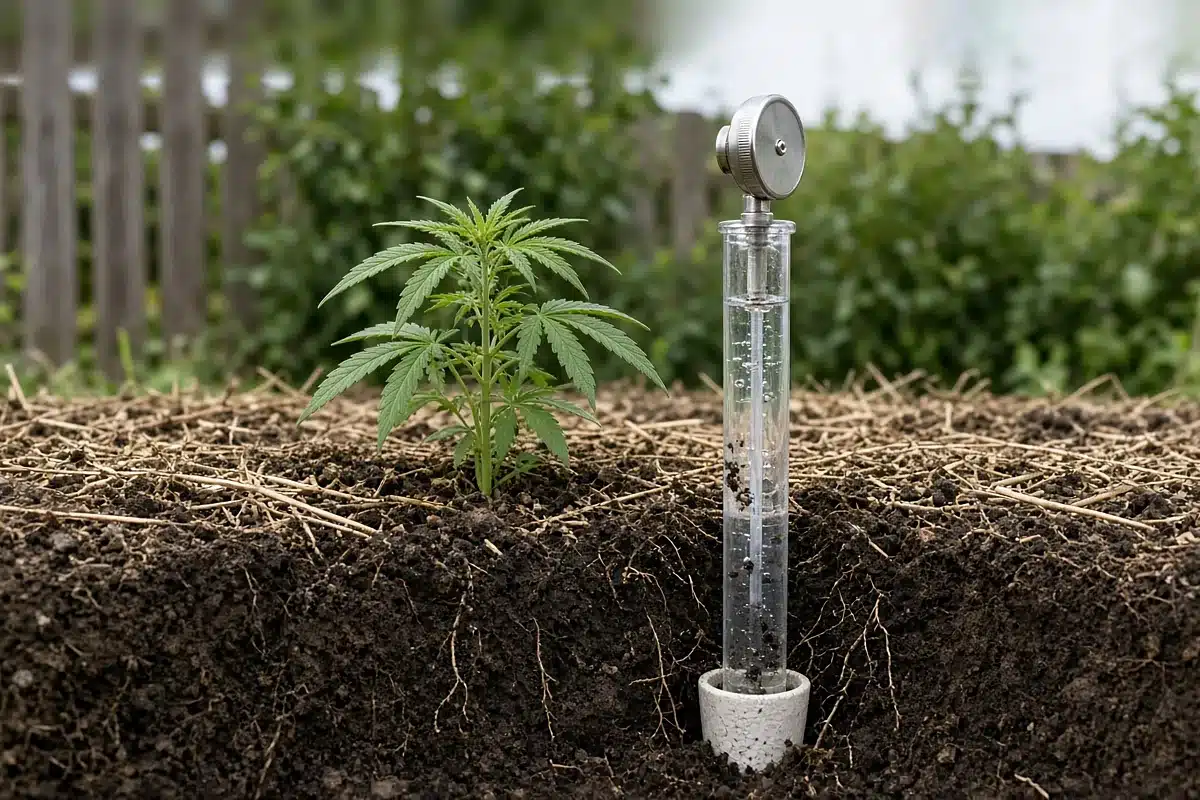
In beds, place the tip at the depth where most feeder roots sit for that growth stage. Take more than one reading along a row, because edges dry faster than the center.
A tensiometer left in place can track tension over days in a stable bed. Simple probe meters still work best as spot checks rather than as fixtures left in wet ground.
Mulched beds can stay moist under a dry surface crust. Always push past the mulch and crust into the root zone. A shallow poke only measures the weather, not the roots.
After a long rain, wait until surface water drains before you chase dry readings. Early checks only confirm that the storm landed.
Bed edges near concrete heat and dry faster. Take an edge reading and a center reading before you decide the whole bed needs water.
Are Soil Moisture Meters Accurate?
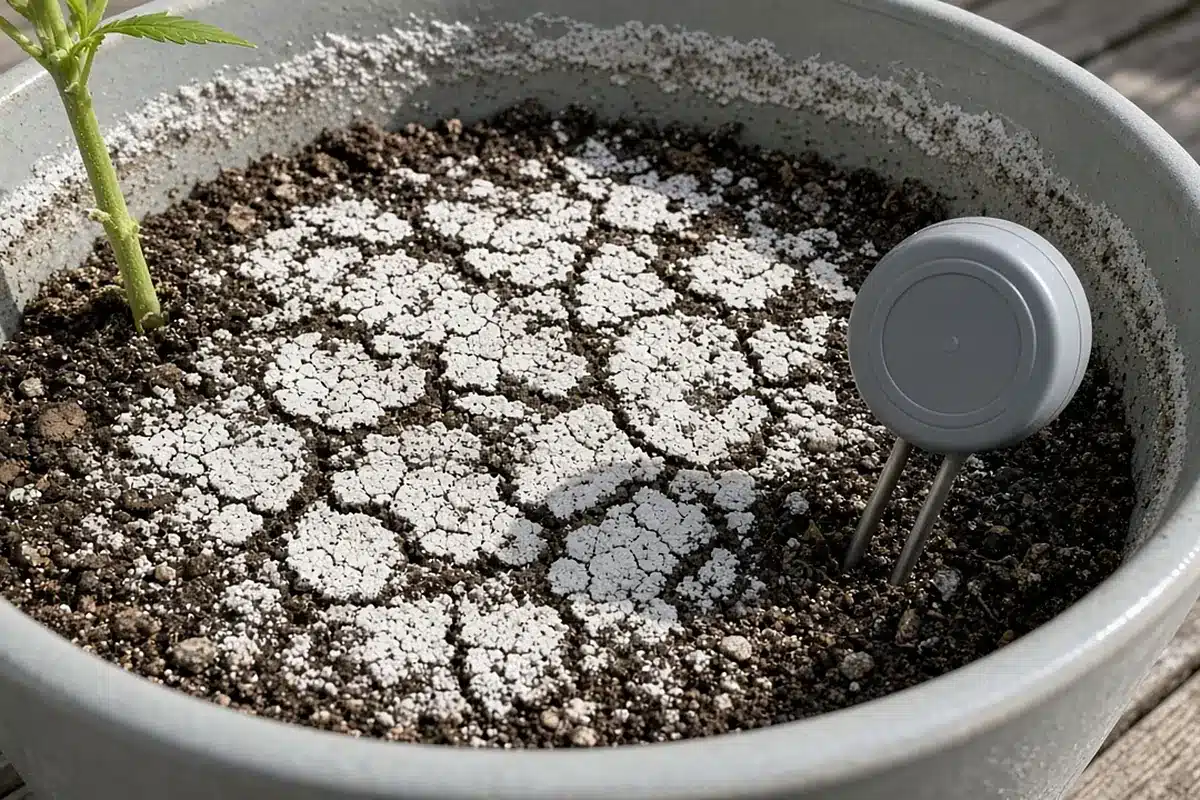
They are accurate enough to compare wetter and drier zones in the same mix. They are not lab instruments. Utah State University Extension notes that salts raise the electrical conductivity of soil, so fertilizer can throw off readings from sensors that rely on it, and that a sensor needs good contact with the soil to read accurately. A white crust on the surface, different media and a bent tip can all shift the dial.
If every pot reads wet while plants look thirsty, check for salt crust, move the probe off the pot wall and confirm with a finger.
When readings disagree with plant look and pot weight, believe the plant and the weight first, then clean or replace the probe. A bent tip jammed into a fertilizer crust will lie wet for weeks.
Use the meter as one aid inside a wider watering habit, not as the only number that counts.
If you flush a salty pot, give the mix time to re-wet evenly before you trust the next reading.
Caring for a Moisture Meter
Insert, read, wipe and store dry. Leaving a cheap probe in wet soil invites corrosion and drift. Keep the tips straight and free of caked mix.
Store the meter indoors between sessions. Outdoor sheds that swing from damp nights to hot afternoons shorten the life of cheap tips and make the dial sticky.
Replace bent tips. A tip that no longer seats straight will wedge against pot walls and fake a wet reading.
Replace batteries in digital units before they run low so a dead unit does not leave you guessing.
Sources
- Utah State University Extension, Soil Moisture Measurement and Sensors for Irrigation Management
- UF/IFAS Extension, Field Devices for Monitoring Soil Water Content (AE266)
FAQ
Are Soil Moisture Meters Accurate?
They are useful for comparing wetter and drier root zones, but simple meters are not lab instruments. Salts, fertilizer and different mixes can shift the reading. Use the meter with a finger check and the feel of the pot, not as the only signal.
How Deep Should a Moisture Meter Go in a Cannabis Pot?
Push the probe into the active root zone, usually the middle depth of the pot, not just the dry crust on top. Place it about halfway between the stem and the pot wall so you are not reading against the plastic edge.
How Do I Read the Dry, Moist and Wet Bands on a Meter?
Most analog meters show dry, moist and wet bands rather than a lab number. Read the bands as a comparison within one mix and pot size, then confirm with a finger check and the weight of the pot. Do not read a single band as a fixed rule.
Can I Leave a Moisture Meter in the Soil?
Cheap probe meters are not meant to sit in wet soil for long stretches. The metal tips can corrode and the reading can drift. Insert the probe, take a reading, wipe it clean and store it dry indoors between sessions.


