
Cover Crops for Cannabis Beds: What to Plant Between Seasons
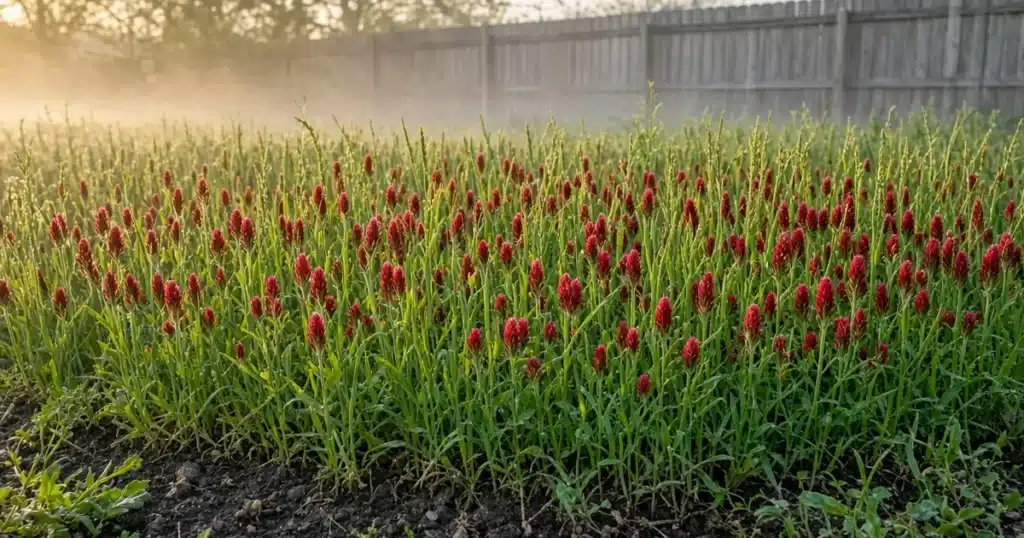
A cover crop is a crop you don’t harvest. You sow it on a bare cannabis bed between seasons to protect and build the soil. Common choices are cereal rye, oats or crimson clover, sown in late summer or early fall. In spring, cut rye and clover when they flower, then wait 3 to 4 weeks before you plant.
What Is a Cover Crop and Why Use One in a Cannabis Bed?
Once an outdoor bed is harvested, it can sit bare until planting time. Over winter, bare soil is open to erosion, and leftover nutrients can wash below the root zone.
A cover crop fills that gap. Its roots hold the soil in place and open channels through heavy ground. When you cut it in spring, the leaves and stems become organic matter. University of Maryland Extension notes that cover crop roots take up nutrients that might otherwise leach out of the soil, which is why farmers call some of them “green manures.”
For a grower who reuses the same bed year after year, this is a simple, low-effort way to keep the ground in shape. It pairs well with the ideas in our guides to living soil and reusing old soil. Rotating what grows in a bed is another of those habits, and our guide to crop rotation and verticillium wilt goes into it.
Which Cover Crops Work Best Before Cannabis?
Cover crops for home gardens fall into two groups: grasses and legumes.
- Cereal rye (Secale cereale) is the hardiest choice. It sprouts in cool weather, survives hard winters, and grows quickly in spring. It does not add nitrogen. WSU Extension calls it a nitrogen scavenger, because it takes up nitrogen already in the soil.
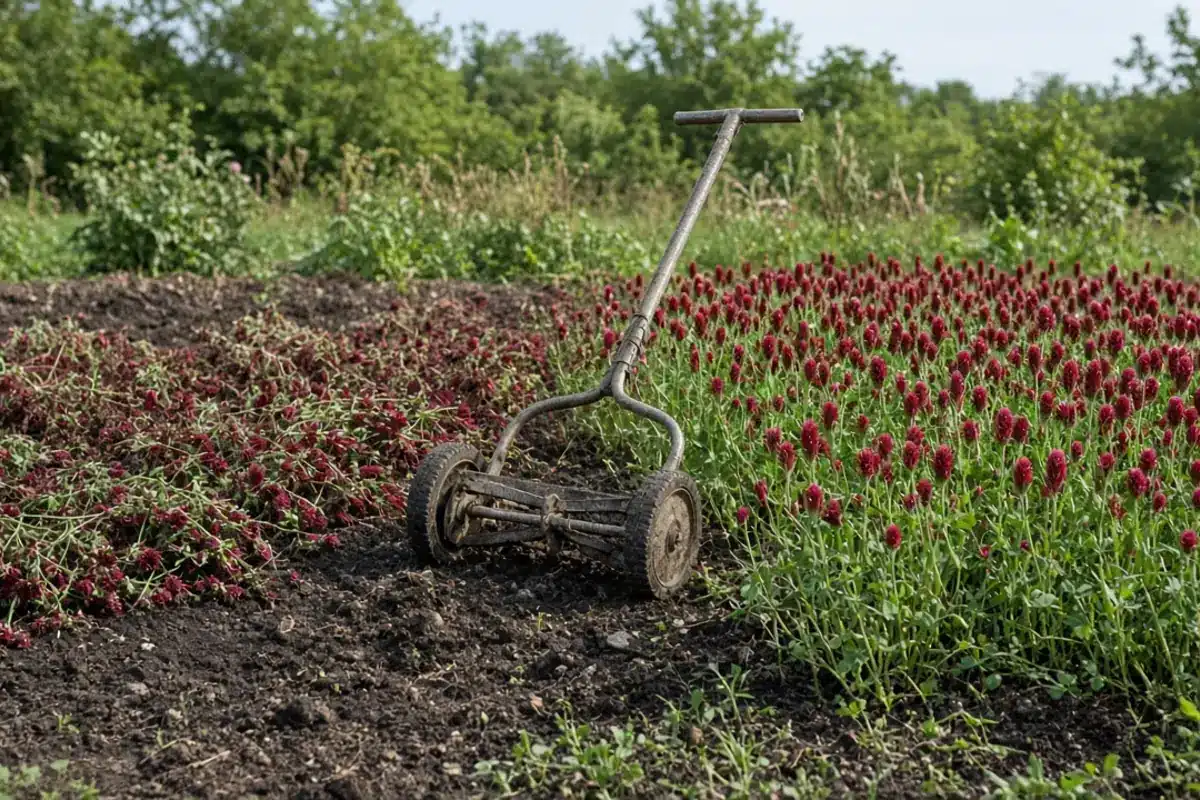
- Crimson clover (Trifolium incarnatum) is a legume. Bacteria in its root nodules take nitrogen from the air, so it adds nitrogen when it is turned in. It is also easy to cut and handle by hand.
- Oats are the easiest place to start. They are not cold-hardy and are killed by the first hard freeze, leaving a brown mat that works as mulch by spring. In mild-winter areas oats may not winter-kill, so check with your state extension service if you garden somewhere with soft winters.
- Hairy vetch is another legume often mixed with rye. WSU Extension notes it is harder to turn in, because its tendrils wrap around tiller tines.
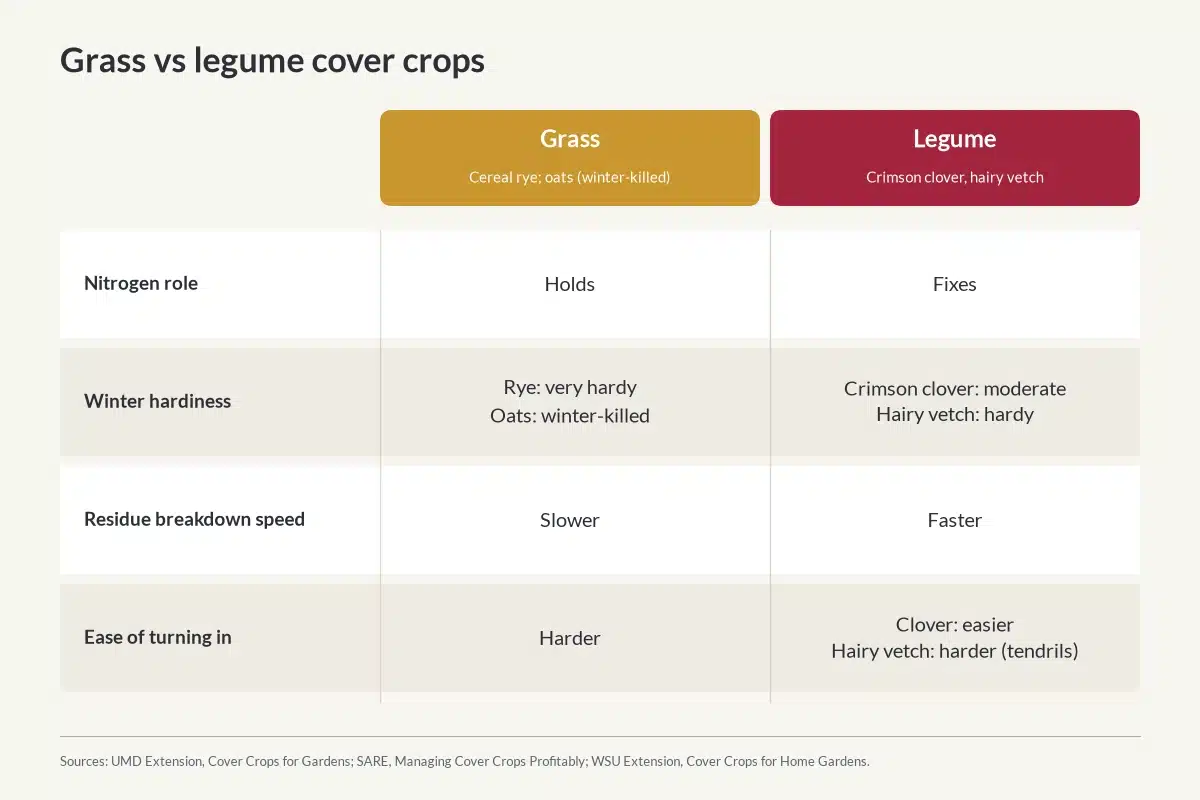
| Cover crop | Type | Nitrogen role | Winter | Spring job |
|---|---|---|---|---|
| Cereal rye | Grass | Holds nitrogen | Very hardy | Cut when it flowers |
| Oats | Grass | Holds nitrogen | Usually winter-killed | Rake or plant through the mat |
| Crimson clover | Legume | Fixes nitrogen | Moderately hardy | Cut at full bloom |
| Hairy vetch | Legume | Fixes nitrogen | Hardy | Cut at full bloom |
A rye and clover mix is a common middle ground. The rye gives cover and roots, and the clover adds nitrogen. WSU Extension’s home garden guide lists seeding rates in cups per 100 sq ft, which is handy for small beds.
When Should You Sow a Cover Crop?
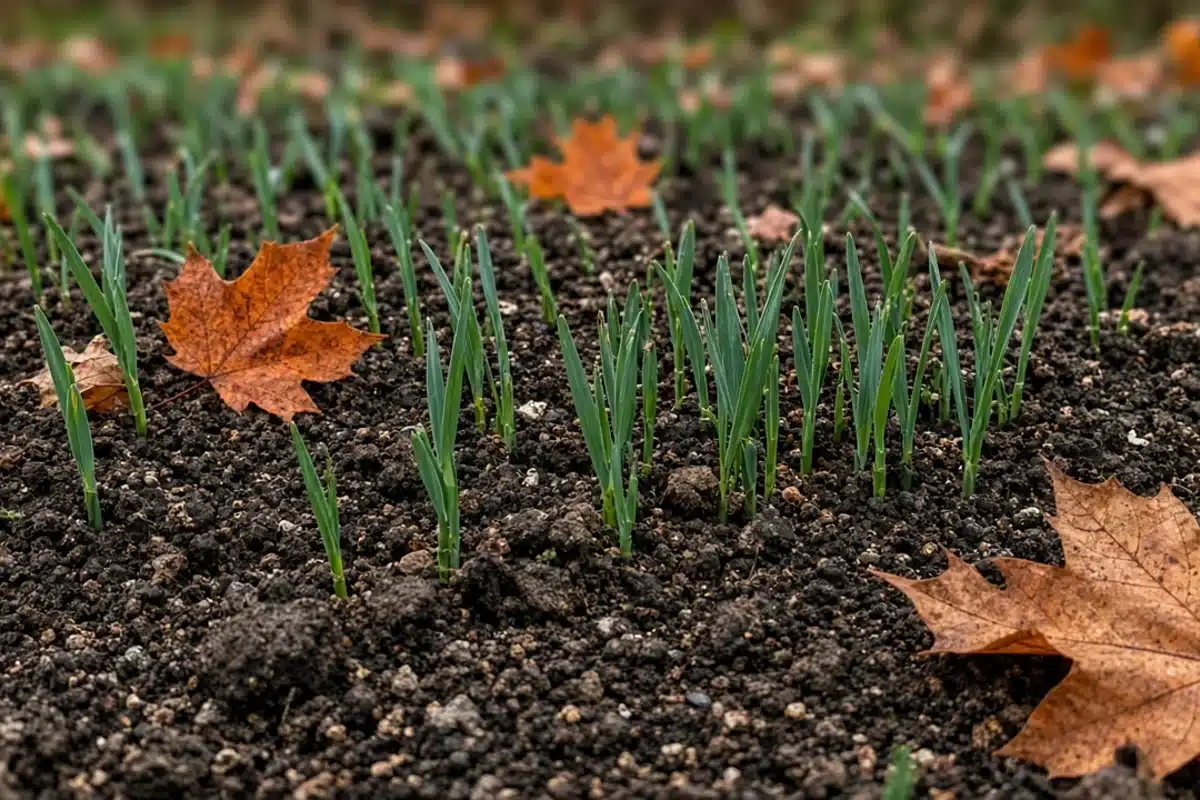
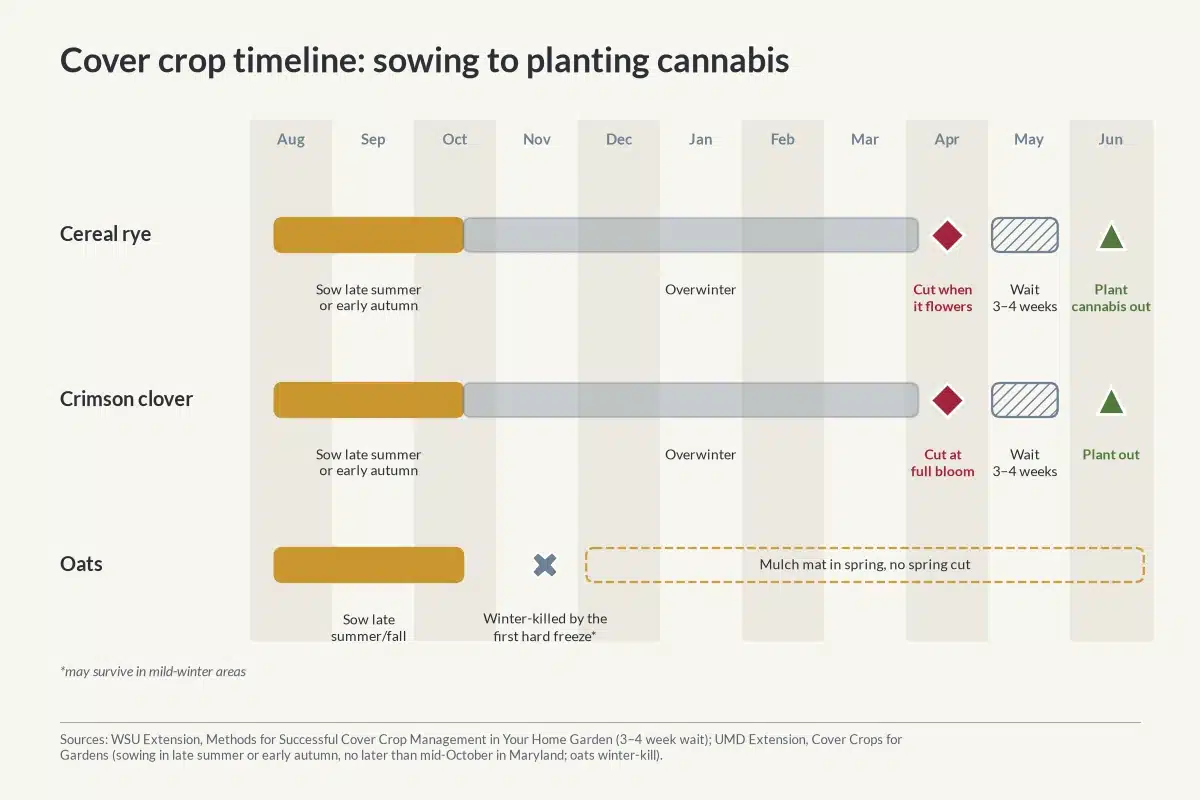
Sow soon after harvest, so the seed can sprout and grow before winter. The right window depends on the crop and your area. As one example, University of Maryland Extension says fall cover crops are planted in late summer or early autumn, and no later than mid-October in Maryland. Your state extension service can give dates for your area.
Rake the bed level, scatter the seed, rake it in lightly, and water if the weather is dry.
How Do You Cut Down a Cover Crop in Spring?
Timing depends on the species. Cut cereal rye and crimson clover when they flower, before they set seed. Where winter has killed the oats, there is nothing left to cut.
Use a scythe, string trimmer or mower, then choose one of two paths:
- Leave it as mulch. The cut stems stay on the surface, protect the soil and break down slowly. You plant through the mulch.
- Turn it in. Chop the residue and fork it into the top few inches of soil. It breaks down faster that way, which suits clover.
Illinois Extension notes that both options have benefits. Tilling mixes in organic matter, while mulch suppresses weeds and disturbs the soil less.
How Long After Cutting Can You Plant Cannabis?
Wait 3 to 4 weeks after cutting before you plant out. That is WSU’s general guidance for gardens. The WSU Extension cover crop management guide notes that fresh cover crop residue can hold back new plants, and that a 3 to 4 week wait often improves their establishment.
Count backward from your planned planting date. If you usually plant out in late May, cut rye or clover in late April or early May. If you start seedlings indoors, such as feminized seeds, time them to the same date. After that, feed as usual. Our guide to nitrogen for cannabis plants explains how much a growing plant needs.
Can You Grow a Cover Crop in Containers?
Yes, in the off-season. Large fabric pots and raised containers that sit empty over winter can take a pinch of oats or clover after the cannabis comes out. The idea is the same as in a bed: keep the mix covered, cut the crop in spring, wait 3 to 4 weeks and replant. For a broader look at bed soil, see the best soil for outdoor cannabis.
FAQ
Is crimson clover good before cannabis?
Yes. Crimson clover is a legume, and bacteria in its root nodules take nitrogen from the air, so it can add nitrogen to the bed as it breaks down. It is also easy to cut by hand when it flowers. Check its winter hardiness for your area before you sow.
Does cereal rye add nitrogen?
No. Cereal rye is a grass, and WSU Extension calls it a nitrogen scavenger. It takes up nitrogen already in the soil instead of adding new nitrogen. Legumes such as crimson clover and hairy vetch are the cover crops that fix nitrogen from the air.
Should you till a cover crop in or leave it as mulch?
Either works. Turning it in speeds up breakdown, which suits clover. Leaving it on top as mulch protects the soil, suppresses weeds and disturbs the soil less. Whichever you choose, wait 3 to 4 weeks after cutting before you plant.
What happens if a cover crop goes to seed?
It can come back as a weed in your bed. To stop that, cut rye and clover when they flower, before seeds form. Oats that winter has already killed need no cutting. SARE's Managing Cover Crops Profitably goes deeper on termination timing.


