
Soil Temperature for Planting Cannabis Transplants
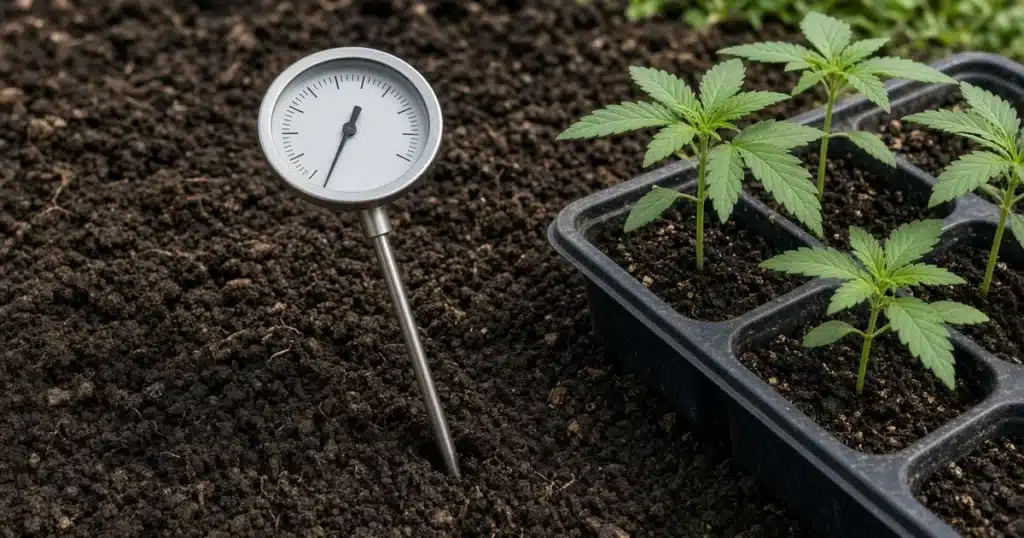
The date on the calendar says spring, the air feels warm and your young plants are ready to go outside. But the soil may not be ready yet. Soil warms far more slowly than air, and cold soil can hold back roots for weeks after planting. University of Wisconsin-Madison Extension says a better way to judge when to plant than a calendar date is to test soil temperature. The focus here is setting out transplants: how soil temperature differs from air temperature, how to measure it with a soil thermometer, what depth and time of day to use, what warm-season crops need, how to warm cold beds and what to do when a cold spell arrives. Still at the seed stage? Kind Seed Co’s how to germinate cannabis seeds and the germination section of the noob’s guide come first. Picking a planting window is its own topic in when to plant cannabis seeds outdoors.
Soil temperature is not air temperature
University of Wisconsin-Madison Extension explains that air temperature can change quickly with a late storm or a warm, sunny day, while soil temperature changes much more slowly because of the mass and moisture of the soil. A few warm afternoons do not mean the root zone has warmed up.
Sun exposure matters as well, UW-Madison notes. A sunny day warms dark, open ground faster than soil under a thick layer of light-colored mulch. That is why two beds in the same yard can be at very different temperatures on the same morning.
Another point from UW-Madison is that the last frost date is about air temperature, not soil, and that the real date of the last frost can vary widely from year to year. Checking the soil gives you a direct reading of the conditions roots will actually face.
Why soil temperature matters for transplants
Roots grow best in warm soil. In cold soil, a transplant may sit still for days or weeks, putting out little new root growth while it waits for conditions to improve. During that time it is more exposed to stress. Warm-season plants in particular can be set back by planting too early. Waiting until the soil has warmed gives transplants the best chance to root in quickly and start growing.
What you need
A soil thermometer is the only special tool you need. UW-Madison Extension suggests buying a soil temperature thermometer and keeping it just for testing soil. Choose one with a long metal probe that can reach several inches into the ground and a dial or display that is easy to read. A notebook or phone note for recording readings is also helpful.
How to measure soil temperature, step by step
There is a simple method from UW-Madison Extension. Here is how to use it for transplants:
- Choose the spot where you plan to plant. Measure in the bed itself, not in a nearby lawn or path.
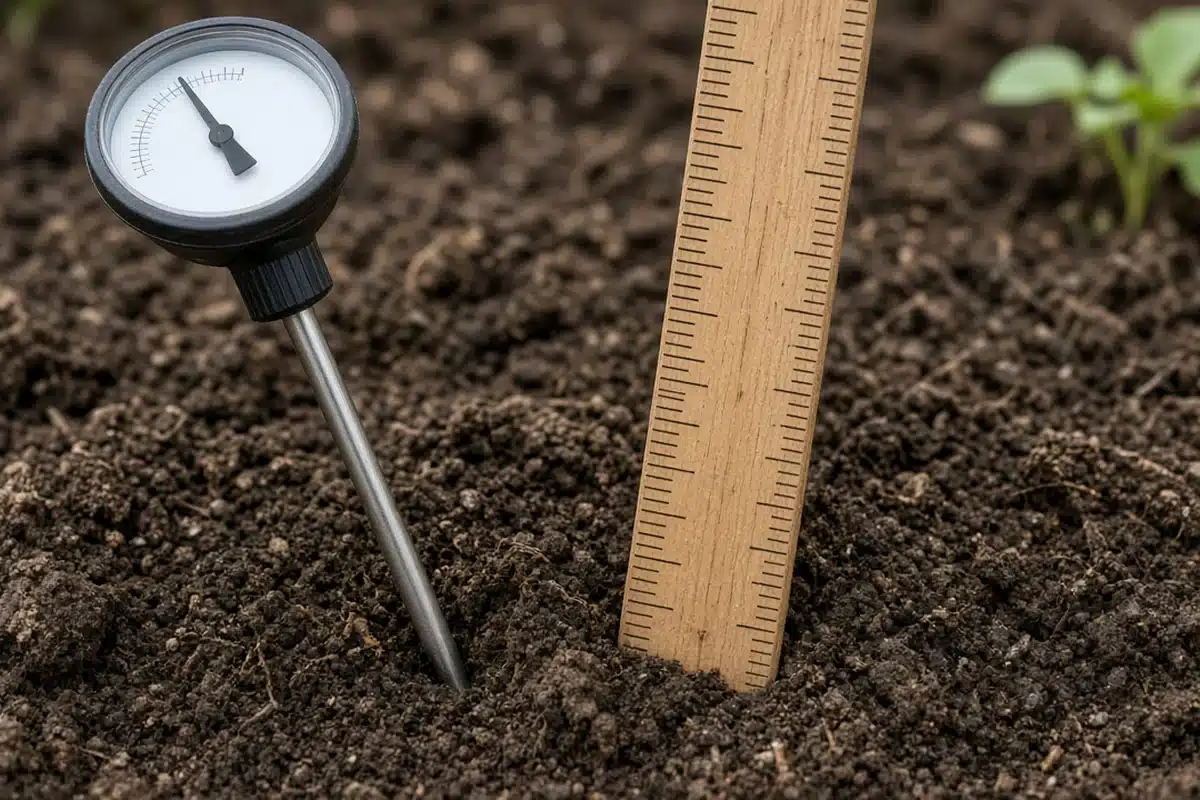
- Push the probe into the soil to a depth of four to six inches. UW-Madison Extension recommends this depth for transplants, because that is where their roots will sit.
- Take readings at about the same time each day. UW-Madison suggests mid-day, between about 10 a.m. and noon.
- Repeat on three days in a row, as UW-Madison Extension recommends.
- Wait a minute or two for the reading to settle before you write it down.
- Record each reading with the date.
- Check more than one spot if your bed is large or partly shaded.
Taking readings over several days smooths out a single warm or cold morning and tells you whether the soil is warming steadily.
What temperature do warm-season crops need
UW-Madison Extension publishes a chart of minimum soil temperatures and notes that it can guide when to set out transplants, measured at the four to six inch depth. Warm-season crops sit at the top of that chart. For example, it gives a minimum of 65°F for peppers and cucumbers, and 70°F for tomatoes and squash.
Washington State University Extension adds that tender crops such as tomatoes should not be set out until nighttime air temperatures stay above 55°F, and that you should wait until all danger of frost has passed.
Neither source gives a figure for cannabis. As general guidance, treat it like other warm-season, frost-tender crops. Wait until frost danger has passed, the soil at transplant depth has warmed steadily over several days and nights are no longer cold. Your local extension office can help with conditions in your area.
How to warm cold soil
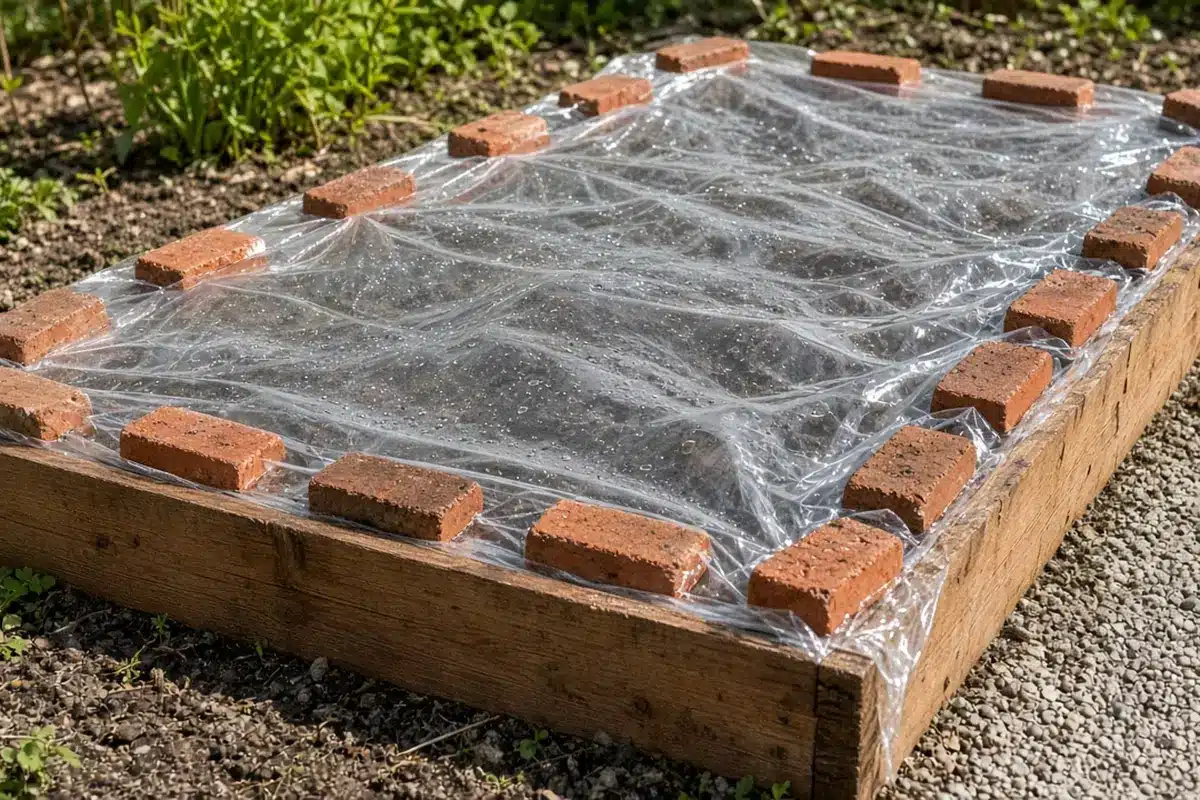
If your soil is slow to warm, a few methods can help. UW-Madison Extension explains that a dark surface, such as open ground or soil covered with black plastic, warms faster on a sunny day than soil covered with light-colored mulch. It adds that clear plastic also warms soil through a greenhouse effect, trapping heat and moisture. University of Maine Cooperative Extension notes that clear plastic is typically removed before planting, since leaving it on the ground around crop plants could create excessive heat and injure them.
Raised beds help too. UW-Madison Extension notes that raised beds about four to eight inches tall or more will be warmer in the upper few inches than soil at ground level. Washington State University Extension agrees, saying the better drainage of raised beds leads to warmer soil in spring, so you can plant into warmer soil earlier.
A few practical tips:
- Lay plastic over the bed a week or two before you plan to plant, and secure the edges.
- Pull back heavy mulch in spring so sun can reach the soil. Add it back once the soil has warmed.
- Choose a bed in full sun for your earliest plantings.
- Keep checking with your thermometer so you know when the soil is ready.
Waiting out a cold spell
Even after the soil warms, a late cold snap can arrive. UW-Madison Extension notes that a late freeze is still possible, so be ready to cover beds if needed.
If cold weather is in the forecast after you have planted:
- Cover young plants overnight with a frost cloth or row cover. Washington State University Extension notes that fabric row covers can raise daytime temperatures by a few degrees. It also warns not to let covers rest on plants, since frost damage can occur where the material touches them, and suggests setting covers over hoops.
- Remove covers during the day so plants get light and air.
- Water the soil a day before the cold arrives. Moist soil tends to hold heat better than dry soil.
- Keep potted transplants in a sheltered spot and delay planting until the cold passes.
If plants are still in pots, waiting a few extra days is usually safer than planting into cold ground. While you wait, keep them in a sheltered spot. To adjust plants to outdoor conditions, read hardening off cannabis seedlings, and for the move into the ground, see transplanting cannabis plants.
Keep a record
Soil temperatures follow a pattern from year to year, but the timing shifts with the weather. Keeping a simple record of your readings each spring shows how quickly your beds warm and which spots warm first. After a few seasons, you will have a good sense of when your garden is usually ready, and your thermometer will confirm it.
Troubleshooting
Transplants sit still for weeks after planting. The soil may have been too cold. Check soil temperature at four to six inches and wait for it to warm before the next planting.
Readings jump around from day to day. You may be measuring at different times or depths. Measure at the same depth and time of day on three days in a row.
One bed is always colder than the others. It may be shaded or covered with heavy mulch. Pull back mulch, try plastic or choose a sunnier bed.
The soil is warm but nights are cold. Wait until nights warm up before setting out tender plants, as Washington State University Extension advises.
A frost arrived after planting. Cover plants overnight and remove covers during the day.
Your thermometer reads oddly. Check it against another thermometer in a glass of water, and replace it if it is far off.
Sources
- University of Wisconsin-Madison Extension. When Is the Right Time to Plant Vegetable Seeds? Check Soil Temperature. https://hort.extension.wisc.edu/articles/when-is-the-right-time-to-plant-vegetable-seeds-check-soil-temperature/
- University of Maine Cooperative Extension. Bulletin #2752, Extending the Gardening Season. https://extension.umaine.edu/publications/2752e/
- Washington State University Extension. PNW Gardener’s Handbook, Chapter 7: Vegetable Gardening. https://extension.wsu.edu/pnw-gardeners-handbook/chapter-7-vegetable-gardening/
FAQ
How deep should I measure soil temperature for transplants?
UW-Madison Extension recommends inserting the thermometer probe four to six inches deep for transplants, since that is where their roots will grow. Measure in the bed where you plan to plant, at the same time each day, and take readings on three days in a row for an accurate picture.
What time of day should I check soil temperature?
UW-Madison Extension suggests taking readings at about the same time each day, usually mid-day, between about 10 a.m. and noon. Measuring at a consistent time makes your readings comparable from day to day. Repeat for three days in a row before deciding whether the soil is warm enough.
How can I warm my garden soil faster?
Cover it with plastic, use raised beds and pull back heavy mulch in spring. UW-Madison Extension explains that dark or plastic-covered soil warms faster in sun and raised beds warm sooner than ground-level soil. Washington State University Extension also notes raised beds drain better and warm earlier in spring.
What soil temperature is warm enough for cannabis transplants?
Extension charts give no figure for cannabis. As general guidance, treat it like other frost-tender, warm-season crops. Wait until frost danger has passed, soil at transplant depth has warmed steadily over several days and nights are no longer cold. Your local extension office can advise on your area.


