
Garden Soil vs Potting Mix: Which Is Best for Cannabis?
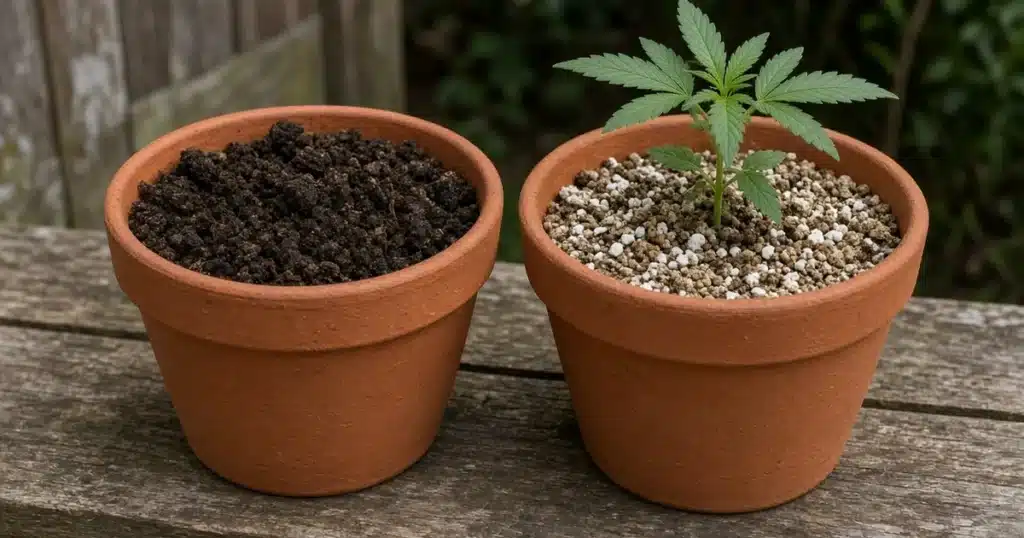
When you start growing cannabis in containers, you may want to dig some soil out of the garden and fill your pots with it. It is free and it grows plants just fine in the ground, so why not? The answer is that soil behaves very differently in a pot than it does in a bed. Iowa State University Extension puts it simply: garden soil alone is not a good growing medium for containers. University of Maryland Extension explains that container plants depend on a small volume of growing medium, and their roots cannot spread out to find water and nutrients the way roots in the ground can. Here you will see why garden soil struggles in pots, what a good potting mix contains, when garden soil does make sense and how to choose bagged products by type.
What growing media has to do
University of Maryland Extension explains that a growing medium has three main jobs:
- Supply roots with nutrients, air and water.
- Allow for maximum root growth.
- Physically support the plant.
Roots grow in the spaces between soil particles, and air and water travel through those same spaces. Maryland Extension explains that when you water, the water moves through these pores and pushes air out. If extra water cannot drain away, fresh air cannot get back in and roots suffocate. That is the core of the garden soil vs potting mix question. A good container medium keeps enough of those spaces open for both air and water.
Why garden soil struggles in pots
Iowa State Extension explains that garden soil compacts when placed in a container, which leads to poor drainage and poor aeration. University of Maryland Extension adds that soils are too dense to allow good air and water movement in a container, and that they hold water so well in their small pores that they can drown roots, especially in shallow containers.
There is another problem, according to Iowa State Extension. As garden soil dries in a pot, it pulls away from the inside of the container. Water then runs down the gap between the soil and the pot wall and out the bottom, without wetting the root ball. That makes it hard to water plants properly.
In the ground, the same soil works because it is part of a much larger, connected system. Water can drain down and away, worms and roots keep channels open and the soil is not confined by the walls of a pot.
What is in a good potting mix
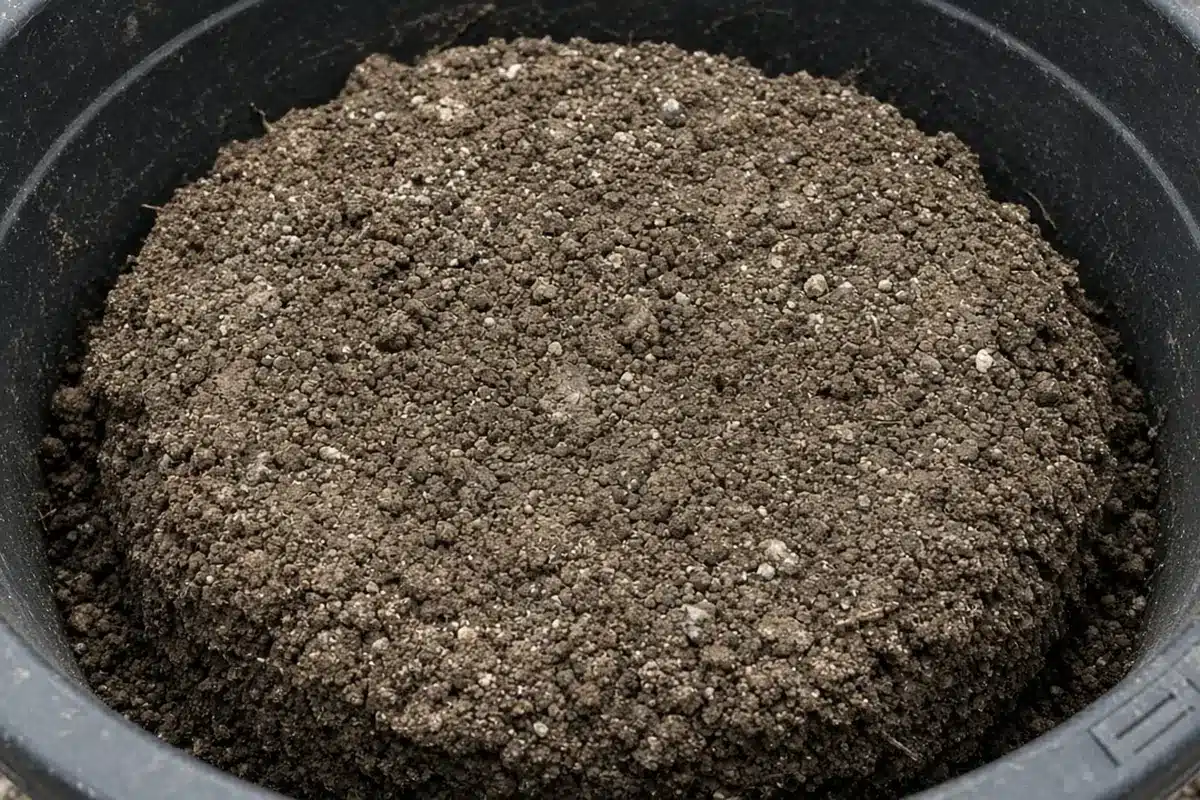
University of Maryland Extension describes commercial soilless mixes as an excellent choice for containers. It notes that they are lightweight, drain well, hold water and nutrients and are generally free of weeds, insects and diseases. Iowa State Extension agrees that a commercial potting mix is often the best choice for containers.
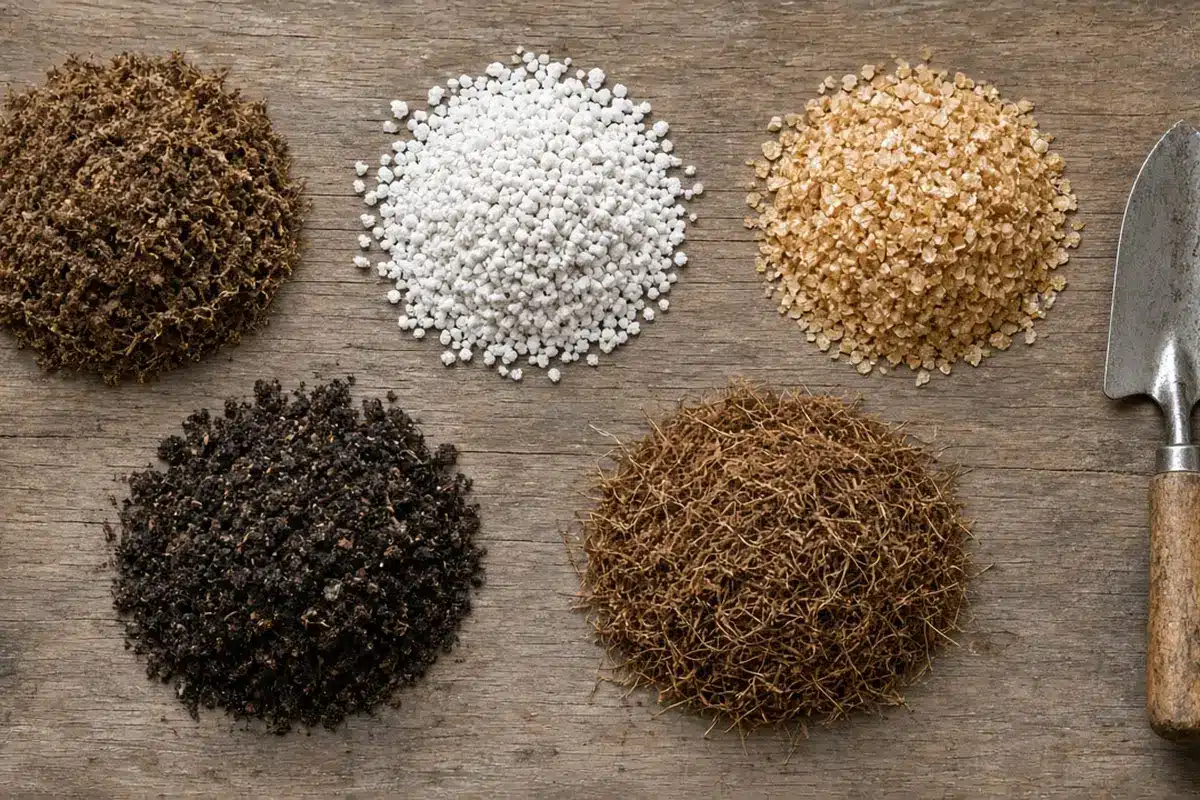
University of Maryland Extension names ingredients commonly found in these mixes:
- Sphagnum peat moss.
- Perlite.
- Vermiculite.
- Composted bark.
- Compost.
- Coconut coir.
- Small amounts of lime and fertilizer.
Maryland Extension puts the typical pH of these mixes at about 6.2. It also warns that a dry soilless mix can shed water, so it suggests working water into the mix with your hands, wearing gloves, until it is thoroughly wet before planting.
Compost in container mixes
University of Maryland Extension says it is highly recommended to include some compost in container growing media. It notes that compost contains the major and minor nutrients plants need and can stand in for sphagnum peat moss, which has very few nutrients, though peat holds water better than compost. Maryland adds that nutrients in compost are released slowly and are usually not enough for a whole season.
It gives these examples of good mixes for container vegetables:
- 100% compost.
- 100% soilless mix.
- Half soilless mix and half compost.
When garden soil does make sense
Garden soil is not useless in containers, but it needs to be used carefully. University of Maryland Extension says topsoil should only be added to very large containers and should not make up more than about 5 to 10% of the volume.
Iowa State Extension offers a homemade option using equal amounts by volume of garden soil, sphagnum peat moss and perlite. The peat and perlite open up the soil so it drains and breathes better than garden soil alone.
Soil for beds vs soil for pots
The difference comes down to scale and drainage. In a garden bed or raised bed, roots can spread out, water drains into the ground below and soil life keeps the structure open. Native garden soil improved with compost is usually the right choice for beds. In containers, a lighter mix that holds its structure is the better choice.
A simple way to think about it:
- In-ground beds: work with your native soil and improve it.
- Raised beds: use a blend that suits a larger volume and connects to the ground below.
- Containers: use a light, well-drained potting mix with little or no garden soil.
Whatever you grow in, add organic matter over time. A layer of compost worked into beds each year improves structure and drainage, and a layer of mulch on top helps hold moisture. Container mixes, by contrast, are usually replaced or refreshed instead of built up year after year.
Choosing the containers themselves is covered by Kind Seed Co in the best cannabis growing containers.
How to choose bagged products by type
Bagged products can be confusing because the names overlap. University of Maryland Extension notes that products sold as topsoil, planting soil, planting mix or potting soil vary a great deal in composition and quality. A label alone does not tell you what is inside.
Use these tips from both sources when choosing:
- Look for lightweight, well-drained mixes. Iowa State Extension says high quality mixes are lightweight, well-drained, free of disease organisms and weed seeds, hold moisture and nutrients well and do not readily compact.
- Be wary of very cheap, heavy bags. Iowa State Extension says poor quality mixes are often inexpensive, black, heavy and do not drain well.
- Check the ingredient list. University of Maryland Extension suggests avoiding mixes that contain sedge peat, feel heavy or gritty, have very fine particles or appear clumped.
- Skip bark fines and wood mulch as the main ingredient for container plants. University of Maryland Extension notes they are high in carbon and low in nutrients.
- If you add sand, University of Maryland Extension says to use only coarse builder sand, not play sand.
For starting seedlings, a finer mix is often used. Read seed starting mix for cannabis for that.
Reusing potting mix
You do not have to throw out potting mix every year. University of Maryland Extension suggests emptying containers at the end of the season, removing plant residue and tags and storing the mix in a covered bin or heavy bags. It advises against saving mix if root diseases were a problem. Because soilless mixes and compost break down and lose nutrients over time, it suggests mixing last year’s media half and half with fresh mix or compost the following year.
Troubleshooting
Water drains out the bottom right away. The mix may have dried and pulled away from the sides. Soak the pot in a tub of water and switch to a lighter mix next time.
The pot stays soggy for days. The mix may be too dense or contain garden soil. Repot into a lighter, well-drained mix.
New potting mix will not absorb water. Soilless mixes repel water when dry. Work water in by hand until it is fully moist before planting.
Plants in a reused mix look pale. Old mix loses nutrients over time. Blend it with fresh mix or compost.
A bagged mix feels heavy and gritty. It may be low quality. Choose a lighter mix with a clear ingredient list.
Weeds sprout in your containers. The mix or soil may have carried weed seeds. Use a quality commercial mix.
Sources
- Iowa State University Extension and Outreach. Can I Use Garden Soil in Containers or Should I Purchase a Commercial Potting Mix? https://yardandgarden.extension.iastate.edu/faq/i-would-grow-few-vegetables-containers-can-i-use-garden-soil-or-should-i-purchase-commercial
- University of Maryland Extension. Growing Media (Potting Soil) for Containers. https://www.extension.umd.edu/resource/growing-media-potting-soil-containers
FAQ
Can I use garden soil in pots for cannabis?
Not on its own. Iowa State Extension says garden soil compacts in containers, causing poor drainage and aeration, and pulls away from the pot as it dries. University of Maryland Extension says topsoil should only go in very large containers and make up no more than about 5 to 10% of the volume.
What is the difference between garden soil and potting mix?
Garden soil is dense mineral soil that works well in the ground. Potting mix is a lighter blend made for containers. University of Maryland Extension notes that soilless mixes often contain peat moss, perlite, vermiculite, composted bark, compost or coir, so they drain well and stay airy.
Can I make my own potting mix?
Yes. Iowa State Extension suggests equal amounts by volume of garden soil, sphagnum peat moss and perlite. University of Maryland Extension names other good container options, including 100% compost, 100% soilless mix or a half and half blend of the two. Mix thoroughly and wet it well before planting.
Can I reuse potting mix next year?
Usually, yes. University of Maryland Extension suggests removing plant residue, storing the mix covered and blending it half and half with fresh mix or compost next season. It advises against saving mix if root diseases were a problem, since old mix also loses nutrients and breaks down over time.


