
Watering Plants While on Vacation: Cannabis Containers
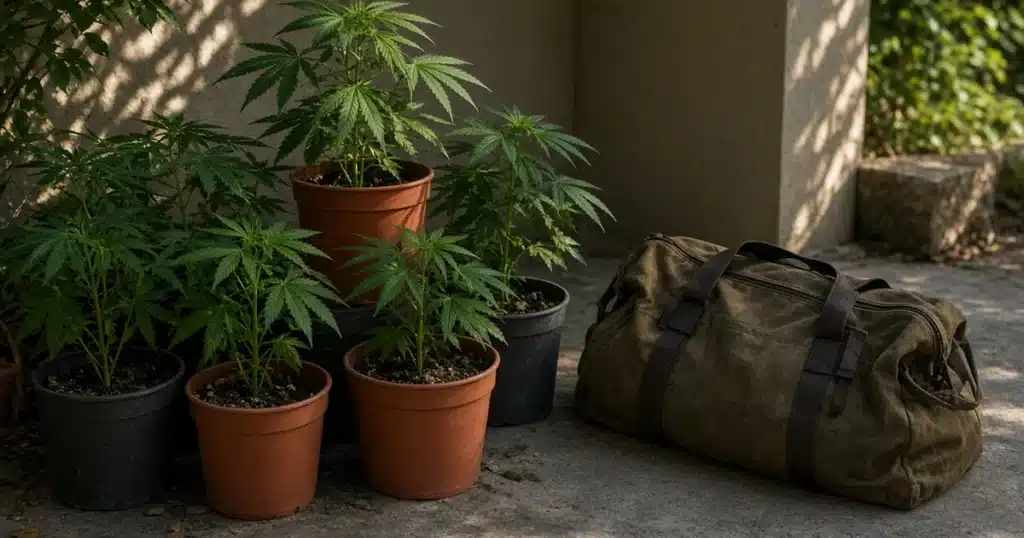
Container plants dry out faster than plants in the ground. In the heat of summer, a pot that seemed fine in the morning can be bone dry by evening. That makes leaving home, even for a few days, a real worry for anyone growing cannabis in containers. Kansas State University Extension notes that summer heat may call for daily watering of container plants. The good news is that a little planning keeps most plants healthy through a short trip. Washington State University Extension explains that for a weekend away, extra water the day before you leave is usually enough, while a trip of ten days or more needs a fuller plan. Both are covered here, from simple no-cost tricks to wick setups and timers.
Start planning early
The best vacation watering plans start well before you pack. Washington State University Extension recommends not planting anything new for about four to six weeks before you leave. Fresh transplants have not rooted far yet, so they dry out fast. Plants that have had time to settle in handle a few days of less attention much better.
Early planning also gives you time to test any system you set up. Washington State Extension advises making sure a wick setup works correctly several weeks in advance so you can adjust it. The same idea applies to drip lines and timers. A system you test the week before you leave is far more reliable than one you set up the night before.
Give a deep soak before you leave
The single most useful step is a thorough watering right before you go. Washington State University Extension recommends soaking everything well the day before you leave, so the water reaches at least six inches deep. For smaller pots and hanging baskets, it suggests soaking them in a bucket of water so the moisture reaches the center of the pot.
To check how deep the water went, WSU suggests digging a small hole and looking at how wet the soil is at different depths. Darker soil means wetter soil, while lighter soil is drier.
Move and group pots in shade
Two simple, no-cost tricks buy plants extra time. Kansas State University Extension suggests grouping containers close together so their canopies touch. It explains that grouping reduces water loss from the pots and also makes the job easier for anyone watering for you. Washington State Extension adds that grouping by water needs creates a more humid environment.
Another Kansas State tip is to move plants from sunny spots into shade. It notes that a short stay in the shade will not harm sun-loving plants and can give you a day or two of relief. Washington State Extension recommends a spot with afternoon shade.
For outdoor cannabis, a spot with morning sun and afternoon shade is a good compromise. Plants still get some light, but they lose less water during the hottest part of the day. Move them back into full sun when you return.
Washington State Extension also suggests sinking small pots into the ground to keep roots cool and cut down on water loss.
Add mulch
Mulch slows how fast pots dry out. Washington State University Extension notes that mulch placed around plants reduces evaporation and runoff, improves water penetration into the root zone and limits weeds that compete for water. A layer of straw, shredded leaves or bark on top of the potting mix works well. More options are in mulch for cannabis.
Washington State Extension also recommends pulling weeds before you leave, since they take water your plants need.
How to set up a wick system, step by step
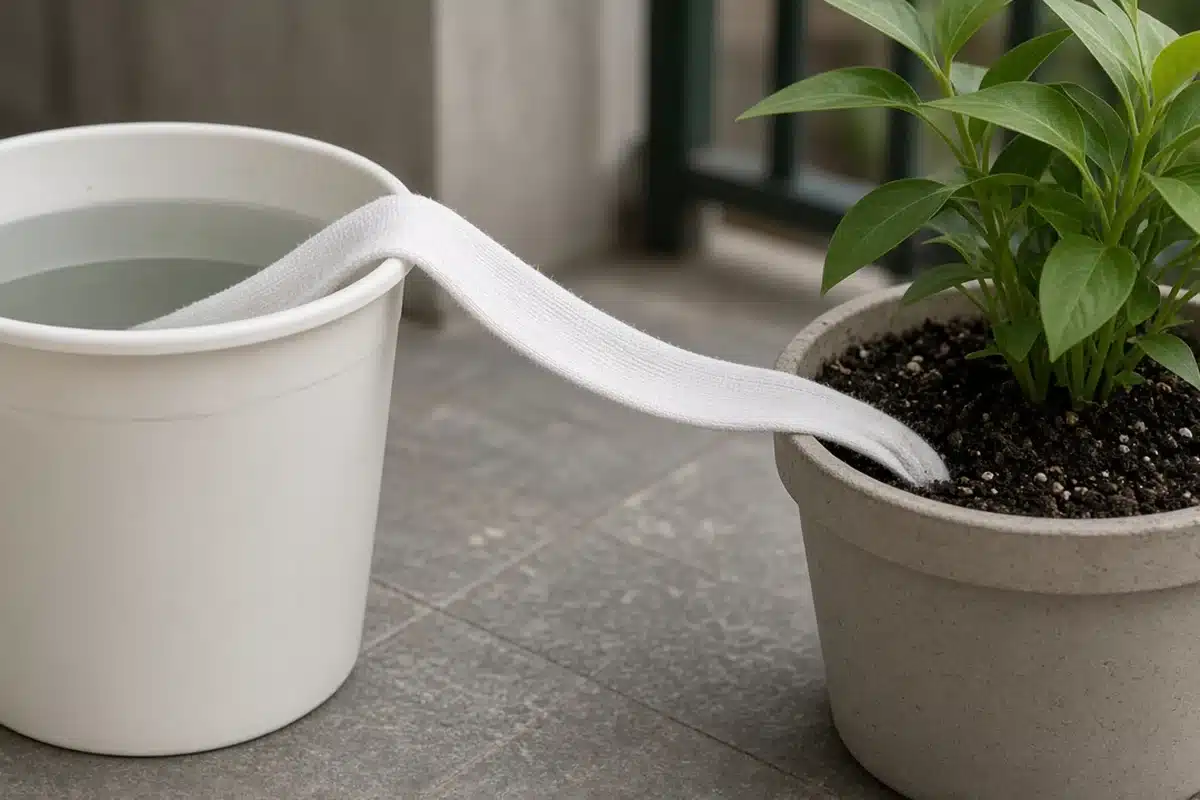
Washington State University Extension describes a low-cost wicking system that works indoors or out. Here is how to set one up:
- Choose an absorbent wick, such as a strip of cotton or an old cotton shirt cut into strips.
- Fill a container with water. A bottle, bowl or pail works. Washington State Extension notes that a large bucket may water several plants.
- Place the water container next to the pot.
- Push one end of the wick into the water.
- Bury the other end about three inches deep in the moist soil of the pot.
- As the soil dries, water moves along the wick into the pot.
- Test the setup several weeks before your trip, as Washington State Extension advises, and adjust the number of wicks if a pot stays too dry or too wet.
Washington State Extension simply says to place the water container next to the plant. Make sure it holds enough water for the whole trip, and test the wick before you leave so you can see how quickly it draws water into the pot.
Self-watering pots
Washington State University Extension mentions self-watering pots with a built-in water reservoir as a moderate-cost option, and notes that kits can convert most pots to self-watering. They are a good fit for growers who travel often. How they work is explained in Kind Seed Co’s post on self-watering pots for cannabis.
Timer-run systems
For longer trips or many containers, an automated system is the most reliable option. Washington State University Extension notes that a drip system with an automatic timer is an efficient solution for many containers, and that it works while you are away and when you are home. Kansas State Extension adds that many people hook containers into an existing drip system so they are watered on the same schedule as the rest of the yard, and that it works with proper planning.
Run the system for at least a week before you leave. Check each pot daily during that week to make sure it is getting enough water but not too much. Choosing and setting timers will get its own upcoming post on hose timers.
Ask a plant sitter
Kansas State University Extension says the most common solution is a reliable neighbor. Asking a friend to come over and water is usually the simplest choice. Kansas State suggests spending a few minutes showing them where the pots and water source are, and offering to return the favor. Washington State Extension also counts finding someone to water as a no-cost option.
Write clear notes for a plant sitter
A good note makes the job easy and avoids mistakes. Include:
- Where each pot is, especially if you moved them into shade.
- Where the hose, watering can and water source are.
- How to check if a pot needs water, such as pushing a finger a few inches into the soil.
- How much water to give, such as watering until a little runs out the bottom.
- What to do if a plant wilts badly.
- How to reach you.
Washington State Extension advises checking the soil instead of watering on a set schedule, so ask your sitter to check before watering. For signs that a plant needs water, read underwatering cannabis.
When you get home
Check every pot as soon as you are back. Push a finger a few inches into the soil of each one and water any that feel dry. If you moved plants into shade, return them to full sun over a few days instead of all at once. Look over the leaves for wilting or yellowing, and note which setups worked best so your next trip is even easier to plan.
Troubleshooting
Pots were dry when you got home. The soak may not have reached deep enough, or the trip was too long for the setup. Next time, soak deeper and add a wick or timer.
A wick did not keep the pot moist. The wick may be too thin or the water container too low. Use thicker cotton strips or add a second wick.
Pots are waterlogged after a timer system ran. Run times were too long. Shorten them and test again for a week before the next trip.
Plants grew pale or stretched in shade. They were in shade too long. Move them back into sun gradually after you return.
New transplants struggled while you were away. They had too little root. Avoid planting in the four to six weeks before a trip.
Your sitter overwatered. Ask them to check the soil before each watering instead of watering on a set schedule.
Sources
- Washington State University Extension. Vacation Time and Watering Containers. https://wpcdn.web.wsu.edu/extension/uploads/sites/57/2019/09/Vacation-Time-Watering-Containers.pdf
- Kansas State University Extension. Tips for Maintaining Container Plants When on Vacation. https://www.johnson.k-state.edu/programs/lawn-garden/agent-articles-fact-sheets-and-more/agent-articles/annual-and-perennial-flowers/tips-for-maintaining-container-plants-when-on-vacation.html
FAQ
How do I water container plants while on vacation?
For a short trip, soak pots deeply the day before you leave, group them together in afternoon shade and add mulch. For a longer trip, add a wick system, self-watering pots or a timer-run drip system, or ask a reliable neighbor to water. Test any system well before you go.
How long can container plants go without water?
It depends on pot size, weather and the plant. Washington State Extension notes that a weekend away is usually fine with extra water the day before, while ten days or more needs a fuller plan. Small pots dry out fastest, so give them extra attention or move them indoors.
Do wick watering systems work for pots?
Yes. Washington State University Extension describes a simple wick setup using cotton strips and a container of water placed beside the pot. One end sits in the water and the other goes about three inches into the soil. Test it several weeks ahead so you can adjust the number of wicks.
Should I move plants into shade while I am away?
Moving pots into shade for a short trip can help. Kansas State Extension notes a short stay in shade will not harm sun-loving plants and buys a day or two between waterings. A spot with morning sun and afternoon shade is a good compromise. Move plants back into sun gradually when you return.


