
Squirrels and Chipmunks in Cannabis Gardens: Fixes
Squirrels and chipmunks in cannabis gardens do most of their damage in the first few weeks. A row of freshly sown seeds or a tray of tender transplants is an easy meal, and small diggers can clear a bed in a morning. Penn State Extension notes that chipmunks may eat flower bulbs, seeds and seedlings, and UW-Madison Extension adds that chipmunks and ground squirrels dig up planted seeds and feed on seedlings. The fix is mostly about timing and a simple physical barrier, applied before the animals learn your bed is a food source.
Who is digging?
Start by naming the animal, because habits differ.
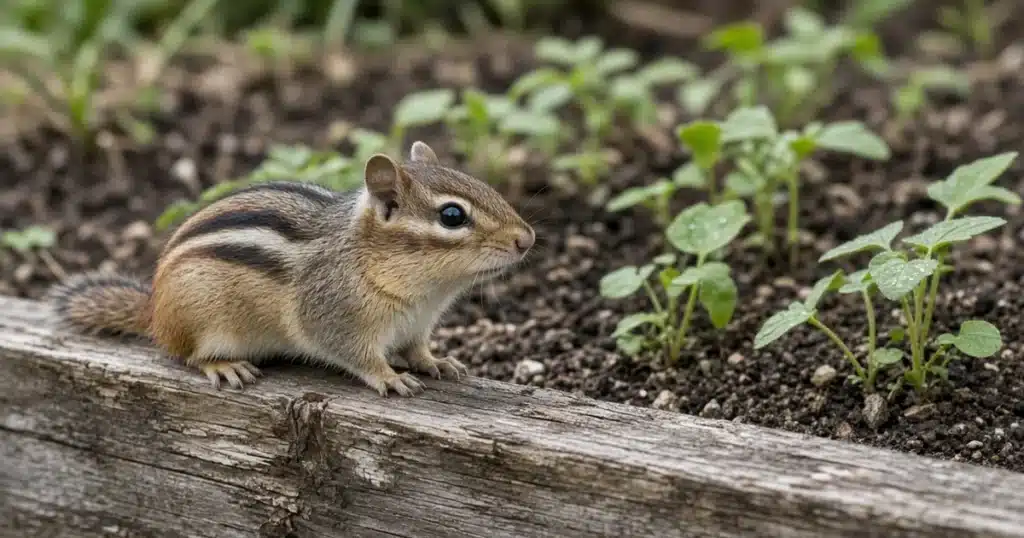
- Eastern chipmunk. Penn State Extension describes a small brown ground squirrel about 5 to 6 inches long, plus a 3 to 4 inch tail that is hairy but not bushy. It has five dark and two tan stripes along its back and stripes on the sides of its face.
- Thirteen-lined ground squirrel. UW-Madison Extension describes rows of light and dark stripes or dots along the back. Unlike chipmunks, it has no stripes on the sides of its head, and it runs with its tail held straight out, while chipmunks run with their tails upright.
- Tree squirrels. The larger, bushy-tailed squirrels spend much of their time in trees. Penn State Extension notes that red squirrels spend a great deal of time in trees, while chipmunks spend most of their time on the ground.
Chipmunks also have a giveaway call. Penn State Extension describes a sharp "chuck-chuck-chuck," compared with the red squirrel’s high-pitched chatter.
What the damage looks like
- Small holes dug where seeds were sown, often with the seed or hull gone.
- Seedlings snipped off, uprooted or missing overnight.
- Disturbed soil around new transplants.
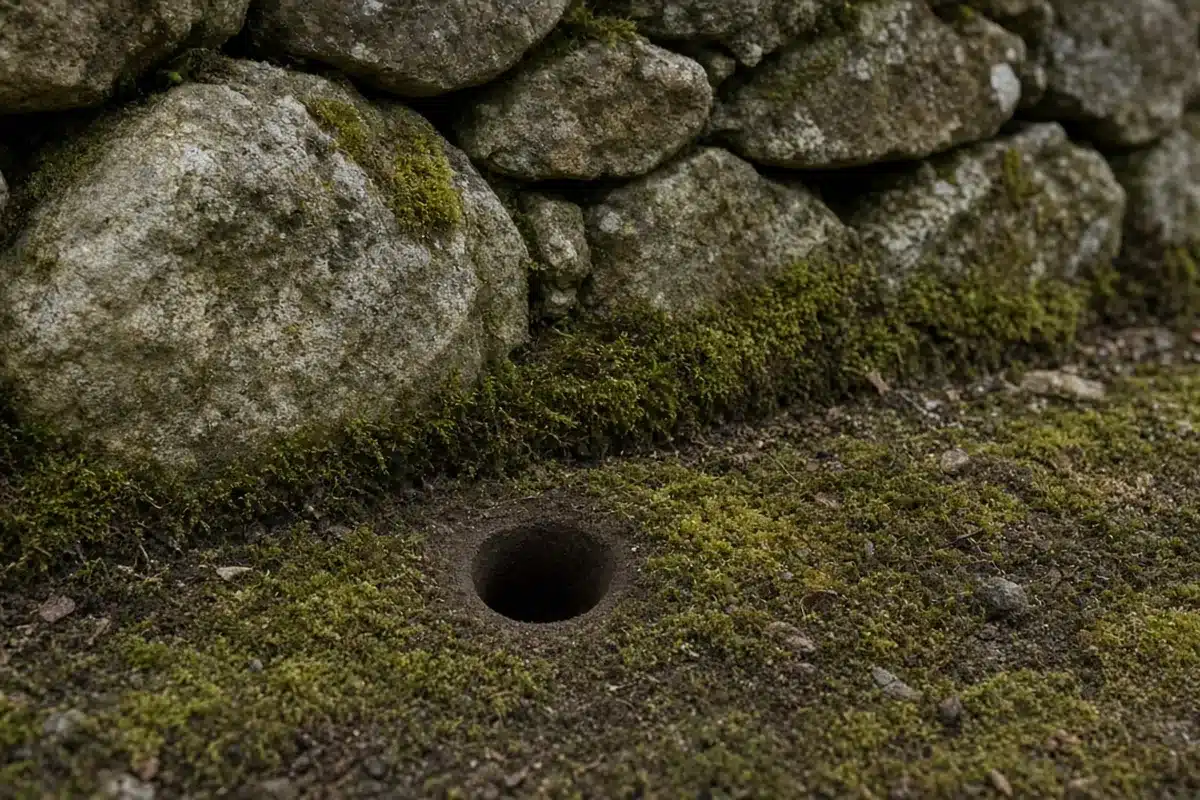
- Small burrow openings nearby. Penn State Extension notes that chipmunk burrow entrances are about 2 inches across with no obvious pile of soil, because the animal carries the dirt away in its cheek pouches.
If damage is mostly chewed leaves on larger plants, rabbits are likely, and Kind Seed Co profiles them in rabbits and cannabis. If seedlings are pulled up but no digging is visible, birds may be the culprit, which birds and cannabis addresses.
Habits that matter for timing
Penn State Extension notes that chipmunks are most active in the early morning and late afternoon. They go quiet over winter and rely on food stored in their burrows rather than true hibernation, and may come out on warm winter days. UW-Madison Extension notes that chipmunks generally emerge in late March, and that ground squirrels mate soon after waking from hibernation in spring.
Their diet explains why seeds disappear. Penn State Extension lists grains, nuts, berries, seeds, mushrooms, insects and carrion, and notes that chipmunks cache food in their burrows throughout the year. UW-Madison Extension says a single storage chamber can hold around nine gallons of food. Ground squirrels prefer fresh green plants such as grasses, then switch to seeds as autumn approaches, according to UW-Madison Extension.
Spring is also breeding season. Penn State Extension notes that chipmunks mate twice a year and give birth to two to five young from April to May and again from August to October, so the number of mouths near a bed can grow fast as summer goes on.
They also stay close to home. Penn State Extension notes that a chipmunk’s home range can reach half an acre, but it defends only about 50 feet around its burrow entrance. A burrow near a bed means the bed sits inside its daily patrol.
For a cannabis grower, the risky window is clear. Seeds sown outdoors in spring and transplants set out in late spring arrive just as these animals are active, hungry and raising young.
Hardware cloth: the main defense
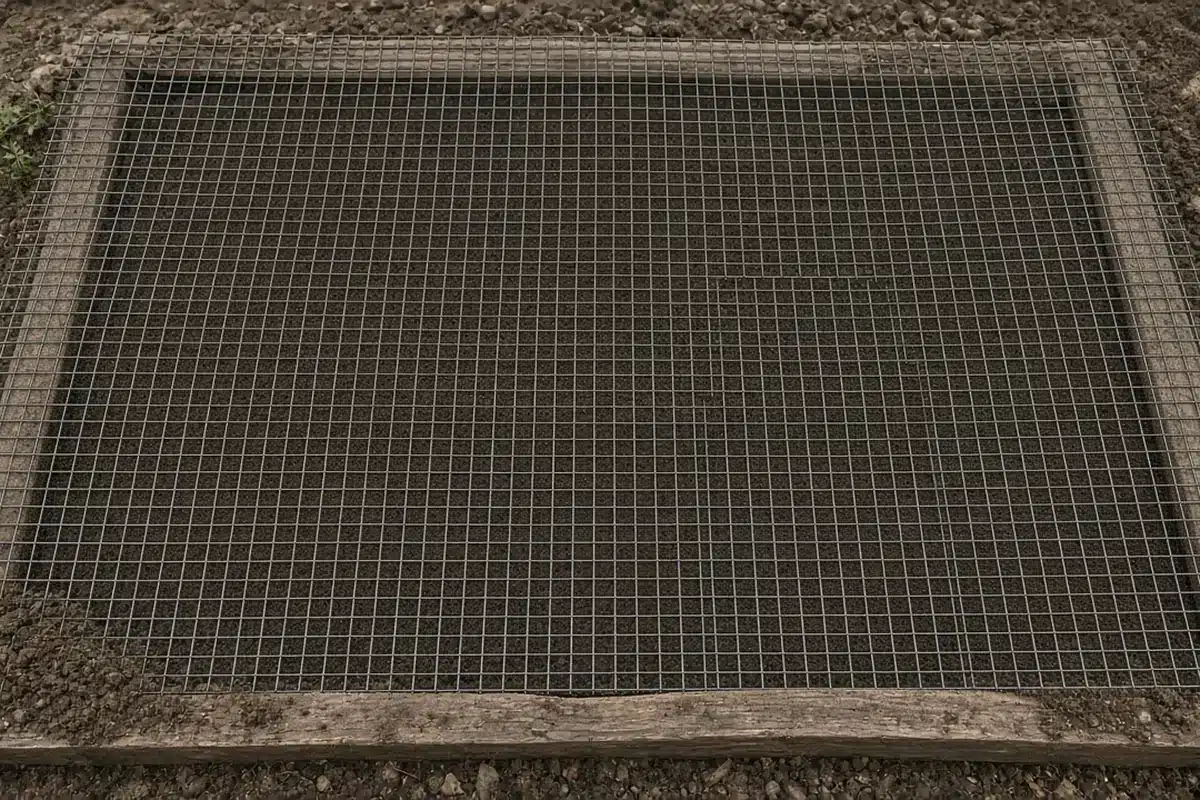
Both sources point to the same tool. Penn State Extension recommends quarter-inch hardware cloth over seeds and bulbs, covered with soil and extending at least 1 foot past each edge of the planting. UW-Madison Extension describes the same approach. After planting, lay the hardware cloth directly on the soil, top it with a thin layer of soil, and run it at least a foot past each margin.
Penn State Extension also notes that where chipmunk numbers are high, exclusion is often cheaper than trapping.
How to protect cannabis seeds and seedlings, step by step
- Sow seeds or set transplants as usual.
- Cut quarter-inch hardware cloth large enough to reach at least 1 foot past every edge of the planted area.
- For seeds, lay the cloth flat on the soil and cover it with a thin layer of soil.
- For transplants, cut an opening in the cloth large enough for the stem to grow, or use a separate square around each plant.
- Pin the edges down so animals cannot lift them.
- Check daily for digging along the edges in the first weeks.
- Once plants are sturdy and the seed stage has passed, widen stem openings or lift the cloth before stems grow too thick.
For small seedlings, a wire cage or upturned mesh basket over each plant is a common alternative. Make sure it is pinned down firmly and tall enough not to touch leaves.
UW-Madison Extension points out one limit. Exclusion can be impractical where rodents can dig under or climb over the protected area. A cage with a mesh top and buried edges suits beds where digging under is a problem.
Making the garden less inviting
Habitat changes reduce pressure over time.
- Move bird feeders. Penn State Extension suggests placing feeders at least 15 to 30 feet from buildings, and UW-Madison Extension advises keeping them away from gardens you want to protect, since spilled seed attracts rodents.
- Store seed safely. UW-Madison Extension recommends rodent-proof containers for seed and other food.
- Break up cover. Both sources advise against continuous plantings of shrubs and ground covers that connect wooded areas to buildings or gardens, since this gives rodents protected travel routes.
- Manage woodpiles and debris. UW-Madison Extension advises storing wood away from buildings and garden edges, and Penn State Extension notes that debris makes burrows harder to spot.
- Keep grass short around bed edges. Penn State Extension notes that short grass offers less cover and makes chipmunks use an area less.
What about repellents and trapping?
Penn State Extension notes that taste repellents labeled for squirrels exist for bulbs, seeds and foliage not meant for consumption, that they need repeated application and that they usually do not give complete protection. Since cannabis is a consumed crop, read any label carefully and favor physical barriers.
Penn State Extension calls trapping the most practical method of removing chipmunks in many home situations, using live traps baited with foods such as peanut butter or sunflower seeds. Ask your local Extension office about trapping in your area before you start. For most growers, hardware cloth and a few weeks of vigilance are enough.
If you do trap, Penn State Extension has a few tips worth following.
- Place the trap along paths where chipmunks are seen often.
- Secure the trap so it does not shift when the animal steps in, since movement can spring it early and scare the chipmunk off.
- Prebait for 2 to 3 days with the doors wired open, then set the trap once the chipmunk is feeding steadily on the bait.
- Check traps often, and release any animal you did not mean to catch.
- Avoid direct contact with a trapped chipmunk.
Troubleshooting
Seeds vanish even under cloth. The cloth may not reach far enough. Extend it at least a foot past every edge and pin it down.
Transplants are pulled up the first night. Fresh soil around new plants invites digging. Firm the soil, add a mesh collar or cage and check at dawn.
Damage moves to the next bed. Protect every new planting, not just the one that was hit first.
The problem returns each spring. Look for burrows within about 50 feet of the bed, and reduce cover and food sources around them.
Sources
- Penn State Extension. Chipmunks. https://extension.psu.edu/chipmunks
- UW-Madison Extension. Chipmunk and Ground Squirrel Ecology and Damage Management (G3997-011). https://hort.extension.wisc.edu/files/2023/12/G3997-011-Chipmunk-and-Ground-Squirrel-Ecology-and-Damage-Management-David-Drake-Carolin-Tappe-Ryan-Klausch-and-Jason-Suckow.pdf
FAQ
How do I stop squirrels from digging up my seedlings?
Cover the planting with quarter-inch hardware cloth. Penn State Extension and UW-Madison Extension both recommend laying it over seeds, topping it with a thin layer of soil and extending it at least 1 foot past each edge. Pin the edges down and cut openings for stems as plants grow, or use mesh cages over transplants.
Do chipmunks eat seedlings?
Yes. Penn State Extension notes that chipmunks may eat flower bulbs, seeds and seedlings, and UW-Madison Extension says chipmunks and ground squirrels dig up planted seeds and feed on seedlings. Their diet is mostly seeds, nuts, berries and insects, so freshly sown beds are especially attractive in spring when they are active.
When are chipmunks most active in the garden?
Penn State Extension says chipmunks are most active in the early morning and late afternoon. They are quiet through winter and become active again in spring, which overlaps with outdoor sowing and transplanting. Check new beds at dawn and in late afternoon during the first weeks after planting to catch problems early.
How can I tell a chipmunk from a ground squirrel?
Look at the head and tail. UW-Madison Extension notes that chipmunks have stripes on the sides of the face, while thirteen-lined ground squirrels do not. Ground squirrels run with their tails straight out, and chipmunks run with their tails held upright. Penn State Extension adds that chipmunks make a sharp chuck-chuck call.


