
Sandy Soil for Cannabis: Watering and Building
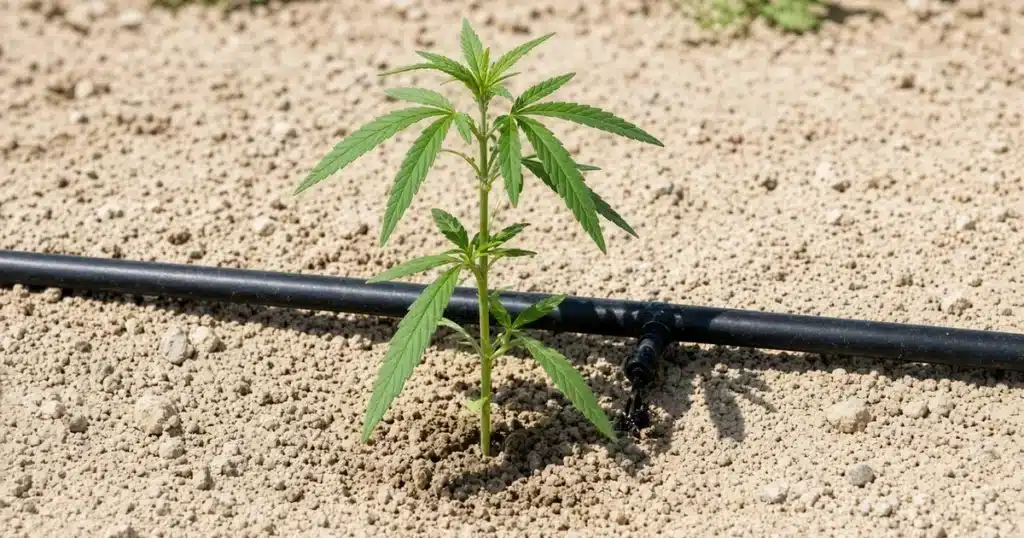
Sandy soil for cannabis has a reputation as a problem, but it has real strengths. It drains fast, warms early in spring and lets air reach roots even after heavy rain. Its weakness is just as clear. Water and nutrients slip through it quickly, so plants can go from fine to thirsty in a single hot afternoon. Colorado State University Extension sums it up well. Plants on sandy soil do not use more water, they just need to be watered more often in smaller amounts. Learn to work with that, and a sandy bed can grow a strong crop.
How to tell if your soil is sandy
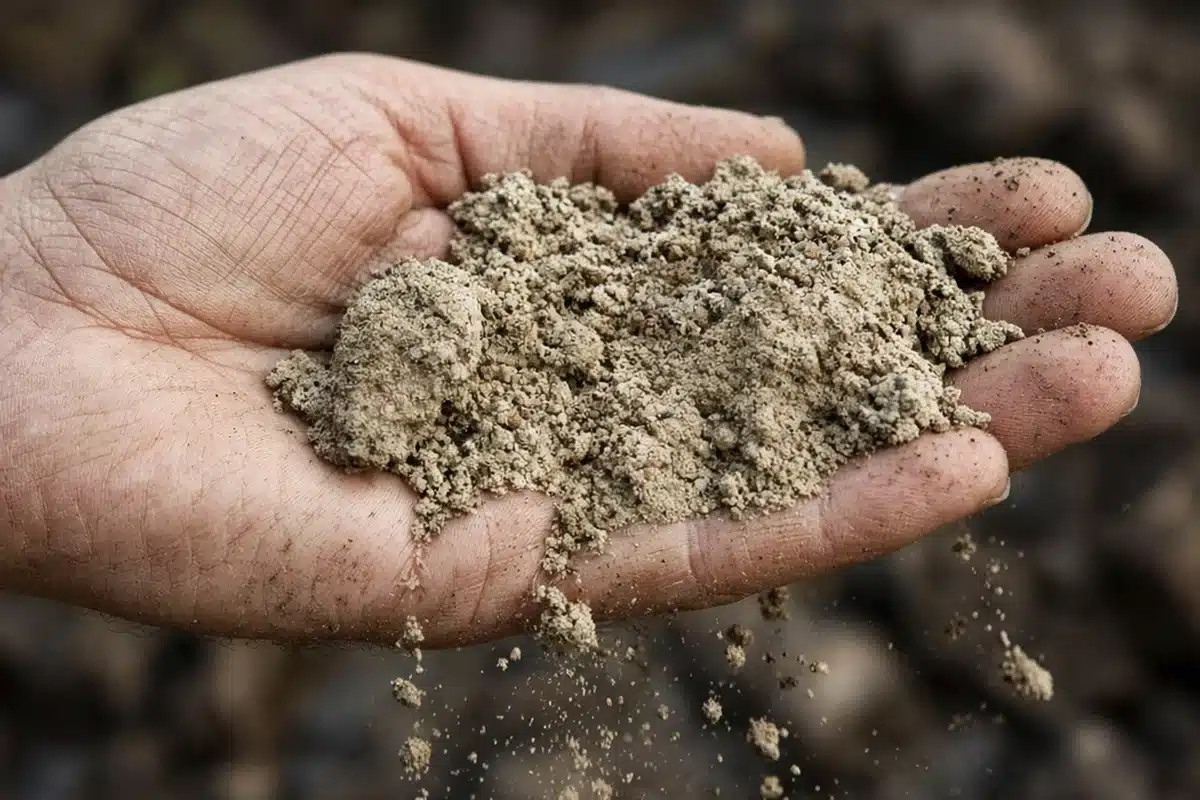
Sand is the largest of the three mineral particle sizes. Utah State University Extension describes sand particles as 0.05 to 2 millimeters across and large enough to see with the naked eye. It notes that wet sandy soil feels gritty between the fingers and will not hold its shape when squeezed into a ball.
Texture names come from the mix of particles. Utah State Extension notes that loamy sand is at least 70 percent sand and sand is at least 90 percent sand. Colorado State Extension adds a detail that matters for growers. True sandy soil needs more than 50 percent medium to coarse sand. Fine sand, like the bagged sand sold for play boxes, adds little drainage and does not behave the same way.
Sand comes in more than one kind. Utah State Extension notes that natural sands with a mix of particle sizes are hard to compact, while dune and beach sands with more uniform particles pack tightly over time. Even when packed, sandy soils still let air move freely around roots.
For a quick check, rub a moist pinch of soil and try to squeeze it into a ball. For real numbers, run a jar test at home or send a sample to a lab. What a lab report includes is explained by Kind Seed Co in soil testing for cannabis.
Why sand drains so fast
It comes down to pore space. Colorado State Extension explains that water clings to particles and fills small pores, while air fills large ones. Sandy soils have lots of large pores and few small ones, so water drains downward under gravity and little is held for roots.
The numbers are striking. Utah State Extension reports that sandy soil takes in water at 1 to 10 inches per hour and that about half an inch of water recharges one foot of sandy soil. Colorado State Extension’s comparison shows water reaching 24 inches deep in sandy soil in about 40 minutes, against about 4 hours in clayey soil.
Water also stays in a narrow column. Utah State Extension notes that water moves rapidly downward in sand and does not spread sideways to any great extent. Colorado State Extension’s data show sideways spread in sand of about 12 to 24 inches, against up to 60 inches in clayey soil. That shapes where you put your water.
Sandy soil compared with clay
Colorado State Extension’s comparison table is a handy summary:
- Water-holding capacity is low in sand and high in clay.
- Nutrient-holding capacity is low in sand and high in clay.
- Drainage is fast in sand and slow in clay.
- Sand warms quickly in spring, while clay warms slowly.
- Sand seldom builds up salts, while clay can.
- Sand has moderate compaction potential, while clay has high.
If your bed looks like the opposite problem, heavy ground has its own article, clay soil for cannabis.
Watering cannabis in sandy soil, step by step
Watering is where sandy beds succeed or fail. Colorado State Extension warns that heavy irrigation on sand wastes water because it leaches below the root zone, and that water-soluble nutrients such as nitrogen leach with it.
- Water more often with smaller amounts instead of soaking the bed once a week.
- Put water directly over the roots. Utah State Extension advises placing drip emitters directly above the root zone because water will not spread far sideways in sand.
- Add a second emitter or ring of emitters as plants grow so the wetted zone keeps up with the roots.
- Check moisture with your finger a few inches down rather than judging by the surface.
- Expect to water more often in hot, windy weather and as plants get bigger.
- Avoid flooding the bed. Water that runs past the roots is lost, along with nutrients.
The exact schedule depends on your climate, plant size and how much organic matter is in the bed, so treat it as a pattern to adjust rather than a fixed routine.
Building better structure with organic matter
Both sources agree on the main fix. Utah State Extension calls organic matter the best amendment for sandy soils, and Colorado State Extension says the best practice is routine applications of organic matter. Colorado State Extension notes that organic matter holds ten times or more water and nutrients than sand, and that sandy soils with 4 to 5 percent organic matter make an ideal garden soil.
How to do it well:
- Use composted material. Utah State Extension advises composting woody, low-nitrogen materials such as bark, wood chips and straw before mixing them in.
- Mix it in thoroughly. Utah State Extension says amendments should always be thoroughly mixed in, not left as a layer.
- Know what you are buying. Utah State Extension suggests reading the label or asking for a list of ingredients before buying an organic matter mix from a nursery, garden center or composting company.
- Choose compost over raw material. Utah State Extension explains that compost usually carries more nitrogen than raw organic matter and is less likely to tie up minerals. High-nitrogen and previously composted materials can be mixed in directly.
- Add it over several seasons. Colorado State Extension describes soil improvement as a process that takes years rather than a single large application.
- Do not overdo it. Colorado State Extension warns that too much organic matter can lead to salt build-up and nutrient imbalances.
Mulch and other helpers
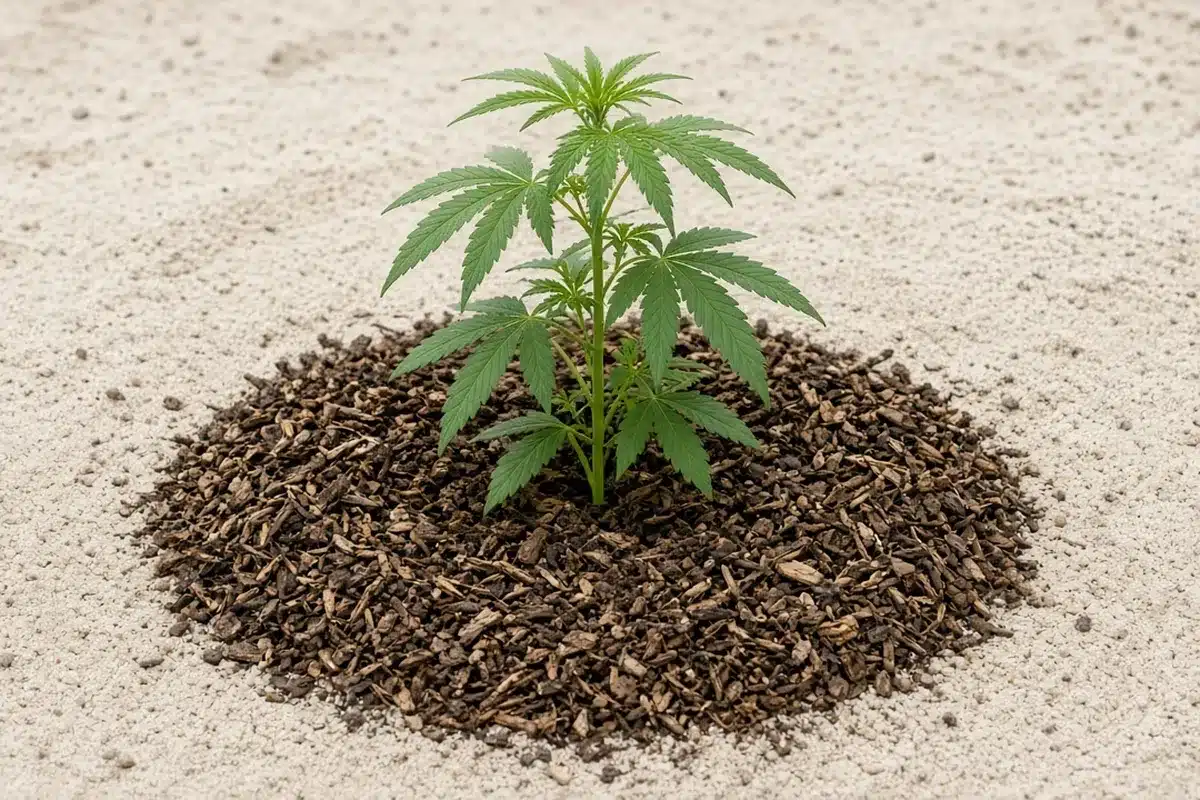
Colorado State Extension notes that organic mulch such as wood or bark chips slowly improves soil tilth as it breaks down and is worked in by soil organisms. It advises skipping weed fabric under the mulch so this can happen, and topping the mulch up periodically. On sand, a mulch layer also shades the surface and slows drying between waterings, which is general good practice for any fast-draining bed.
Where amending is not practical, Colorado State Extension lists other options. Space plants further apart to reduce competition, use smaller transplants that adapt more easily, and consider raised beds or containers.
What not to add to sandy soil
- Clay. Utah State Extension warns that mixing clay into sand in the wrong proportion can create something like low-grade concrete.
- Different soil in layers. Colorado State Extension explains that a sharp change in texture between layers slows water and air movement. Mix added soil with the soil below rather than layering it.
- Extra fertilizer to make up the difference. Colorado State Extension notes that heavy fertilization will not compensate for poor soil preparation.
Support for tall plants
Utah State Extension notes that sandy soils may not give enough physical support to plants with heavy tops, which is why trees on sand are often staked for their first seasons. Large outdoor cannabis plants carry a lot of weight late in the season, so plan stakes or a cage on loose sandy ground before plants get tall.
Troubleshooting sandy beds
Plants wilt by mid-afternoon. The root zone has dried out. Water more often, check that emitters sit over the roots and add mulch.
Leaves pale soon after heavy rain. Nutrients may have leached below the roots. Rebuild organic matter over time, and keep feeding light and regular rather than heavy and rare.
Water runs straight through containers or raised beds. The mix may be too coarse. Blend in composted material for more water-holding capacity.
Plants lean or topple. Sand gives little anchorage. Stake early.
Sources
- Utah State University Extension. Gardening in Sandy Soils. https://extension.usu.edu/yardandgarden/research/gardening-in-sandy-soils
- Colorado State University Extension. Managing Soil Tilth: Texture, Structure, and Pore Space (GardenNotes 213). https://extension.colostate.edu/resource/managing-soil-tilth-texture-structure-and-pore-space/
FAQ
Is sandy soil good for growing cannabis?
It can be. Sandy soil drains fast, holds plenty of air and warms quickly in spring. Its drawback is low water and nutrient holding, so plants need frequent, smaller waterings. Colorado State Extension notes that sandy soils with 4 to 5 percent organic matter make an ideal garden soil, so build organic matter steadily.
How often should I water cannabis in sandy soil?
More often than in loam or clay, but with less water each time. Colorado State Extension says plants on sand do not use more water, they just need frequent, smaller irrigations. Utah State Extension notes about half an inch of water recharges a foot of sandy soil. Check moisture a few inches down before watering.
What is the best way to improve sandy soil?
Add composted organic matter regularly and mix it in well. Utah State Extension calls organic matter the best amendment for sandy soils, and Colorado State Extension says it holds ten times or more water and nutrients than sand. Build it up over several seasons and avoid adding clay, which can create a hard, concrete-like mix.
Should I use drip irrigation in sandy soil?
Drip works well if emitters sit right above the roots. Utah State Extension explains that water moves straight down in sand and spreads very little sideways, so an emitter a short distance from the stem can miss the root zone. Add emitters as plants grow so the wetted area expands with the roots.


