
Black Vine Weevil in Cannabis Pots: Find and Stop It
A cannabis plant in a pot that wilts on moist soil, with a few leaves that look nibbled around the edges, can be hiding black vine weevil. This flightless beetle spends most of its life underground as a grub, and the grub is the stage that does the real harm. University of Maryland Extension calls it a major nursery and landscape pest that is extremely difficult to eliminate once it settles into a production site. Containers suit it well, because the larvae stay in the root ball and the adults hide around the pots by day. Kind Seed Co has laid out each life stage below, along with how to check a pot and how to keep the pest from moving through a container collection.
What does black vine weevil look like?
There are two stages a grower is likely to notice. The adult is a dark beetle with a short snout, and the larva is a pale grub that lives in the soil.
- Adults. University of Maryland Extension describes them as 7 to 9 mm long and dark black with patches of yellowish hairs on the wing covers. UConn Extension adds that they have a distinct short snout and elbowed antennae.
- No flight. The wing covers are fused together, so adults cannot fly. They walk from plant to plant, which is why a problem tends to build in one spot over several years.
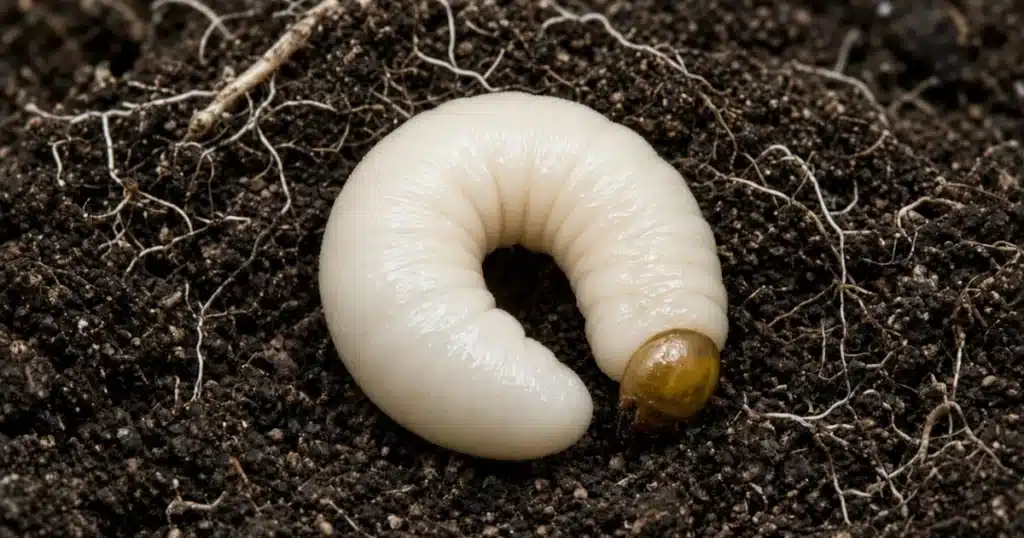
- Larvae. Both sources describe legless, cream to white grubs with brown or yellow-brown heads. They are typically C-shaped and grow to about half an inch long.
- Eggs. University of Maryland Extension says the eggs are round, less than 1 mm across, and white at first before turning pale brown.
- Pupae. The grubs pupate in a small earthen cell they form in the soil or potting mix, and the adult stays in that cell while its body hardens.
A legless grub matters for identification. Many soil larvae have small legs near the head, so a grub with no legs at all, found in a pot, is a strong clue. Wireworms are a different soil larva with a hard, shiny body, and they are covered in the post on wireworms in cannabis soil.
How do the adults and grubs damage a plant?
The two stages feed on different parts of the plant, and the damage they cause is very different in scale.
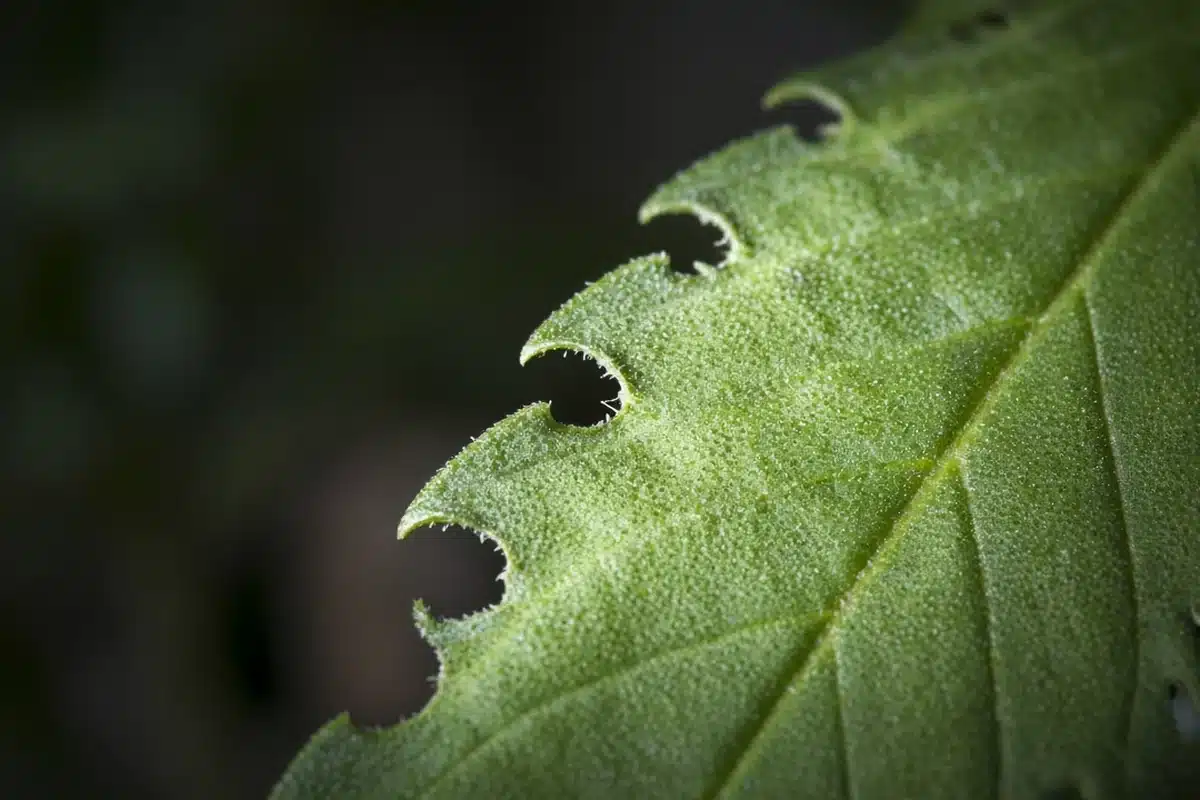
The adults feed at night and chew notches into the edges of leaves. UConn Extension describes the notches as C-shaped and calls the damage mainly cosmetic. University of Maryland Extension notes that notching is often only noticeable when the population is high, and that some plants show grubs in the roots with no leaf notching at all.
The larvae are the serious problem. University of Maryland Extension explains that young larvae feed on fine roots, while mature larvae move to stems, crowns and larger roots, sometimes boring inside them. On many plants, stems are girdled just below the soil line, and the plant dies. A plant with a damaged root system may suddenly wilt even though the soil is moist, which is easy to mistake for a watering problem.
How does the life cycle play out in containers?
Knowing the calendar helps you decide when to look and when to act. UConn Extension reports that all adults are females that reproduce without mating, so a single weevil carried in on a plant can start a population.
- Spring. Larvae that spent the winter in the soil resume feeding. UConn Extension notes that this early spring feeding often causes the heaviest damage.
- Early summer. Grubs pupate and adults emerge. University of Maryland Extension says adults usually start emerging in June and keep emerging over a 20 to 40 day period.
- Summer. New adults feed on leaves for about 3 weeks before they start laying eggs. University of Maryland Extension puts egg laying from late June to the end of October in its area.
- Late summer and fall. Eggs are laid on the soil surface near the stem. UConn Extension says they hatch in about two weeks and land in the top one to two inches of growing media, where the young larvae begin feeding on fine roots.
- Winter. The pest overwinters as larvae. University of Maryland Extension notes that overwintering larvae often move to the bottom of container-grown plants.
Outdoors there is usually one generation a year. Both sources note that in a greenhouse or other warm structure, several overlapping generations can occur, so every stage may be present at once.
How do you check a pot for weevils?
Because adults hide by day and larvae stay in the root ball, a weevil problem can go unnoticed until plants decline. A simple routine makes it easier to catch.
- Walk the plants after dark with a flashlight. Adults are active at night, so this is the easiest time to see them on leaves.
- Look for fresh notches along leaf margins in late spring and summer, as University of Maryland Extension recommends.
- Tip pots and check underneath. UConn Extension says adults rest by day at the base of favored plants and under and on the side of containers.
- Lay a piece of corrugated cardboard or a board on the soil near susceptible plants and lift it each morning. University of Maryland Extension suggests corrugated cardboard traps placed below the canopy.
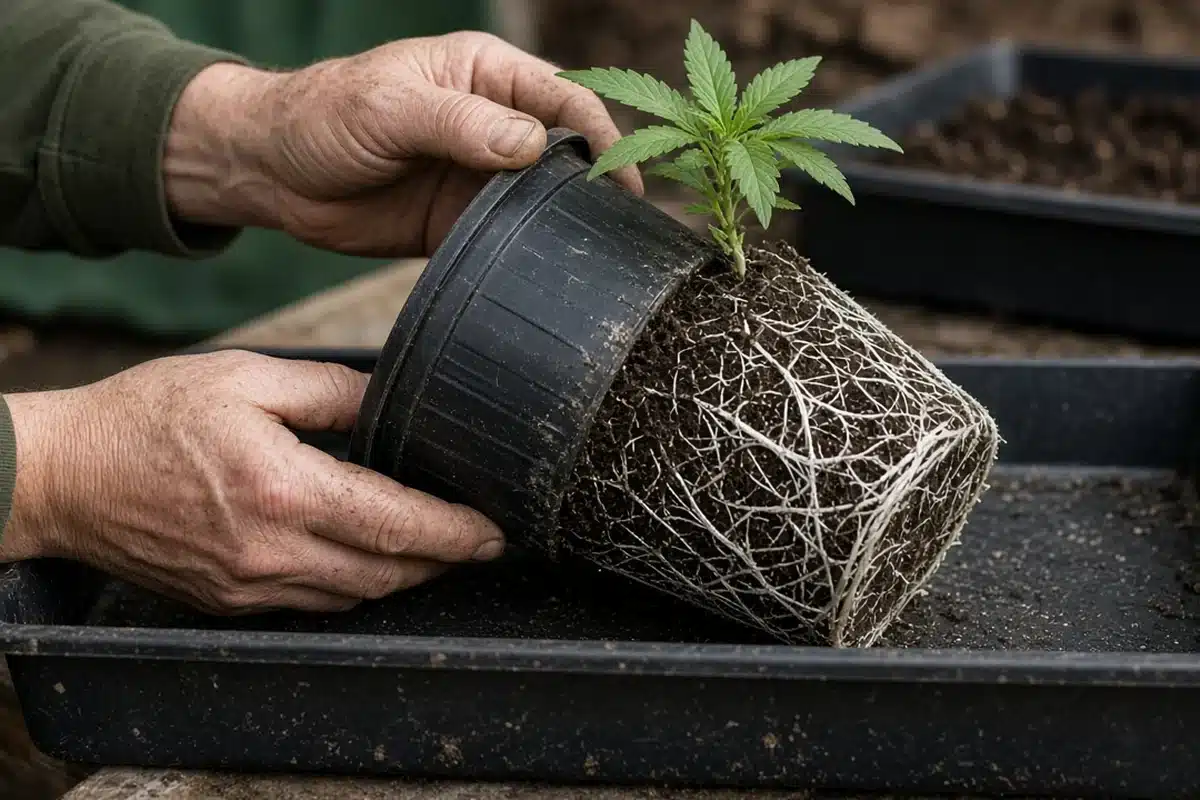
- If a plant wilts on moist soil, slide it out of its pot. University of Maryland Extension advises examining roots and crowns and checking the outside of the root ball and inside it.
- Count what you find. A few grubs in one pot calls for a different response than grubs in every container.
How do you get rid of black vine weevil?
Begin with the gentlest steps, and save more involved measures for a confirmed infestation.
- Handpick adults. UConn Extension suggests handpicking adults when only a few plants are infested. Drop them into a small container of soapy water.
- Remove grubs from lightly affected pots. Shake loose mix away from the roots, pick out the grubs, and repot into clean mix.
- Discard heavily damaged plants. UConn Extension advises discarding heavily infested plants immediately, along with their mix, rather than moving them near healthy pots.
- Use beneficial nematodes. Both sources describe microscopic insect-attacking nematodes applied as a soil drench. UConn Extension says they enter and kill all larval stages and pupae, though not eggs or adults.
- Choose the right type. University of Maryland Extension reports that Heterorhabditis species, which actively search deeper in the soil, work better on this grub than Steinernema species.
- Time the drench. University of Maryland Extension suggests noting new leaf notching in summer and waiting about one month before applying nematodes, so grubs have hatched and entered the soil. It also says soil must be moist and between 50 and 85 degrees F for nematodes to survive.
- Apply in the right conditions. UConn Extension recommends moist soil and early morning, evening or overcast weather to avoid heat and direct sunlight. Repeat applications may be needed.
Beneficial nematodes fit well with other natural helpers in a garden. Which insects and other organisms work in a grower’s favor is the theme of the best bugs for a cannabis grow.
How can you keep weevils out of a container garden?
Keeping this pest out beats cleaning up after it, because the adults walk in and the grubs travel inside root balls.
- Inspect new plants before they join the collection. University of Maryland Extension advises inspecting plants for larvae before planting.
- Keep new arrivals apart for a while and check them after dark.
- Separate older, infested stock from young plants, as both sources recommend for nurseries.
- Avoid placing pots next to dense hedges of yew, arborvitae or spruce. UConn Extension notes that such hedgerows are good hosts and can be a source of weevils.
- Start each season with fresh, clean mix rather than reusing mix from a pot that held grubs.
- Keep the area around pots free of debris, where adults hide during the day.
Why is a pot still wilting after treatment?
When a plant goes on declining, work through these checks before assuming the treatment failed.
- Grubs may have already destroyed too much of the root system for the plant to recover. Check the crown just below the soil line for girdling.
- Nematodes may have dried out or met soil that was too warm or too cold. Water before and after applying, and check that the mix stays moist.
- Eggs are not affected by nematodes, so a later hatch can restart the damage. A follow-up check a few weeks later is worth the effort.
- The cause may be another root pest. Small soft insects clustered on roots with a waxy coating point to a different problem, covered in root aphids on cannabis.
- Overwatering can also cause wilting. If you find no grubs and the roots look brown and soft, look at drainage and watering instead.
Sources
- University of Maryland Extension. Black Vine Weevil: Controlling a Major Nursery and Landscape Pest (FS-805). https://extension.umd.edu/sites/extension.umd.edu/files/publications/FS-805%202013%20Black%20Vine%20Weevil.pdf
- UConn Extension IPM. Black Vine Weevil. https://ipm.cahnr.uconn.edu/ipm-black-vine-weevil/
FAQ
Are black vine weevils harmful to cannabis?
The adults chew notches in leaf edges, which is mostly cosmetic. The grubs are the real threat. They feed on fine roots and then on crowns and larger roots, and they can girdle stems just below the soil line. A potted plant with heavy grub feeding may wilt suddenly and die even though the soil stays moist.
Why do I see leaf notches but never find any beetles?
Adults feed at night and hide during the day around the base of plants and under pots. Check with a flashlight after dark, or lay cardboard on the soil and lift it in the morning. University of Maryland Extension also notes that grubs can be present in roots even when leaves show no notching at all.
When should I apply beneficial nematodes for weevil grubs?
Apply them when grubs are in the soil, not when only adults are around. University of Maryland Extension suggests waiting about a month after new leaf notching appears in summer. Water the pot first, apply in the evening or on an overcast day, and keep the mix moist and between 50 and 85 degrees F.
Can one weevil really start a new infestation?
Yes. UConn Extension reports that all black vine weevil adults are females that lay eggs without mating. A single adult carried in on a new plant, or a few grubs hidden in a root ball, can build a population over a season or two, especially where pots stay in the same place each year.


