How to Stake Cannabis Plants Outdoors
The short answer
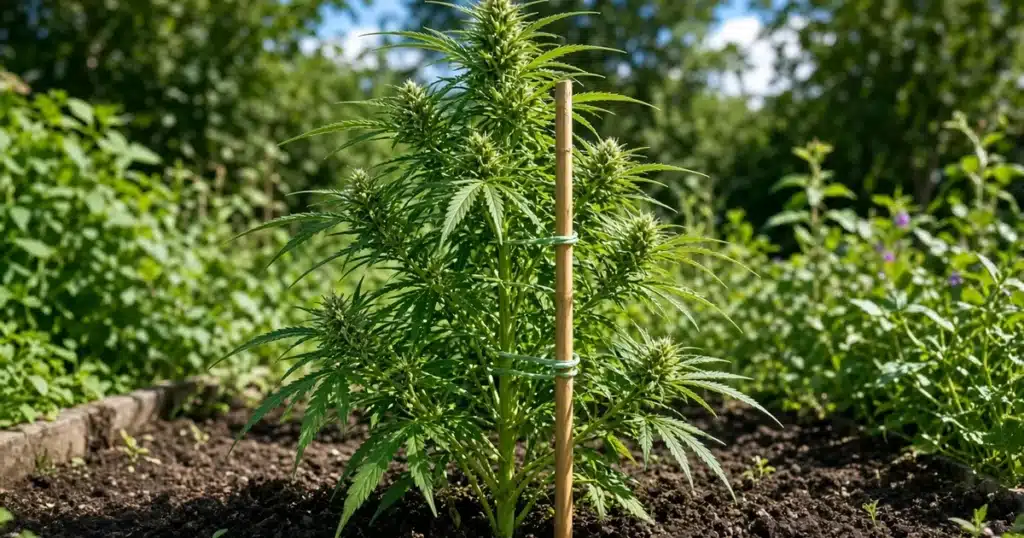
Staking cannabis plants means driving a sturdy stake into the soil beside the main stem and tying the plant to it with soft, loose ties. Set the stake on the upwind side and keep it clear of the root ball. Add ties as the plant grows and the colas get heavy.
Done early, staking keeps plants upright through summer storms and late season weight. The sections below cover stake types, placement, and tying.
Why outdoor plants need stakes
Outdoor cannabis faces two big forces. Wind pushes on the whole plant, and buds add weight at the tips late in the season. Both can bend or snap a stem.
A single stake gives the main stem a backbone. Heavy side branches can lean on extra stakes. The goal is support, not a rigid frame. Some swaying in the breeze is normal and fine.
Where you grow matters too. An open hilltop or a yard between two houses can funnel wind straight at your plants. A spot behind a fence or a hedge sees far less. Watch how the trees and grass move on a breezy day before you plant. Plan sturdier stakes for the windiest corners.
A trellis or plant training does a different job than a stake. If you want a net that spreads the canopy, see our guide to the art of cannabis trellising. If you want to shape the plant by bending branches, our post on low stress training for cannabis covers that. Here the focus stays on stakes and ties.
Choosing stakes
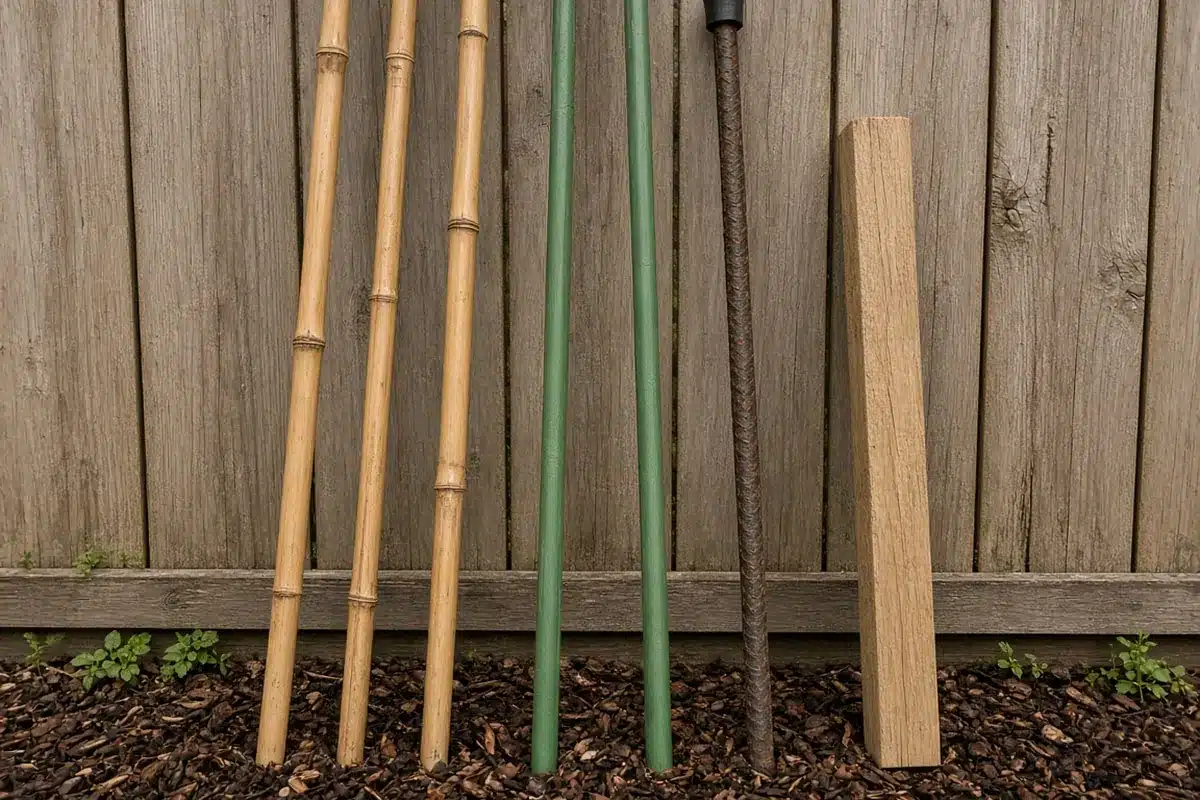
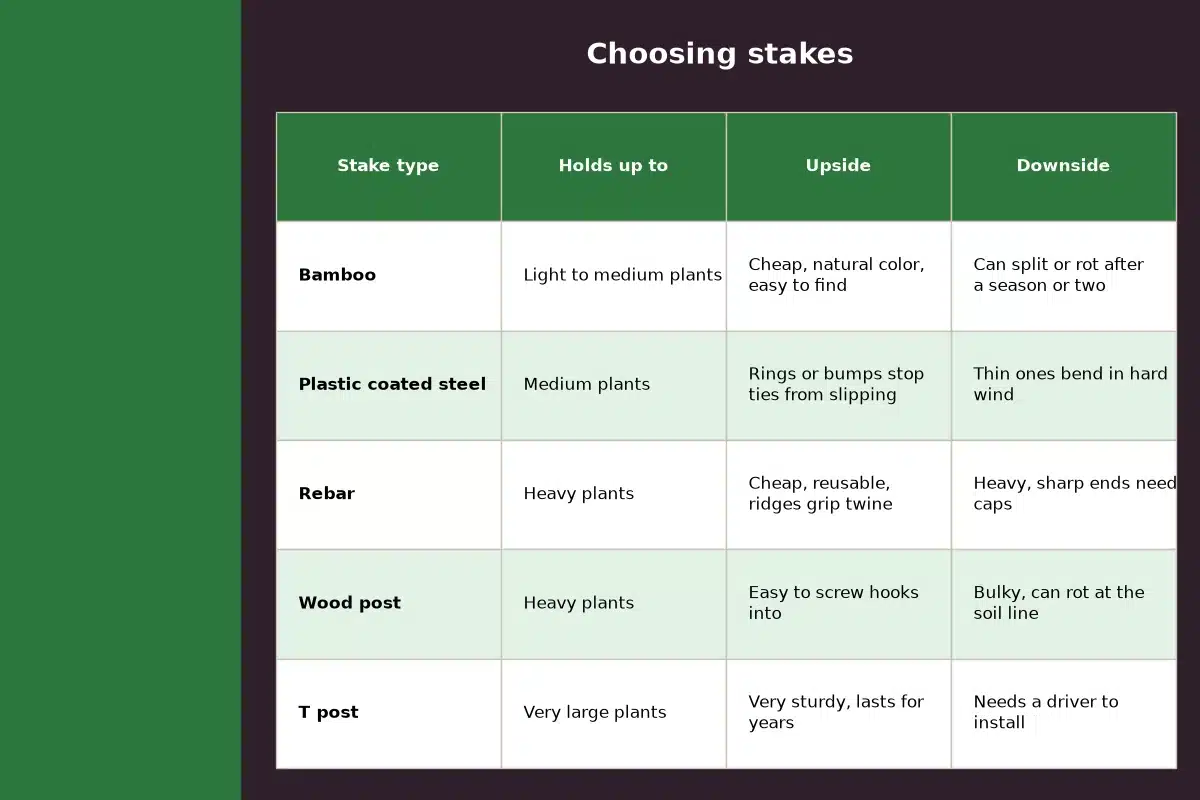
A guide from Iowa State University Extension and Outreach, cited under the table, describes several common stake materials. The table compares the ones that suit cannabis.
| Stake type | Holds up to | Upside | Downside |
|---|---|---|---|
| Bamboo | Light to medium plants | Cheap, natural color, easy to find | Can split or rot after a season or two |
| Plastic coated steel | Medium plants | Rings or bumps stop ties from slipping | Thin ones bend in hard wind |
| Rebar | Heavy plants | Cheap, reusable, ridges grip twine | Heavy, sharp ends need caps |
| Wood post | Heavy plants | Easy to screw hooks into | Bulky, can rot at the soil line |
| T post | Very large plants | Very sturdy, lasts for years | Needs a driver to install |
Source: Staking Perennials, Iowa State University Extension and Outreach, for bamboo, plastic coated steel, and rebar stakes. Wood post and T post rows reflect general garden practice.
Pick a stake that will stand taller than the plant’s expected height once it is in the ground. Once flowering starts, cannabis can stretch a lot. A stake that looks long in June can look short by September.
Where to place the stake
Placement matters as much as the stake itself.
Put the stake on the upwind side of the plant. The Staking and guying trees page from University of Minnesota Extension says to place the stake upwind from the direction of prevailing spring or summer winds. That way the plant leans away from the stake rather than slamming into it.
Keep the stake a few inches from the main stem. The Iowa State guide warns against damaging root systems when you drive a stake. It suggests leaving enough room between the stake and the roots.
In a container, push the stake down along the inside wall of the pot. For in ground plants, drive it deep enough that it does not wobble. About a third of the stake below ground is a good rule of thumb for tall plants.
Stake early if you can. The Iowa State guide says plants in windy spots should be staked earlier in the season. Place the stake while the plant is small. There are fewer roots to hit then.
How to stake a cannabis plant
Follow these steps for each plant.
- Pick a stake that will rise above the plant’s final height.
- Find the upwind side of the plant.
- Set the stake a few inches from the main stem.
- Drive it straight down until it stands firm.
- Tie the main stem to the stake with a loose figure eight.
- Add a new tie every foot or so as the plant grows.
- Add side stakes for heavy branches once buds start to form.
- Check every tie each week and loosen any that bite in.
Tying without damage
Ties are where most staking goes wrong. A tie that is too tight or too thin can cut into a growing stem.
The Iowa State guide says ties should be soft and flexible. It names strips of cotton fabric, jute, and twine as good options. It also says to tie the material in a loose figure eight, with the stake in one loop and the stem in the other. That keeps the stem from rubbing on the stake.
The Minnesota page makes a similar point for trees. Whatever touches the stem should be wide and flexible. It warns against running wire through a piece of garden hose and wrapping it around a stem, because abrasion and compression soon follow.
For tall stems, the Iowa State guide suggests tying in several places. Keep the top tie well below the flowers so buds are not pinched.
Soft plant ties work well. So do cloth strips and stretchy garden tape. Avoid bare wire, zip ties pulled tight, and fishing line.
Supporting heavy colas late in the season
Late flowering is when staking earns its keep. Colas fill out, pick up dew, and get heavy after rain. A branch that held up in August may fold in September.
Add short stakes under the heaviest branches. Tie each branch to its own stake just below the bud site. Bamboo works well here because it is light and easy to move.
Check plants after every storm. A branch that has started to bend is far easier to save than one that has snapped. If a branch cracks, prop it with a stake and wrap the break with soft tape. Many recover if the outer skin is still attached.
As harvest approaches, see our guide on when to harvest outdoor cannabis so you do not leave heavy plants out longer than needed.
Troubleshooting
The stake leans after rain. It is not deep enough. Drive it farther in or add a second stake on the opposite side.
Ties leave marks on the stem. They are too tight or too thin. Switch to wider, softer material and loosen each tie.
The plant outgrew the stake. Add a taller stake beside the first one and tie the top to it.
A branch snapped in the wind. Prop it up, wrap the break gently, and tie it to a short stake. Trim it only if it wilts.
The stake hit a big root. Pull it out and move it a little farther from the stem.
The plant rubs against the stake. Retie with a figure eight so the stem sits in its own loop.
Take it down at the end
Remove stakes and ties when you harvest. The Minnesota page reminds growers that supports left on too long can damage or girdle a stem. Clean and store your stakes so they are ready next spring.
At Kind Seed Co, we think a few minutes with a stake and some soft ties is cheap insurance for a whole season of growth.
Sources
- Iowa State University Extension and Outreach, Staking Perennials
- University of Minnesota Extension, Staking and guying trees
FAQ
When should I stake cannabis plants outdoors?
Early, while the plant is still small. That spares the roots and has support in place before summer storms and heavy buds.
Which side of the plant should the stake go on?
The upwind side, so wind pushes the plant away from the stake instead of into it.
What should I use to tie cannabis to a stake?
Soft, flexible ties like cloth strips, jute, twine, or garden tape. Tie a loose figure eight so the stem does not rub on the stake.
How tall should the stake be?
Taller than the plant's expected final height once it is in the ground, since cannabis stretches a lot during flowering.
Is staking the same as trellising?
No. A stake supports a single stem or branch. A trellis is a net or frame that spreads and supports the whole canopy.