Where to Put a Grow Tent in Your House
The short answer
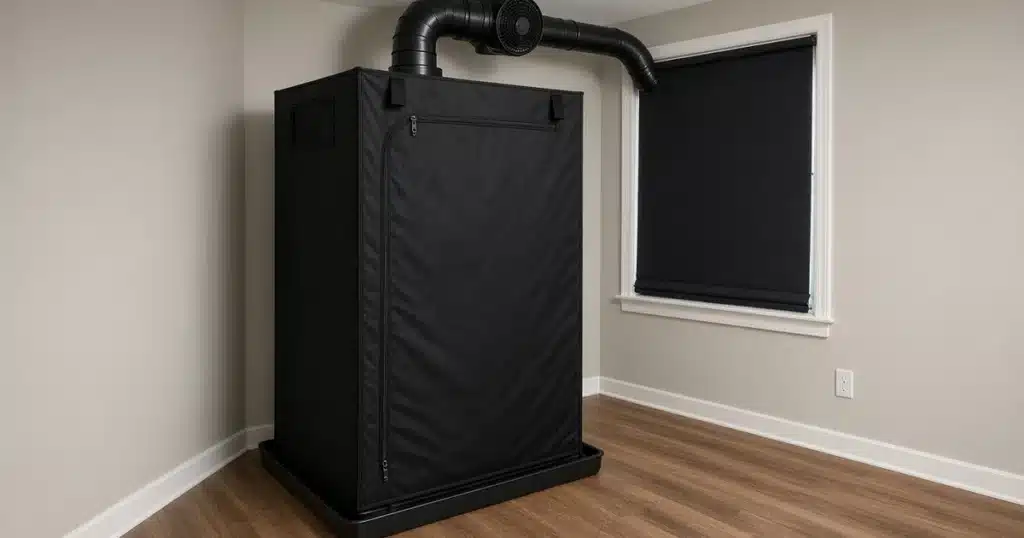
Where to put a grow tent? Choose a room with a hard, level floor and an outlet close by. It should also hold a steady temperature and let air move in and out. For most homes that means a spare room or a dry basement corner.
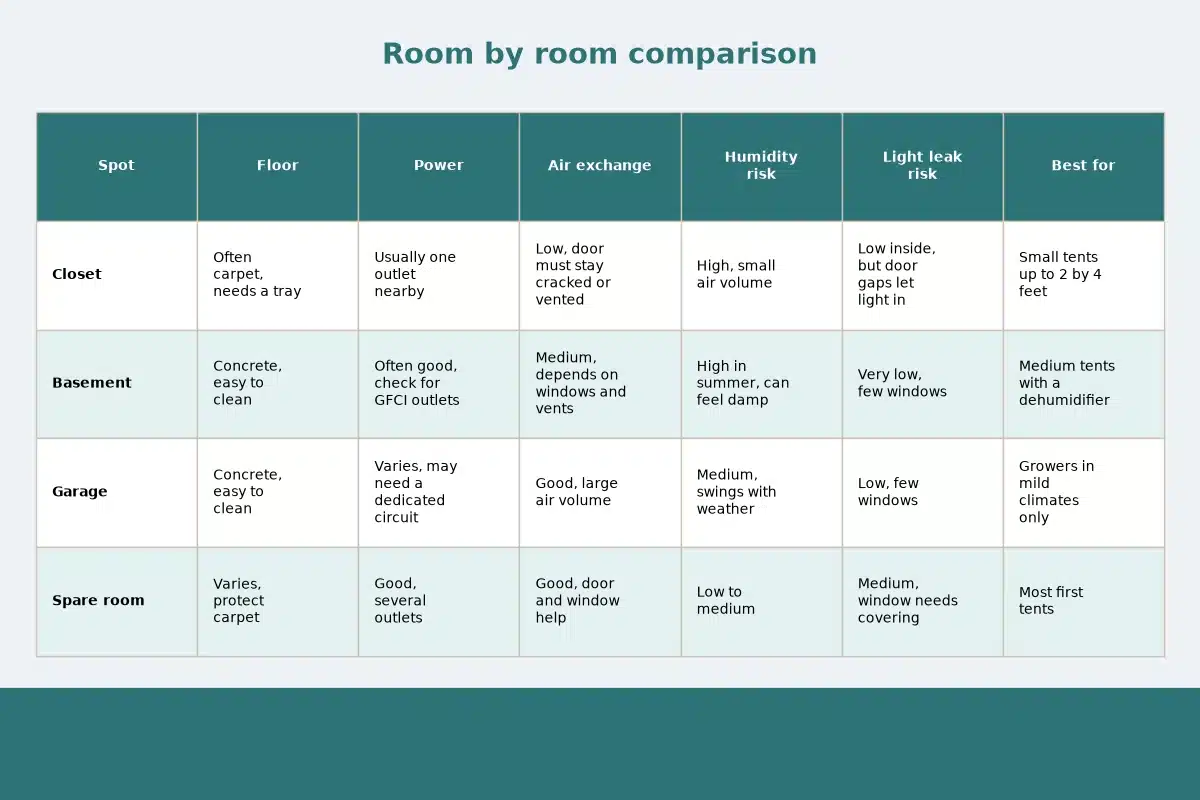
Closets and garages can work too, but each one asks for an extra fix. A closet is short on air. A garage swings hot and cold. The table below compares the four common spots so you can pick one before you buy or build.
What every tent spot needs
Run through five checks before you look at any room. They decide how hard the grow will be far more than the tent itself.
Floor. Wet pots make a full tent heavy. You want a flat surface that will not soak up spills. Tile, sealed concrete and vinyl are easy. Water that reaches carpet gets trapped under the tent and stays there.
Power. Every light, fan and timer needs an outlet. Plan the location around a wall outlet you can reach without a long run of cords across the floor.
Air in and air out. Plants breathe out water all day. A tent needs a fan that pulls warm, damp air out and a path for fresh air to come back in. That air needs a place to go, such as a door you can crack, a vent or a window.
Humidity. The room around the tent matters too. If the space is already damp, the tent will only add to it.
Light leaks. Indoor plants need real darkness when the lights are off. Zippers and seams can let in light from the room, a hallway or a street lamp.
Room by room comparison
| Spot | Floor | Power | Air exchange | Humidity risk | Light leak risk | Best for |
|---|---|---|---|---|---|---|
| Closet | Often carpet, needs a tray | Usually one outlet nearby | Low, door must stay cracked or vented | High, small air volume | Low inside, but door gaps let light in | Small tents up to 2 by 4 feet |
| Basement | Concrete, easy to clean | Often good, check for GFCI outlets | Medium, depends on windows and vents | High in summer, can feel damp | Very low, few windows | Medium tents with a dehumidifier |
| Garage | Concrete, easy to clean | Varies, may need a dedicated circuit | Good, large air volume | Medium, swings with weather | Low, few windows | Growers in mild climates only |
| Spare room | Varies, protect carpet | Good, several outlets | Good, door and window help | Low to medium | Medium, window needs covering | Most first tents |
Source: A Brief Guide to Mold, Moisture and Your Home, US Environmental Protection Agency, humidity guidance used for the humidity column.
The humidity column comes from that EPA guide. It says to keep indoor humidity below 60 percent, ideally between 30 and 50 percent, and notes that a humidity meter costs about $10 to $50 at a hardware store. That range is for the house, not the inside of the tent. Your plants can run higher inside the tent, but the room around it should stay in that range.
The closet
A closet is the most common first spot because it hides the tent and already has a door. The downside is how little air there is. A fan pulling air out of the tent just moves it into a tiny box. The closet heats up and gets damp fast.
If you use a closet, plan to duct the exhaust out of the closet, not just out of the tent. A louvered door or a vent cut into the door helps. On carpet, set a waterproof tray under the tent.
The basement
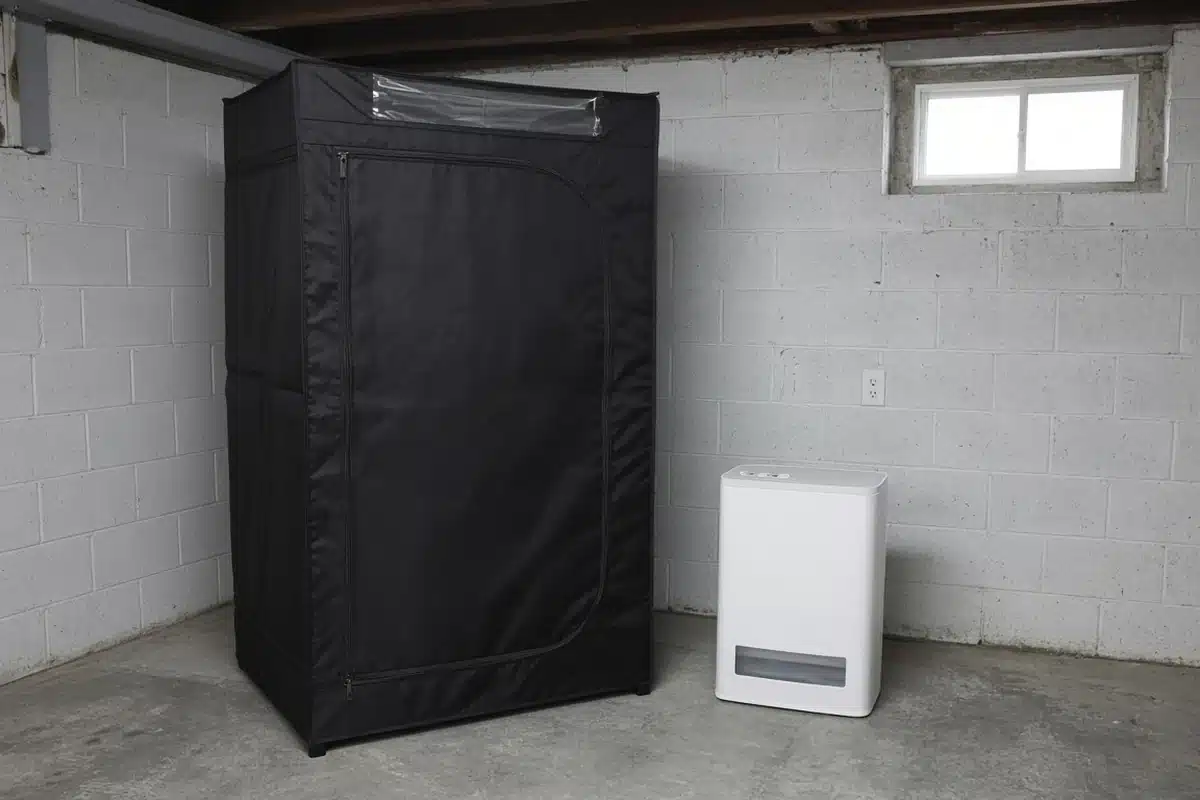
Basements tend to stay cool and dark, which plants like. Concrete floors make spills easy to clean. The problem is moisture. Many basements already run damp in summer. The EPA guide points out that condensation on walls, windows or pipes is a sign that humidity is too high.
If you see sweating pipes or a musty smell, solve that first. A dehumidifier near the tent and a fan that moves air across the room go a long way.
The garage
Garages offer space, concrete and plenty of air. It also follows the weather. Summer afternoons can cook a tent, and winter nights can chill it below what young plants handle well.
A garage works best in a mild climate or when it is insulated. Watch for fumes too. Parked cars, paint and fuel cans do not belong near plants or near the air intake for the tent.
The spare room
For most people, a spare room is the easiest choice. It has outlets, a door, often a window and normal house temperatures. If the floor is carpet, lay down a tray or a sheet of vinyl first.
Cover the window at night or put the tent where window light will not hit the seams. Keep the door able to close so you can control light and noise.
How to choose your spot in six steps
- List every room you could use and note the floor type in each one.
- Find the nearest outlet and check whether other big appliances share that circuit.
- Measure the space with the door open and closed, and leave a foot of room on the sides for zippers and access.
- Put a humidity meter in the room for a few days and write down the readings morning and night.
- Sit in the room with the lights off at night and look for light from windows, doors and hallways.
- Pick the spot that passes the most checks, then follow our complete grow tent set up guide to build it.
Light leaks and the dark period
Many new growers are surprised by how much light leaks matter. Iowa State University warns in How to Set Up Supplemental Lights for Indoor Plants that room lights, lamps and street lights can pollute the dark period and keep some plants from flowering.
For a tent, that means two things. The tent fabric should be in good shape, and the room should be dark at night too. Close the blinds, shut the door and check the zippers with a flashlight from the inside.
Sizing the fan for your room
The room you pick shapes the fan you need. A small closet needs the air pushed out of the space, while a spare room or garage can absorb it. Our guide to inline fan CFM for a grow tent walks through the math for your tent size.
Troubleshooting
The room smells musty after a few weeks. Humidity in the room is too high. Check the meter, run a dehumidifier and make sure the exhaust leaves the room.
Water pools under the tent. The floor is not level or the tray is too small. Shim the tent or move to a flatter spot.
The breaker trips when the light comes on. Too many loads share one circuit. Move the tent or a large appliance to another circuit.
You can see light inside the tent at night. Light is coming through a seam or zipper. Cover the window, close the door and patch any pinholes with tape.
The tent runs hot every afternoon. The room itself is too warm. Pick a cooler room or move the grow schedule so the lights run at night.
Keep the tent clean wherever it lands
Any spot will grow mold if spills sit for days. Wipe the floor of the tent often and follow our guide to cleaning a grow tent between grows.
The right room makes every other part of the grow easier. At Kind Seed Co, we suggest you spend an evening checking floor, power, air and light before you set up anything.
Sources
- US Environmental Protection Agency, A Brief Guide to Mold, Moisture and Your Home
- Iowa State University Extension and Outreach, How to Set Up Supplemental Lights for Indoor Plants
FAQ
Can I put a grow tent in a closet?
Yes, if the closet has a way to vent air out. Without a vent or a cracked door, the closet heats up and gets damp quickly.
Is a basement a good place for a grow tent?
It can be. Basements stay cool and dark, but many run damp, so plan on a dehumidifier and a humidity meter.
Can a grow tent go in a garage?
A garage works in mild weather or when it is insulated. Hot summers and cold winters make it hard to hold steady temperatures.
What humidity should the room around the tent be?
The EPA suggests keeping indoor humidity below 60 percent, ideally between 30 and 50 percent.
Do I need to worry about light outside the tent?
Yes. Room lights, hallway lights and street lights can leak in during the dark period, so keep the room dark at night.