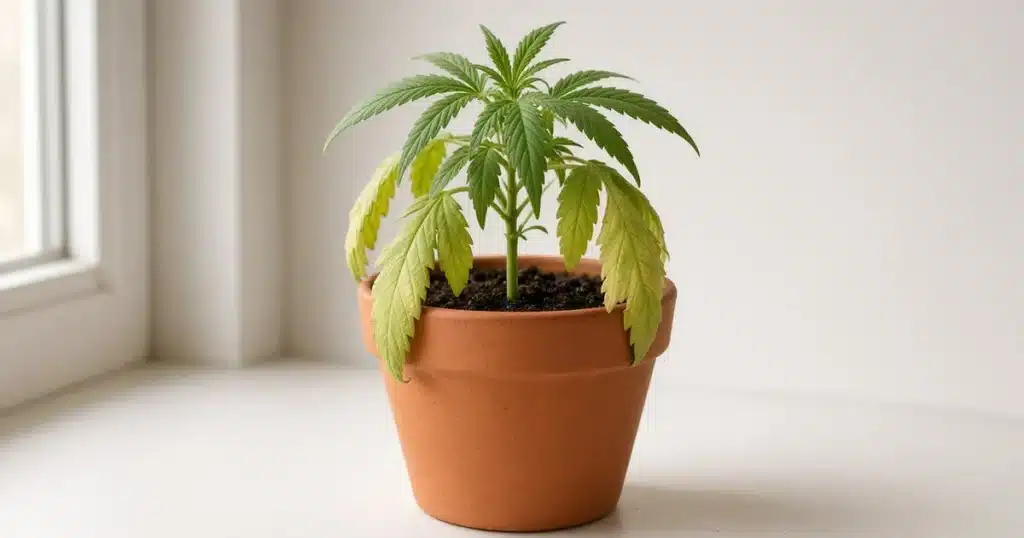
Min Max Thermometers for Tents and Garden Beds
The short answer
A min max thermometer records the highest and lowest temperature since you last reset it. Place it at plant height out of direct light and read it at the same time each day. Write down both numbers, then press reset to start a fresh record.
That simple habit shows you what happens while you are asleep or at work. The sections below cover placement, reading, resetting, and what to do with the numbers.
What a min max thermometer does
A regular thermometer tells you the temperature right now. A min max model also holds on to the extremes. It holds on to the afternoon peak and the low point just before dawn.
Older models use a U shaped glass tube with two small markers that the liquid pushes along. Digital models store the numbers in memory and show them at the press of a button. Both do the same job.
That memory is the whole point. Most growers look at their space in the daytime, while the lights are on or the sun is up. The real trouble often comes at night, when no one is looking.
Why highs and lows matter more than the current reading
Plants respond to the full daily range, not a single moment. A tent that reads a pleasant 75°F at noon might drop to 55°F at 4 a.m. A bed can feel mild in the morning and still bake by midafternoon.
Greenhouse growers have relied on this tool for decades. A greenhouse heating publication from UF/IFAS Extension, cited under the table below, says an inexpensive maximum minimum record thermometer can easily check the accuracy of a thermostat. It calls the tool well worth the investment.
The same logic works in a tent or a backyard bed. If your heater, fan, or light timer is not doing what you think, the overnight low or the afternoon high will show it.
Reading the numbers and what they tell you
Use the table as a quick guide to what each reading points to.
| Reading | What it shows | What to check |
|---|---|---|
| High far above the current temperature | Heat built up while you were away | Light height, exhaust fan, afternoon sun on a bed |
| Low far below the current temperature | A cold dip at night or before dawn | Heater, door gaps, frost on an outdoor bed |
| Small gap between high and low | Stable conditions | Nothing, keep logging |
| Large gap between high and low | Wide daily swings | Insulation, timer settings, shade or covers |
| High and low both off from your thermostat | Thermostat may not be accurate | Compare against a checked thermometer |
Source: AE11/AE015: Heating Greenhouses, UF/IFAS Extension, for using a max min thermometer to check thermostat accuracy and placing sensors at plant level out of direct sun. Other rows reflect general grow practice.
Where to place it in a tent
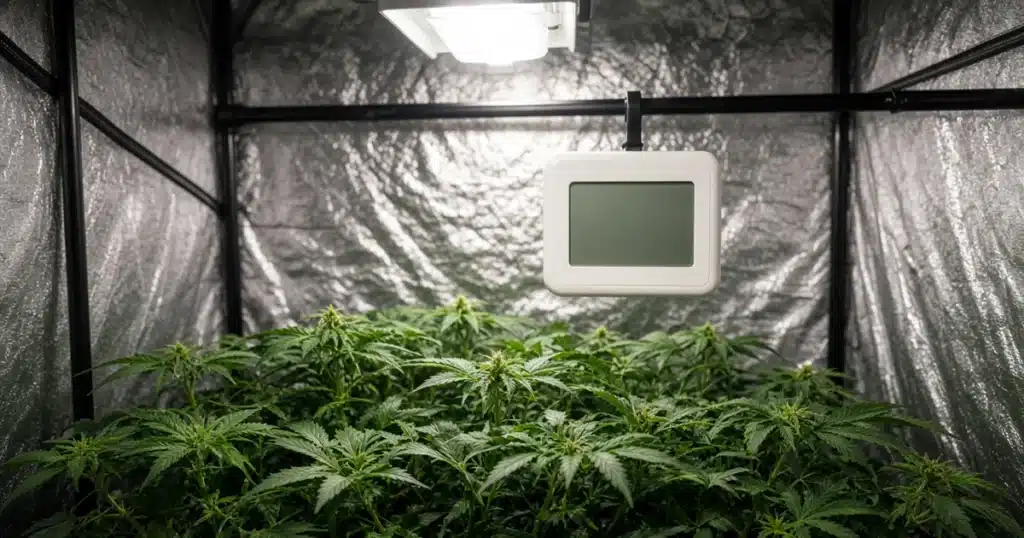
Put the sensor at canopy height. Air by the floor and air by the light can be several degrees apart. You want the number your plants actually feel.
Keep it out of direct light. The UF guide says greenhouse thermostats should sit at plant level and be shielded from direct sunlight. A sensor under a grow light reads the heat of the lamp, not the air.
Hang it in the center of the tent, clear of the walls. Keep it out of the path of the intake and the exhaust fan. A sensor in a blast of fresh air reports that air, not the space as a whole.
Running more than one tent? Give each one its own thermometer. Two tents on the same timer can still behave very differently.
Where to place it in a garden bed
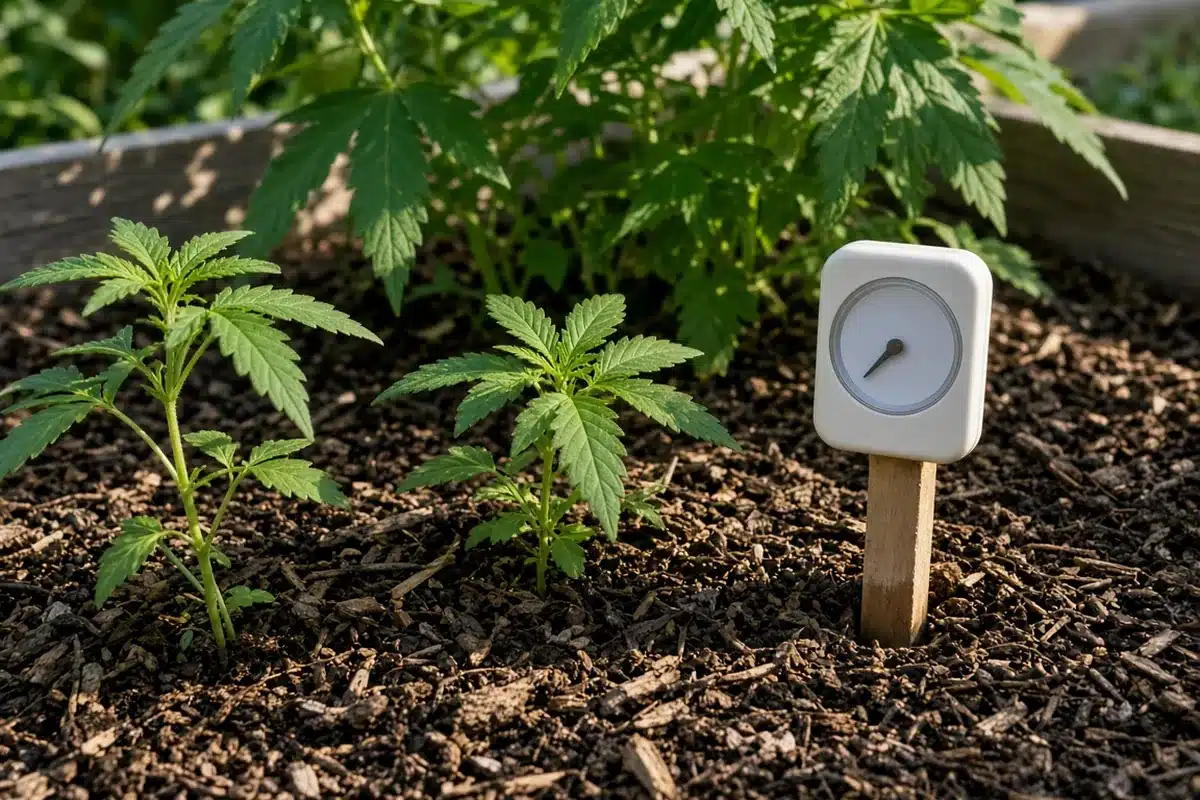
The same rules hold outdoors, with a few changes. Mount the thermometer at the height of the plants, not on a fence post at eye level. Cold air settles low on still nights.
Shade the sensor. A small vented box or a spot on the north side of a stake works. Put a sensor in full sun and it can read far above the true air temperature.
Use a model rated for outdoor use. Cheap housings can let in rain and morning dew. That moisture fogs the display.
If your bed has a row cover or a cold frame, put the thermometer under the cover. That is where the plants live.

How to read and reset a min max thermometer
Follow these steps each day.
- Pick a time you can stick to, such as first thing in the morning.
- Read the current temperature and note it.
- Read the maximum and write it next to the date.
- Read the minimum and write it down too.
- Press the reset button, or slide the markers back down on a glass model.
- Check that the high and low now match the current reading.
Reading at the same time each day keeps your records comparable. Each line in your log then covers a full 24 hour cycle.
Many digital units reset with a single button. Some need you to hold the button for a few seconds. On glass models, a magnet or a push button usually drops the markers back onto the liquid.
Checking that your thermometer is accurate
A thermometer is only useful if it reads true. A short item titled Thermometer Accuracy, in the Ornamentals Northwest archives at Oregon State University, explains a simple ice water check. A thermos of crushed ice and distilled water sits at 32°F.
Place the sensor in the mix for a few minutes and read it. If it shows 30°F, it reads two degrees low, and you add two degrees to every reading. The same piece also says readings should be made out of direct sunlight.
Once you have one checked thermometer, use it to compare the rest. That includes the thermostat on your heater.
Using the numbers to make changes
Once you log highs and lows, guesswork becomes a plan. Watch for patterns across a week rather than one night.
If the high creeps up each afternoon, raise your light, add airflow, or shade a bed during peak sun. Our guide on grow light heat management covers indoor options.
If the low drops too far, add a heater on a thermostat or close gaps in the tent. For cold season ideas, see heating a grow tent in winter.
A min max thermometer reads air. If you want to know how warm the leaves themselves are, a different tool fits better. Our post on infrared thermometers for leaf temperature explains that side.
Troubleshooting
The high reads far too hot. The sensor is in direct light. Move it into shade at canopy height.
The low and high never change. You may have forgotten to reset, or the reset did not take. Hold the button a little longer and confirm both numbers match the current reading.
Readings jump around. The sensor sits in a fan draft. Move it out of the direct path of the air.
The display fogged. Moisture got inside. Dry the unit indoors and switch to an outdoor rated model for beds.
Your thermostat disagrees with the thermometer. Check the thermometer in ice water first. If it reads true, adjust or replace the thermostat.
The battery died and the record is gone. Replace batteries on a set date each season so you do not lose a week of data.
Make it a daily habit
A min max thermometer costs little and takes a minute a day. The record it builds shows you what your plants live through around the clock.
At Kind Seed Co, we see steady temperatures as one of the easiest wins in any grow. Read the numbers, reset, write them down, and adjust when a pattern shows up.
Sources
- UF/IFAS Extension, AE11/AE015: Heating Greenhouses
- Oregon State University, Ornamentals Northwest Archives, Thermometer Accuracy
FAQ
What does a min max thermometer measure?
It shows the current temperature plus the highest and lowest readings since the last reset. That lets you see conditions while you were away.
How often should I reset it?
Once a day at the same time is best. Write down the high and low first, then reset to start a new record.
Where should it go in a grow tent?
Hang it at canopy height in the middle of the tent, out of direct light and away from fan drafts.
Can I use it outdoors in a garden bed?
Yes. Use an outdoor rated model, place it at plant height, and shade the sensor so sun does not skew the reading.
How do I know if it is accurate?
Place the sensor in a mix of crushed ice and distilled water for a few minutes. It should read 32 degrees Fahrenheit.