
Sulphur Deficiency in Cannabis Plants

Sulphur does not get as much attention as nitrogen or potassium, but cannabis cannot grow well without it. Kind Seed Co explains how to spot sulphur deficiency, what causes it and how to correct it before it affects your buds.
For a full look at what sulphur does in the plant, read our guide on why sulphur is so important for cannabis plants. This page focuses on the shortage itself.
Signs of sulphur deficiency
Young leaves turn pale first
With a nitrogen shortage, older leaves turn yellow while new ones stay green. Sulphur works the other way round. It does not move easily inside the plant, so the youngest leaves at the top turn light green to yellow first. Our guide to nitrogen deficiency in cannabis plants shows the bottom up pattern to compare.
Slow growth
Sulphur goes into the proteins, amino acids, enzymes and vitamins a plant needs to grow, and it is needed to form chlorophyll. Without enough, growth slows and plants can end up weak and small.
Reddish purple stems
Stems may turn red or purple. Some strains do this naturally, so look at it together with the other signs.
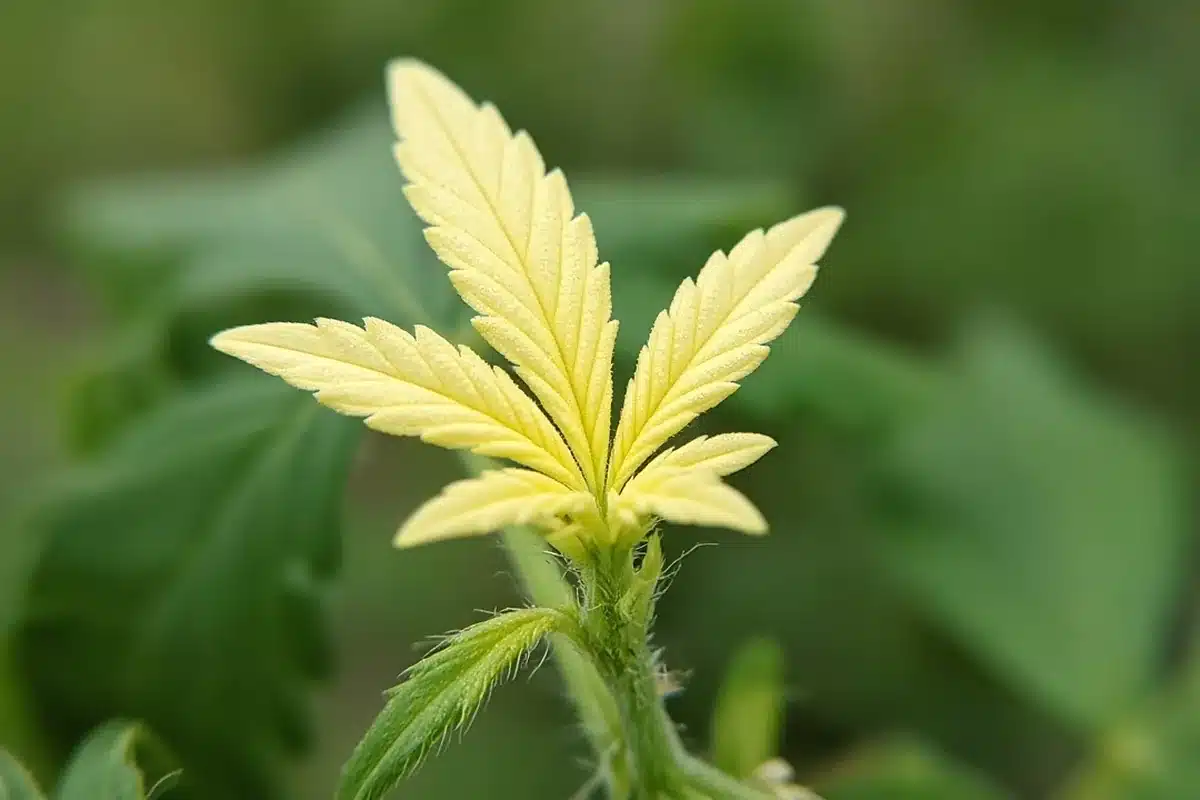
Other nutrient problems can look a lot like this, so confirm what is going on before you add anything.
Why it matters for your buds
Sulphur is part of the enzymes plants use to make cannabinoids such as THC and CBD, and terpenes, the compounds behind aroma and flavor. A plant short on sulphur can make less of them, which can mean weaker, less fragrant buds.
What causes it
- Alkaline soil. When soil pH runs too high, sulphur becomes harder for roots to reach. Our guide to understanding pH and how it affects cannabis plants shows how to check it.
- Rain and sandy soil. Rain can wash sulphur out of the soil, especially sandy soil that drains fast.
How to correct sulphur deficiency
Slow and steady: soil amendments
- Elemental sulphur. Mix it into the soil, and over time soil bacteria turn it into a form cannabis can take up.
- Gypsum. Also called calcium sulfate, it adds sulphur and helps heavy clay soil drain better.
- Compost and manure. Both supply sulphur, and poultry manure is a good source.
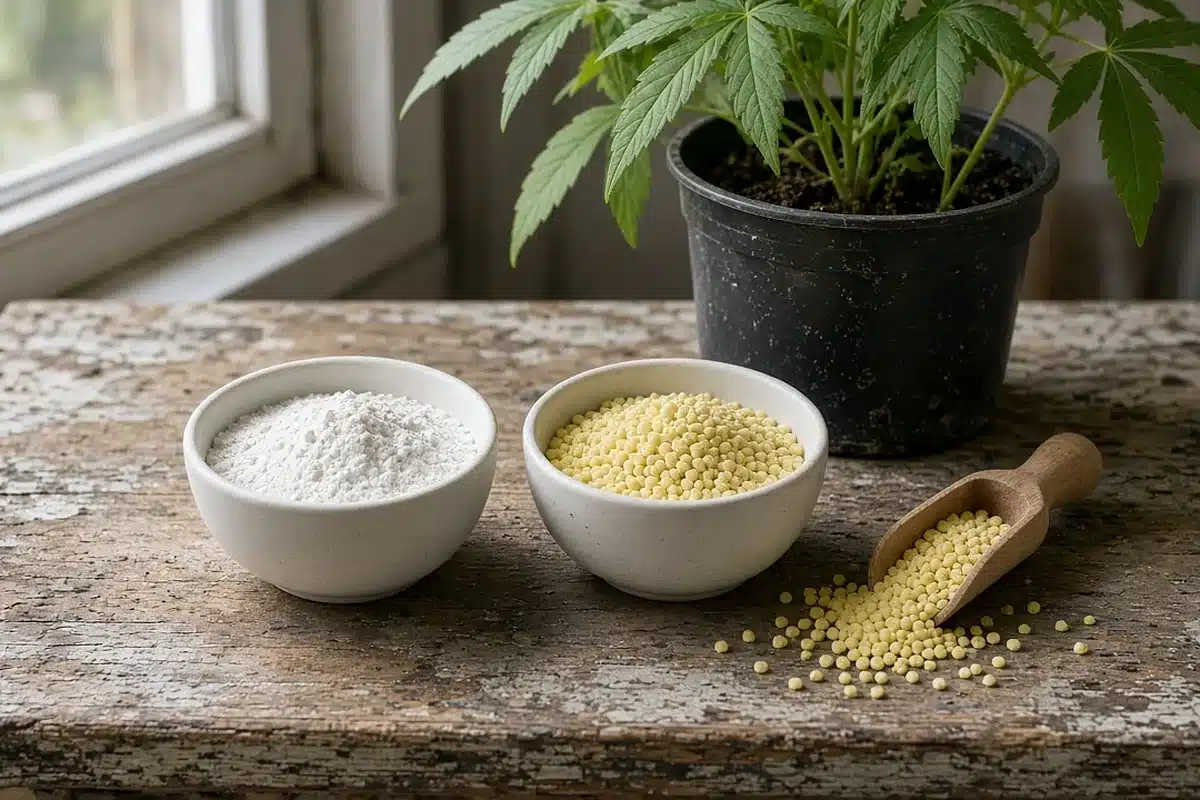
Fast: sprays and fertilizers
Amendments take time to work. If your plants already show clear signs, a foliar spray put straight on the leaves corrects the shortage quickly, and a sulphur based fertilizer feeds the whole plant. Follow the label so you do not overdo it and cause nutrient burn.
How to prevent it
Feed on a regular schedule and test your soil from time to time so you can see pH and nutrient levels before problems start. Working compost or manure into the soil keeps sulphur topped up between grows. If new growth still looks pale after you fix sulphur, check our guide to zinc deficiency in cannabis plants, another shortage that shows on fresh leaves.
FAQ
How can you tell sulphur deficiency from nitrogen deficiency?
Sulphur deficiency turns the youngest leaves pale first, while nitrogen deficiency starts on the oldest, lowest leaves.
What adds sulphur to soil for cannabis?
Elemental sulphur, gypsum, compost and manure all add sulphur. Poultry manure is a good source.
Can high pH cause sulphur deficiency?
Yes. In alkaline soil, sulphur becomes harder for cannabis roots to absorb.
Does sulphur affect cannabis aroma?
Yes. Sulphur is part of the enzymes that make cannabinoids and terpenes, so a shortage can mean less aromatic buds.


