Sunflowers Drooping: Heavy Heads, Water and Stem Damage
The short answer
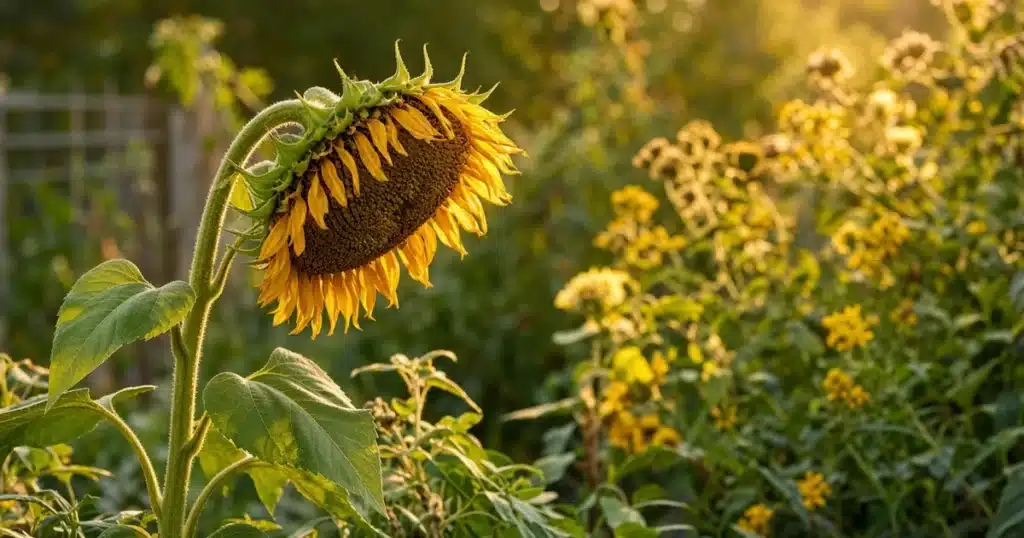
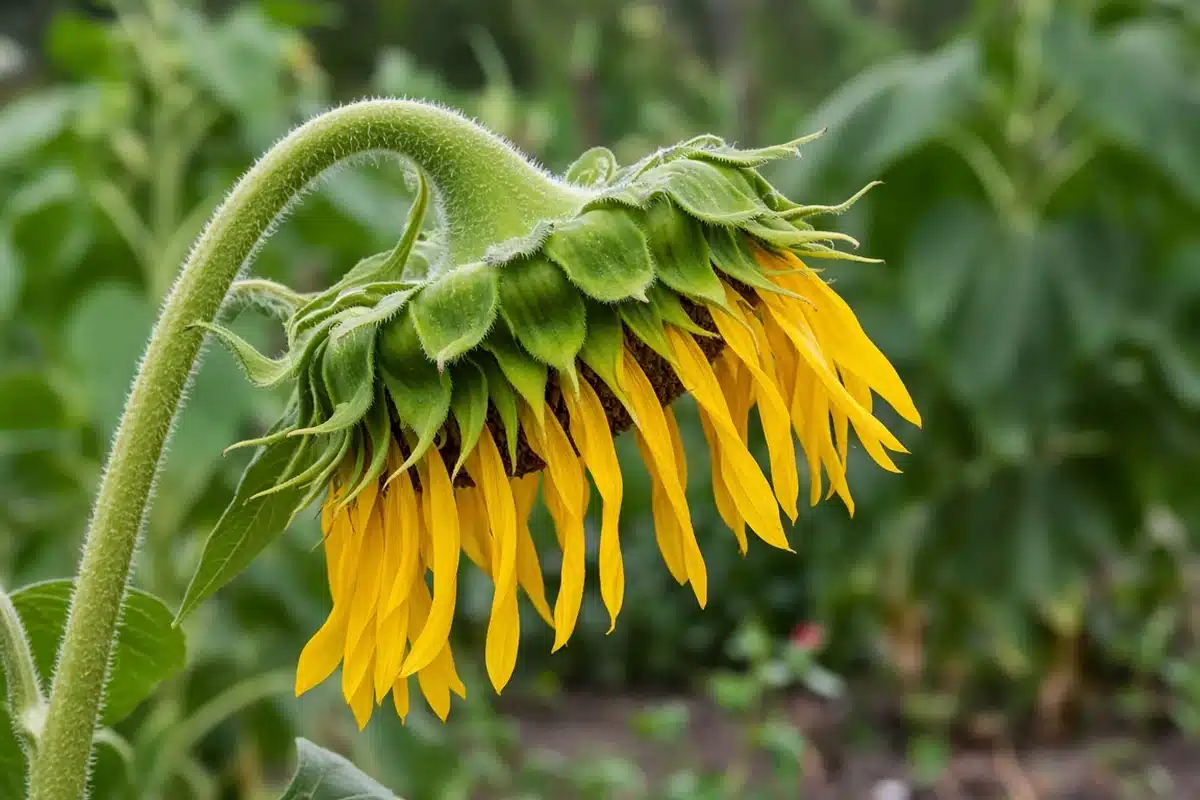
Sunflowers drooping is often normal. As seed heads fill and mature they turn to face down, and Iowa State University Extension says that is the sign they are ready to harvest. Drooping leaves on younger plants usually point to dry soil or heat. A bent or snapped stem after wind is damage, so stake tall plants.

Why are my sunflowers drooping?
First, check what’s drooping. A heavy head that nods down late in the season is usually maturing. Wilting leaves on a plant still in bloom suggest a water or heat problem. A kinked or split stem points to wind damage.
Leaf droop usually comes down to water. Iowa State says sunflowers are quite drought tolerant once established, but for full, meaty seeds you should not allow serious water stress during flowering and seed formation. Regular watering may be needed to get young plants established.
Heat adds strain. South Dakota State University Extension says sunburn can occur when roots cannot supply enough water fast enough on hot, windy days. It suggests watering deeply so roots are not restricted to the top few inches of soil. For dry soil signs, see underwatering cannabis.
Is a nodding sunflower head normal?
Yes. Illinois Extension explains that young sunflowers may follow the sun across the sky, but once they mature the stem hardens and the flowers face east. As the head ripens and gets heavy, it bends.
Iowa State says seed heads are ready to harvest when they face downward and the inner florets rub off easily. By then the outer ring of colorful petals is spent and the back of the head is a lemon yellow color. Illinois Extension describes the same stage, with the back of the head yellow brown and the head drooping down. Iowa State says sunflower seeds reach maturity 70 to 100 days after planting.
| Cause | Sign | Fix |
|---|---|---|
| Maturing seed head | Head faces down, back turns lemon yellow | Harvest or leave for birds |
| Dry soil | Wilting leaves during bloom | Water deeply |
| Hot, windy days | Wilting and leaf burn | Water deeply and mulch |
| Wind | Bent or snapped stem | Stake tall plants |
| High nitrogen | Lush leaves, few flowers | Use a mild fertilizer |
Sources: Iowa State University Extension, Illinois Extension, South Dakota State University Extension, NC State Extension.
How do you support tall sunflowers?
NC State Extension says taller varieties should be planted in a sheltered location to avoid wind damage, and stakes may be needed to hold the stems. Iowa State says tall varieties should be thinned to stand 2 to 2 and a half feet apart and staked to help support the seed head in windy conditions.
Feeding shapes growth too. Iowa State says to avoid high nitrogen fertilizers, since they tend to promote leafy growth and inhibit flowers. A mild fertilizer solution or a slow release fertilizer after establishment is enough. For tips on a bent stem, read how to fix broken and bent cannabis stems.
How to: step by step
- Check whether the head or the leaves are drooping.
- Feel the soil a few inches down for moisture.
- Look for bent or broken stems.
- Water deeply in dry spells, especially during bloom.
- Stake tall plants in windy spots.
- Harvest heads once they face down and the back turns lemon yellow.
Iowa State says harvested heads can be placed in paper bags or netted in cheesecloth and hung in a dark, dry, well ventilated spot. The seed should be ready in a couple of weeks. For general stress signs, see the effects of environmental stresses on weed plants.
Troubleshooting
Heavy head facing down late in summer: normal maturing. Leave it for birds or harvest when the back turns yellow.
Wilting leaves in bloom: dry soil. Water deeply so roots grow below the top few inches.
Leaves wilt on hot, windy afternoons: roots cannot keep up. Water deeply and mulch to reduce soil heat and water loss.
Bent stem after wind: stem damage. Stake or support tall plants, and choose a sheltered spot next year.
Seed heads with empty shells: Iowa State says hungry birds are one of the biggest problems. Cover heads with bags or cheesecloth as they ripen.
Check the head, then the soil
A nodding head is usually good news, while wilting leaves and bent stems are worth fixing. The Kind Seed Co blog has more help for garden plants beyond cannabis.
Sources
- Growing sunflowers and their varieties, Iowa State University Extension
- Sunflowers symbolize summer, Illinois Extension
- Helianthus annuus (sunflower), NC State Extension Gardener Plant Toolbox
- Heat causes problems with garden produce, South Dakota State University Extension
FAQ
Do sunflowers wilt in afternoon heat?
They can. South Dakota State University Extension says plants can suffer when roots cannot supply water quickly enough on hot, windy days. Watering deeply so roots are not limited to the top few inches of soil helps, and mulch reduces soil temperature and water loss during hot spells.
When should sunflower heads be cut?
Iowa State University Extension says heads are ready when they face downward and the inner florets rub off easily. The outer petals are spent and the back of the head is lemon yellow. Check a few seeds to make sure they are filled, then cut the head and dry it.
Do sunflowers follow the sun?
Only when young. Illinois Extension says developing flower buds may follow the daily path of the sun across the sky. Once plants mature, the stem hardens and the flowers face east. Heavy heads then bend down as the seeds fill and ripen.
Do birds cause problems with sunflower heads?
Yes. Iowa State University Extension says hungry birds and powdery mildew are the biggest problems for sunflowers. To save seed for yourself, place ripening heads in paper bags or net them in cheesecloth. NC State notes you can also leave seed heads standing for birds in winter.
How far apart should tall sunflowers be?
Iowa State University Extension says tall growing varieties should be thinned to stand 2 to 2 and a half feet apart. They should also be staked to help support the seed head in windy conditions. NC State suggests a sheltered location to avoid wind damage.