
Underwatering Cannabis: Signs, Causes and How to Revive
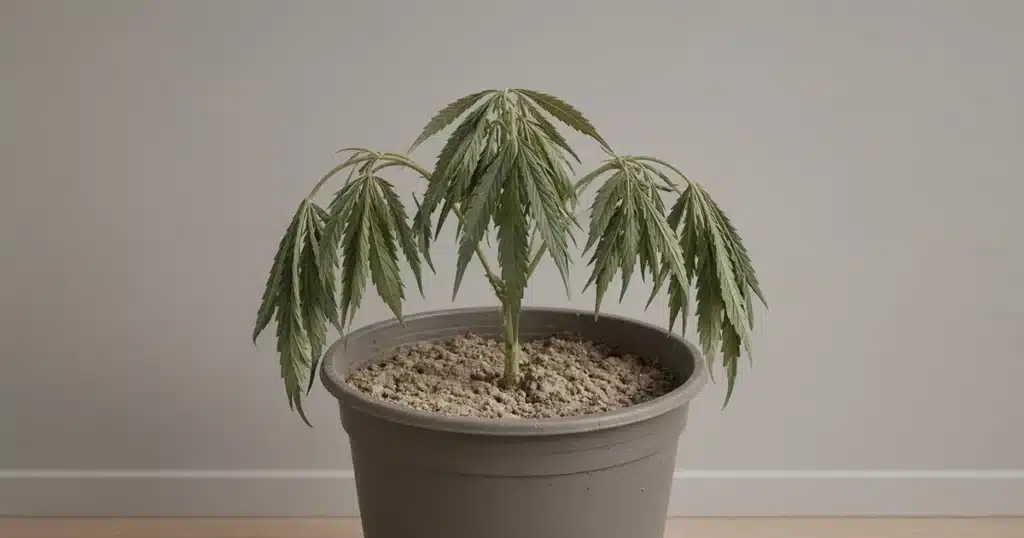
Underwatering cannabis means the root zone runs too dry for too long. The plant wilts, leaves hang limp, the pot feels light and the mix may shrink away from the sides of the container. Photosynthesis drops while the plant is dry. Most underwatered plants recover once the whole root zone is rewet slowly and watering becomes more regular.
What are the signs of an underwatered cannabis plant?
- Wilting. Leaves and leaflets droop and hang down from the stem.
- A light pot. A container that has dried out weighs much less than one that was just watered.
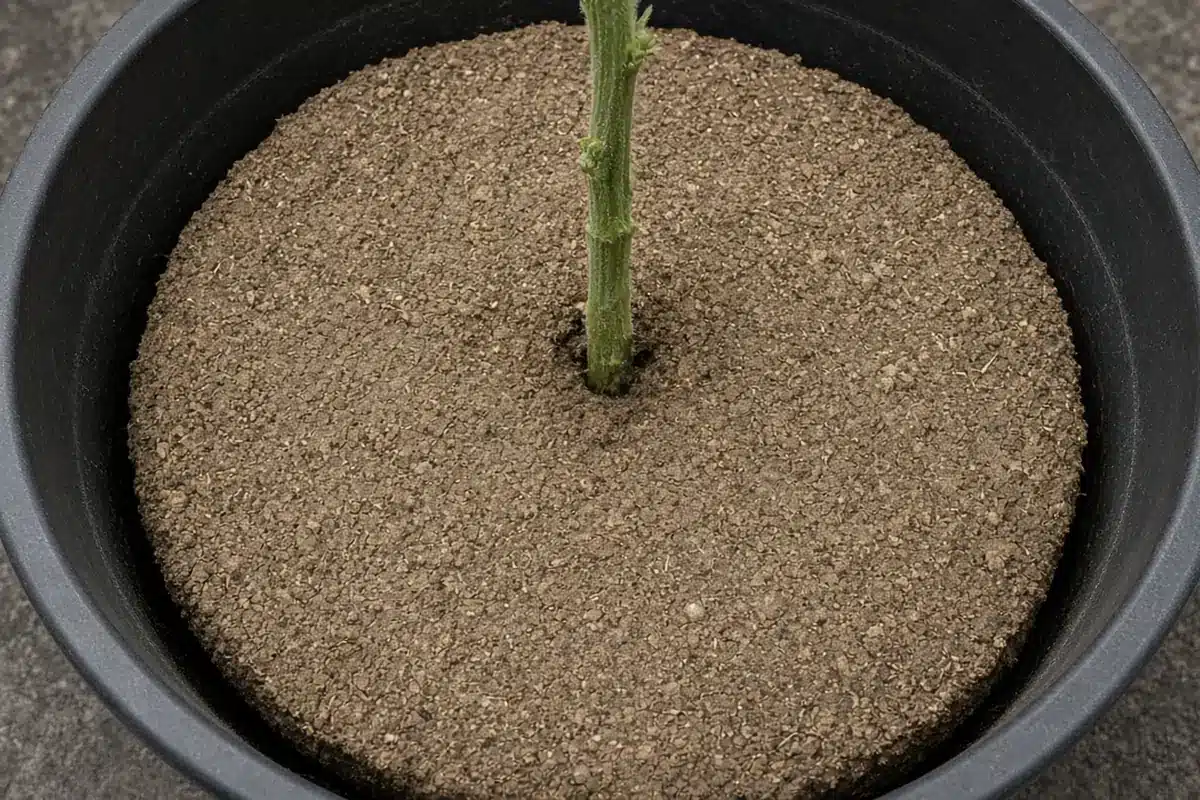
- Dry mix below the surface, not just on top.
- Mix that has shrunk away from the container wall, leaving a gap.
- Water that runs straight out the bottom without soaking in.
- Slow growth if the plant stays dry again and again.
University of Maryland Extension notes that both under and overwatering stress plants and can cause stunted or poorly fed growth, early leaf loss, pest or disease outbreaks and even plant death.
What happens inside a dry plant
A 2019 study from the University of Guelph in HortScience tested controlled dry periods on potted cannabis in flower. Watering was held back in the seventh week of flowering until the plants wilted, which took 11 days. At that point:
- Net photosynthesis was 42% lower than in watered plants.
- Moisture in the growing mix was 84% lower than in watered plants, 5.3% compared with 33.3% by volume.
- Plants were visibly wilted, and the angle of an indicator leaf had increased by 50% from its normal position.
The day after watering, photosynthesis had only partly recovered and was still 32% lower than in the watered plants. Moisture in the mix, however, was back to normal. The lesson for home growers is that a plant can look fine soon after a drink while still working below its best for a while.
This was a controlled trial with a single cultivar under tightly managed conditions. The researchers note that other varieties may respond differently, so it is not a guide to holding back water on purpose.
Underwatered vs overwatered cannabis
Both problems can make a plant droop, which is why they are confused. Maryland Extension states plainly that wilting is not a reliable sign of dryness, because plants can wilt both when too dry and when kept too wet.
| Check | Underwatered | Overwatered |
|---|---|---|
| Mix below the surface | Dry | Wet or soggy |
| Pot weight | Light | Heavy |
| Mix and pot wall | Gap may form | No gap |
| Leaves | Limp and hanging | Droop while soil is wet |
| Root risk | Roots dry out | Roots lack air and can rot |
Source: University of Maryland Extension. Caplan, Dixon and Zheng 2019, HortScience.
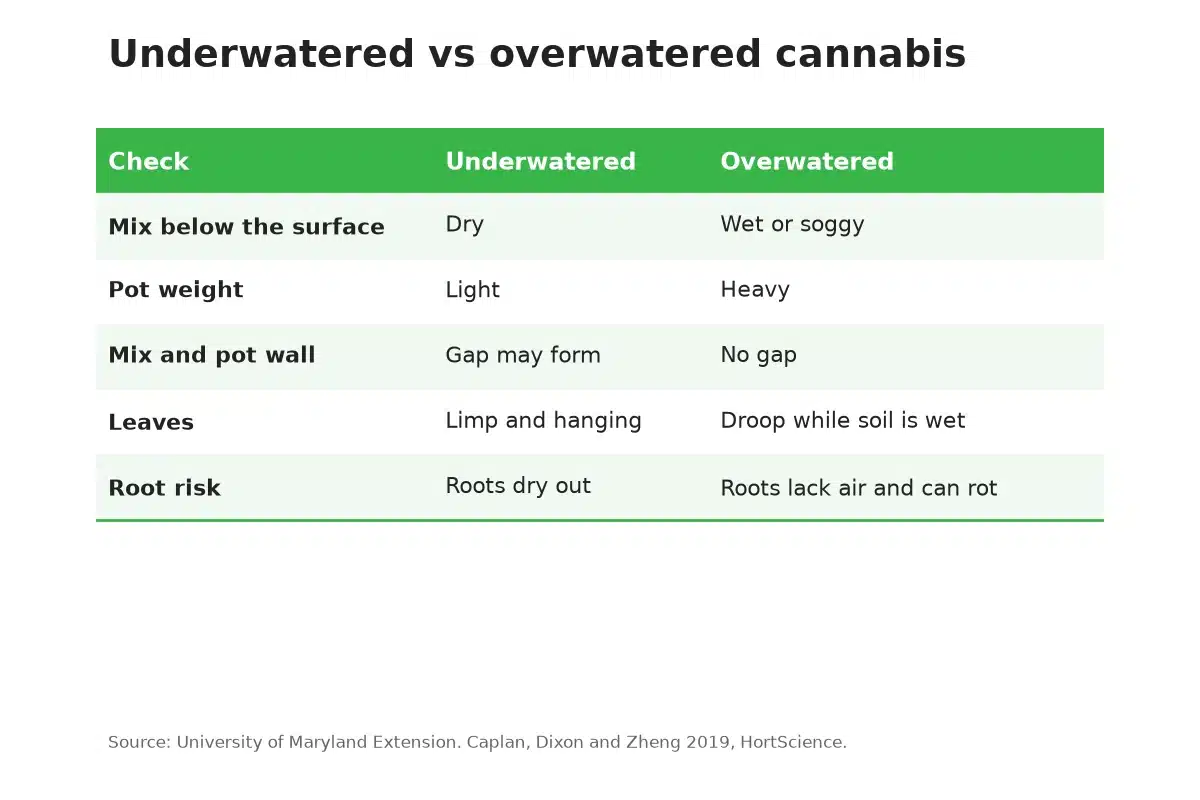
The fix is to check the mix, not the leaves. If the mix is wet and the plant still droops, the problem is the opposite one, covered in overwatering cannabis.
What causes underwatering?
- Containers dry fast. Maryland Extension explains that the whole root system of a container plant sits above ground, so the mix dries out more quickly than garden soil.
- Hot, dry weather. Some containers need watering every day when it is hot and dry, according to Maryland Extension.
- Hard surfaces. Brick, stone, concrete and decking can reflect or release heat and add heat stress around pots.
- Shallow watering. A splash on top may never reach the lower roots.
- Dry, water repelling mix. University of Maine Extension notes that soilless mixes tend to repel water when dry. UMass Extension adds that peat moss by itself is hard to wet.
- Porous or small containers. Maryland Extension notes that clay, ceramic, concrete and wood pots dry faster than plastic, resin, fiberglass or metal, and small containers dry faster than large ones.
- Sun and breeze. Pots in full sun or in a breezy spot dry out faster than those in shade or sheltered from wind.
How to check if your plant needs water
Maryland Extension advises against watering containers on a set schedule without checking them first. These checks take less than a minute per pot.
- Feel below the surface. Maryland Extension advises feeling the mix below the top layer to judge whether it is moist enough.
- Lift the pot. For lightweight containers, learn how heavy the pot feels right after watering and when it needs water. Maryland Extension calls this a useful shortcut.
- Wait until the top is nearly dry. Maryland Extension guidance for young plants is to wait until the top of the mix is nearly dry before watering.
- Consider a meter. How to use one is explained in soil moisture meters for cannabis.
How to revive a dry cannabis plant, step by step
- Water slowly at the base. Apply water to the mix at the base of the plant, not on the leaves. Maryland Extension notes that wet leaves can spread disease and the water may not reach the roots.
- Expect the first pour to run through. If the mix has pulled away from the pot, most water flows through the gap and out the drain holes. Repeat watering is needed to rewet dry mix.
- Soak from below if needed. Maryland Extension suggests setting the container halfway into a bucket or tub of water and letting it soak up moisture until the surface is moist.
- Let it drain fully. Each watering should rewet the whole container, with extra water dripping freely out of the drain holes. A large container may need several gallons.
- Empty saucers. Standing water can seep back into the pot and lead to root rot.
- Give it time. In the Guelph study, photosynthesis was still below normal the day after watering, so do not judge recovery in the first hour.
- Hold off on feeding. Maryland Extension warns that young plants are easily damaged by fertilizer when they are under moisture stress.
How to prevent underwatering
- Check pots often in hot weather, and look at weight and the mix below the surface, not the calendar.
- Water until it drains, so the whole root zone is wet.
- Use a gentle flow. Maryland Extension suggests a water breaker on cans and hoses so you do not wash mix out of the pot.
- Raise pots on feet or bricks so water drains freely, without blocking the drain holes.
- Choose a mix that rewets easily. UMass Extension notes that coir is easier to rewet after drying than peat moss. More on that medium is in coco coir as a grow medium.
- Mulch outdoor pots and beds. For options, read mulch for cannabis.
- Avoid dark pots in full sun. Maryland Extension notes that dark containers can raise mix temperatures and injure tender roots.
- Pre-wet new mix. University of Maine Extension suggests mixing warm water into soilless mix until it is evenly moist but not soaked before you fill pots.
- Consider self watering containers. Maryland Extension describes them as a way to cut maintenance by saving water and nutrients.
Stage by stage
Seedlings. Small pots dry fast but tiny roots also rot easily. Maryland Extension advises keeping seedling mix moist but not wet, and watering when the top is nearly dry.
Vegetative stage. Maryland Extension notes that moisture needs change with the plant’s stage of growth and the weather. Until you learn how fast each pot dries, check containers daily, especially in summer.
Flowering. Large plants in full flower can dry a pot fast. The Guelph study showed a clear drop in photosynthesis when plants in flower were allowed to wilt, so steady watering matters at this stage.
Timing and amounts for everyday watering are the core of the Kind Seed Co watering guide for cannabis plants.
Common mistakes
- Treating every droop as thirst. Check the mix first.
- Watering only the surface of a dry pot.
- Giving up after water runs straight through a shrunken root ball.
- Feeding a dry, stressed plant.
- Leaving saucers full after a big rewetting.
- Using the same schedule in a heat wave as in mild weather.
- Setting pots on blacktop, concrete or metal in full sun, where reflected heat dries them out and stresses roots.
- Wetting the leaves instead of the mix at the base of the plant.
Sources
- Caplan, D., Dixon, M., and Zheng, Y. 2019. Controlled drought stress study in potted cannabis. HortScience 54(5):964 to 969. https://doi.org/10.21273/HORTSCI13510-18
- University of Maryland Extension. Growing Vegetables in Containers and Salad Tables. https://extension.umd.edu/resource/growing-vegetables-containers-and-salad-tables
- University of Maryland Extension. Care of Vegetable Seedlings. https://www.extension.umd.edu/resource/care-vegetable-seedlings
- University of Maine Cooperative Extension. Bulletin 2751, Starting Seeds at Home. https://extension.umaine.edu/publications/2751e/
- UMass Extension. Bagged Potting Mixes and Garden Soils for Home Gardeners. https://www.umass.edu/agriculture-food-environment/home-lawn-garden/fact-sheets/bagged-potting-mixes-garden-soils-for-home-gardeners
FAQ
What does an underwatered cannabis plant look like?
Leaves hang limp and the whole plant droops. The pot feels light, the mix is dry below the surface and it may pull away from the container wall. Because overwatered plants can also droop, always check the moisture of the mix before you decide how to fix the problem.
How do I tell if my plant is overwatered or underwatered?
Check the mix and the pot, not the leaves. A light pot with dry mix below the surface points to underwatering. A heavy pot with wet mix points to overwatering. University extension guidance notes that wilting alone is not a reliable sign, since plants can wilt in both cases.
How do I revive a dry cannabis plant?
Water slowly at the base until water drains from the bottom, then repeat, since the first pour often runs through gaps. If the mix will not soak up water, set the pot halfway in a tub of water until the surface is moist. Let it drain, empty the saucer and hold off on feeding.
Can a cannabis plant recover from underwatering?
Usually yes, if the roots have not died. In a university study, plants that wilted after 11 dry days were rewatered and their mix returned to normal moisture by the next day. Photosynthesis was still lower than normal at that point, so recovery takes some time after the first watering.


