Carrots Not Germinating: Crusting, Drying and Planting Depth
The short answer
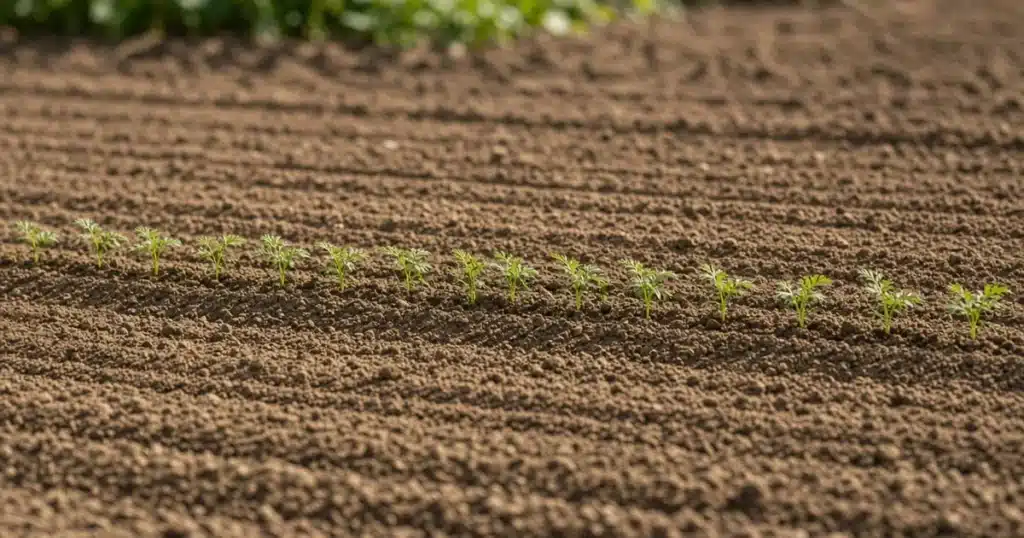
Carrots not germinating usually come down to dry soil, a hard crust or seed sown too deep. Carrot seed is slow and needs a moist surface for weeks. Utah State University Extension says seeds take 14 to 21 days to emerge. Sow about a quarter inch deep, cover with compost or fine sand and keep the surface damp.
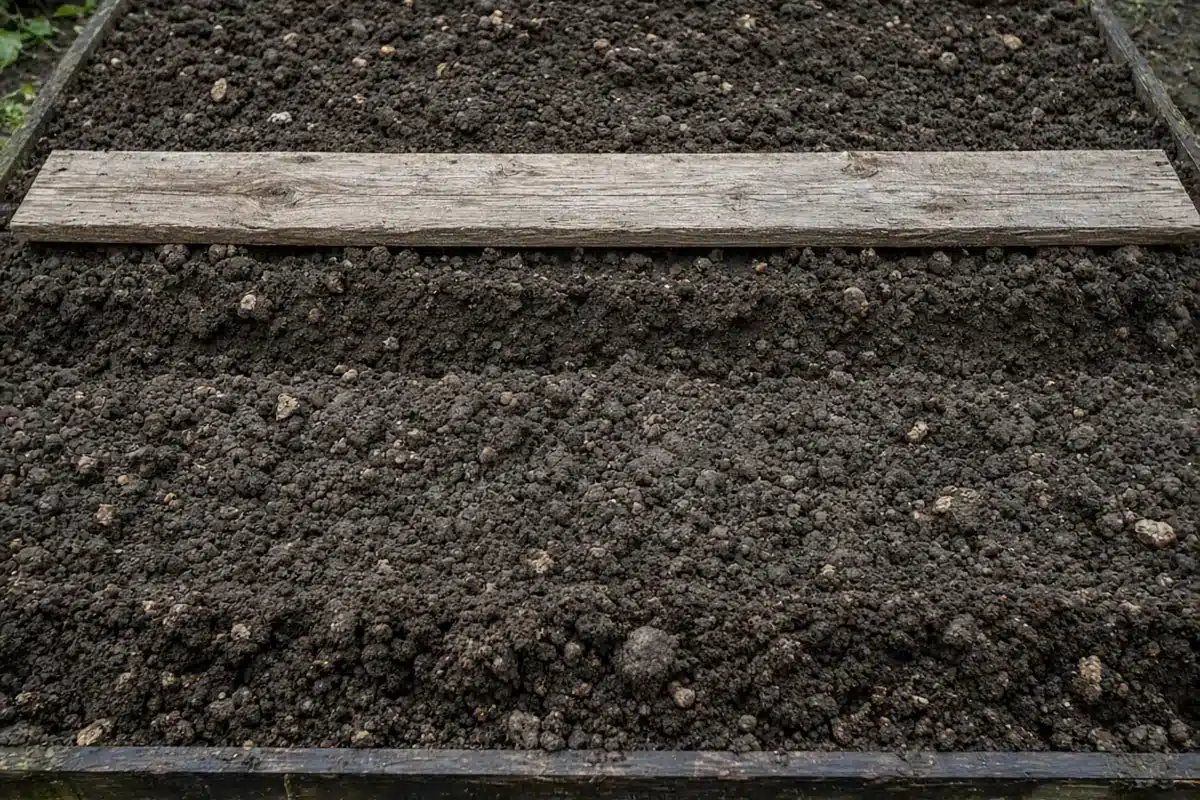
Why are my carrot seeds not germinating?
Carrots are slow, and many gardeners give up too soon. Utah State University Extension says carrot seeds germinate well at 55 to 65 degrees Fahrenheit and take 14 to 21 days to emerge. University of Illinois Extension notes that germination can take as long as two weeks and seedlings may not come up evenly.
The three common causes are a surface that dries out, a crust that seedlings cannot push through and seed planted too deep. Heat adds a fourth, since Utah State says temperatures above 80 degrees Fahrenheit reduce seed germination.
For dry soil signs, see underwatering cannabis, since the same checks apply to a carrot bed.
How deep should carrot seed be planted?
Shallow. Utah State says seeds should be planted a quarter inch deep. Illinois Extension gives a range of one quarter to one half inch in early spring, with no more than two or three seeds per inch. Later sowings may go one half to three quarter inch deep when the soil is drier and warmer.
Soil texture matters too. Illinois Extension says the seedbed should be worked evenly to break up clumps and clods, with the soil prepared 8 to 9 inches deep. Utah State says carrots prefer fertile, well drained, deep, sandy soils rich in organic matter. To judge when your bed is ready, read when is soil ready to work.
How do you stop soil from crusting?
Utah State says crusting soils limit seedling emergence and affect plant stands. Its advice is to plant seeds on the soil surface, then cover them with compost or fine sand. It also says to keep a uniform and moist soil surface.
Radishes help as well. Utah State says planting radishes with carrots helps minimize the crusting problem and marks where the rows are. Illinois Extension suggests a single radish seed every 6 to 12 inches. Illinois also says covering the row with clear polyethylene film warms the soil and conserves moisture. For more on crusts, see soil crusting and cannabis seedlings.
| Problem | Sign | Fix |
|---|---|---|
| Dry surface | No sprouts after three weeks | Sprinkle water to keep the top moist |
| Soil crust | Seedlings stuck under a hard layer | Cover seed with compost or fine sand |
| Seed too deep | Few or patchy sprouts | Sow a quarter to a half inch deep |
| Heat above 80 F | Poor germination | Sow in cooler weather or cover the row |
| Clods in the bed | Uneven rows | Work the soil fine before sowing |
Sources: Utah State University Extension, University of Illinois Extension.
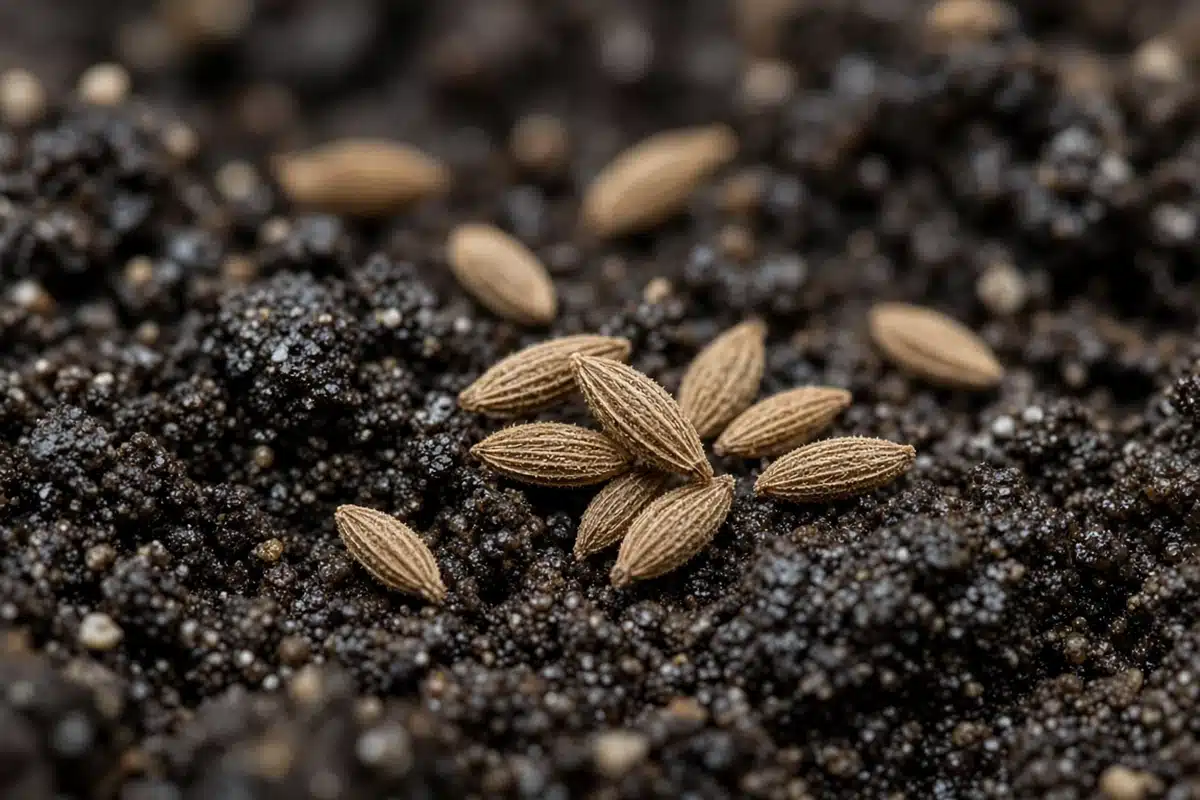
How to: step by step
- Prepare fine, loose soil 8 to 9 inches deep.
- Sow seed about a quarter inch deep.
- Cover with a thin layer of compost or fine sand.
- Add a radish seed every 6 to 12 inches to mark the row.
- Water gently to keep the surface moist.
- Cover the row with clear film in cool spring weather.
- Thin seedlings once they come up.
Utah State says to thin seedlings when plants have 3 to 4 true leaves, spacing them 2 to 3 inches apart in rows 12 to 18 inches apart. Illinois Extension says that during late spring and summer it may be necessary to supply water by sprinkling.
Troubleshooting
No sprouts after three weeks: dry surface or heat. Keep the top evenly moist and avoid sowing when temperatures pass 80 degrees.
Seedlings stuck under a crust: hard surface. Use a light cover of compost or fine sand, and plant radishes in the row.
Patchy rows: seed too deep or clods in the bed, so sow shallow into fine, even soil.
Seedlings come up then stall: moisture swings. Utah State says these can slow leaf development, so mulch around plants once they’re up.
Patience and a damp surface
Most carrot beds that seem to fail are only slow or dry on top. Shallow sowing, a light cover and steady moisture solve most problems. The Kind Seed Co blog has more garden help for plants beyond cannabis.
Sources
FAQ
How long do carrot seeds take to sprout?
Utah State University Extension says carrot seeds take 14 to 21 days to emerge and germinate well at 55 to 65 degrees Fahrenheit. University of Illinois Extension says germination can take as long as two weeks and seedlings may not emerge evenly, so wait three weeks before deciding a row has failed.
Why plant radishes with carrots?
Radishes sprout fast. Utah State University Extension says planting radishes with carrots helps minimize the crusting problem and identifies where the planted rows are. Illinois Extension suggests one radish seed every 6 to 12 inches, since carrots can be slow to germinate and the row is easy to lose.
Does hot weather affect germination?
Yes. Utah State University Extension says temperatures above 80 degrees Fahrenheit reduce seed germination. Illinois Extension says later sowings may be planted a little deeper, at one half to three quarter inch, when soil is drier and warmer. Sprinkling water during late spring and summer also helps seed sprout.
Can I cover carrot rows to help them sprout?
Yes. University of Illinois Extension says covering the row with clear polyethylene film warms the soil and conserves moisture. Utah State University Extension suggests covering the seed itself with compost or fine sand instead of heavy soil, which helps seedlings reach the surface through a crust.
How far apart should carrot seedlings be?
Utah State University Extension says to thin carrots when plants have 3 to 4 true leaves, leaving 2 to 3 inches between plants in rows 12 to 18 inches apart. Illinois Extension gives closer spacing for small finger carrots and wider spacing for larger varieties.