Thick Cannabis Stems: How to Grow Stronger Stalks
Quick answer: Thick cannabis stems usually come from steady, bright light, gentle airflow, careful feeding and enough space for each plant. Extension guides for indoor seedlings name poor light, too much water, high heat, overfeeding and crowding as the main causes of tall, spindly growth. Fix those early and new growth tends to come in shorter and sturdier.
A sturdy stem matters because it carries water and food up to the leaves and holds the plant upright as it gets heavier. Thin, soft stems flop over, bend easily and struggle to support later growth. The good news is that most of these causes are things you can actually control.
What a Thick, Healthy Stem Looks Like
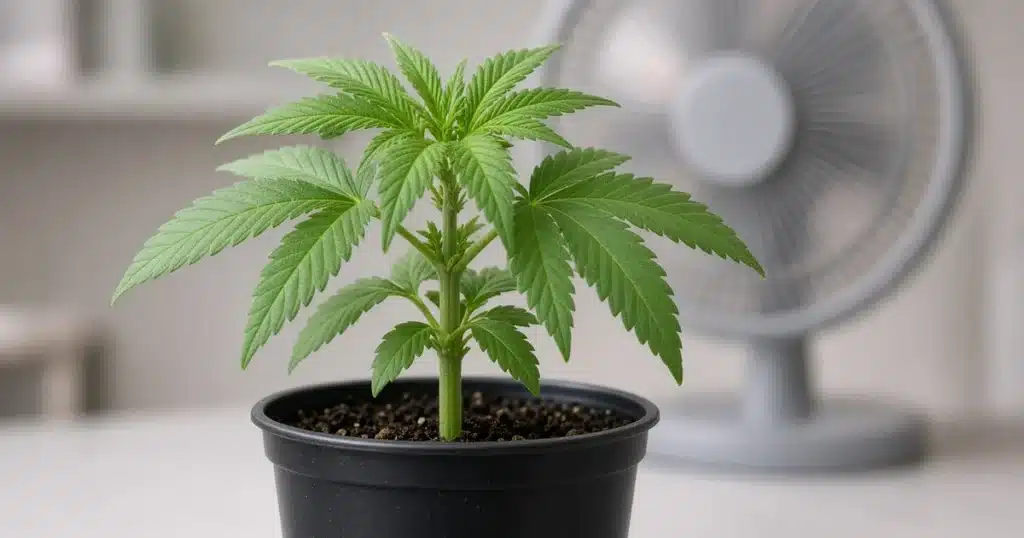
A sturdy young stem is firm to a light touch, stands upright without support and has short gaps between each set of leaves. It thickens a little more each week as the plant adds leaves above it. A weak stem looks long and pale, bends easily and leaves big spaces between leaf pairs. Iowa State calls the goal short, stocky transplants, and that is a good picture to keep in mind for young cannabis plants too.
What Makes Cannabis Stems Thin?
Iowa State University Extension lists five factors that contribute to tall, spindly growth in transplants started indoors: poor light, excessive watering, high temperatures, excessive fertilization and crowded conditions. It adds that proper growing conditions should produce short, stocky transplants. Those are vegetable and flower seedlings, but the same basics apply to young cannabis plants.
| Cause | What you see | First thing to check |
|---|---|---|
| Too little light | Tall, thin stem with wide gaps between leaves | Light height, brightness and hours |
| Too much heat | Fast, soft, stretched growth | Air temperature at plant height |
| Overfeeding | Rapid, soft, lush growth | Feeding strength and how often |
| Too much water | Soft growth, slow roots | How wet the mix stays between waterings |
| Crowding | Plants racing each other upward | Space between pots and leaves |
| Still air | Soft stems that never get tested | Gentle air movement in the space |
Light
UNH Extension explains that a plant which does not get enough light day after day cannot grow properly. In seedlings, it says, this looks like stretched, thin plants with lots of space between the leaves. The total light a plant gets in a day is called the daily light integral, or DLI. UNH also notes that once a stem is stretched, adding light will not shrink it back down, but more light may prevent further stretch.
Feeding
Utah State University Extension says overfertilizing can cause rapid succulent growth, which causes weak stems and makes plants more attractive to pests and diseases. It suggests it is better to err on the side of being a little lean on fertilizer than excessive.
Heat
USU notes that most vegetable seedlings prefer night temperatures of 60 to 65°F and that spindly plants can result when it runs warmer. Cannabis seedlings have their own comfortable range, but the same pattern holds: too much warmth pushes soft, fast growth.
How to Grow Thick Cannabis Stems
- Give enough light from the start. Weak light is the most common cause of thin stems. Move the light to a suitable height for your fixture and watch new growth for long gaps between leaves.
- Keep the temperature moderate. Avoid hot, stuffy spaces. Iowa State and USU both link high temperatures to spindly growth.
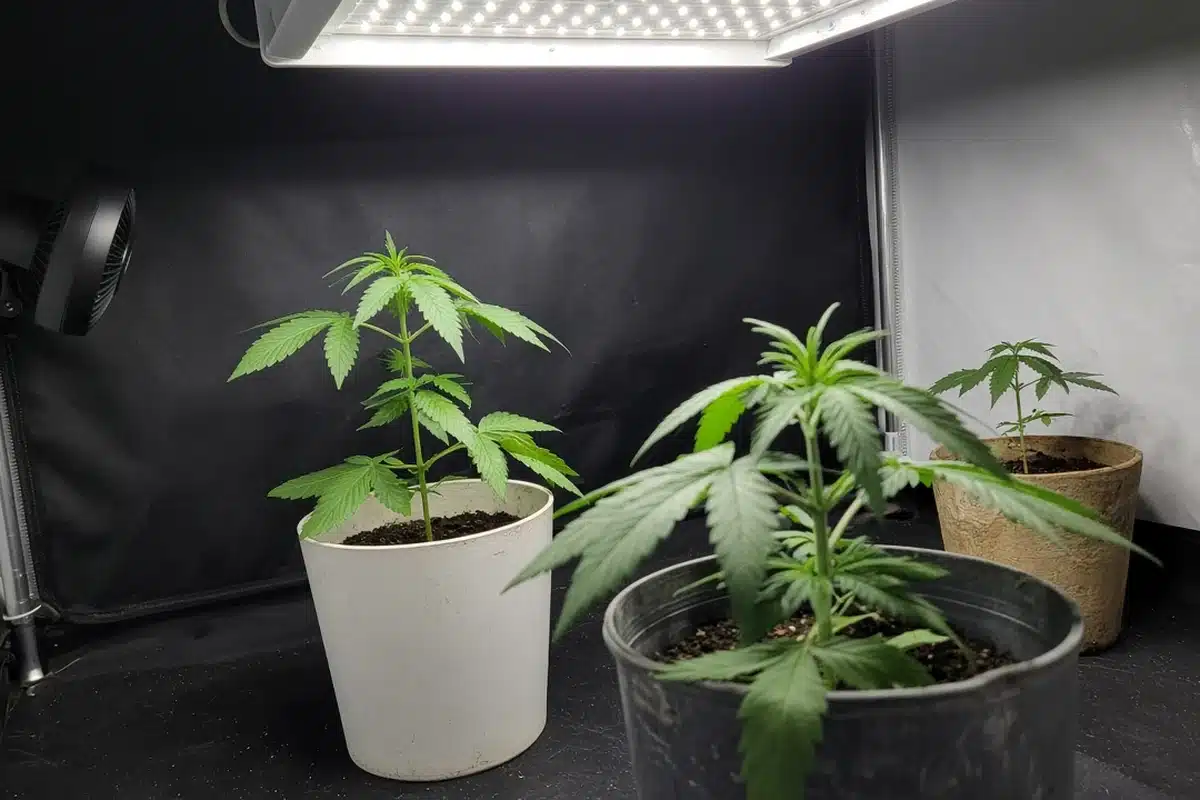
- Add gentle airflow. USU says very light, intermittent, direct airflow on seedlings can help them grow strong and resilient. It suggests short sessions of 5 to 10 minutes or more, one to several times a day. For setup, see our guide to using an oscillating fan in a grow tent.
- Avoid strong, constant wind. USU warns that too much direct airflow can damage seedlings and likely increase how often you need to water.
- Feed lightly. Follow the label for seedlings, and if none is given, USU suggests diluting the normal concentration by half. When in doubt, lean is safer than heavy.
- Water by weight. Lift the pot. Water when it feels much lighter, and let the mix dry moderately between waterings so roots get air.
- Space plants out. Give each plant room so the leaves of neighbouring plants are not competing for light.
- Pot up on time. USU says seedlings are ready to move to a larger container when a healthy number of roots are visible but before they form dense mats.
- Try light brushing. Some growers gently brush the tops of young plants to keep them compact, but results vary, so see it as an optional extra. If you try it, use a light touch and stop if leaves are damaged.
Is It Thin Stems or a Different Problem?
If a plant is tall with long gaps between nodes, the issue is stretch, which our guide to controlling stretching in cannabis plants covers. If a stem is cracked, kinked or snapped, it needs support and repair, explained in our guide to fixing broken and bent cannabis stems.
Troubleshooting
Stems flop over after potting up. Roots need a few days to settle. Keep the light steady, water carefully and avoid strong airflow until the plant perks up.
The plant leans toward the light. The light is too far away, too weak or off to one side. Center the light and check its height. Young plants that lean and stretch are covered in our guide to leggy cannabis seedlings.
Stems stay thin under a strong light. Check the other causes. Heavy feeding, warm air, wet mix or crowding can still give soft stems, even when the light is right.
New growth is lush, dark and soft. This often points to overfeeding. USU links overfertilizing to rapid succulent growth and weak stems. Ease off the feed strength and watch new growth.
Leaves look torn or dry at the edges near the fan. The airflow is too strong or too close. Move the fan back or run it for shorter periods.
A stem splits. That is physical damage, not thinness. Support it and see the broken stems guide linked above.
Sources
- Utah State University Extension, Starting Vegetable Seeds Indoors: Seeding, Culture and Transplanting: https://extension.usu.edu/yardandgarden/research/starting-vegetable-seeds-indoors-seeding-culture-and-transplanting
- Iowa State University Extension and Outreach, Why Are Plants Started Indoors Getting Tall and Spindly?: https://yardandgarden.extension.iastate.edu/faq/flower-and-vegetable-plants-i-started-indoors-getting-tall-and-spindly-why
- UNH Extension, Growing Seedlings Under Lights: https://extension.unh.edu/resource/growing-seedlings-under-lights-fact-sheet
These sources cover vegetable and flower seedlings, not cannabis trials. We pass them on as general seedling guidance.
FAQ
How do you grow thick cannabis stems?
Give young plants enough light, keep temperatures moderate, add gentle airflow, feed lightly and leave space between pots. Iowa State Extension lists poor light, too much water, high heat, overfeeding and crowding as causes of spindly growth, so fixing those is the main way to grow sturdier stems.
Does a fan help grow thick cannabis stems?
It can help. Utah State University Extension says very light, intermittent, direct airflow on seedlings can help them grow strong and resilient. Keep it gentle, run it in short sessions and avoid strong, constant wind, which USU says can damage seedlings and make the mix dry out faster.
Why are my cannabis stems so thin?
The usual causes are too little light, warm temperatures, too much water, heavy feeding and crowded plants. Iowa State Extension names all five as factors in tall, spindly growth indoors. Genetics also play a part, since some plants simply grow finer stems than others.
Does more light give you thick cannabis stems?
More light helps prevent thin, stretched growth, but it cannot undo stretch that has already happened. UNH Extension says plants that do not get enough light each day grow stretched and thin, and that adding light will not shrink a stretched stem back down, though it may prevent further stretch.
Can overfeeding cause thin cannabis stems?
Yes, it can lead to weak stems. Utah State University Extension says overfertilizing can cause rapid succulent growth, which causes weak stems and makes plants more attractive to pests and diseases. It suggests erring on the side of being a little lean on fertilizer, especially with young plants.