
Two Seedlings From One Cannabis Seed: What It Means
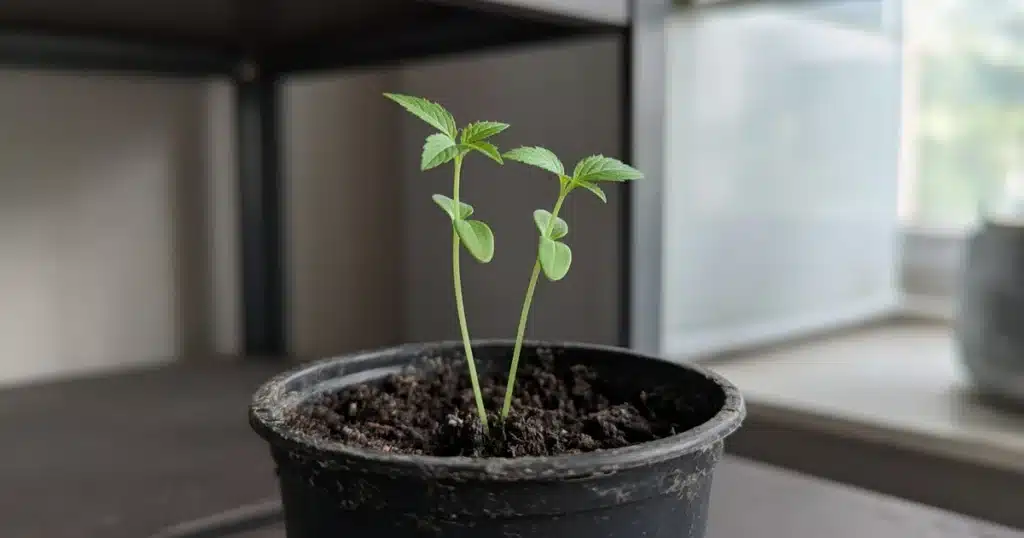
Two seedlings from one cannabis seed is what growers call twins, sometimes linked to a seed holding more than one embryo. Peer-reviewed data on how often it happens in cannabis is thin, so this post covers what growers can see and how to separate twins gently.
Why Do Two Seedlings Come From One Cannabis Seed?
Growers sometimes see two taproots or two stems come out of one seed shell. One possible explanation is that the seed held more than one embryo, though how often this happens, and why, is not known. Either way, treat each twin as you would any seedling. Most growers only notice them when germinating in a paper towel, as covered in our guide to germinating cannabis seeds.
What Is Polyembryony?
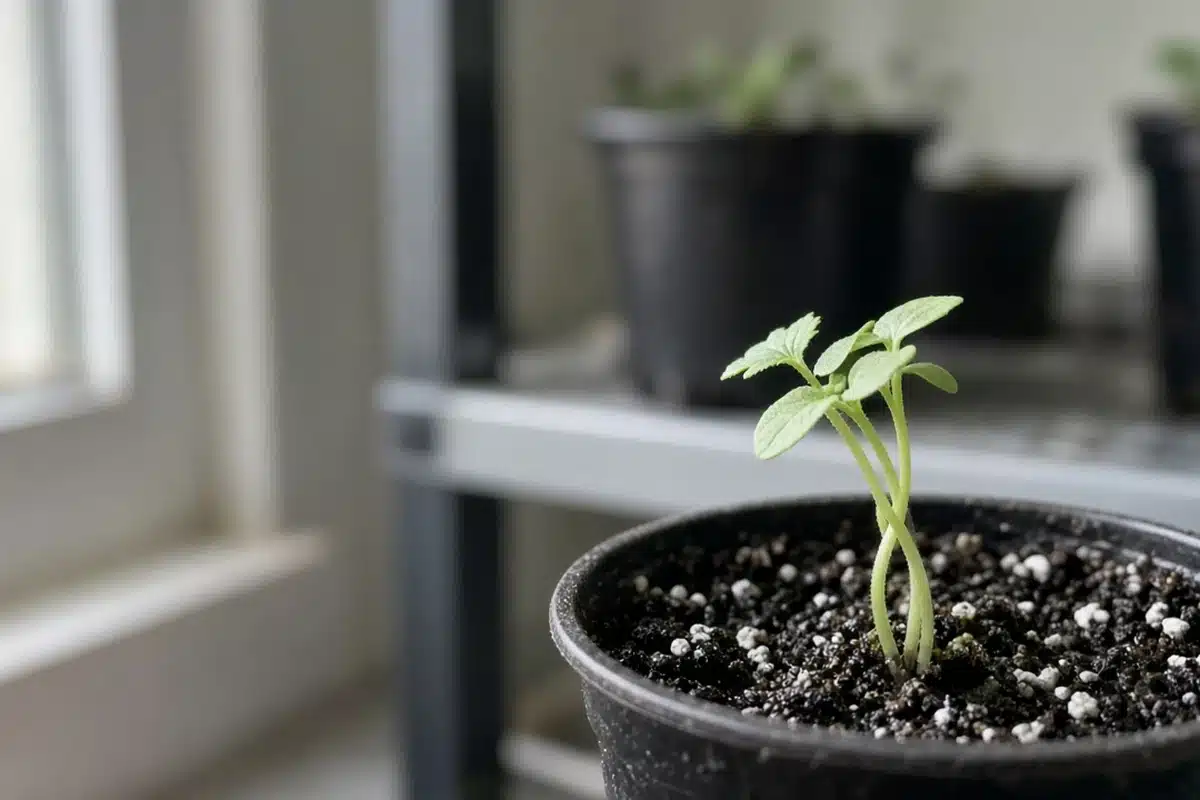
Polyembryony is the botanical term for a seed that holds more than one embryo. Twin cannabis seedlings are sometimes linked to it. Its cause and rate in cannabis are not known. Odd traits in seedlings can have many causes, and our guide to cannabis mutations covers other unusual growth that growers see.
Twin Seedling Signs and Care Choices
| What you see | What it may mean | Care choice |
|---|---|---|
| Two sprouts from one seed shell | Possible polyembryony or a split emergence | Keep both moist and lit like any seedling |
| Two taproots on one germinated seed | One seed produced two growing points | Decide early whether to separate them or keep one |
| One twin is clearly weaker | Uneven vigor between the two | Keep the stronger one, or grow both if space allows |
| Twins tangled at the soil line | Roots or stems sharing a tight spot | Separate gently, before roots tangle further |
| Wondering if twins mean better genetics | Twins are an emergence event, not a grade | Judge each plant by how it grows |
| Wondering if a twin is a triploid | Triploidy is a different genetics topic | See the FAQ below for the difference |
Should You Separate Twin Cannabis Seedlings?
It depends on your space and your goal. Two plants in one spot compete for light, water and root room, so many growers separate them or keep only the stronger one. Others grow both together in one pot, which means more root competition and a harder transplant later. If you separate them, many growers do it early, before roots tangle, and tease them apart gently in moist media. Tearing shared roots can set both back. Damp, crowded starts also raise the risk of problems in our seedling diseases guide.
Are Twin Seedlings Genetically the Same?
There is no firm answer: whether twins match each other genetically is unknown. The safest view is to treat each twin as its own plant and watch how it grows. Neither twin should be assumed to be a clone of the mother plant.
Starting more seeds? Browse our feminized seeds and read our germination guarantee.
Sources
The study below covers triploid cannabis plants, a different topic from twin seedlings. It is cited only to explain that difference.
Because twin seedlings have little research behind them, Kind Seed Co sticks to general growing information and what growers can see.
FAQ
Is one twin a clone of the mother?
There is no evidence for this, so it should not be assumed. Whether a twin shares genetics with its sibling is also unknown. Treat each twin as its own plant, and judge it by how it grows rather than by how it sprouted.
When is it safe to separate twins?
Earlier is usually easier, because roots tangle more as the seedlings grow. Separate them in moist media and work slowly so you do not tear shared roots. Some growers skip separation and keep only the stronger twin, which avoids root damage altogether.
Do twin seedlings grow weaker?
They may start weaker, since two plants share one seed's stored food and then compete for space. Often one twin grows faster than the other. Once separated, many twins grow on normally. Give each one good light, water and room.
Is a twin seedling the same as a triploid?
No. A triploid is a plant with three sets of chromosomes instead of two. A 2023 study in Plants used flow cytometry to find natural triploids in cannabis seedling populations, noting that cannabis is normally diploid. That study does not tie triploidy to twin seedlings, which are an emergence event.


