Wall of Water Protectors for Early Cannabis Transplants

The short answer
A wall of water plant protector is a ring of water filled plastic tubes that stands around a young plant. The sun warms the water by day. The water gives that heat back slowly at night, which shields the transplant from cold snaps.
For cannabis, a wall of water lets you move hardened seedlings outside a little earlier in spring. Set it up a few days before planting to warm the soil, and take it off once nights stay mild and the plant outgrows the ring.
How a wall of water works
Water holds heat far better than air. A ring of water around a seedling soaks up warmth through a sunny day. After sunset the air cools, and the water slowly releases its stored heat around the plant.
The result is a small pocket of milder air that cold wind cannot easily reach. The plastic walls also block wind, which is often as hard on a new transplant as the cold itself.
Washington State University Extension lists water filled tomato protectors as a type of cloche. Its guide describes them as water filled plastic tubes set up teepee style around young plants. It also reports that they can protect plants down to about 16°F, though cannabis seedlings do better when you never push that limit.
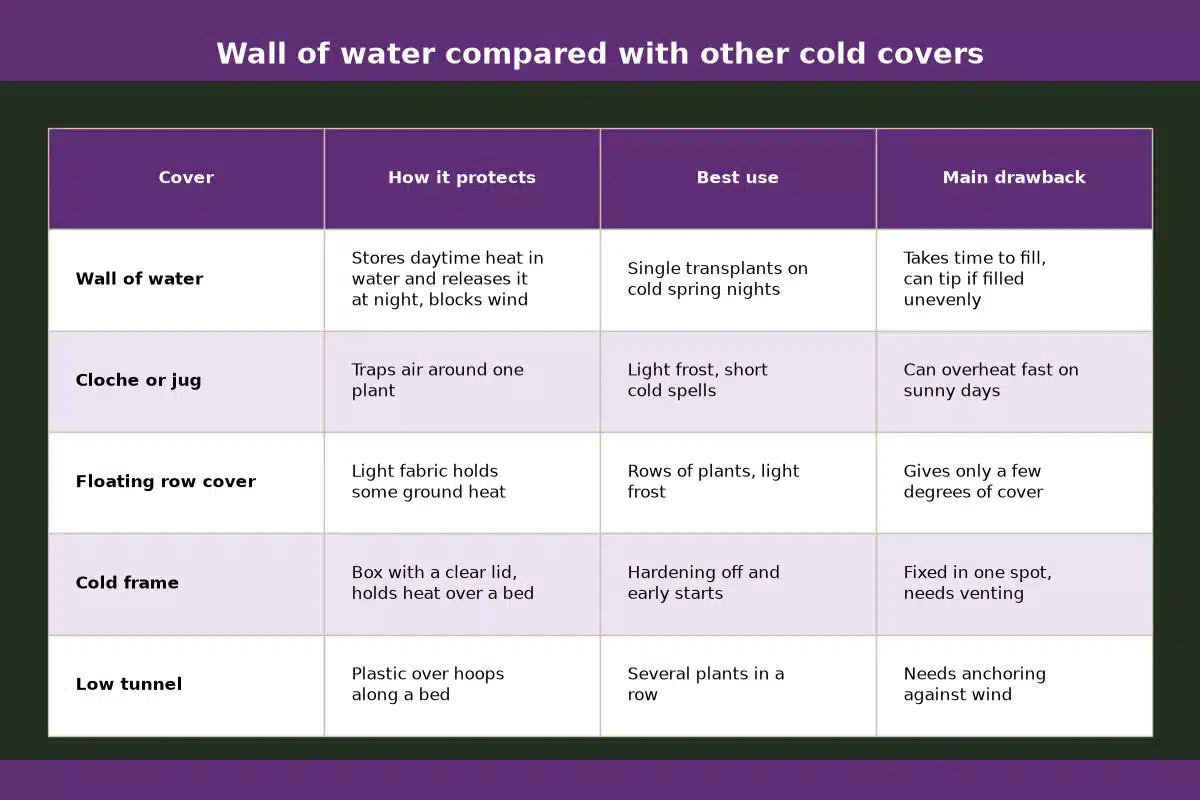
Wall of water compared with other cold covers
| Cover | How it protects | Best use | Main drawback |
|---|---|---|---|
| Wall of water | Stores daytime heat in water and releases it at night, blocks wind | Single transplants on cold spring nights | Takes time to fill, can tip if filled unevenly |
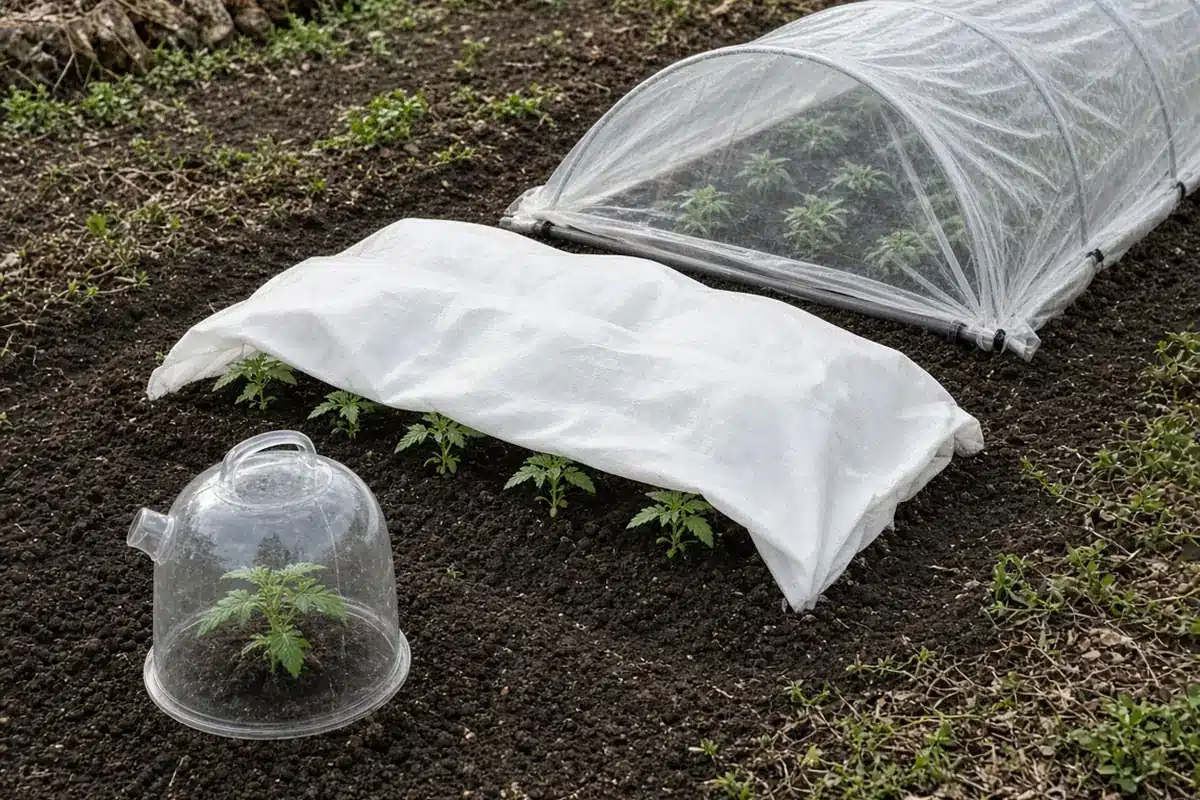
| Cloche or jug | Traps air around one plant | Light frost, short cold spells | Can overheat fast on sunny days |
| Floating row cover | Light fabric holds some ground heat | Rows of plants, light frost | Gives only a few degrees of cover |
| Cold frame | Box with a clear lid, holds heat over a bed | Hardening off and early starts | Fixed in one spot, needs venting |
| Low tunnel | Plastic over hoops along a bed | Several plants in a row | Needs anchoring against wind |
Source: Season Extenders, Washington State University Extension, Skagit County Master Gardeners, cover types and how each extends the season.
The WSU guide covers each of these tools and notes that season extending practices can add two to four weeks to the growing season. A wall of water is one of the few that protects a single plant with stored heat rather than trapped air alone.
When to use one for cannabis
Cannabis seedlings are tender. They grow best in warm soil and air. One cold night can stall them for days.
A wall of water makes sense when your days are warm enough for growth but nights still dip toward frost. It is a bridge, not a way to plant in the middle of winter.
Colorado State University Extension gives a useful benchmark in its guide to Growing Tomatoes. Tomatoes need nights above 52°F, days above 60°F and soil above 55°F at transplant. It names water filled protectors and black plastic mulch as ways to handle mild frost and warm the soil. Cannabis likes similar warmth, so those numbers are a sensible target.
Before your plants go out, they should already be hardened off. Our guide to hardening off cannabis seedlings explains how to build up their time outside over a week or two. You can also use a cold frame for that step.
How to set up a wall of water in seven steps
- Pick the planting spot and prepare the soil a few days ahead.
- Set the empty ring over the spot and place a bucket or tall pot in the middle to hold it upright.
- Fill each tube about three quarters full with water, working around the ring so it fills evenly.
- Remove the bucket and let the tubes lean inward into a teepee shape.
- Leave the ring in place for three to five days so the water and soil warm up.
- Plant your hardened seedling in the center and water it in.
- Check it each morning and afternoon for the first week.
Venting on warm days
A closed teepee can trap a lot of heat on a sunny afternoon. If the day turns hot, open the top of the ring so the tubes stand straighter. That lets hot air escape and keeps the seedling from cooking.
If the forecast calls for a cold night, close the top again in the evening. This open and close routine is the main daily job while the protector is in use.
When to take it off
WSU Extension advises removing water filled protectors when the plant outgrows the cylinder and the weather improves. For cannabis that usually means once nights stay mild and the top leaves reach the rim of the ring.
Do not wait too long. A plant that grows tall inside the ring can stretch toward the open top and end up thin and weak. Take the ring off on a calm, mild day. The plant then has time to adjust before any wind.
To take it off, lift the ring straight up, or tip the tubes outward and slide it away. Empty the water slowly at the base of the plant if the soil is dry, or away from it if the soil is already wet.
Choosing and caring for a protector
Wall of water style protectors come in a few sizes. Choose one wide enough to leave a few inches around the seedling. A larger ring also holds more water and more heat.
Store them clean and dry at the end of the season. Rinse out any dirt, let them dry fully and roll them up away from sunlight to keep the plastic from cracking.
Short on protectors? Give the rings to the youngest or smallest plants first. Bigger plants are better able to ride out a mild cold night under a simple cover.
Climate matters
How much a wall of water helps depends on your spring. In places with long, cool springs, it can give a real head start. In mild climates you may not need it at all. Our guide to growing cannabis in different climates can help you decide when to plant outside.
Troubleshooting
The ring keeps falling over. The tubes were filled unevenly. Empty the low side. Refill around the ring in small amounts, with a bucket in the center while you fill.
The seedling wilts on a sunny day. Heat built up inside. Open the top of the ring and check it again in the afternoon.
Leaves are damaged after a hard freeze. The cold was deeper than the water could handle. Add a frost cloth over the top of the ring on very cold nights.
The plant is tall and thin. Either it stayed in the ring too long or the light was too low. Remove the ring and let the plant firm up in open air.
A tube leaks. Small holes form over time. Patch it with waterproof tape or leave that tube empty and fill the others.
A small tool for a cold spring
A wall of water is simple, cheap to run and easy to reuse. It lets you move hardened plants outside a little sooner and protects them through those nervous first nights. At Kind Seed Co, we see it as a good fit for growers in short season areas who want an early start.
Sources
- Washington State University Extension, Season Extenders
- Colorado State University Extension, Growing Tomatoes
FAQ
What is a wall of water plant protector?
It is a ring of water filled plastic tubes that stands around a young plant. The water stores heat by day and releases it at night.
How cold can a wall of water protect against?
WSU Extension says these protectors can shield plants down to about 16°F. Tender cannabis seedlings do better well above that.
When should I put a wall of water out?
Set it up three to five days before planting so the water and soil can warm first.
When do I remove it?
Take it off once nights stay mild and the plant reaches the rim of the ring.
Do I need to harden off seedlings first?
Yes. A wall of water protects against cold, but seedlings still need to adjust to sun and wind before they go out.