
Bottom Watering Cannabis: When It Helps and How to Do It
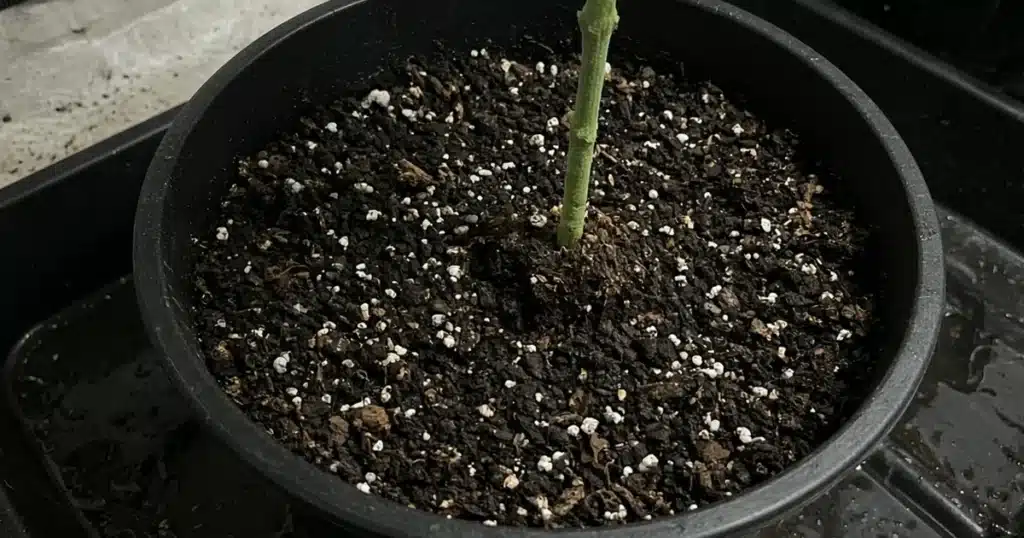
Bottom watering means standing a pot in water so the mix soaks moisture up from below. Research on container tomato shows it can work but lets salts collect toward the top of the pot, so a weaker feed did better there. We found no cannabis trial of bottom watering, so the steps here are grower practice.
What Is Bottom Watering?
Subirrigation, or bottom watering, delivers water to the base of the container instead of the top. In a container study on tomato, pots stood in nutrient solution in troughs and the unabsorbed solution drained back to a tank for reuse (Garcia-Santiago et al.). Our watering guide covers top watering.
When Does Bottom Watering Make Sense for Cannabis?
We found no cannabis trial on bottom watering. The closest study is on hemp in containers: Rutgers researchers found that plants irrigated when the substrate reached -10 kPa, instead of -20 kPa, had larger canopies and more biomass (Rutgers). That study did not use bottom watering, so it shows hemp grew larger at the wetter trigger point, not that bottom watering helps. Our post on self-watering pots covers a related container setup.

Source: Rutgers container hemp study. Plants were not bottom watered. The Wet treatment had larger canopies, thicker stems and more biomass, and it also used more water.
Data for this chart:
| Treatment | Watering started at | Result |
|---|---|---|
| Wet | -10 kPa | Larger canopy volume and stem diameter, more stem and total biomass, more water use |
| Dry | -20 kPa | Smaller plants |
How Do Growers Bottom Water Pots?
Growers set the pot in a tray or tub of water, let the mix soak until the top feels damp, then drain the tray. This is grower practice. In the tomato study, watering started when the substrate reached a set moisture tension, which shows timing can be measured rather than guessed (Garcia-Santiago et al.).
What Are the Downsides of Watering From Below?
In the tomato study, substrate EC rose and pH dropped from the bottom to the top layers of subirrigated pots, and root weight in the top layer fell 35% with the strongest solution (Garcia-Santiago et al.). Yield was highest with a weaker solution. Because water does not wash through from the top, salts can build up, and growers who water from below often check runoff EC, which is grower practice rather than a tested step.
Sources
Some sources below studied hemp or other crops rather than drug-type cannabis, and their findings are reported as results for those crops.
- Garcia-Santiago et al. 2019, Water: Subirrigation of Container-Grown Tomato II
- Rutgers: Container Shape and Irrigation Management Effects on Hemp
Based on the sources above, this page from Kind Seed Co is meant as general growing information.
FAQ
How does water move up through a pot?
When a pot stands in water, the substrate draws moisture upward from the base. In a container study on tomato, this movement carried salts with it: substrate EC rose from the bottom to the top layers of subirrigated pots. That is why the top of a bottom-watered pot can collect salts over time.
Why can salts build up with subirrigation?
In the tomato study, subirrigated pots showed rising EC and falling pH toward the top of the substrate as the nutrient solution got stronger, and salt buildup was linked to pH acidification. The best subirrigated yield came with a weaker nutrient solution. We found no study of feed strength for bottom-watered cannabis.
Do container size and shape affect hemp?
In a Rutgers study on hemp grown in 12-liter containers, container type affected flower dry weight, favoring the shorter, wider pots over taller ones. Container type and irrigation also changed calcium and boron levels in the plants. Cannabinoid concentrations were not affected by container or irrigation treatments in that study.
How wet should hemp substrate stay?
In the Rutgers container study, hemp irrigated when the substrate reached -10 kPa grew larger canopies, thicker stems and more biomass than hemp irrigated at -20 kPa. The researchers concluded that keeping the root zone free of moisture stress, at values less negative than -10 kPa, helps maximize hemp growth.


