
Are Self-Watering Pots Good for Cannabis? How Reservoir Containers Work
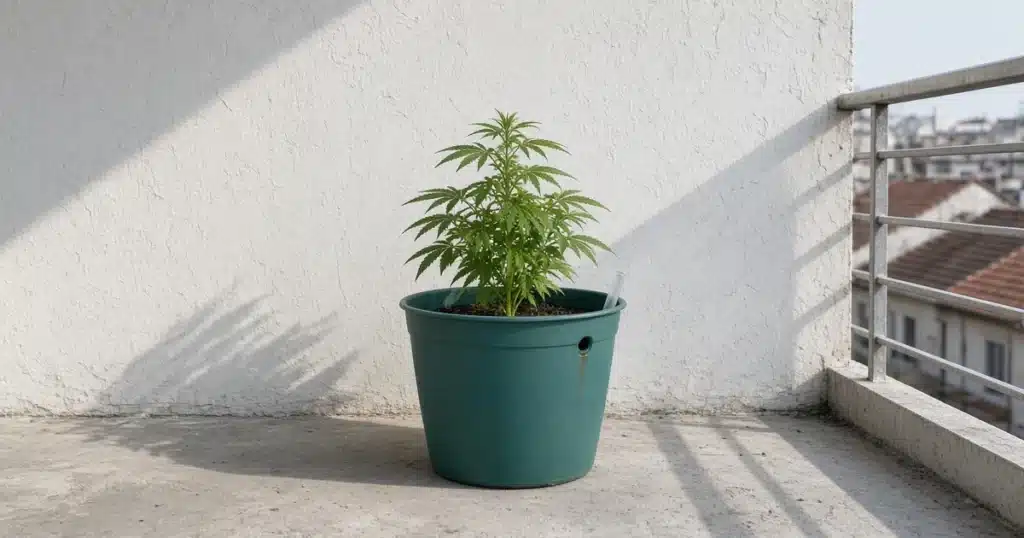
Self-watering pots can work for cannabis when they are set up with the right mix. A reservoir under a perforated platform lets the potting mix wick water up to the roots, and a side overflow hole stops overfilling. Mississippi State Extension recommends a soilless mix, not garden soil, so the wicking works.
How Does a Self-Watering Pot Work?
A self-watering pot is really two spaces stacked together. At the bottom sits a water reservoir. Above it, the potting mix rests on a perforated platform. Part of the mix, or a separate wick, reaches down into the water.
University of Maryland Extension describes how water is drawn up from the reservoir into the mix by wicking, and how roots can grow down through the medium toward the water. Instead of drainage holes in the bottom, the container has an overflow hole on one side.
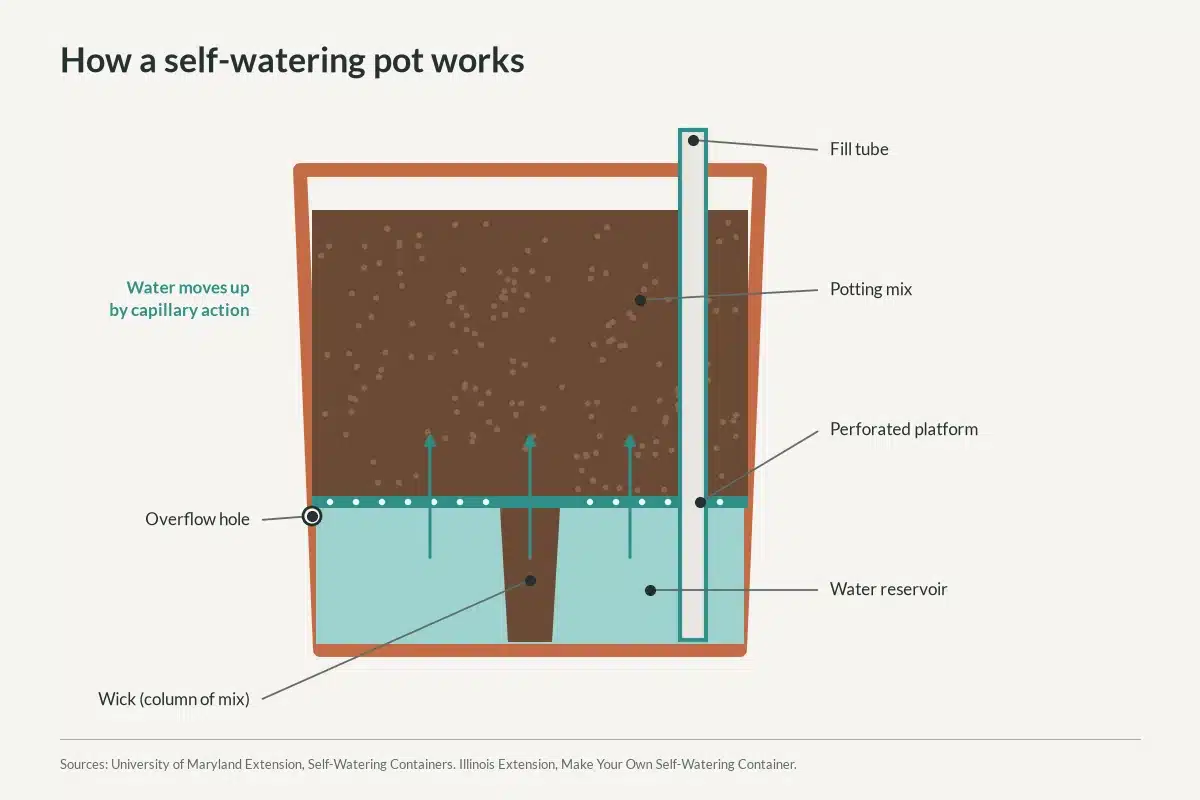
Mississippi State University Extension calls these subirrigated containers. The mix pulls water up by capillary action, the way a sponge soaks up liquid from a pan, which keeps moisture consistent in the root zone.
Are Self-Watering Pots Good for Cannabis?
They can be, with a couple of caveats. UMD says self-watering containers help conserve water and nutrients and make it possible to leave your containers alone for a few days.
Vegetable and flower research does not map perfectly onto cannabis, so watch your plants and the mix rather than a calendar.
The pot style is only one choice. For size, material and drainage, see our guide to the best cannabis growing containers.
What Potting Mix Works in a Self-Watering Pot?
The mix matters, because it has to carry water upward. Mississippi State Extension recommends a soilless mix built from ingredients such as peat moss, pine bark, coir, vermiculite and perlite. These are the same components used in the greenhouse and nursery trades.
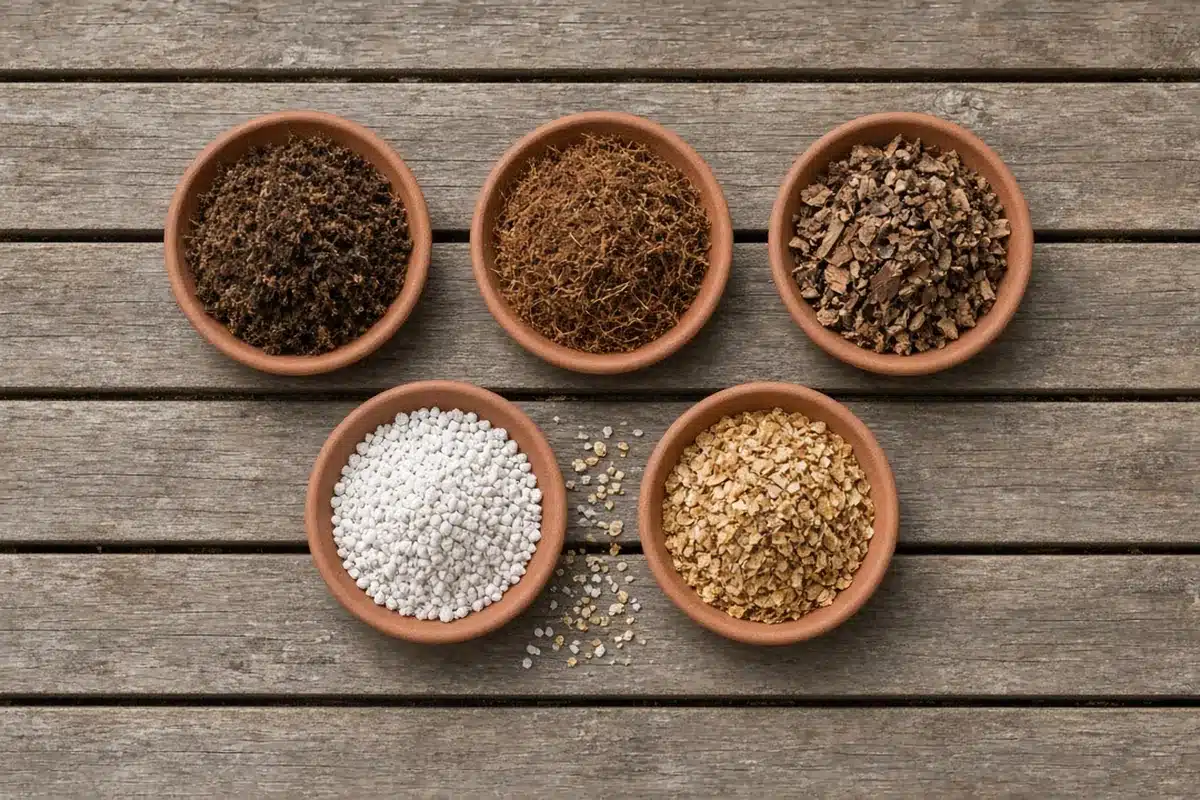
MSU also warns against two things:
- native soil dug from the garden
- bagged products meant for amending in-ground beds
Their physical properties do not suit subirrigated containers. MSU adds that wetting agents, often found in commercial mixes, improve how well the mix takes up water.
How Often Do You Refill the Reservoir?
It depends on how much the plant is growing. The University of Kentucky’s wicking container guide says plants with a heavy to moderate amount of growth can use up the reservoir in 3 to 5 days.
You top up through the fill tube, not over the soil surface. If the reservoir runs dry too fast, the Kentucky design adds a second perforated ring, which holds more water and keeps the upper soil moister.
For everyday watering habits, start with our guide to watering cannabis plants. If you prefer a reading over a guess, soil moisture meters are another option.
Can You Build a Self-Watering Container?
Yes. Illinois Extension has a simple build:
- Start with an 18-gallon plastic tub with a lid.
- Set a 6-inch net pot in the bottom as the wick, filled with mix.
- Stand a length of 2 to 3 inch PVC pipe in one corner as the fill tube.
- Drill an overflow hole about 3 to 4 inches from the bottom. It must sit below the top of the net pot, but not so low that the tub holds too little water.
- Fill the tub with a lightweight container mix and plant.
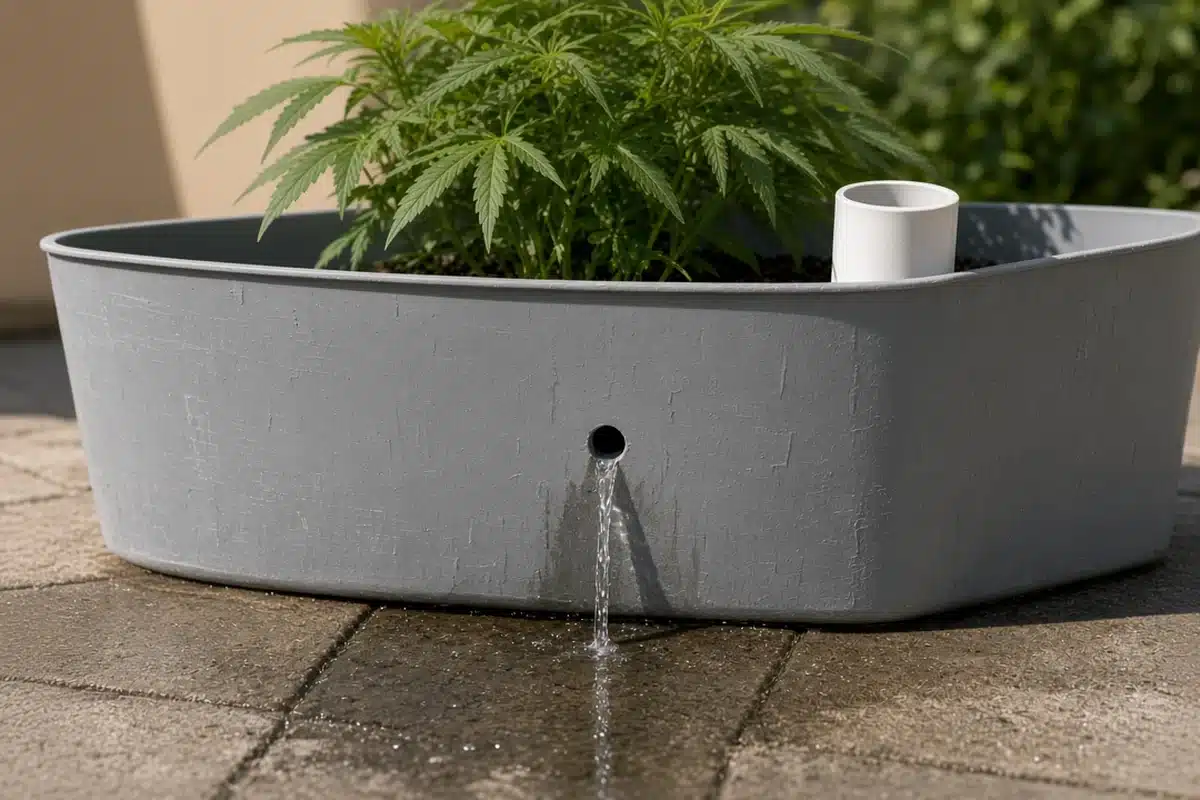
UMD also describes a 5-gallon bucket garden that recycles water and nutrients.
When Is a Self-Watering Pot the Wrong Choice?
MSU notes that these containers keep the root zone consistently moist. If your mix turns soggy instead, read our guides on overwatering cannabis and pythium root rot before you change anything else.
The other thing to avoid is garden soil, which MSU rules out for these containers.
FAQ
Can you use garden soil in a self-watering pot?
No. Mississippi State University Extension warns against native soil and bagged products meant for amending in-ground beds, because their physical properties do not suit subirrigated containers. It recommends a soilless mix made from ingredients such as peat moss, pine bark, coir, vermiculite and perlite.
How long does the water reservoir last?
It depends on how much the plant is growing. The University of Kentucky's wicking container guide says plants with a heavy to moderate amount of growth can use up the reservoir in 3 to 5 days. Its design adds a second perforated ring when the soil above needs more water.
Do self-watering pots need drainage holes?
Not in the usual place. University of Maryland Extension explains that a self-watering container has an overflow hole on one side instead of holes in the bottom. Illinois Extension places that hole a few inches above the base, so extra water escapes when the reservoir is filled too high.
Can you feed cannabis through a self-watering pot?
These containers help conserve both water and nutrients, University of Maryland Extension says, and its 5-gallon bucket design recycles water and nutrients. For what to feed and when, follow our feeding schedule for cannabis in soil and the directions on the product you use.


