
Hop Latent Viroid in Cannabis: Signs, Spread and Testing
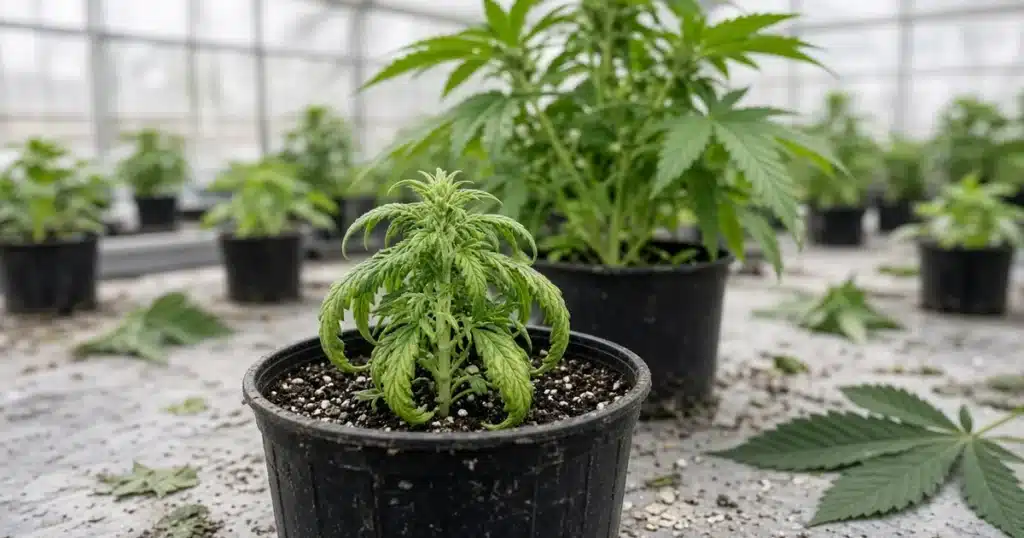
Hop latent viroid (HLVd) is a tiny infectious RNA that can stunt cannabis and shrink flower development, a problem growers call dudding disease. Plants can carry it with mild or no symptoms, so a lab test such as RT-PCR is the reliable check. In Canadian tests, about one in four samples was positive.
What Is Hop Latent Viroid?
HLVd is a pathogenic circular RNA particle. It is common in hop and can also infect stinging nettle, and it was first found in cannabis in California (PNW Handbook). The PNW Handbook says it causes dudding disease in cannabis production, but not every variety shows symptoms. The PNW Handbook reports that a 2021 survey found HLVd in 90% of California cannabis facilities. That figure counts facilities, not plant samples. In Canada, a lab study tested 15,947 samples from licensed facilities by RT-PCR. An average of 25.6% were positive, and the rate ranged from 5.3% to 92% depending on province and year (Punja et al.). For seed or clone choices, see our guide to seeds or clones.
What Are the Symptoms of HLVd in Cannabis?
In the Canadian study, symptoms changed with growth stage. Mother and vegetative plants ranged from no symptoms to mild leaf curl and mottling, while flowering plants could be severely stunted with reduced flower development. Infected plants showed 12% to 42% reductions in flower stem length, fresh weight and plant height, depending on genotype, and THC and terpene levels were lower (Punja et al.). In field hemp, the PNW Handbook lists stunting, smaller leaves, shorter internodes, yellowing and brittle stems, and notes early symptoms can look like a nitrogen deficiency. These are not the same as genetic cannabis mutations.
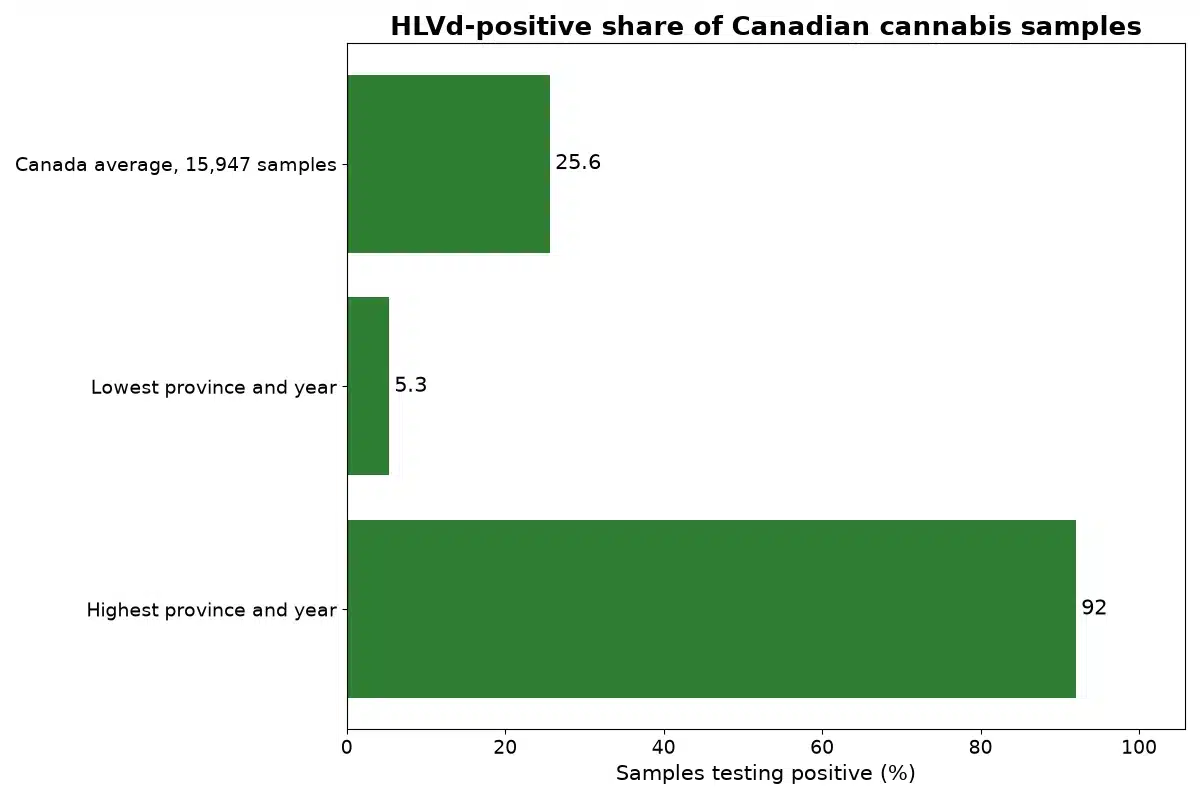
Source: Punja et al. 2024 (abstract), RT-PCR tests of samples from licensed facilities in nine Canadian provinces, 2020 to 2023. A separate 2021 California survey found HLVd in 90% of facilities (PNW Handbook). That counts facilities, not samples.
Data for this chart:
| Measure | Value | Source |
|---|---|---|
| Average positive, all samples | 25.6% of 15,947 | Punja et al. 2024 |
| Range by province and year | 5.3% to 92% | Punja et al. 2024 |
| California facility survey, 2021 | 90% of facilities | PNW Handbook |
Growth losses in HLVd-infected greenhouse cannabis
Source: Punja et al. 2024 (abstract). Reductions compared with noninfected plants, depending on genotype.
| Measure | Reduction | Source |
|---|---|---|
| Inflorescence stem length, fresh weight and plant height | 12% to 42% across these measures, depending on genotype | Punja et al. 2024 |
How Does HLVd Spread Between Plants?
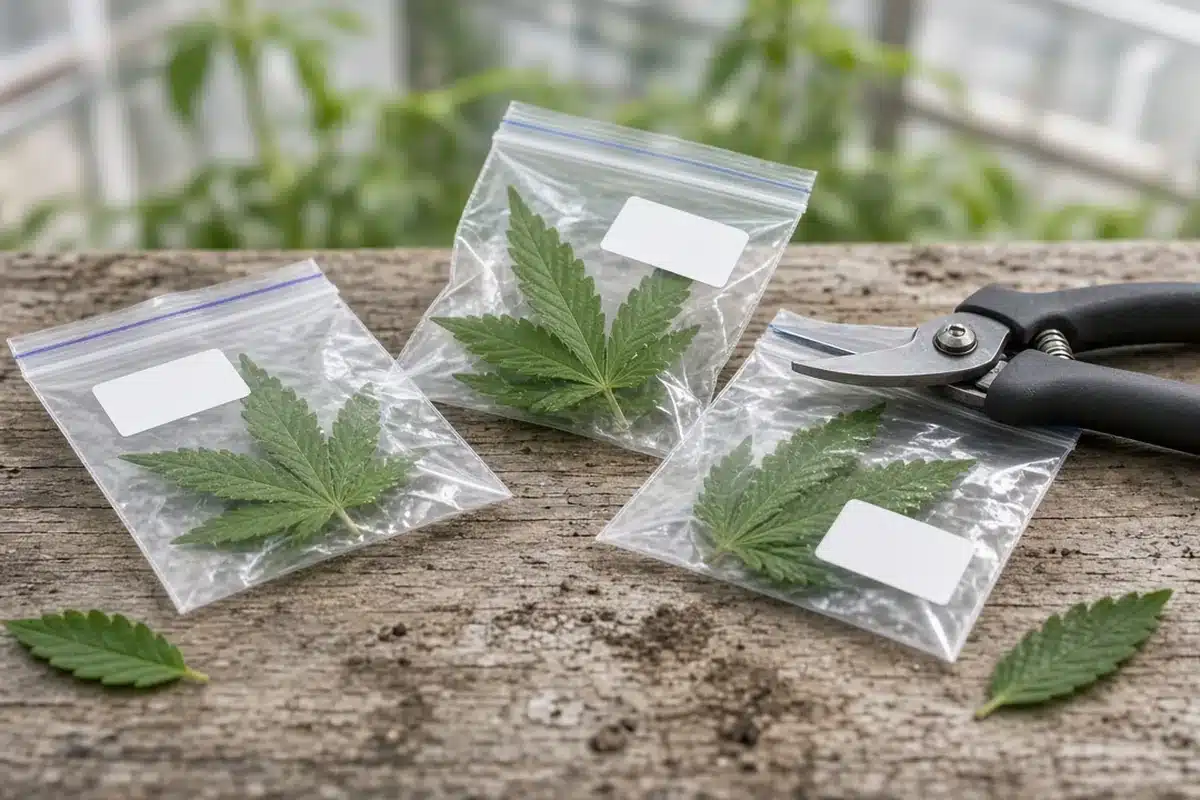
The PNW Handbook says HLVd spreads through vegetative propagation, such as taking cuttings from an infected mother plant, and through seed made with infected mothers or pollen. In hop, it spreads mechanically during propagation and field work, and to a limited degree by plant contact. There is no evidence that insects carry it. The Handbook’s hemp advice is to use viroid-tested stock, remove infected plants, avoid sharing nutrient solution between plants in hydroponic systems, and heat blades at 320°F for 10 minutes between plants when propagating (PNW Handbook).
How Do Growers Test for HLVd?
Because infected plants can look healthy, a lab test is the way to confirm HLVd. The Canadian study used RT-PCR and found the viroid in upper, middle and lower leaves and in roots of mother, vegetative and flowering plants (Punja et al.). Growers usually send plant tissue to a diagnostic lab and follow the lab’s sampling instructions. Testing mother plants before taking cuttings fits the Handbook’s advice to start with viroid-tested stock.
Prefer to start a new grow from seed? The PNW Handbook notes that seed from infected mothers or pollen can carry HLVd. You can browse our cannabis seeds.
Sources
Some sources below studied hemp or other crops, or give general garden guidance, rather than studying drug-type cannabis. Their findings are reported as results for those crops or settings.
- Punja et al. 2024, Canadian Journal of Plant Pathology 46:174-197: Hop Latent Viroid on Greenhouse-Grown Cannabis in Canada (abstract)
- PNW Plant Disease Management Handbook: Hemp Viroid Diseases
The two sources above carry this viroid page, and Kind Seed Co presents it as general growing information.
FAQ
Can a cannabis plant have HLVd without symptoms?
Yes. In the Canadian study, symptoms on mother and vegetative plants ranged from none to mild leaf curl and mottling, and some plants without symptoms still tested positive. The PNW Handbook also says not all varieties show symptoms, which is why growers rely on a lab test rather than looks alone.
Which plant tissue is best for an HLVd test?
The Canadian study found HLVd in the uppermost leaves, in leaves from the middle and lower canopy, and in roots of mother, vegetative and flowering plants. Since the viroid can sit in several tissues, follow the sampling instructions from the lab you send plant material to.
Does HLVd affect hemp as well as cannabis?
Yes. The PNW Handbook reports HLVd in hemp in Colorado, Washington and Oregon. In Oregon State surveys of 79 hemp sites in 2021 and 2022, it was found at eight Oregon and two Washington sites. Infected field hemp may show stunting, small leaves, short internodes and brittle stems.
Can you cure a plant infected with HLVd?
The PNW Handbook lists no cure. Its hemp advice is exclusion and sanitation: start with viroid-tested stock, remove infected plants, keep nutrient solutions separate between plants, and heat propagation blades at 320°F for 10 minutes between plants to limit spread through cuttings and tools.


