Apical Dominance in Cannabis Explained
Quick answer: Apical dominance is the control the growing tip of a stem holds over the buds below it. The tip makes a hormone called auxin that moves down the stem and keeps nearby side buds quiet, so the plant puts its effort into one main shoot. NC State Extension explains that removing the terminal bud takes away that source of auxin and lets the side buds grow. That is the biology behind topping, pinching and bending cannabis. Cut or tip the leader and the plant spreads its growth across several branches instead of one central cola.
What Is Apical Dominance?
Apical dominance is the way a plant’s top bud keeps the buds below it from growing. Every stem ends in a terminal bud, the growing point at the very top. Along the stem, each node carries a leaf and a small bud tucked into the angle where the leaf joins the stem. NC State Extension calls these axillary buds. They are ready to grow. Most of them simply wait.
The waiting is not random. In its Extension Gardener Handbook botany chapter, NC State Extension explains that stem tips make auxins and that these hormones keep lateral buds from growing. So the tip sets the pace for everything beneath it.
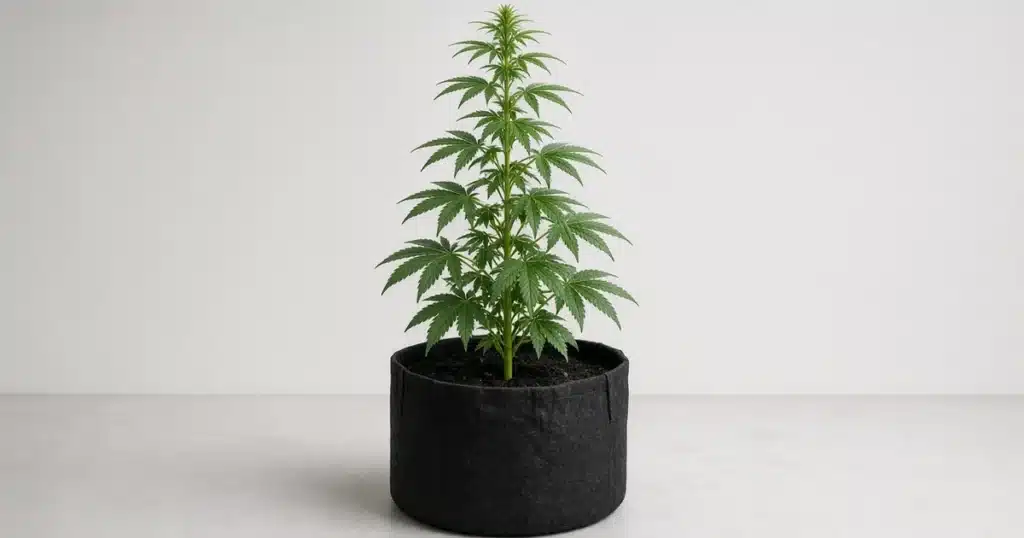
A cannabis seedling shows this clearly. It grows one strong central stem with side branches that get shorter toward the top, giving the plant a cone or Christmas tree outline. The top bud site ends up as the main cola, usually the largest flower cluster on an untrained plant. That shape is apical dominance at work.
In the wild, this trait pays off. Racing straight up gets the leaves above neighbors and into full sun before anything else can shade them. Indoors, under a fixed light, that same race can leave lower branches small and far from the lamp.
How Does the Growing Tip Control Side Branches?
The tip sends a chemical message down the stem. University of Georgia Extension describes auxin moving downward from the shoot apex and holding back the lateral buds below it. Its pruning guide for woody plants adds that the strength of the effect varies from one species to another and shapes both how many side shoots form and the angle they grow at.
Auxin is only half the story. The NC State handbook adds that cytokinins, a second group of hormones, enhance shoot growth and counteract auxin. When the dominance is removed, cytokinin levels rise in the axillary buds. The handbook sums it up simply: auxins favor upward growth and cytokinins favor side growth.
Virginia Cooperative Extension, writing about fruit trees in its guide to the physiology of pruning, frames the balance as inhibitors from the tip against promoters coming up from the roots. Concentrations of the inhibitor are highest near the shoot tip. Lower on the shoot, where the inhibitor is weaker and the promoter stronger, buds tend to break first. Virginia Tech also admits the exact mechanism is not fully understood after decades of study.
What a grower needs is the pattern, not the chemistry. Buds nearest the top are held back hardest. Buds farther down, closer to the roots, are released first when the balance shifts.
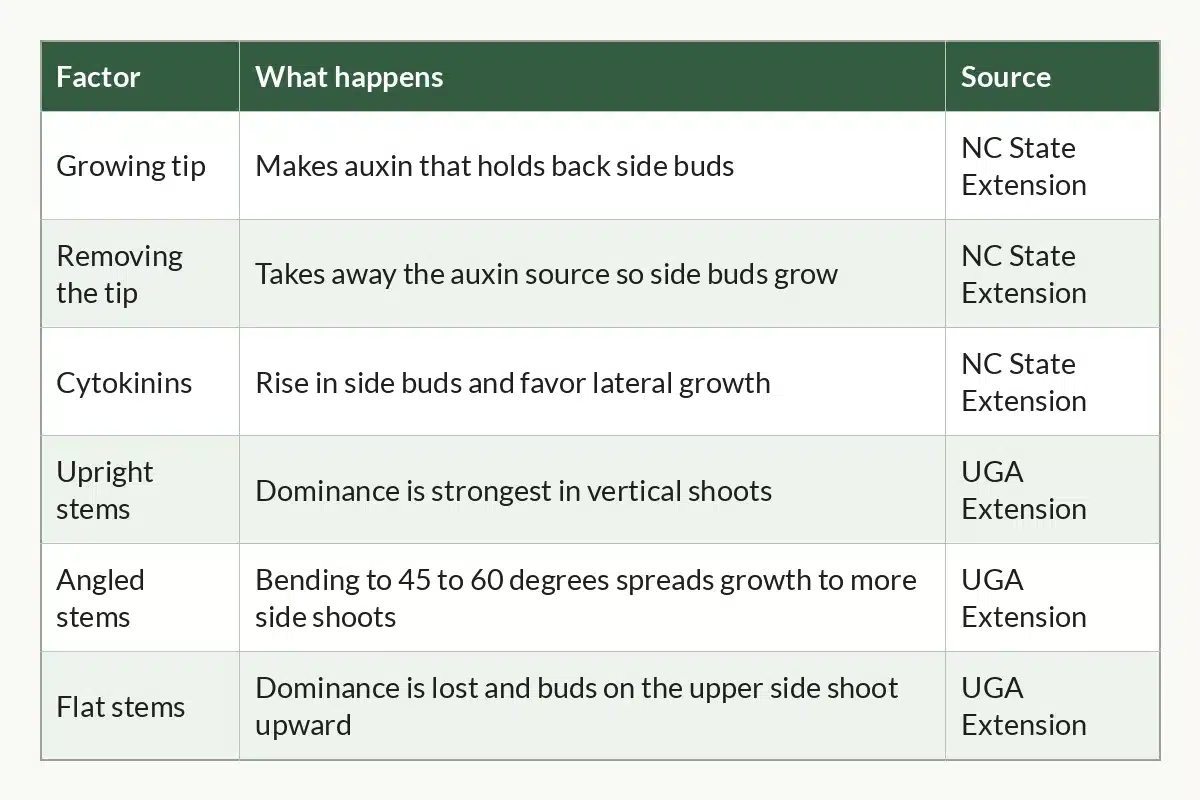
Apical Dominance at a Glance
| Factor | What happens | Source |
|---|---|---|
| Growing tip | Makes auxin that holds back side buds | NC State Extension |
| Removing the tip | Takes away the auxin source so side buds grow | NC State Extension |
| Cytokinins | Rise in side buds and favor lateral growth | NC State Extension |
| Upright stems | Dominance is strongest in vertical shoots | UGA Extension |
| Angled stems | Bending to 45 to 60 degrees spreads growth to more side shoots | UGA Extension |
| Flat stems | Dominance is lost and buds on the upper side shoot upward | UGA Extension |
How Does Topping Break Apical Dominance?
Topping removes the source. When you cut off the main tip, the auxin supply from that point stops and the buds just below the cut are free to grow. NC State Extension describes this exact effect for pinching or pruning back a plant.
Virginia Tech offers a handy number from its fruit tree work. After a heading cut, the three or four buds immediately below the cut usually develop into shoots. The same guide counts pinching annual plants to make them branch as a form of heading. Cannabis is an annual, and topping is pinching on a larger scale.
On a cannabis plant, the two shoots at the node below the cut usually take over as new leaders. Our guide to topping your plants for bigger yields walks through where to cut and when. Results vary with the plant, its age, its overall vigor and how much light reaches the new tops.
FIMming works on the same principle with a softer touch. Instead of a clean cut, part of the newest growth is pinched away, which can leave several shoots competing at the tip. Our post on FIMming cannabis covers the technique. Either way, you end up sharing growth among more tops.
University of Georgia Extension notes that heading cuts are the most invigorating kind of pruning and lead to thick, compact regrowth near the cut. That is why a topped plant often looks bushier within a couple of weeks.
How Does Bending Change Apical Dominance?
Stem angle counts just as much as cutting. You can shape a plant this way without ever picking up pruning shears, simply by changing how its branches sit. University of Georgia Extension explains that auxin travels downward with gravity, so the effect is strongest on stems that stand straight up. Branches held at 45 to 60 degrees from vertical show less vigor near the tip and more side shoots farther along. On horizontal limbs, the dominance is lost entirely.
The UC Master Gardener program in Alameda County describes the same effect. A shoot bent and tied flat lets buds along its upper side grow into upright shoots. A branch at about 45 degrees shows only partial dominance, with just a few side buds becoming shoots.
Both sources deal with fruit trees and shrubs, not cannabis. The hormone pattern is general plant biology, though, and it explains why low stress training works. When you bend a cannabis stem toward the side and tie it down, the old tip no longer sits highest, and lower branches climb toward the light.
How to Work With Apical Dominance in Cannabis
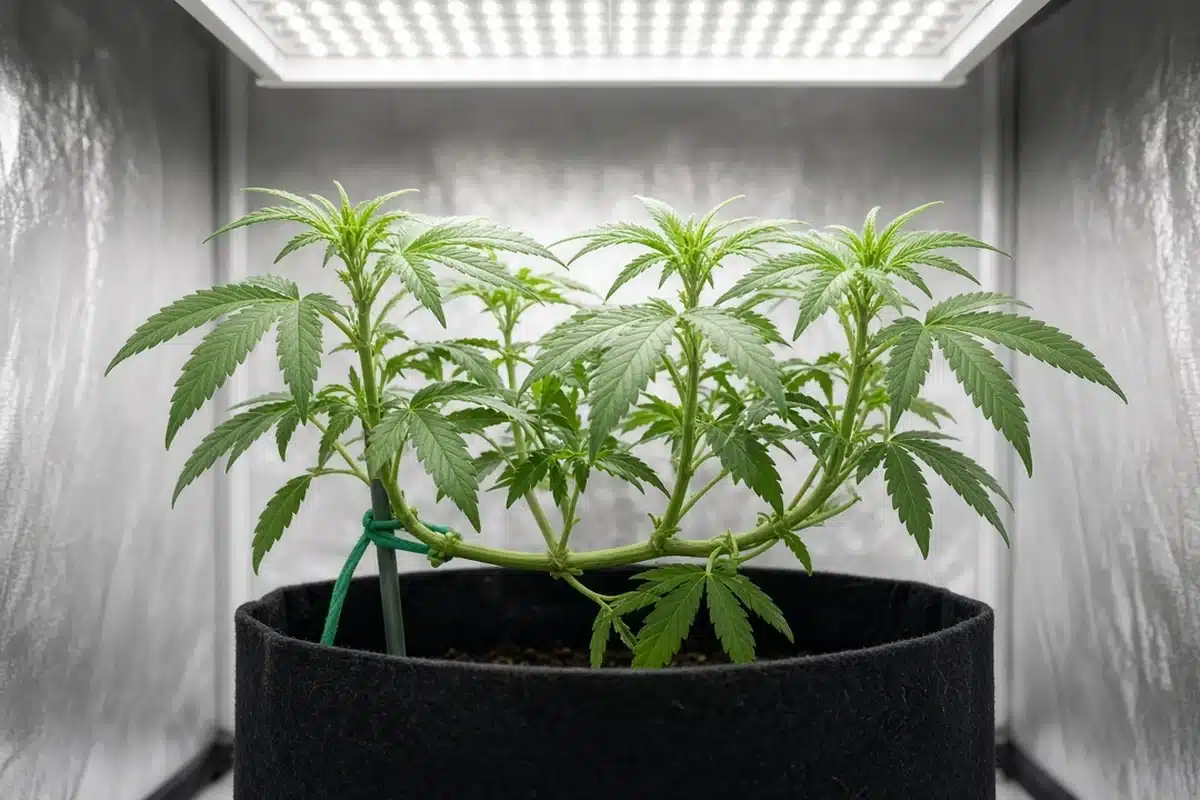
- Decide on a shape first. One main cola suits a short grow or a small space. Several even tops suit a wider canopy under one light.
- Let the plant root in. Wait until it has several nodes and shows steady new growth before you cut or bend.
- Top above a node. Cut just above a node so the two shoots below can take over as leaders.
- Or bend instead of cutting. Ease the main stem sideways and tie it loosely so side branches rise toward the light.
- Bend gradually. Move stems a little each day rather than forcing a sharp angle at once.
- Even out the canopy. Guide the tallest shoots down and outward so the tops sit at a similar height.
- Watch where growth goes. New upright shoots on a flat branch show the dominance has shifted, so steer them as well.
- Stop shaping before flowers set. Major cuts late in the cycle leave the plant less time to grow new tops.
Troubleshooting Apical Dominance Problems
The plant grew one tall spear with weak side branches. That is apical dominance with nothing to check it. Top or bend the leader early next time.
Only one new shoot took over after topping. One bud often wins the race. Bend the stronger shoot sideways so the weaker one can catch up.
A flat branch sprouted many upright shoots. UGA Extension describes this response on horizontal limbs. Keep the best shoots and guide the rest.
Growth stalled after a hard cut. Heavy pruning slows a plant while it rebuilds. Give it time and steady conditions before shaping again.
The canopy is uneven after training. Shoots closer to the light grow faster. Tie down the tallest tops and let lower ones fill in.
Sources
- NC State Extension, Extension Gardener Handbook, Chapter 3 Botany: https://content.ces.ncsu.edu/extension-gardener-handbook/3-botany
- University of Georgia Extension, Basic Principles of Pruning Woody Plants (B949): https://fieldreport.caes.uga.edu/publications/B949/basic-principles-of-pruning-woody-plants/
- Virginia Cooperative Extension, Physiology of Pruning Fruit Trees (422-025): https://www.pubs.ext.vt.edu/422/422-025/422-025.html
- UC Master Gardener Program of Alameda County, Pruning Fruit Trees: https://ucanr.edu/site/uc-master-gardener-program-alameda-county/pruning-fruit-trees
FAQ
Does every cannabis plant show apical dominance?
Most young plants grow a clear leader with shorter side branches. UGA Extension notes the strength of the effect varies by species, and growers see differences between cannabis plants too.
Is apical dominance bad for yield?
It is not bad, just suited to sunlight from above. Indoors, spreading growth across several tops can make better use of a fixed light.
Does topping stress the plant?
Any cut is a wound that the plant must close. A plant with good roots and steady conditions usually resumes growth within days.
Can I break apical dominance without cutting?
Yes. Bending and tying the main stem lowers the tip so side branches rise, the same effect UGA Extension describes for angled limbs.
Which hormone causes apical dominance?
Auxin made in the growing tip. NC State Extension adds that cytokinins counteract it and favor side growth.