
Cannabis Cotyledons: What Seed Leaves Tell You About a Seedling
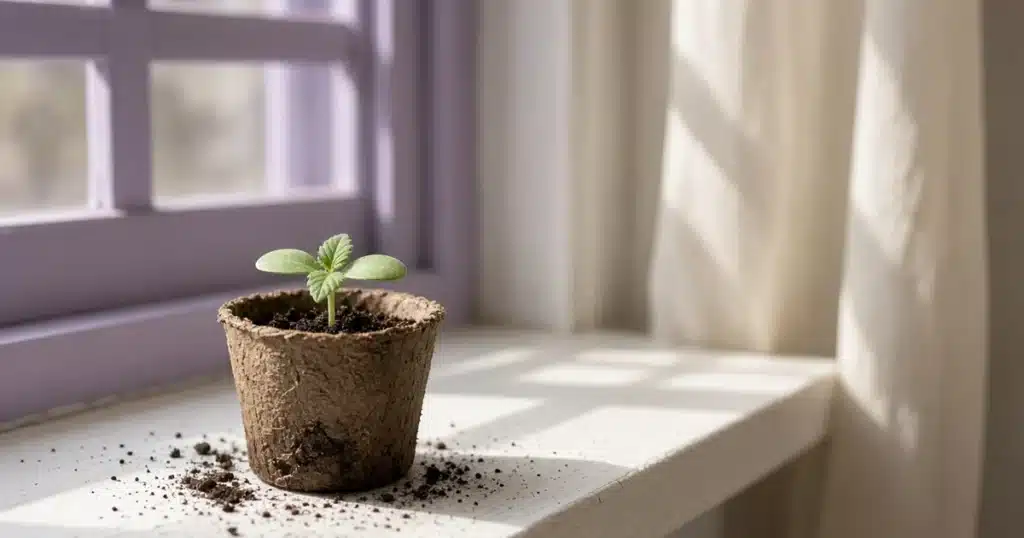
Cotyledons are the two round seed leaves that open first when a cannabis seed sprouts. They feed the seedling from stored reserves until the first serrated true leaves take over. As the true leaves grow, the seed leaves matter less, and a change in their color is a cue to check the seedling’s light, water and feeding.
What Are Cotyledons on a Cannabis Seedling?
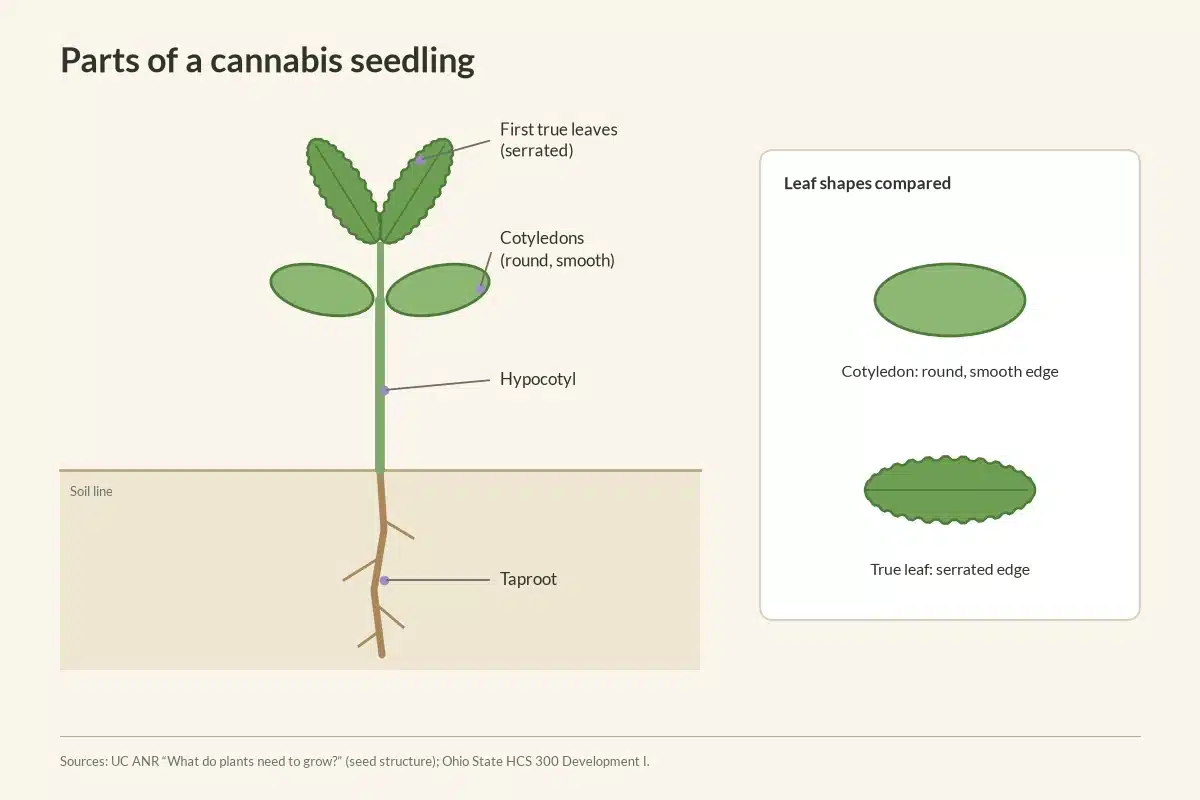
Cotyledons are part of the embryo inside the seed. UC Agriculture and Natural Resources describes the cotyledon as a “seed leaf” that usually stores food for the young plant. It is often the first part of a seedling able to photosynthesize.
Cannabis is a dicot, so it has two cotyledons. Germination is epigeal: the stem below the cotyledons, called the hypocotyl, stretches upward and lifts them above the soil, as Ohio State’s plant development notes explain. For how seeds get to this point, see our guide on how to germinate cannabis seeds.
How Are Cotyledons Different From True Leaves?
Cotyledons are smooth, rounded or oval, and sit in a pair at the top of the young stem. True leaves grow from the tip between them and look like the adult plant. On cannabis, the first true leaves are single, serrated blades, and later sets add more fingers. Our cannabis glossary has short definitions of both.
Ohio State’s Farm to School module puts it simply: the leaves that emerge after the cotyledons are the true leaves. A seedling with 2 to 3 true leaves and good roots is generally ready to move on to a bigger pot. Our guide to seed transplantation covers that step.
How Long Do Cotyledons Last?
Cotyledons usually store food for the young plant and are often the first part of a seedling to photosynthesize, per UC ANR. As true leaves develop, the seed leaves become less important.
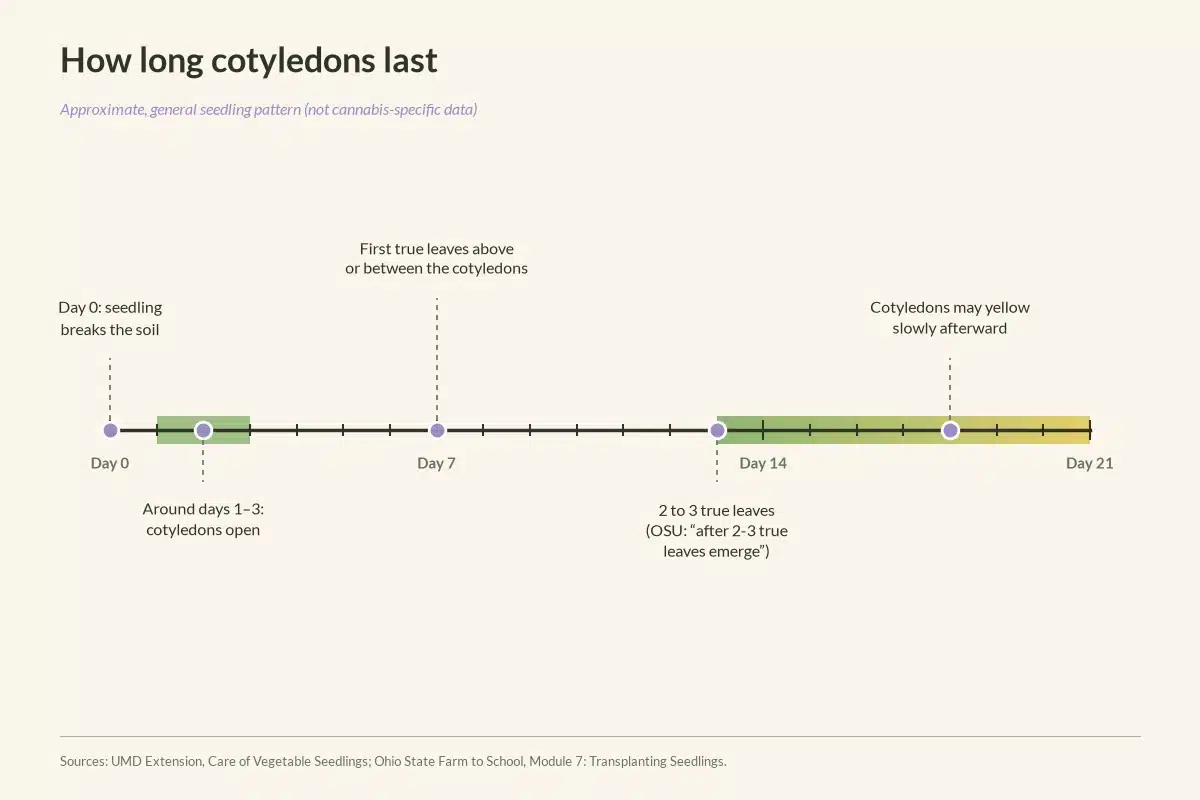
This is an approximate, general seedling pattern drawn from extension guidance on vegetable seedlings, not cannabis-specific data:
- Day 0: the seedling breaks the soil.
- Around days 1 to 3: the cotyledons open.
- Around the first week or so: the first true leaves appear above or between the cotyledons.
- Around days 14 to 21: 2 to 3 true leaves are growing, and the cotyledons may start to fade.
As true leaves develop, cotyledons may fade, yellow or drop. For where this stage fits in the bigger picture, read about the life cycle of a cannabis plant or our autoflower seeds guide.
Why Are My Cotyledons Turning Yellow?
Look at the true leaves as well as the cotyledons. If the true leaves look healthy, a fading seed leaf is less of a concern. If both look pale or damaged, check the growing conditions.
| What you see | What to check |
|---|---|
| Both cotyledons yellow, true leaves pale too | Light, watering and feeding. For pale new growth, read about nitrogen deficiency |
| Cotyledons yellow, true leaves healthy | Keep watching the true leaves |
| One cotyledon smaller than the other | Keep watching the true leaves |
| Brown, burnt-looking edges | Light distance and feeding |
| White or bleached patches | Light distance and intensity |
| Stem pinching or collapsing at the soil line | Read up on common seedling diseases |
The University of Maryland Extension’s care of vegetable seedlings guide is a good general reference for light, watering and potting up young plants.
What Does It Mean if Cotyledons Curl or Stay Closed?
If cotyledons curl, check the seedling’s light, temperature and watering against general seedling care guidance such as UMD’s.
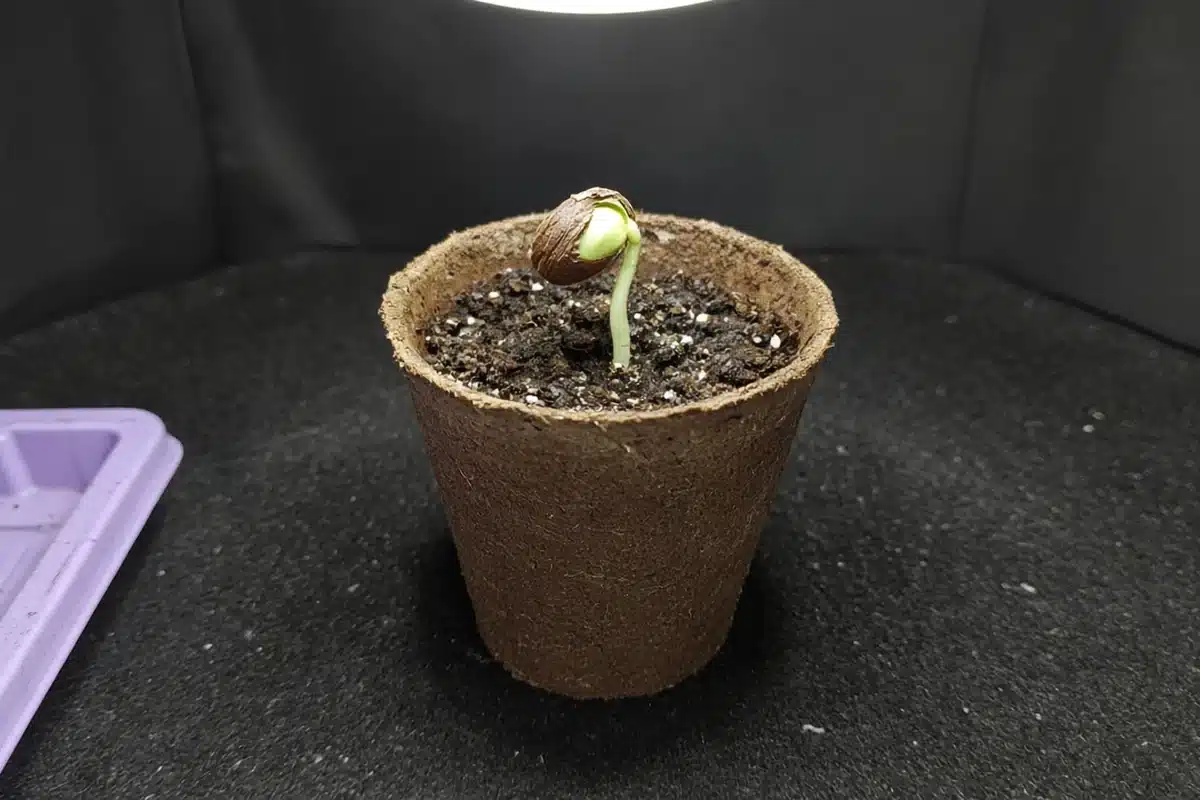
Cotyledons that stay closed are often still held in the seed shell, sometimes called a “helmet”. The shell often loosens as the seed leaves expand. Pulling it off can tear the cotyledons, so keep conditions steady and watch the seedling.
Can a Seedling Grow On if It Loses Its Cotyledons?
It may, especially once true leaves have formed. Results vary from seedling to seedling, so keep conditions steady and watch how the true leaves develop.
FAQ
Is it normal for cotyledons to fall off?
It can be. Cotyledons store food for the young plant, and as true leaves develop they become less important, so they may yellow and fall. Watch the true leaves. If they look healthy, the seedling is moving on. If they look pale too, check the seedling's light, water and feeding.
Should I remove the seed shell?
Usually leave it. A shell stuck on the cotyledons, sometimes called a "helmet", often loosens on its own as the seed leaves expand. Pulling it off can tear the cotyledons. Keep light, warmth and watering steady, and watch how the true leaves come in.
Do cotyledons need fertilizer?
Cotyledons usually store food for the young plant, according to UC ANR, so they come with their own reserves. Feeding decisions are better based on the true leaves and the plant's growth. Follow general seedling care guidance, such as UMD Extension's, and the directions on any product you use.
Are three cotyledons a problem?
A third cotyledon is a variation you can spot right away, since most seedlings of dicot plants like cannabis show two. Rather than worrying about the extra seed leaf, watch how the true leaves come in and how the seedling grows. Our guide to cannabis mutations explains more.


