Cannabis Seed Anatomy: What Is Inside a Seed
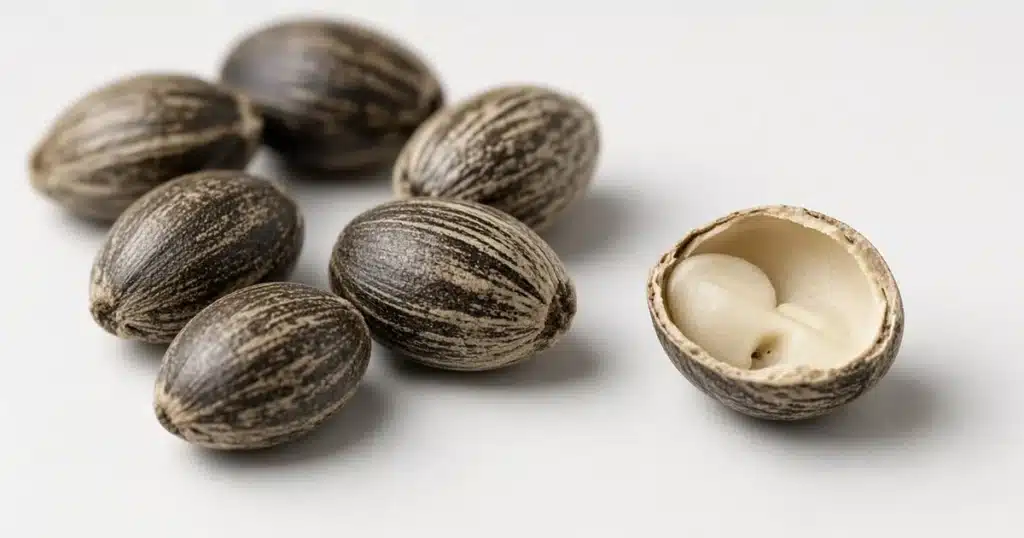
Quick answer: A cannabis seed is technically a small dry fruit called an achene. Extension specialists at NC A&T explain that each one holds a single seed wrapped in a thin wall, the pericarp, and that the embryo fills nearly the whole space inside. NC State Extension describes three basic seed parts: the embryo, a stored food supply, and a protective seed coat. In cannabis, most of the stored food sits in two oil rich seed leaves. Knowing these parts helps you judge seed quality, store seeds properly and understand what happens when a seed sprouts.
Is a Cannabis Seed Really a Fruit?
Botanically, yes. The hemp biology chapter from NC A&T points out that what we call hemp seeds are really small dry nuts. The ovule produces a fruit that stays closed when ripe, which botanists call an achene. Inside that fruit, one seed sits within a thin wall called the pericarp.
Virginia’s Master Gardener training text on botany defines an achene as a small, thin walled dry fruit that does not split open at maturity. Strawberry “seeds” and sunflower seeds are familiar examples. So the hard little object in a cannabis seed pack is a whole fruit, shell and all.
That fruit wall is thin but tough. It is the part you feel when you roll a seed between your fingers, and it carries the mottled pattern many growers use to judge maturity. Underneath it, the true seed coat forms a second, finer layer around the embryo. Together they give the living tissue inside a surprising amount of protection for something so small.
NC A&T describes the seed as smooth and elliptical, about an eighth to a quarter of an inch long. The guide also notes that seeds do not ripen evenly on the plant, which explains why a batch of harvested seeds often shows varied colors and patterns.
What Are the Parts of a Cannabis Seed?
NC State’s handbook chapter on plant botany lists three parts found in seeds generally:
- The embryo. A miniature plant in a dormant state.
- The endosperm. A stored food source that can include proteins, carbohydrates or fats.
- The seed coat. An outer layer that protects the embryo from disease, insects and moisture until conditions are right to sprout.
Cannabis fits this plan with a twist. Virginia’s chapter notes that some seeds, once mature, no longer hold a separate endosperm because the embryo has taken that food into itself. NC A&T reports that most of a hemp seed’s mass is its pair of cotyledons, packed with oil and protein. The seed leaves, in effect, are the pantry.
Think of the seed as a packed lunch for a plant that cannot yet feed itself. Until the first true leaves open and start making sugar, everything the seedling builds comes from those stored reserves. A large, well filled seed starts with a bigger lunch than a small, shriveled one. No wonder growers pay so much attention to seed size and firmness.
Inside the embryo, three structures matter most. The radicle is the embryonic root. The hypocotyl sits above it and becomes the lower stem. The cotyledons, or seed leaves, fold against each other at the top.
Watch the radicle, because it is the first thing to move. It sits at the pointed end of the seed, which is why seeds often split open there first. A seed planted with the point down or sideways sorts itself out, since the young root turns to grow downward on its own.
What Happens Inside a Cannabis Seed When It Sprouts?
A seed stays dormant until conditions are right. NC State explains that seeds need suitable temperature, moisture, oxygen and in some cases light before growth resumes. Virginia’s chapter adds that water has to soak in through the coat before any visible change takes place.
Once water moves in, the embryo wakes up. NC State describes the radicle as the first part to appear. It grows down and develops into the primary root, which later produces root hairs and side roots. The hypocotyl then lengthens and lifts the cotyledons up through the soil.
In cannabis the two cotyledons are the seed’s main store of oil and protein, and they feed the seedling for its first days above the soil. That pair also places cannabis among the dicots. NC State sorts plants this way: two seed leaves mark a dicot, and one marks a monocot. Our explainer on cannabis cotyledons covers what these seed leaves tell you once they open.
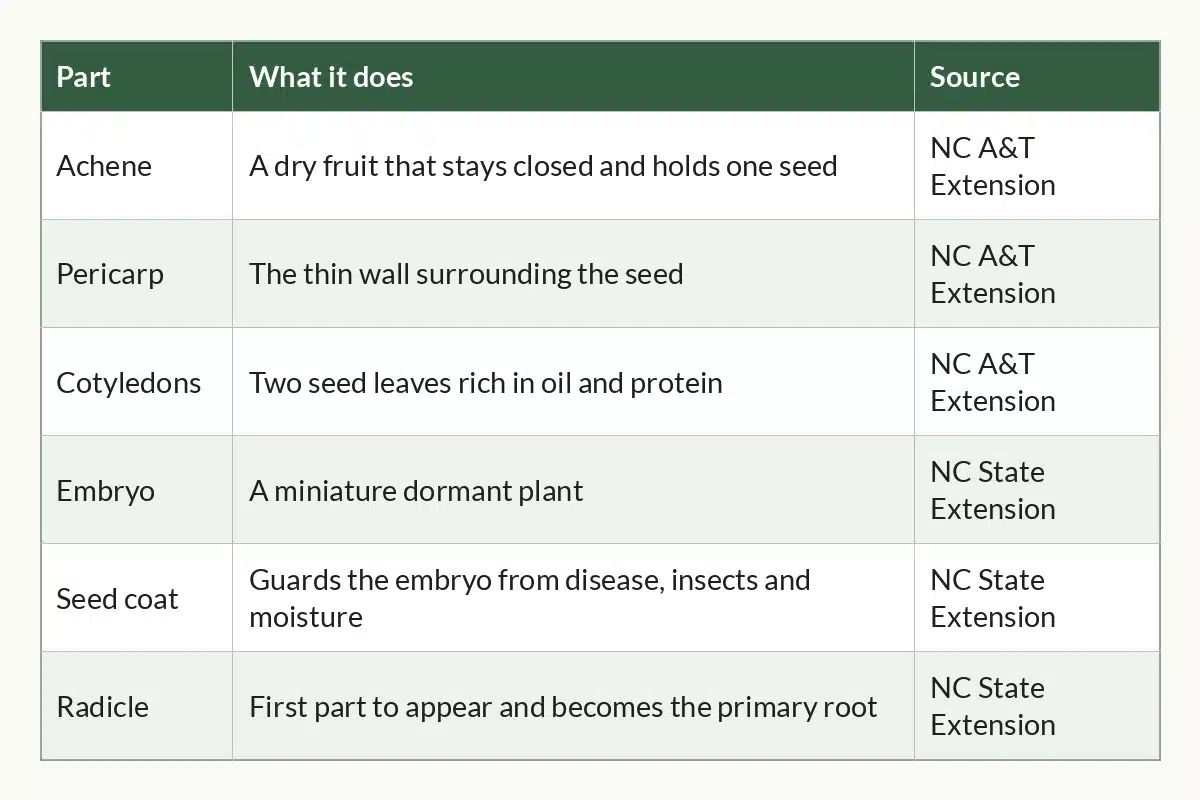
Cannabis Seed Anatomy at a Glance
| Part | What it does | Source |
|---|---|---|
| Achene | A dry fruit that stays closed and holds one seed | NC A&T Extension |
| Pericarp | The thin wall surrounding the seed | NC A&T Extension |
| Cotyledons | Two seed leaves rich in oil and protein | NC A&T Extension |
| Embryo | A miniature dormant plant | NC State Extension |
| Seed coat | Guards the embryo from disease, insects and moisture | NC State Extension |
| Radicle | First part to appear and becomes the primary root | NC State Extension |
How Does Seed Anatomy Relate to Seed Quality?
Each part of the seed has a job, and damage to any of them can matter. A cracked shell exposes the embryo to moisture and decay organisms. A crushed seed may have a broken embryo inside even if the outside looks fine. A seed that is pale and soft may not have finished ripening on the plant.
Many growers look for seeds that feel firm under light pressure, though shell color and pattern vary by genetics. Because hemp seeds ripen unevenly, as the NC A&T guide explains, a mix of shades in one batch is common and not, by itself, a problem. Our guide to what good cannabis seeds look like walks through these signs in detail.
The seed coat also explains why storage matters so much. Virginia’s chapter notes that the seed coat keeps water out so the seed does not start growing before the proper time. Humid storage weakens that defense.
Seed age plays a part too. Even in good storage, a seed slowly uses up its reserves and the embryo gradually weakens. Fresher seeds generally sprout more readily than very old ones, although well stored seeds can stay usable for years.
Heat works against a stored seed in a similar way. Warmth speeds up the slow chemistry inside a dormant seed, and that chemistry draws on the stored oil and protein. Keeping seeds cool slows that drain so more of the reserve is left for the seedling. A refrigerator works for longer storage, as long as the container is sealed and allowed to warm to room temperature before opening so moisture does not condense on the seeds.
How to Handle and Store Cannabis Seeds
- Handle seeds gently. Use clean, dry fingers or soft tweezers to avoid cracking the shell.
- Keep them dry. Moisture can trigger early growth or invite mold.
- Keep them cool. Steady, cool temperatures slow the seed’s internal use of stored reserves.
- Keep them dark. Store seeds in an opaque container or a closed drawer.
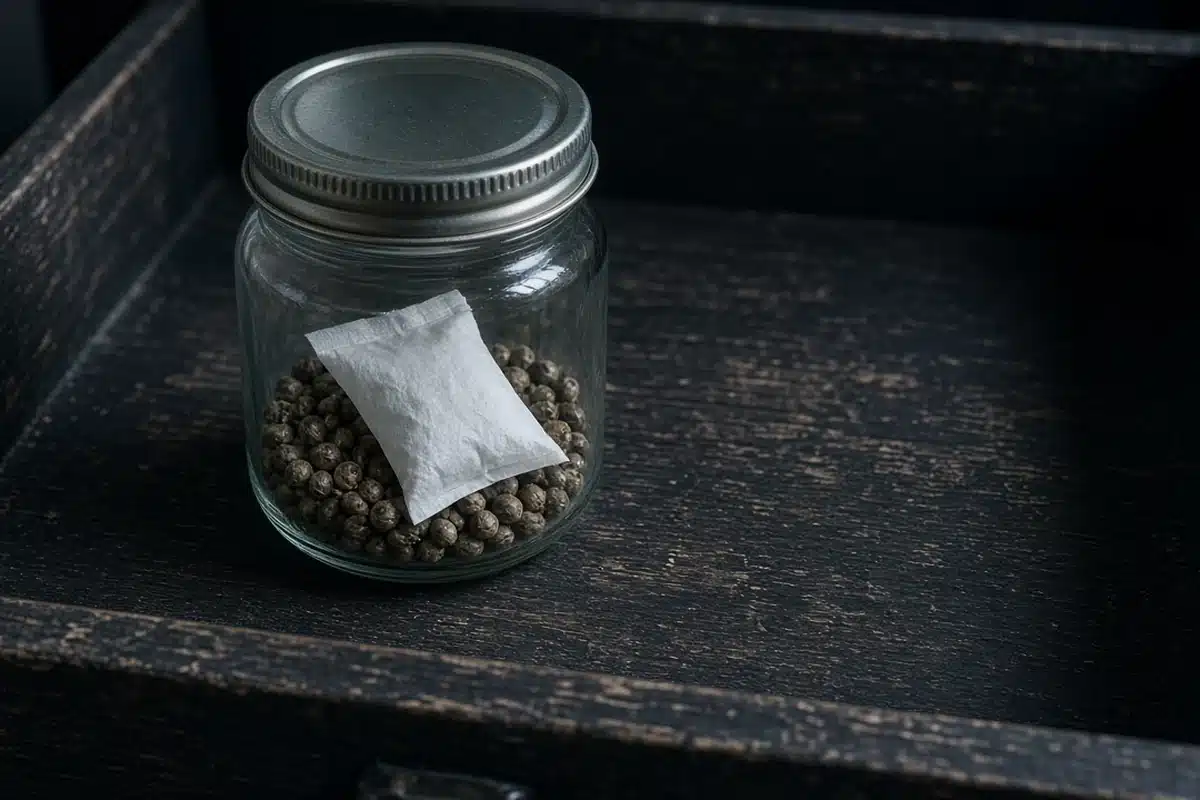
- Use airtight containers. A sealed jar with a small desiccant packet holds humidity low.
- Label everything. Note the strain and date so you can track age.
- Avoid repeated temperature swings. Take out only the seeds you plan to sow.
Shelf life is covered in our article on how long cannabis seeds last.
Troubleshooting Seed Problems
Seed shell is cracked. The embryo may be exposed. Sow it soon rather than storing it.
Seeds look pale and soft. They may be immature. Expect weaker results.
Seeds have mold spots. Storage was too humid. Discard moldy seeds and dry the container.
Seedling emerges with the shell stuck on its leaves. The seed coat did not release. Mist it lightly and let it soften.
Seeds vary in color within one pack. Uneven ripening is common in hemp and not a sign of poor quality on its own.
Sources
- NC A&T Cooperative Extension, All About Hemp: https://www.ncat.edu/caes/cooperative-extension/files/all-about-hemp.pdf
- NC State Extension, Extension Gardener Handbook, Chapter 3 Botany: https://content.ces.ncsu.edu/extension-gardener-handbook/3-botany
- Virginia Cooperative Extension, Master Gardener Handbook, Chapter 1 Botany: https://pressbooks.lib.vt.edu/emgtraining/chapter/1/
FAQ
Is a cannabis seed a fruit or a seed?
Botanically it counts as a small dry fruit called an achene that contains one seed.
What is inside a cannabis seed?
An embryo with a radicle, a hypocotyl and two cotyledons, all wrapped in a protective coat.
Where does a cannabis seed store its food?
Mostly in the two seed leaves, which hold oil and protein.
How big are cannabis seeds?
Hemp seeds are usually about an eighth to a quarter of an inch long.
Why do cannabis seeds vary in color?
Seeds ripen unevenly on the plant, so a batch often shows mixed colors and patterns.