Carbon filter sizing for cannabis grow tents
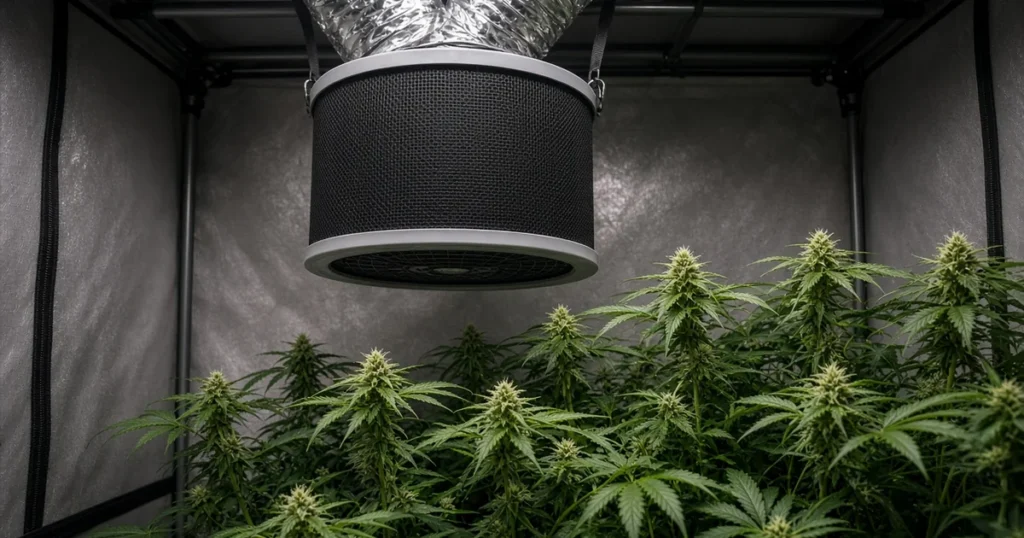
A carbon filter is the piece of gear that keeps an indoor grow from announcing itself to the whole house. Pick one that is too small and the smell leaks through within weeks of flowering. Pick one far too big and you waste money, space and fan power. The good news is that sizing a filter is simple arithmetic once you know three things: your tent volume, how often you want to exchange the air and how much resistance your setup adds.
How a carbon filter works
Air is pulled through a bed of activated carbon granules packed between two mesh cylinders. The carbon has an enormous surface area full of tiny pores, and odor molecules stick to those surfaces as the air passes. The key variable is contact time. If air races through the bed too quickly, many odor molecules pass straight through. That is why each filter has a rated airflow, measured in cubic feet per minute, or CFM, and why the fan and filter have to be matched.
Step one: calculate tent volume
Multiply length by width by height in feet. That gives cubic feet.
| Tent size | Volume in cubic feet |
|---|---|
| 2 by 2 by 5 | 20 |
| 2 by 4 by 5 | 40 |
| 3 by 3 by 6 | 54 |
| 4 by 4 by 6.5 | 104 |
| 5 by 5 by 6.5 | 163 |
| 4 by 8 by 6.5 | 208 |
| 10 by 10 by 7 | 700 |
Step two: pick an air exchange target
Most growers aim to replace all the air in the tent about once a minute. In a hot room or under strong lights, a faster exchange of every 30 to 45 seconds helps keep temperatures in check. Base CFM is simply the tent volume when you exchange once per minute. A 4 by 4 tent at roughly 104 cubic feet needs about 104 CFM before any adjustments.
Step three: add for resistance
Every piece of the system slows air. The carbon filter itself is the biggest drag. Ducting, bends and silencers add more. A practical rule is to add about 25 percent for the filter, 10 to 20 percent for each long duct run or sharp bend, and another 10 to 25 percent if your lights run hot or the room is warm.
For the 4 by 4 example, 104 CFM plus 25 percent for the filter, plus 20 percent for heat, comes to about 150 CFM. A 4 inch fan rated around 200 CFM, or a 6 inch fan run at partial speed, covers it comfortably with room to spare. Our inline fan CFM guide walks through the same math for choosing the fan.
Step four: match the filter to the fan
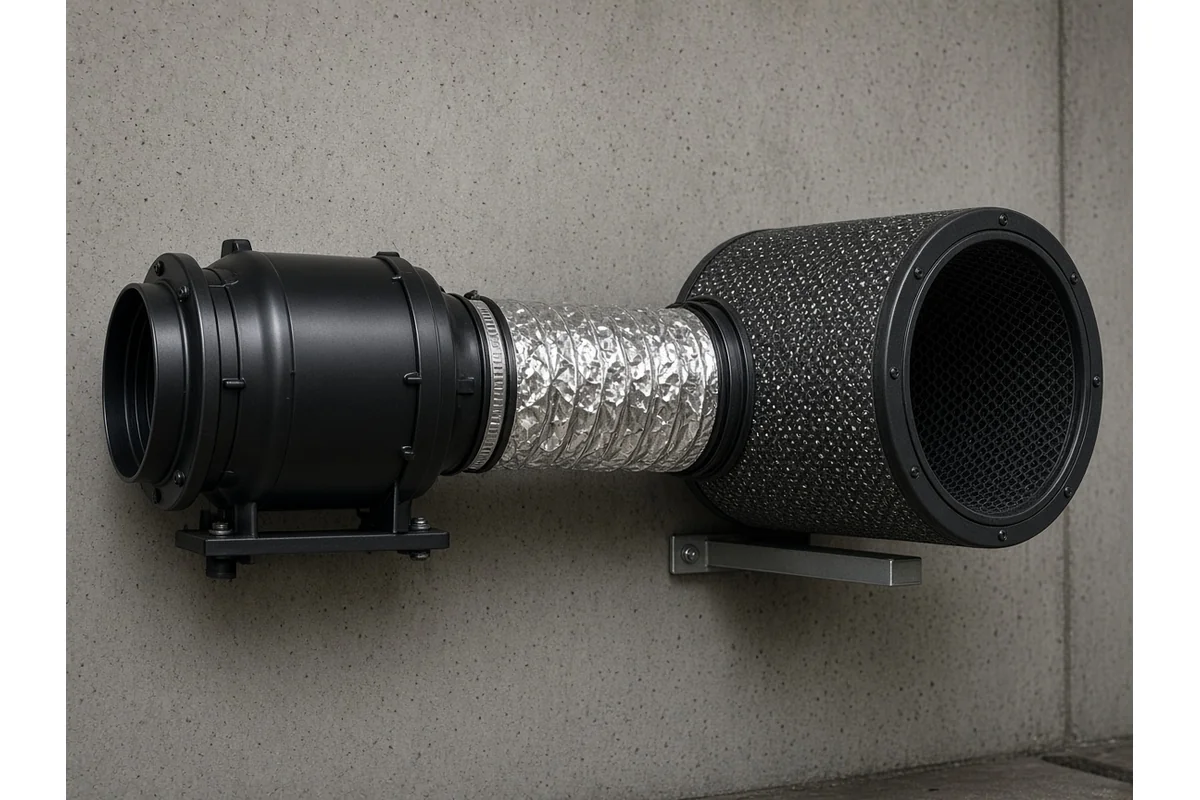
Here is the rule that matters most. The filter’s rated CFM should be equal to or a little higher than the real airflow your fan produces. If the fan pushes far more air than the filter can treat, contact time drops and smell escapes. If the filter is rated much higher than the fan, it works fine but costs more than needed.
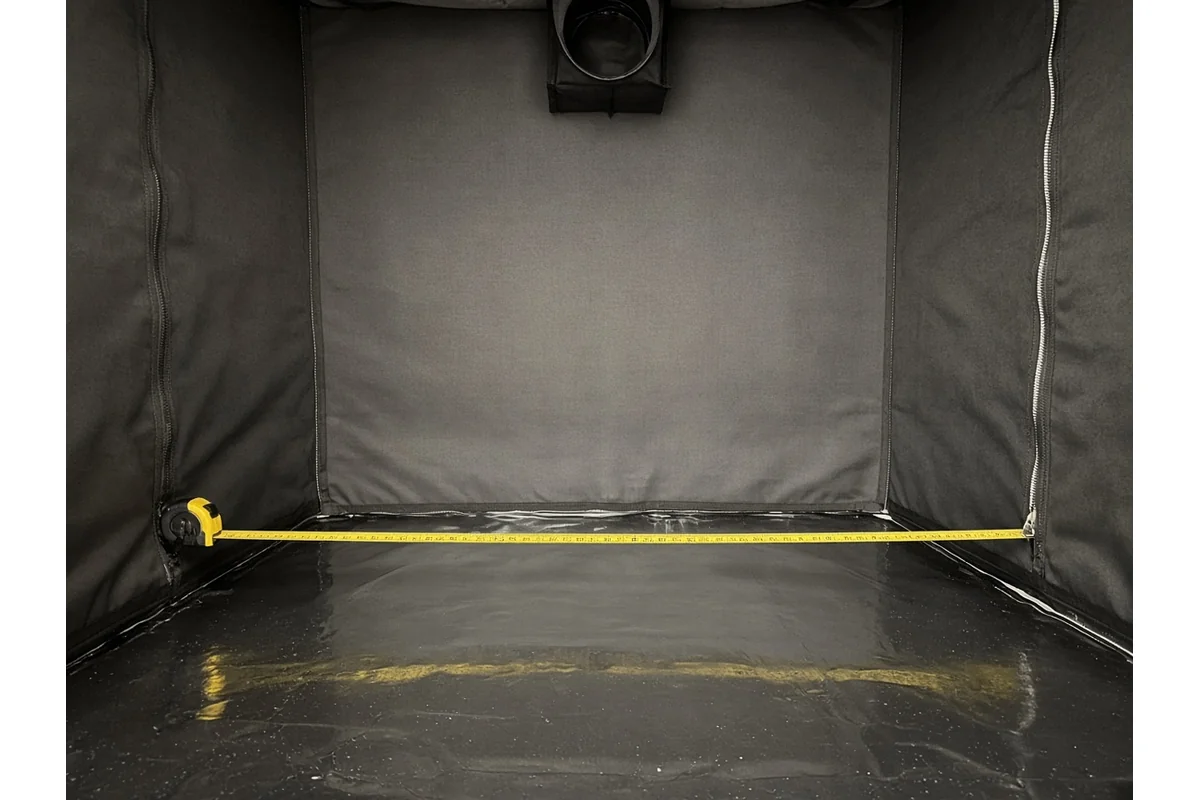
Match the collar size too. A 6 inch fan should connect to a 6 inch filter flange. Mixing a 4 inch filter on a 6 inch fan with a reducer chokes airflow and makes the fan noisy.
Quick reference sizing chart
| Tent | Suggested fan | Suggested filter rating |
|---|---|---|
| 2 by 2 | 4 inch, about 100 to 200 CFM | 4 by 12 inch, around 150 to 200 CFM |
| 2 by 4 or 3 by 3 | 4 inch, about 200 CFM | 4 by 14 inch, around 200 to 250 CFM |
| 4 by 4 | 6 inch, about 300 to 400 CFM | 6 by 16 inch, around 350 to 400 CFM |
| 5 by 5 | 6 inch, about 400 CFM | 6 by 24 inch, around 400 to 500 CFM |
| 4 by 8 | 8 inch, about 600 to 700 CFM | 8 by 24 inch, around 700 to 800 CFM |
Brands rate filters differently, so treat these as starting points and read the actual specification sheet.
Where to mount the filter
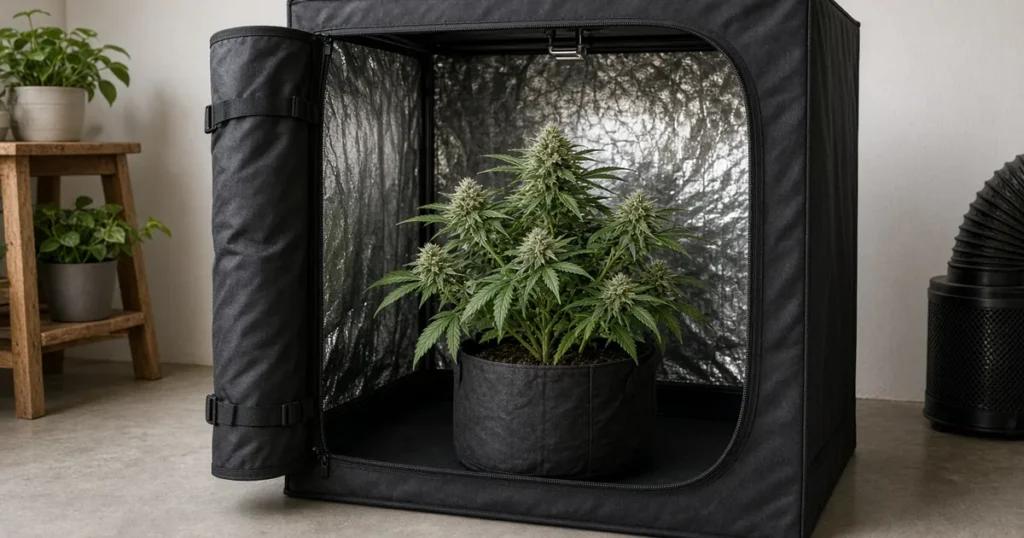
The common setup is a scrubber hanging high in the tent, pulling the warmest, smelliest air through the carbon and then through the fan and out of the tent. This keeps the tent under slight negative pressure, so the walls bow inward a little and smell does not leak out through zippers or seams.
Keep the filter away from the hottest part of a light, and keep a short, straight duct run where possible. Every long sag in flexible ducting cuts real airflow.
Pre filters and humidity
Most carbon filters come with a cloth pre filter sleeve. It catches dust and pollen before they clog the carbon. Wash or replace it every couple of months. Humidity matters too. Carbon works poorly when it gets wet, and humidity above about 70 percent shortens filter life. Keep tent humidity in range for the growth stage and the filter will last longer.
How long a carbon filter lasts
A good quality filter often lasts one to two years of continuous use in a home tent, sometimes longer. Signs that it is done include smell escaping even at full fan speed, a musty odor from the filter itself and visible dust packed into the outer mesh. Our DIY carbon filter build explains how some growers rebuild filters with fresh carbon instead of buying new.
Do you need a filter for every grow
Not every grow needs one, but most indoor flowering grows benefit. Smell rises sharply in the second half of flower. Neighbors, roommates and landlords notice. If you live in a state that allows home cultivation, odor complaints can still create problems under local nuisance rules or a lease, so it is better to handle it from the start. Our guide to preventing weed odor covers other steps such as sealing the room and running the fan on a speed controller.
Common sizing mistakes
The first mistake is buying the fan and filter separately with no thought to matching. The second is ignoring resistance and buying a fan rated exactly at tent volume, which leaves it underpowered once the filter and ducting are attached. The third is running the fan at full speed all the time. A speed controller lets you run quieter in veg and turn up airflow in late flower when smell peaks.
Finally, remember the tent itself. A clean, well sealed tent with good zippers makes any filter work better. Our complete grow tent setup guide covers the full layout including fan placement and passive intake.
Grow legally and responsibly
Home cultivation is only legal in some states, and each state sets its own plant limits, locking rules and rules about whether plants can be visible from a public place. You must be 21 or older to buy seeds from Kind Seed Co, and you should grow only where your state and city allow it. Check your state rules in our guide to the legal requirements for growing weed plants in your state before you plant. Federal treatment of cannabis seeds is also changing, so read our December 11 2026 seed rule explainer before you order. Keep plants and harvested flower locked away from children, pets and visitors, and never drive after using cannabis. This article is general information. It is not legal advice and it is not medical advice.
Frequently asked questions
What size carbon filter do I need for a 4 by 4 tent?
Most 4 by 4 tents do well with a 6 inch filter rated around 350 to 400 CFM, paired with a 6 inch inline fan.
Can a carbon filter be too big?
A larger filter still works, it just costs more and takes more space. The bigger risk is a filter that is too small for the fan.
Should the fan push or pull through the filter?
Most growers pull air through the filter, with the filter inside the tent and the fan after it. That keeps negative pressure in the tent.
How often should I replace a carbon filter?
Roughly every one to two years of steady use, sooner if humidity is high or smell starts escaping.
Final thoughts
Sizing a carbon filter takes a few minutes with a tape measure. Find tent volume, add for resistance and heat, choose a fan to match, then choose a filter rated at or slightly above that fan. Mount it high, keep humidity in check and the grow will stay discreet from seedling to harvest.
Ready to start
Browse the full range in the Kind Seed Co shop or go straight to indoor seeds. Kind Seed Co sells only to adults 21 and older. Always follow the cannabis laws where you live.