What S1 seeds are and how they differ from F1
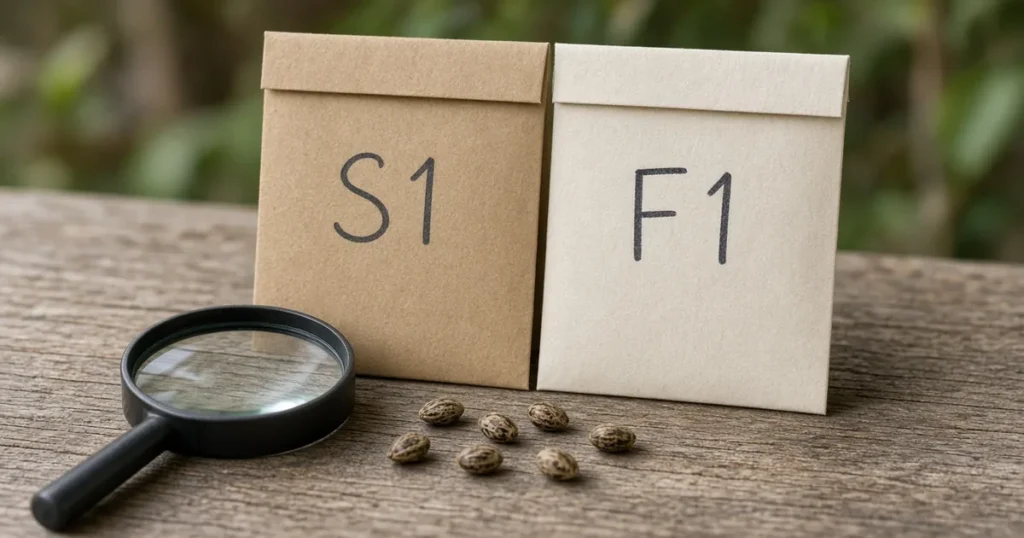
S1 seeds are seeds made by pollinating a female cannabis plant with pollen from itself. Breeders “self” one chosen plant, so every S1 seed carries genes from a single parent. F1 seeds are different: they come from crossing two separate, usually inbred, parent lines, which tends to produce vigorous and very even offspring. In short, S1 is about copying one plant’s genetics as closely as possible, and F1 is about combining two stable lines into a new, uniform hybrid. If you want that kind of consistency in your own garden, start with our F1 cannabis strains. This guide is for adults 21 and older growing where home cultivation is legal.
What does S1 mean?
In plant breeding, the “S” stands for selfed and the number counts generations. An S1 seed is the first generation of seeds made when a plant is pollinated by its own pollen. If you grew those S1 seeds out and selfed one of them again, the result would be S2, and so on.
Cannabis is normally dioecious, which means plants are either male or female. A female plant cannot pollinate itself under normal conditions. To make S1 seeds, a breeder treats part of a female plant so it grows pollen sacs. That pollen carries only female genetics. The breeder then dusts it back onto flowers of the same plant. The seeds that form are S1 seeds.
Because the pollen and the flowers come from the same individual, S1 seeds are also feminized. There is no male parent, so nearly every seed should grow into a female plant.
How S1 seeds are made
Breeders use a few methods to get a female plant to produce pollen. Our post on how to make feminized marijuana seeds covers them in more detail. The common steps look like this:
- Pick the mother. The breeder selects one standout female, often a keeper phenotype they have grown and judged over several runs.
- Reverse a branch. A treatment is applied to one branch or a clone of that plant so it grows pollen sacs instead of only pistils.
- Collect pollen. When the sacs open, the breeder gathers the pollen.
- Pollinate the same plant. Pollen goes back onto flowers from the same mother, or a clone of her.
- Ripen and harvest seeds. Seeds mature over several weeks, then get dried and stored.
This process takes care, isolation and space. Stray pollen can travel and seed other plants in the room, so breeders keep pollination projects separate from their main grow.
What does F1 mean?
F1 stands for first filial generation. It is the first generation of offspring from crossing two different parents. In the most precise sense, F1 hybrids come from two inbred lines (IBLs), which are lines that have been bred within themselves for many generations until they grow very true to type.
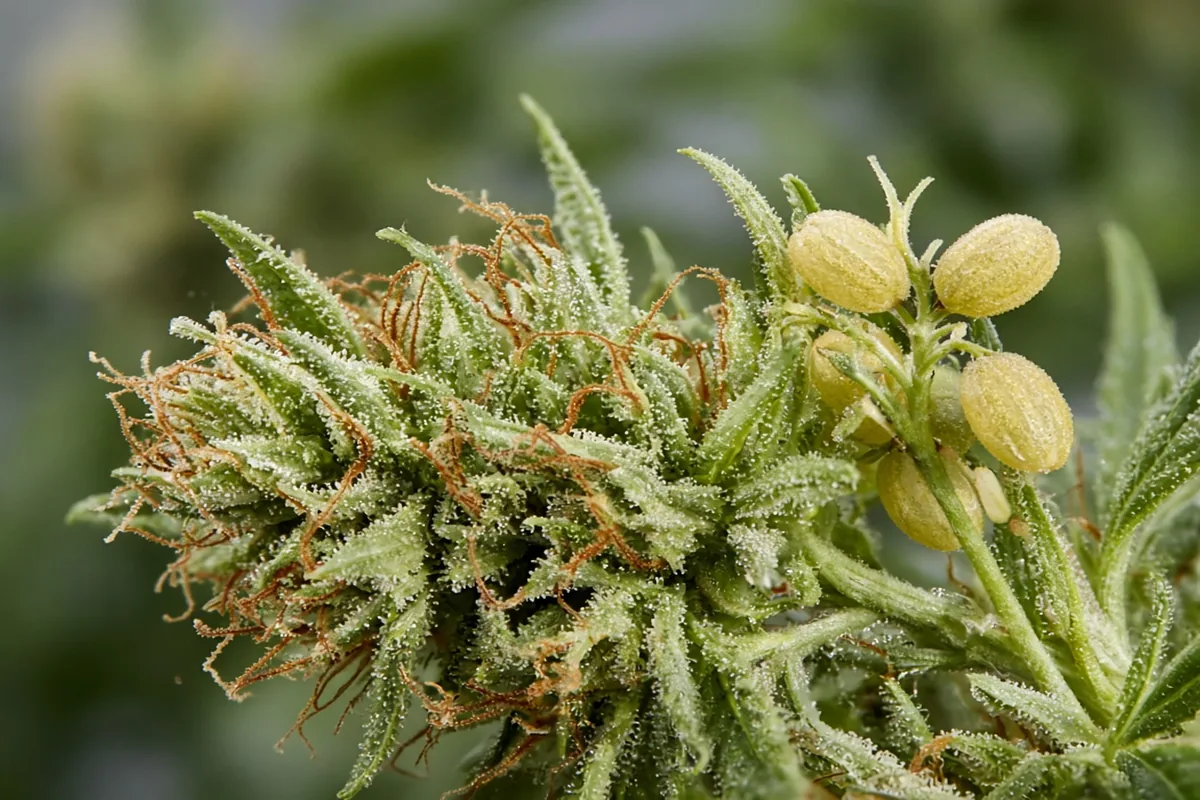
When two stable but different lines are crossed, the F1 offspring all inherit one set of genes from each parent. Because each parent was so uniform, the F1 plants tend to look and grow alike. They often show what growers call hybrid vigor, a term for offspring that grow faster or stronger than either parent. Our guide to F1, F2 and F3 cannabis seeds explains the generations in more depth.
S1 versus F1 at a glance
| Feature | S1 seeds | F1 seeds |
|---|---|---|
| Parents | One plant, pollinated by itself | Two different parent lines |
| How made | Female plant reversed to make pollen | Cross of two inbred or stable lines |
| Sex | Feminized by nature | Depends on how the cross was made |
| Main goal | Preserve one plant’s genetics | Combine two lines into a uniform hybrid |
| Uniformity | Can be fairly even, can also vary | Often very even when parents are true breeding |
| Hybrid vigor | Usually not a feature | A common reason to grow them |
| Typical use | Keeping a favorite cut alive as seed | Reliable crops and consistent results |
Genetics in plain language
Every cannabis plant carries two copies of most genes, one from each parent. Some versions of a gene are dominant and show up even if there is only one copy. Others are recessive and only show up when a plant carries two copies.
What happens in an S1
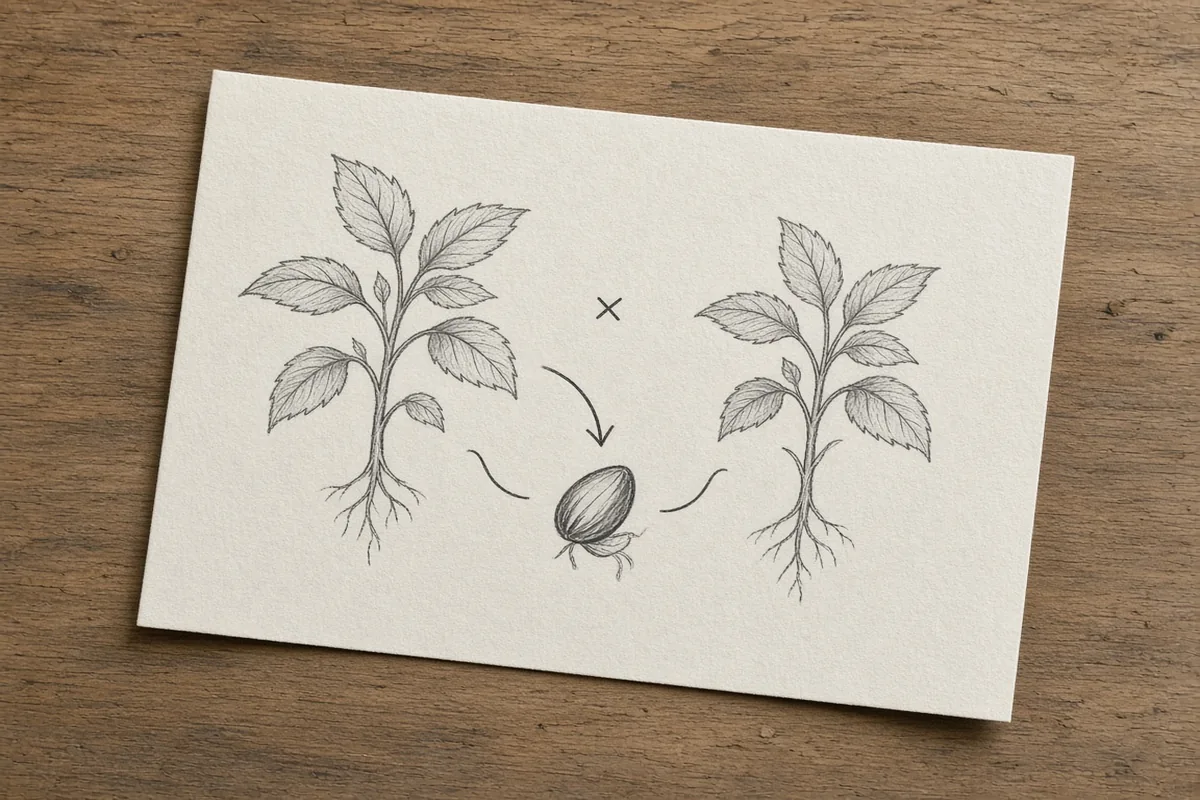
When a plant is selfed, its offspring draw both copies of each gene from the same individual. That reshuffles the mother’s genes. Many S1 plants will look a lot like the mother, but some can show traits that were hidden in her because they were recessive. That can be a surprise in either direction. A breeder may find a better version of the mother, or plants that show weaker traits.
Selfing also increases how many genes are carried in matching pairs. Over several selfed generations, a line becomes more inbred. That can make it more predictable, but some lines lose vigor as they become more inbred.
What happens in an F1
When two true breeding parents are crossed, each F1 plant gets the same mix: one copy from parent A and one from parent B. Because the parents were so uniform, the F1 plants all end up with similar gene pairs. That is why F1 crops can be strikingly even. If you cross F1 plants with each other, you get F2 seeds, which tend to show much more variety. That is one reason growers buy fresh F1 seed rather than saving seed from F1 plants.
Why breeders make S1 seeds
- To save a keeper. If a grower finds a plant they love, selfing it creates seeds that carry that plant’s genetics without needing to keep a mother plant alive.
- To test a plant. Growing out S1s helps a breeder see what recessive traits a plant carries before using it in a larger project.
- To start a new line. S1s can be a step toward building a more stable line over many generations.
- To make feminized seed from a clone only cut. Some well known plants exist mainly as clones. Selfing can turn one of those plants into seed.
Why growers choose F1 seeds
- Uniform plants. Even height and similar timing make it easier to manage a tent or garden.
- Vigor. Many growers like how quickly strong F1 hybrids establish and grow.
- Predictable planning. When plants grow alike, training, feeding and harvest timing are simpler.
- A clear starting point. You know the seed came from two defined parents, not one reshuffled individual.
Kind Seed Co’s F1 collection includes both feminized photoperiod and autoflower options. Our category page notes that all Kind Seed Co F1 hybrids are feminized, so you are not sorting out males. Check each product page for seed type and pack sizes. For more background, read the top 4 reasons to buy F1 seeds.
Are S1 seeds more likely to be intersex?
This is one of the most common questions about selfed and feminized seeds. Intersex plants, often called hermaphrodites, can show up in any seed type. Genetics play a role, and so do stress factors like light leaks, heat swings and rough handling. A well selected mother lowers the chance of passing on that tendency, while a poor choice can raise it. Our guide to hermaphrodite cannabis explains how to spot and prevent it.
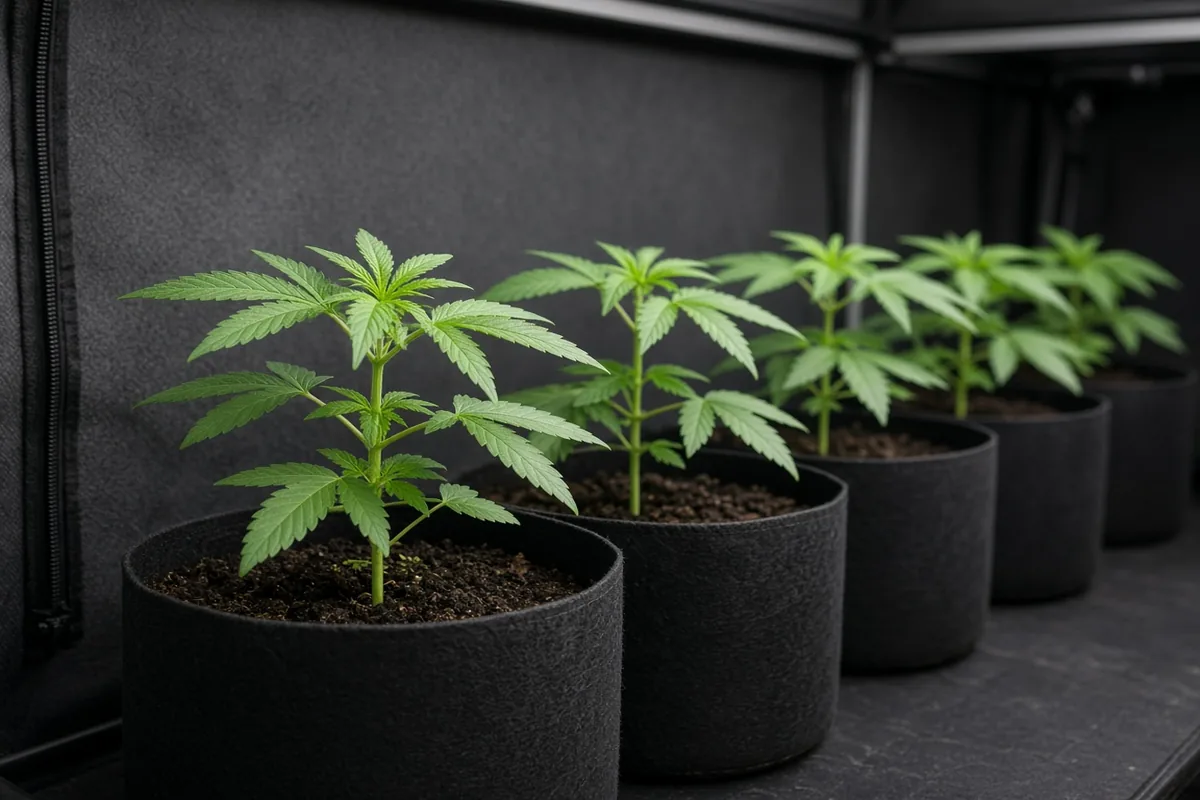
The practical takeaway is simple. Buy from a seed bank you trust, keep your grow environment stable, and inspect plants during the first weeks of flower.
S1, F1, feminized and regular: how they fit together
These terms describe different things, which is why they can be confusing.
- Feminized describes sex. A feminized seed should grow into a female plant.
- Regular also describes sex. Regular seeds can grow into males or females.
- S1 describes how a seed was made: by selfing one plant. S1 seeds are feminized.
- F1 describes generation: the first cross between two parent lines. F1 seeds can be feminized or regular, depending on how the cross was made.
If you are still deciding between seed types, read what is better to grow, regular or feminized seeds.
Should you grow S1 or F1 seeds?
For most home growers, F1 seeds are the easier path. You get uniform, vigorous plants and a clear sense of what to expect. S1 seeds make the most sense for hobby breeders and phenotype hunters who want to explore one plant’s genetics.
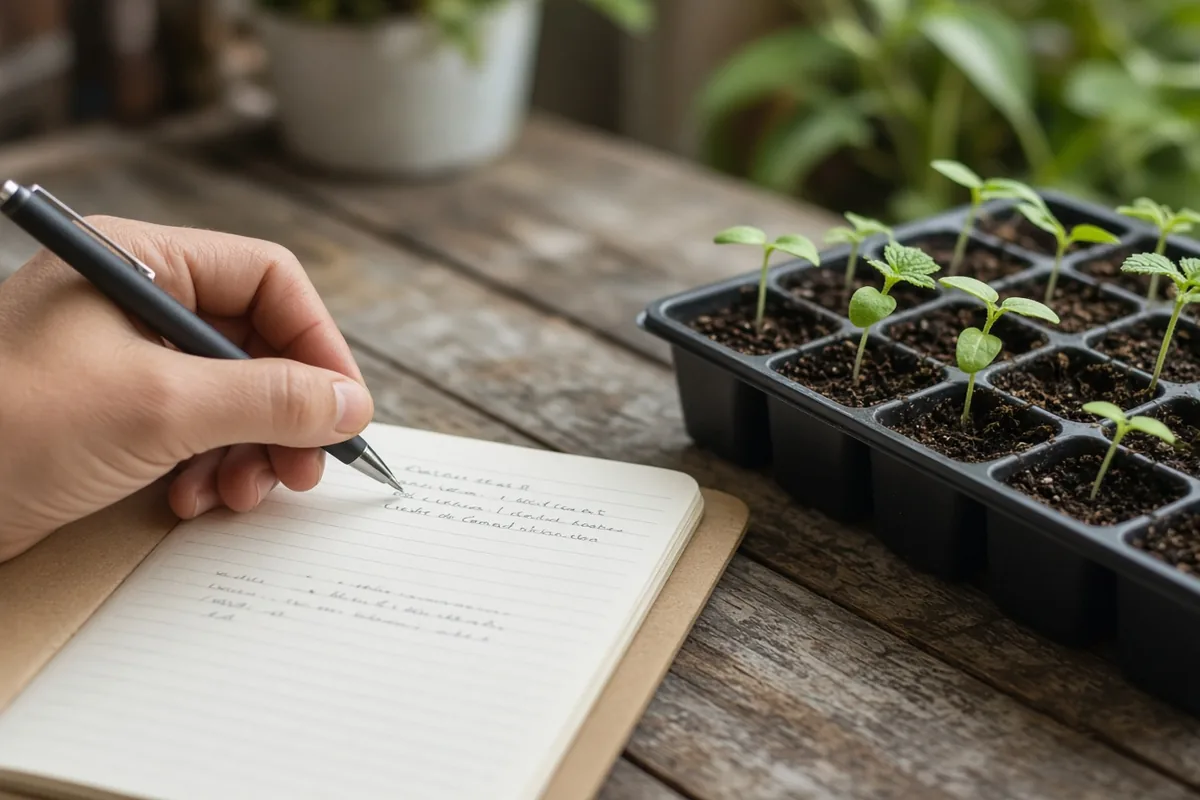
If you do want to try selfing at home, remember that pollination and seed making are part of cultivation. Stay within your state’s home grow rules, keep the project for personal use, and keep pollen away from the rest of your garden.
Frequently asked questions
Are S1 seeds the same as feminized seeds?
All S1 seeds are feminized, but not all feminized seeds are S1. Many feminized seeds come from crossing two different female plants, one of which was reversed to make pollen.
Are S1 seeds stable?
They can be fairly even, but selfing reshuffles one plant’s genes, so some S1 plants can differ from the mother. Stability usually takes many generations of selection.
Are F1 seeds better than S1 seeds?
They serve different goals. F1 seeds are designed for uniform, vigorous crops. S1 seeds preserve one plant’s genetics. Most home growers find F1 seeds easier to plan around.
Can I save seeds from F1 plants?
You can, but seeds made from F1 plants are F2, and F2 plants usually vary much more than their parents. That is why many growers buy fresh F1 seed.
Do S1 seeds have a higher hermaphrodite risk?
Intersex traits can appear in any seed type. A carefully selected mother and a stable grow environment are the best ways to lower the risk.
Is there a germination guarantee on F1 seeds?
Kind Seed Co’s germination guarantee covers Weed Seeds Usa White Label packs when you follow the published method and claim rules. Read the germination guarantee page for the full terms.
Grow uniform plants from F1 genetics
S1 seeds are a breeder’s tool for capturing one plant. F1 seeds are a grower’s tool for consistent, vigorous plants from two defined parents. If you want even plants that are easier to manage, browse our F1 cannabis strains or explore the full Kind Seed Co shop. Kind Seed Co sells only to adults 21 and older. Always follow the home grow laws where you live.