
Garden Gloves for Growers: Picking Pairs for Each Task
The short answer
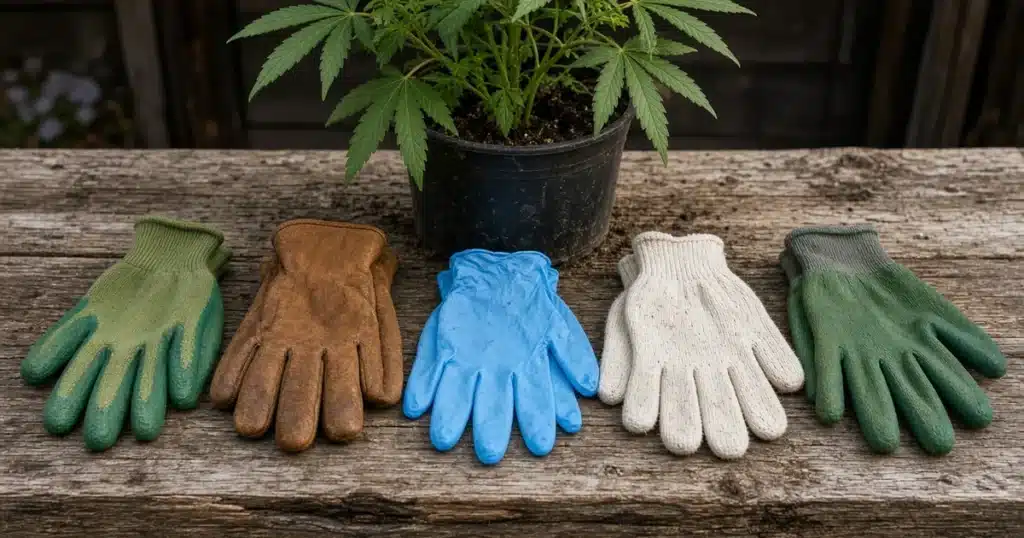
No single pair of garden gloves fits every job. Most home growers do well with three types. Use coated fabric gloves for planting and light soil work, leather gloves for rough jobs and woody stems, and thin nitrile gloves for trimming and sprays.
Add rubberized gloves if you work in wet or muddy beds. Whatever you pick, fit matters as much as material. Gloves should be snug but not pinch. That keeps your grip and feel for small tasks.
Why growers need more than one pair
A grow season covers very different work. You mix soil, dig beds, move pots, tie branches, scout leaves, spray and trim sticky buds. Each task puts different demands on your hands.
UC Master Gardeners in Napa note that there is a glove for every situation. They point to rubberized gloves for muddy areas, leather for hard or dry soil and thin gloves for delicate plants. A small set of pairs lets you match the glove to the job instead of making one pair do everything.
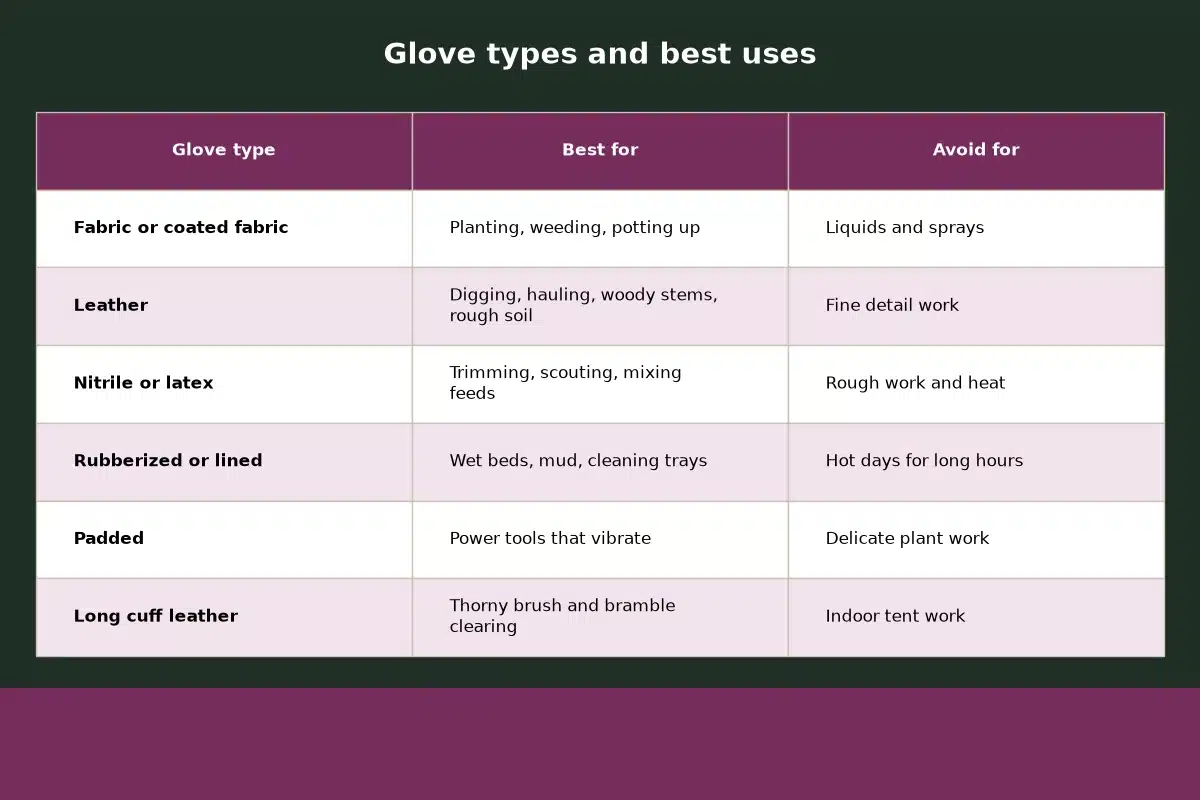
Glove types and best uses
| Glove type | Best for | Avoid for |
|---|---|---|
| Fabric or coated fabric | Planting, weeding, potting up | Liquids and sprays |
| Leather | Digging, hauling, woody stems, rough soil | Fine detail work |
| Nitrile or latex | Trimming, scouting, mixing feeds | Rough work and heat |
| Rubberized or lined | Wet beds, mud, cleaning trays | Hot days for long hours |
| Padded | Power tools that vibrate | Delicate plant work |
| Long cuff leather | Thorny brush and bramble clearing | Indoor tent work |
Source: Wear the Right Glove for the Task, UC Master Gardeners, glove types matched to garden tasks.
Coated fabric gloves
These are knit gloves with a rubber or nitrile coating on the palm and fingers. These are light and flexible. They grip pots and tools well. They suit most indoor and container work.
Fabric soaks up liquid, though. Do not wear plain fabric gloves when you handle sprays or anything wet you do not want on your skin. Keep a second pair for messy days and let each pair dry fully.
Leather gloves
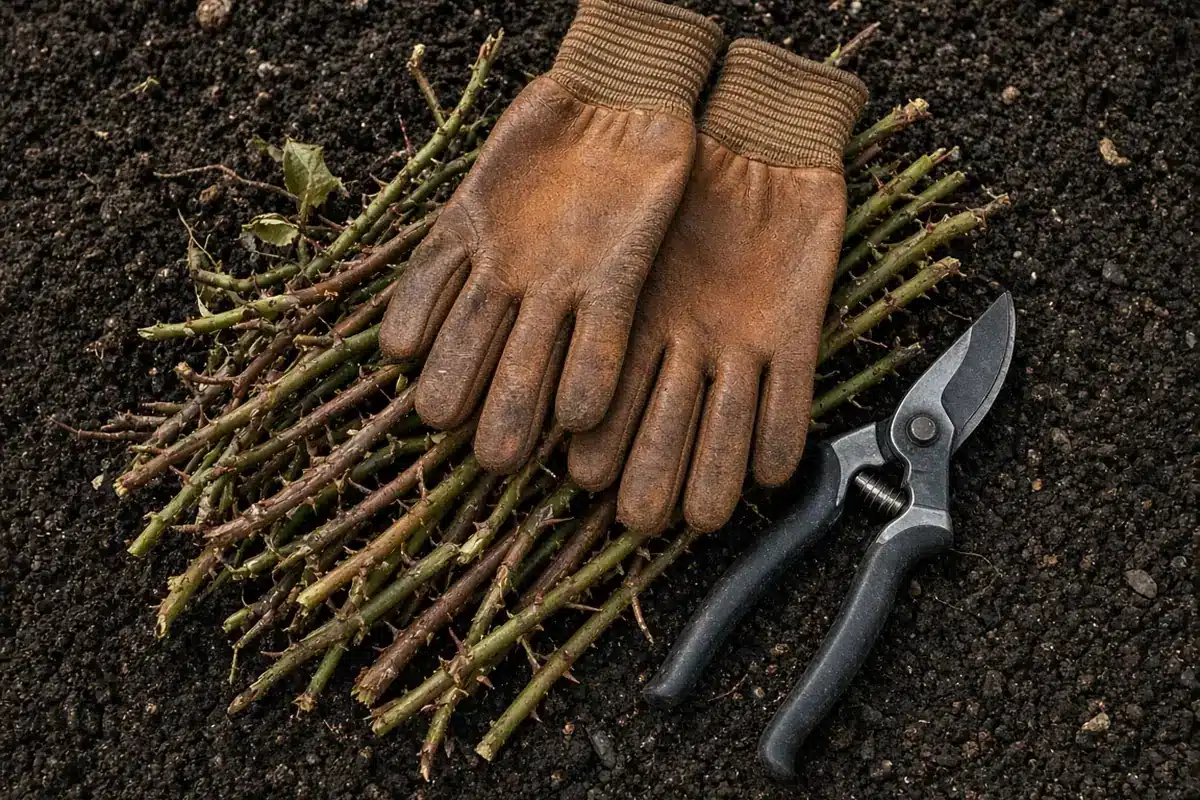
Leather stands up to rough soil, rocks, wood and wire. It suits building beds and moving bags of soil. It also works for cutting thick stems and handling cages and stakes.
Leather is stiff for fine work. Buy a pair that fits closely so you can still grip a trowel or pruner. Clean dried soil off and let leather dry slowly away from heat so it stays soft.
Nitrile gloves
Thin disposable nitrile gloves are the trimming glove. Flower resin sticks to bare fingers and scissors. Nitrile keeps it off your skin and peels away when you are done.
UC Master Gardeners in Napa use thin gloves for delicate plants and as liners inside leather or rubber gloves. Nitrile also works for mixing feeds and handling sticky traps. Toss them when they tear.
Before you spray, check the product label for the right glove. Our guide to insecticidal soap for cannabis covers how to apply soap sprays with care.
Rubberized and lined gloves
Wet work calls for gloves that keep water out. Rubberized gloves suit cleaning trays, scrubbing pots, working in muddy outdoor beds and handling runoff. A thin liner adds warmth. It also makes them easier to pull off.
Fit matters
The Napa column warns that bulky or loose gloves can cost you 20 to 40 percent of your grip. Poor fit also makes you squeeze harder, which tires your hands faster.
How to check fit
- Try the glove on both hands.
- Make a fist. It should close without pinching.
- Pick up a small item like a plant tie or seed.
- Check that fingertips are not loose at the ends.
- Make sure the cuff does not slide down your wrist.
Gloves by grow task
For mixing soil and potting up, wear coated fabric gloves. Leather suits building beds and moving bags. Tying branches and training call for coated fabric or thin nitrile. Wear thin nitrile or use clean bare hands to scout leaves for pests. Trim sticky buds in nitrile, clean trays and reservoirs in rubberized gloves and clear brush outdoors in long cuff leather.
Gloves for outdoor beds
Outdoor work is rougher on hands than tent work. You may pull deep rooted weeds and move rocks. You may also set stakes and haul mulch. Leather gloves handle most of this. Switch to coated fabric when you plant or tie branches so you can feel what you are doing.
Long cuff leather gloves help when you clear brush or thorny plants around a garden edge. The Napa column suggests elbow length leather gauntlets for thorny shrubs. Keep a pair by the shed so you do not reach into brush bare handed.
Care and replacement
The UC Master Gardeners author says to expect to go through a pair or two of each type every season. Cheap gloves that fit well often beat costly gloves you are afraid to get dirty.
- Shake out soil after each use.
- Wash fabric gloves with mild soap and hang them to dry.
- Let leather dry slowly away from heat.
- Check gloves for holes before each use.
- Replace any pair that is torn or worn through.
- Keep work gloves and trimming gloves apart.
Gloves and clean grow spaces
Gloves can carry pests and disease from one place to another. Soil from an outdoor bed can bring bugs into an indoor tent. Keep one set of gloves for outdoor work and another for indoor work.
Wash or swap gloves after handling a sick plant. Thin nitrile gloves are handy here since you can throw them away after one use.
Building a small glove kit
A simple kit covers almost every grow task.
- One or two pairs of coated fabric gloves for daily work.
- One pair of fitted leather gloves for rough jobs.
- A box of nitrile gloves for trimming and messy tasks.
- One pair of rubberized gloves for wet work.
- A hook or bin to keep each type together and dry.
Our cannabis growing supplies list covers the other basics to keep near your kit.
Gloves at harvest
Harvest is when nitrile gloves earn their place. Resin builds up fast on fingers during trimming. Gloves keep your hands clean and help keep skin oils off the flowers. Our guide to cannabis trichomes explains why handling buds gently matters.
Change gloves when they get very sticky. A tacky glove pulls on leaves and slows you down.
Troubleshooting
- Your hands get wet through fabric gloves. Switch to rubberized gloves for wet jobs.
- You keep dropping small items. Your gloves are too loose or too thick.
- Your hands feel tired fast. Try a better fit or a lighter glove.
- Leather gloves went stiff. They dried too fast near heat. Dry the next pair slowly.
- Nitrile gloves tear often. Pick a thicker gauge or a better fit.
- Resin builds up on scissors. Wipe blades often and change gloves when tacky.
Final thoughts
The best garden gloves are the ones that fit the task and your hands. Keep coated fabric gloves for everyday work, leather for rough jobs, nitrile for trimming and rubber for wet work. Check fit, wash them and replace worn pairs. Kind Seed Co has more equipment guides for home growers.
Sources
- UC Master Gardeners, Wear the Right Glove for the Task
- UC Master Gardeners of Napa County, Wear Those Gloves
FAQ
What garden gloves should a cannabis grower own?
Coated fabric gloves, fitted leather gloves, nitrile gloves and a rubberized pair for wet work.
Which gloves are best for trimming buds?
Thin nitrile gloves. They keep sticky resin off your hands and are easy to replace.
Can I use fabric gloves for sprays?
No. Fabric soaks up liquids. Check the product label for the right glove.
How should garden gloves fit?
Snug without pinching, with no loose fingertips, so you keep a good grip.
How often should I replace garden gloves?
Whenever they tear or wear thin. Many growers go through a pair or two of each type each season.



