
Composting Garden Waste From Your Cannabis Grow
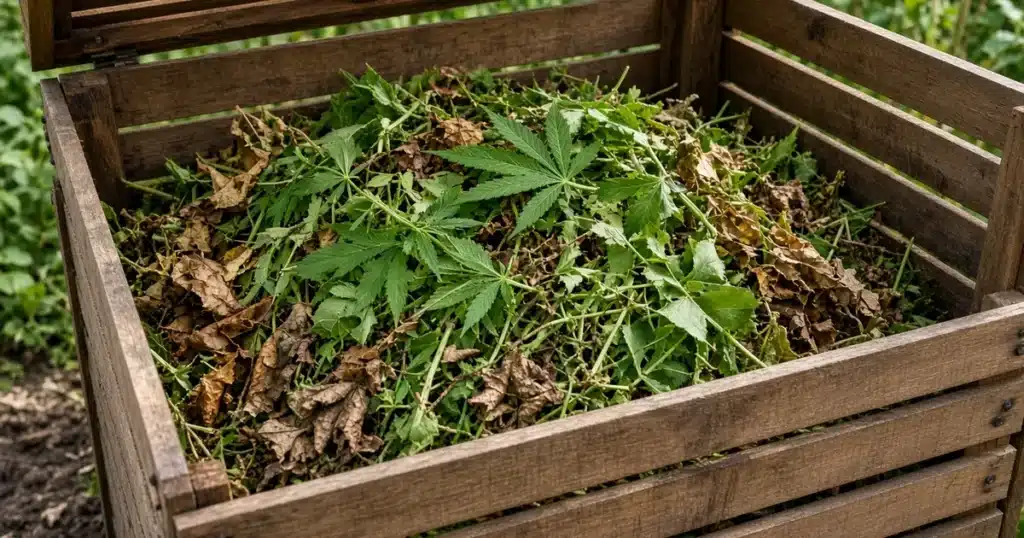
Every outdoor grow produces a pile of plant waste. Leaves, stems, spent plants, weeds and trimmings add up quickly by the end of the season. Instead of bagging it all for the trash, you can turn much of it into compost and return it to your beds. Colorado State University Extension notes that composting recycles nutrients back into the yard, saves landfill space and reduces yard waste volume by 50 to 75 percent. Oregon State University Extension describes simple no-turn methods for gardeners who would rather not manage a hot pile. Coming up: how compost works, how to build a home pile, how to balance greens and browns, how to manage moisture and turning, what not to add, the difference between hot and cold composting and how to use finished compost in your beds. Buying compost and feeding products is a separate subject, handled in Kind Seed Co’s best fertilizer and compost for growing outdoors. Here the focus is making compost.
Why compost your garden waste
Colorado State University Extension explains that organic matter improves drainage and aeration in clay soil by pushing tightly packed particles apart so water and air can move in. In sandy soil, it helps hold water and nutrients. Colorado State adds that compost holds moisture like a sponge and increases the activity of earthworms and other soil life that benefit plants.
Colorado State University Extension also makes an important point. Compost is a soil amendment, not a fertilizer, and contains limited plant nutrients. Think of it as a way to build better soil over time.
What compost needs
Colorado State University Extension explains that composting is a biological process carried out by microorganisms. Like most living things, they need favorable temperatures, moisture, oxygen and food. Get these right and the pile breaks down steadily. Miss one and it slows or stalls.
Greens and browns
Compost materials fall into two broad groups:
- Greens are fresh, moist materials such as green leaves, fresh trimmings, vegetable scraps and fresh grass clippings. They are high in nitrogen, which the microbes need as food.
- Browns are dry materials such as dead leaves, straw and dry stems. They are high in carbon and add bulk and structure.
Colorado State University Extension says a mix of equal parts by volume of green and dry plant material generally gives the best balance. It notes that nitrogen is the most important food nutrient for the microbes, and a shortage drastically slows composting. Woody and dried materials contain little nitrogen, while green material contains much more.
How to build a compost pile, step by step
Colorado State University Extension describes a layered approach:
- Pick a site in partial shade, protected from drying winds and close to where you will use the compost. Colorado State Extension notes partial shade avoids baking in summer but still gives some warmth.
- Gather enough material. Colorado State Extension says a pile generally needs to be around three feet by three feet by three feet to build up enough heat, though well-insulated bins can be smaller.
- Chop or shred material. Pieces of about half an inch to an inch and a half work best, according to Colorado State Extension. Chop woody stems smaller and leave soft parts larger.
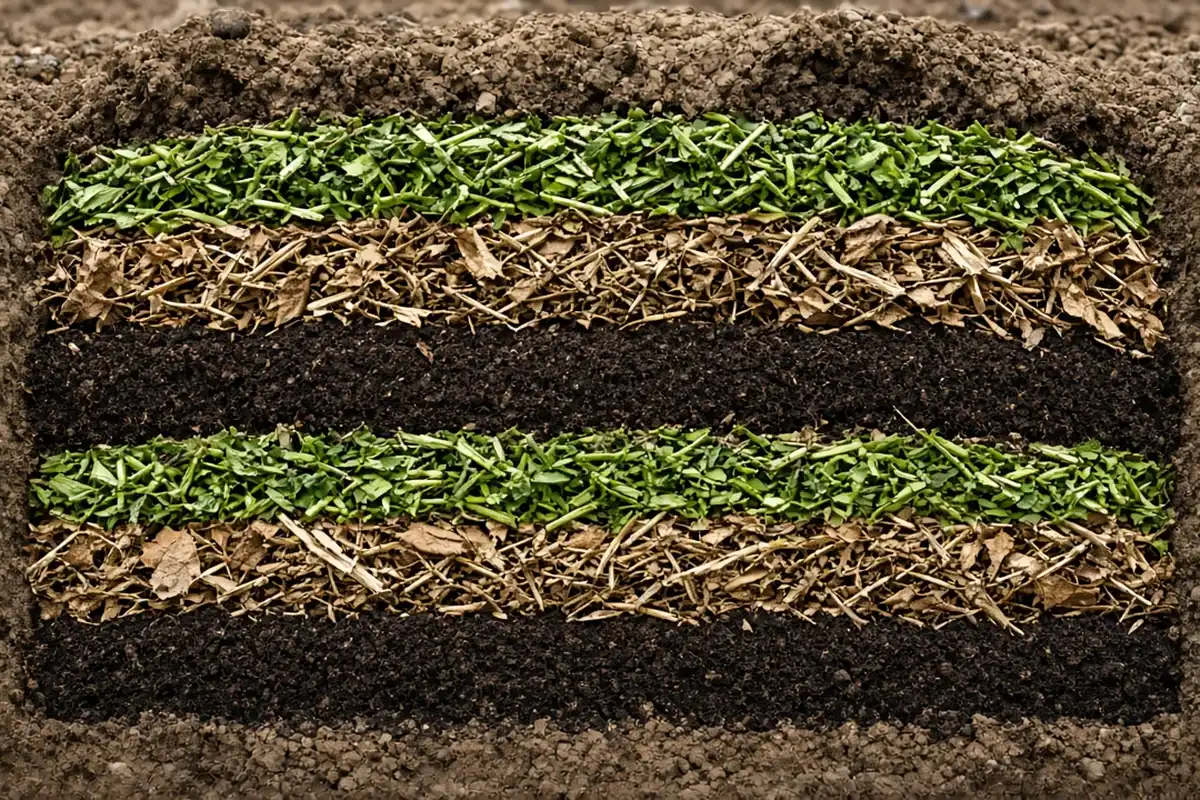
- Build alternating layers of shredded green and dry material, each about six to eight inches deep.
- Keep fine green material such as grass clippings to thin layers of about two inches, since it mats and blocks water and air.
- Add water after every few layers.
- Skip adding garden soil. Colorado State Extension explains that the microbes needed are already on plant surfaces, and large amounts of soil add weight and can suffocate microbes.
- Skip compost starters. Colorado State University Extension says there is no advantage to adding them.
Colorado State Extension notes that a well-built pile should heat up within about two days.
Moisture and turning
Moisture and air are the two things most likely to go wrong. Colorado State University Extension says compost should be moist but not soggy. It suggests wetting the whole pile evenly until only a few drops of water can be squeezed from a fistful of material.
Too dry, and microbes in the dry areas die and the pile slows. Too wet, and water pushes out air, creating low-oxygen conditions and foul odors.
Turning brings in fresh air. Colorado State University Extension recommends fluffing or turning the material with a pitchfork or aeration tool at regular intervals. This also spreads microbes through the pile. Many gardeners cover piles with plastic to stop the outer layers drying out, removing the cover now and then to add water and material.
How long it takes
Colorado State University Extension says that a properly mixed and maintained pile can produce finished compost in one to two months in good summer conditions. Finished compost should be about half its original size with an earthy smell. Cold weather greatly slows the process.
What not to add
Not everything belongs in a home pile. Colorado State University Extension recommends avoiding or limiting:
- Severely diseased plants. Colorado State Extension notes that many, but not all, disease organisms are killed in a hot pile, and the outer layers stay cooler. It advises putting severely diseased plants in the trash.
- Plants treated with weed killers, in general.
- Meat, bones, grease, whole eggs and dairy, which can cause odors and attract rodents.
- Cat, dog or human waste, which may carry disease.
- Highly resinous wood and needles from plants such as junipers, pine and spruce, which break down slowly.
- Wood ashes and lime, which Colorado State Extension says increase salt and alkalinity and cause nitrogen loss.
Kitchen scraps such as vegetable peelings, coffee grounds and eggshells compost well, according to Colorado State.
For cannabis growers, this means healthy leaves, stems and trimmings can usually go in the pile. Plants with serious disease are better bagged and removed.
Hot vs cold composting
Hot composting is the managed pile described above. Colorado State University Extension notes that well-managed compost breaks down rapidly in summer as temperatures reach 120 to 130 degrees Fahrenheit, and that above about 160 degrees the microbes die.
Cold composting skips the heat and the turning. Oregon State University Extension explains that these methods are called cold because little or no heat builds up as the material decomposes. They are slower, but they take less work.
Cold composting methods
Oregon State University Extension describes three no-turn methods:
- Sheet mulch composting. Lay three to four sheets of newspaper or cardboard over the area, overlapping the edges and soaking them with water. Then add alternating green and brown layers, always finishing with brown. Oregon State Extension notes the bed will likely shrink by about half in the first year, and a bed made in fall is ready for spring planting.
- In-place composting. Bury organic material directly in garden soil at least 12 inches deep to discourage animals, and rotate the spot each time.
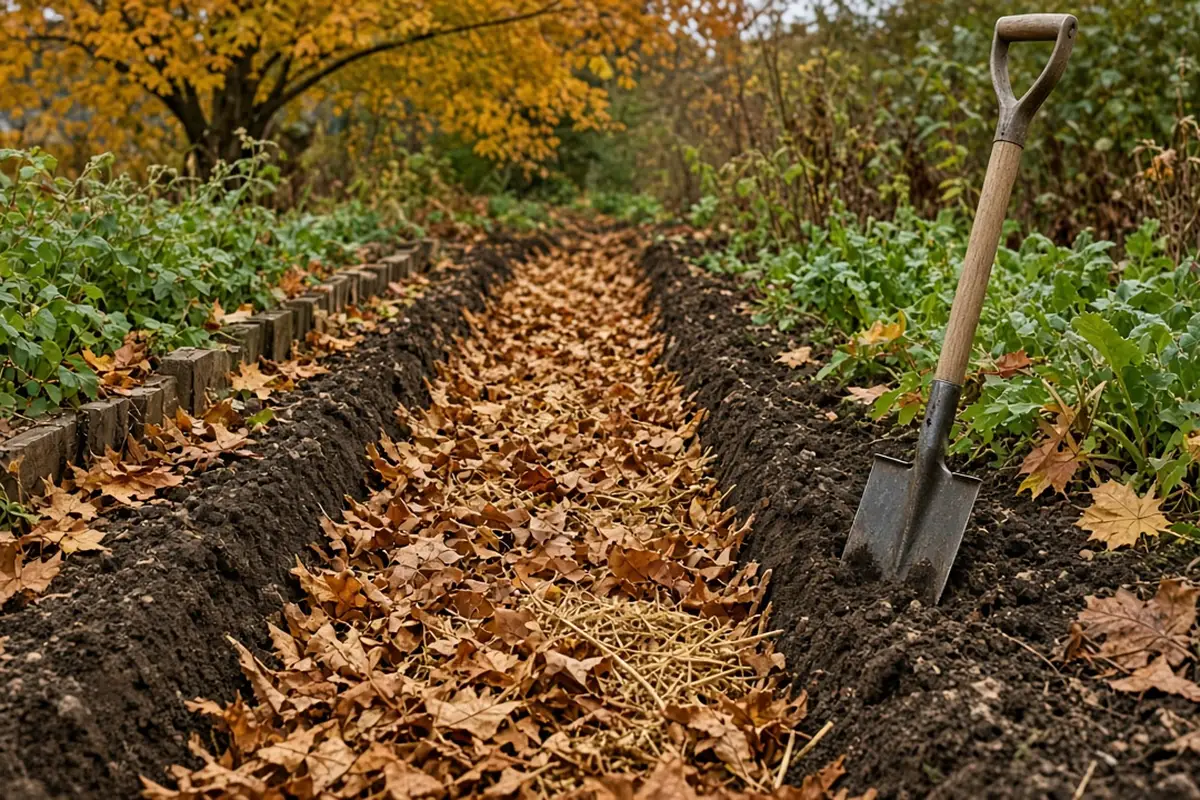
- Trench composting. Dig a trench 12 to 18 inches deep and wide in a path between beds, fill it in fall with leaves, straw or chopped garden debris, then turn the broken-down material onto the beds in spring and use the trench as a path again.
Oregon State Extension also warns that fresh, decaying material can release acids that damage young roots, so it suggests filling planting holes in a new sheet mulch bed with finished compost.
Using finished compost in beds
Colorado State University Extension says areas planted every year, such as vegetable gardens, can accept frequent applications of compost. It recommends mixing compost well into the soil. For containers, it notes that potting mixes made with compost need a material such as perlite to avoid waterlogging.
Compost can also be used as a mulch, though it is light and can blow away. Other options are compared in mulch for cannabis.
Troubleshooting
The pile smells bad. It lacks air. Colorado State University Extension suggests turning it or using an aeration tool.
The center of the pile is dry. It has not been watered enough. Moisten materials while turning.
The outside is dry. Water regularly or cover the pile with a tarp.
The pile is damp but will not heat up. It may lack nitrogen. Mix in fresh green material such as fresh trimmings or grass clippings.
The pile is warm in the center but cool outside. The pile is too small. Add more material to make a larger mass.
Compost is full of weeds. Some weed seeds survive composting. Pull weeds as they sprout.
Sources
- Colorado State University Extension. Composting Yard Waste. https://extension.colostate.edu/resource/composting-yard-waste/
- Oregon State University Extension. Three Methods for No-Turn Cold Composting (EM 9480). https://extension.oregonstate.edu/catalog/em-9480-three-methods-no-turn-cold-composting
FAQ
What can I compost from my cannabis garden?
Healthy leaves, stems, trimmings and spent plants, plus leaves, straw and kitchen vegetable scraps. Colorado State University Extension advises putting severely diseased plants in the trash, avoiding plants treated with weed killers and leaving out meat, dairy and pet waste. Chop woody stems into small pieces so they break down faster.
What is the right mix of greens and browns?
Colorado State University Extension says a mix of equal parts by volume of green and dry plant material generally gives the best balance. Greens such as fresh trimmings supply nitrogen, while browns such as dry leaves and straw add carbon and structure. Build them in alternating layers about six to eight inches deep.
How wet should a compost pile be?
Moist but not soggy. Colorado State University Extension suggests wetting the whole pile evenly until only a few drops of water can be squeezed from a fistful of material. Too dry and microbes die, slowing the pile. Too wet and air is pushed out, which causes low-oxygen conditions and bad odors.
What is cold composting?
Cold composting breaks down material without building heat or turning. Oregon State University Extension describes three methods: sheet mulch beds, burying material in place at least 12 inches deep and trench composting in garden paths. These methods are slower than a hot pile but take much less work and still improve garden soil over time.


