
Watering During Drought: Keep Outdoor Cannabis Going
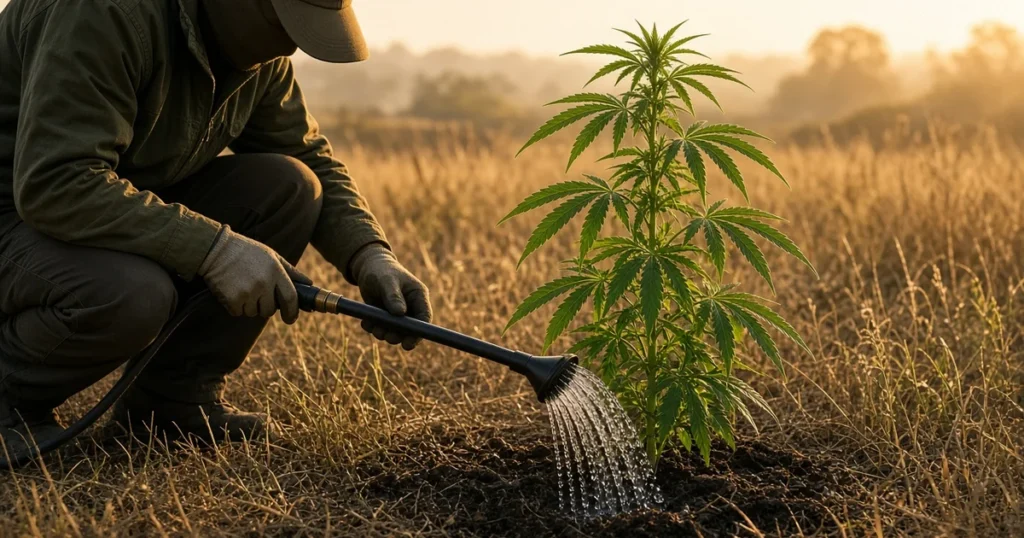
A long dry spell is hard on any outdoor garden. Soil dries out faster, plants use more water in the heat and local watering rules may limit how much you can use. The goal during drought is to make every drop count, putting water where roots can reach it and wasting as little as possible. University of Missouri Extension notes that proper watering can help plants survive dry spells. Colorado State University Extension adds that you should use only the water your plants need. Here you will learn how to check the soil before watering, how to water deeply and less often, the best time of day to water, how to use mulch, which plants to put first and how to spot drought stress. For signs that a plant is short of water in general, turn to Kind Seed Co’s underwatering cannabis.
Follow local water rules first
Before changing your watering routine, check what is allowed. Colorado State Extension advises always checking with your local water provider for the latest drought information and water use rules. Rules may set which days, times or amounts are allowed. Colorado State adds that hand watering of gardens is often allowed on any day, but this varies, so confirm the rules where you live.
Check the soil before you water
The most useful drought habit is checking the soil before every watering. Colorado State Extension recommends checking how much moisture is in the soil before each irrigation. University of Missouri Extension notes that soil may look dry on top while there is still enough moisture below.
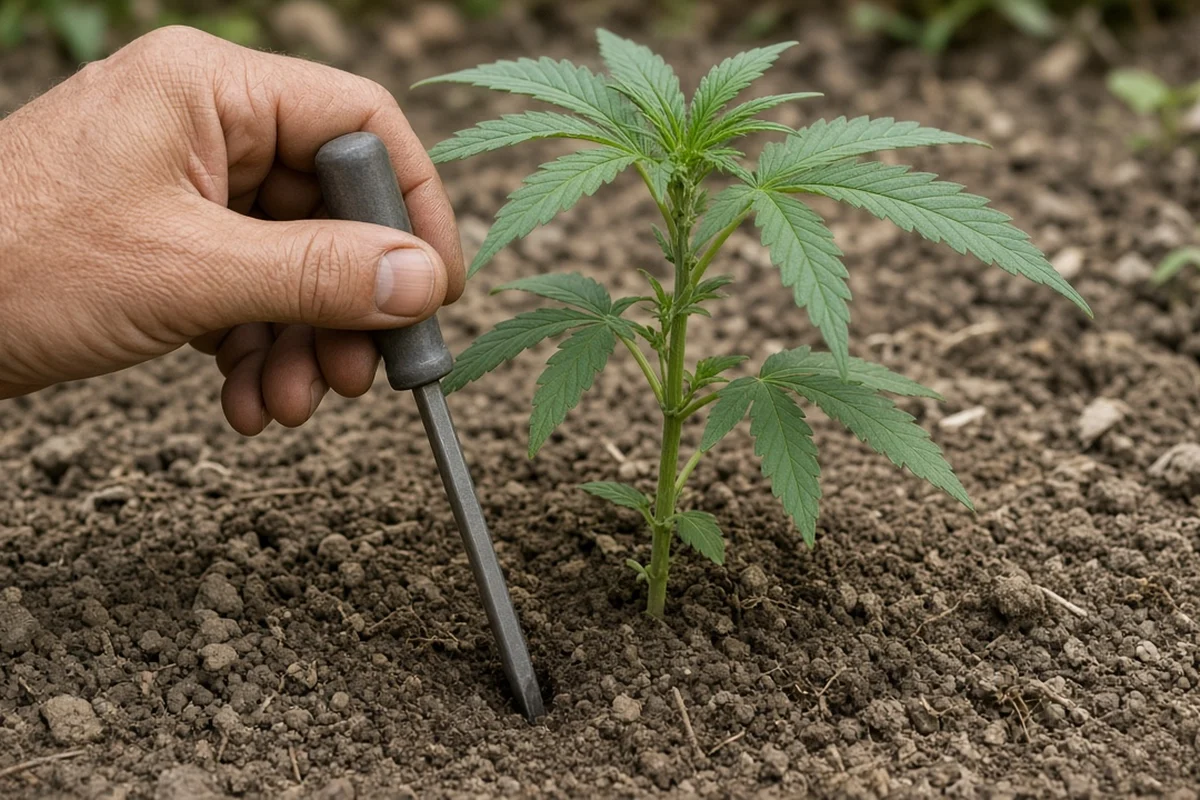
Both sources recommend the screwdriver test:
- Push a long screwdriver into the soil near the plant.
- University of Missouri Extension says that if it comes out clean, the soil is dry and it is time to water.
- Colorado State Extension adds that if a six-inch screwdriver slides in easily, water is often not needed yet.
- Colorado State Extension warns that sandy soils slide easily even when dry, so check them more carefully.
A moisture meter can help, Colorado State Extension says, though soils high in organic matter may read wetter than the moisture plants can actually use. More on them is in soil moisture meters for cannabis.
Water deeply and less often
University of Missouri Extension recommends watering slowly and deeply. It notes that plants need at least an inch of water each week, and that slow watering lets water soak into the soil and reach the roots.
Deep watering encourages roots to grow down, where the soil stays moist longer. Light, frequent sprinkles wet just the upper layer of soil, which dries out quickly in hot weather and encourages shallow roots.
Soil type changes how you water. Colorado State Extension explains that clay soils hold water for a long time and can stay waterlogged below a dry crust. For clay, it suggests running water for about five minutes on, then five minutes off, so it can soak in instead of running off. It adds that sandy soils drain quickly and may need water more often.
Water at the base of the plant
University of Missouri Extension recommends watering at soil level to avoid waste and help prevent leaf diseases. Colorado State Extension suggests watering vegetable gardens by hand or with a drip, trickle or soaker system. Both point toward putting water directly on the root zone instead of spraying the whole garden.
University of Missouri Extension notes that drip irrigation and soaker hoses that automate watering are a good investment, because they deliver water slowly and steadily. That option gets a full post in drip irrigation for cannabis.
Colorado State Extension also advises against watering on windy or rainy days, and against watering paths, patios or other hard surfaces.
Pick the right time of day
University of Missouri Extension recommends watering in the morning. It warns that evening watering leaves water on leaves, making plants more prone to disease. Colorado State Extension suggests applying water to vegetable gardens in the cool of the morning, before 10 a.m.
Morning watering means less water lost to evaporation and gives leaves time to dry during the day. If local rules set specific watering hours, work within them and favor the earliest allowed time.
Use mulch to hold moisture
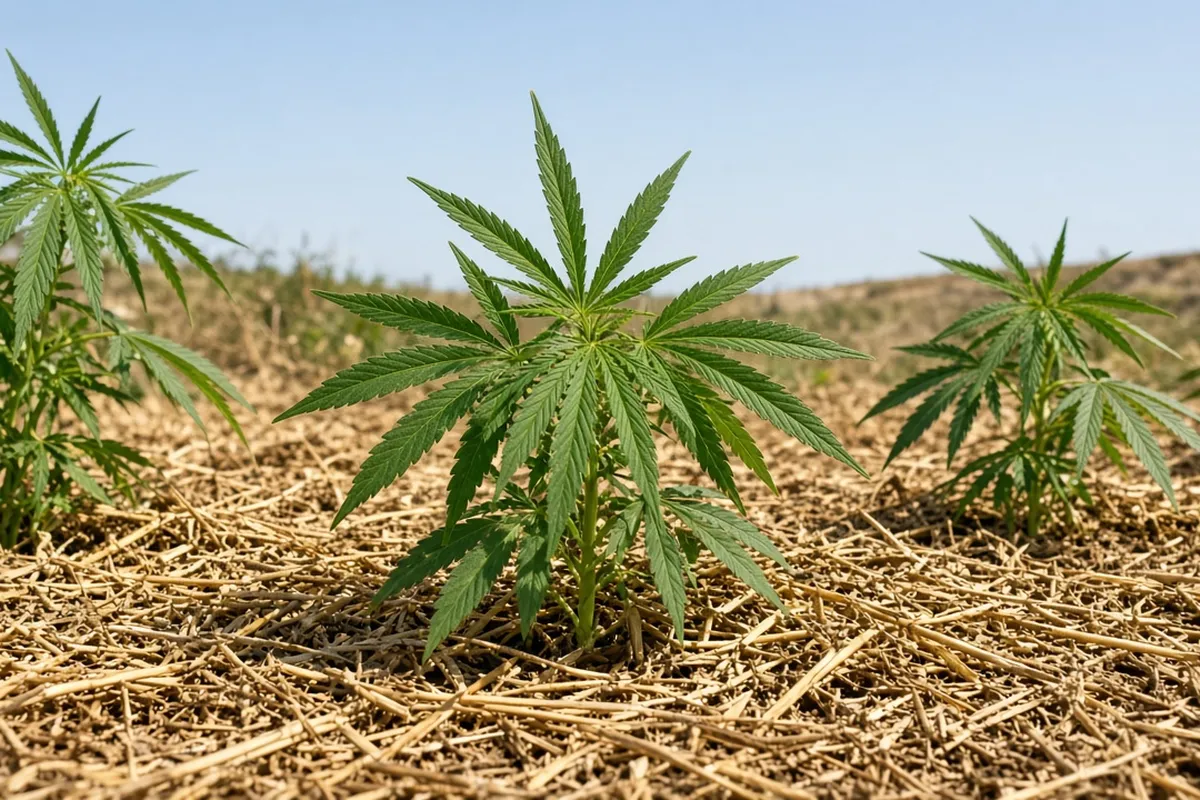
Mulch is one of the most effective drought tools. University of Missouri Extension recommends mulch around root zones to hold moisture and keep roots cool. Colorado State Extension suggests mulching vegetable gardens with organic matter to a depth of three inches or less to reduce evaporation.
Lay mulch after a deep watering so you trap moisture in the soil. Keep it slightly back from the base of the stem. Material choices are compared in mulch for cannabis.
Pull weeds
University of Missouri Extension notes that weeds take water that wanted plants need. During drought, keep beds and the area around plants weeded so your water goes to your crop.
Decide which plants come first
When water is limited, you may not be able to keep everything fully watered. Colorado State Extension says vegetable quality and yield depend on water at critical times. It notes that water is usually most critical during the first few weeks of growth, right after transplanting and during flowering and fruiting.
In an outdoor cannabis garden, that suggests a simple order of priority:
- Recent transplants, which have small root systems.
- Plants that are flowering.
- Plants in containers and raised beds. University of Missouri Extension notes these dry out more quickly and need more frequent watering.
- Established plants in the ground, which can reach deeper moisture.
Colorado State Extension also warns against overwatering vegetables, since they may rot. Drought is not a reason to keep soil soggy.
Hold off on extra feeding
University of Missouri Extension advises against fertilizing during dry spells. It explains that fertilizer encourages growth, and the extra growth needs more water. Wait until the weather and your water supply improve.
Signs of drought stress
Learn to spot early signs that a plant needs water. Watch for:
- Leaves drooping during the hottest part of the day that do not recover by evening.
- Leaves that feel dry, thin or crisp at the edges.
- Slowed growth.
- Soil that has pulled away from the edges of containers.
Afternoon drooping that recovers by the next morning can simply be heat. Drooping in the morning is a clearer sign the plant needs water. Always check the soil to confirm.
Measure what you apply
It is hard to water efficiently if you do not know how much water you are putting down. Colorado State Extension suggests setting shallow, stable containers around the watered area, running the water for a set time and then measuring the depth in each container. That tells you how long it takes to apply a given amount, so you can water for the right length of time instead of guessing.
When the rain returns
When a dry spell finally breaks, do not jump straight back to your old routine. Keep checking the soil before each watering, since one heavy rain may soak the surface without reaching deep roots. Leave mulch in place, as it will keep helping through the rest of the season.
Troubleshooting
Water runs off instead of soaking in. The soil may be clay or crusted. Water in short cycles, about five minutes on and five off, so it can absorb.
Plants droop even after watering. The water may not be reaching the roots. Check a few inches down after watering and water more slowly.
Dry surface soil but plants look fine. Check below the surface with a screwdriver. There may still be moisture deeper down.
Containers dry out by midday. Move them to afternoon shade, group them together and add mulch on top of the mix.
Leaves show spots after watering. Water may be sitting on leaves overnight. Water at the base in the morning.
Your water allowance runs short. Water recent transplants and flowering plants first, and mulch everything.
Sources
- Colorado State University Extension. Watering a Home Landscape During Drought. https://extension.colostate.edu/resource/watering-a-home-landscape-during-drought/
- University of Missouri Extension. Water Deeply and Wisely During Drought. https://extension.missouri.edu/news/water-deeply-and-wisely-during-drought
FAQ
How often should I water during a drought?
Check the soil first instead of watering on a fixed schedule. Colorado State Extension recommends checking moisture before each watering. University of Missouri Extension says plants need at least an inch of water each week, applied slowly and deeply. Sandy soils and containers may need water more often than clay soils.
What is the best time to water during drought?
Morning. University of Missouri Extension recommends morning watering because evening watering leaves water on leaves, raising disease risk. Colorado State Extension suggests watering vegetable gardens in the cool of the morning before 10 a.m. Morning watering also loses less water to evaporation. Follow any local rules on watering hours.
How do I know if my garden soil needs water?
Use the screwdriver test. University of Missouri Extension says to push a screwdriver into the soil and pull it out. If it comes out clean, the soil is dry and needs water. Colorado State Extension notes sandy soils may let it slide in easily even when they are dry.
Which plants should I water first during a drought?
Colorado State Extension notes water is most critical after transplanting and during flowering and fruiting. Put recent transplants and flowering plants first. University of Missouri Extension adds that containers and raised beds dry more quickly. Established plants in the ground can usually reach deeper moisture and can wait a little longer.


