DWC cannabis grow guide
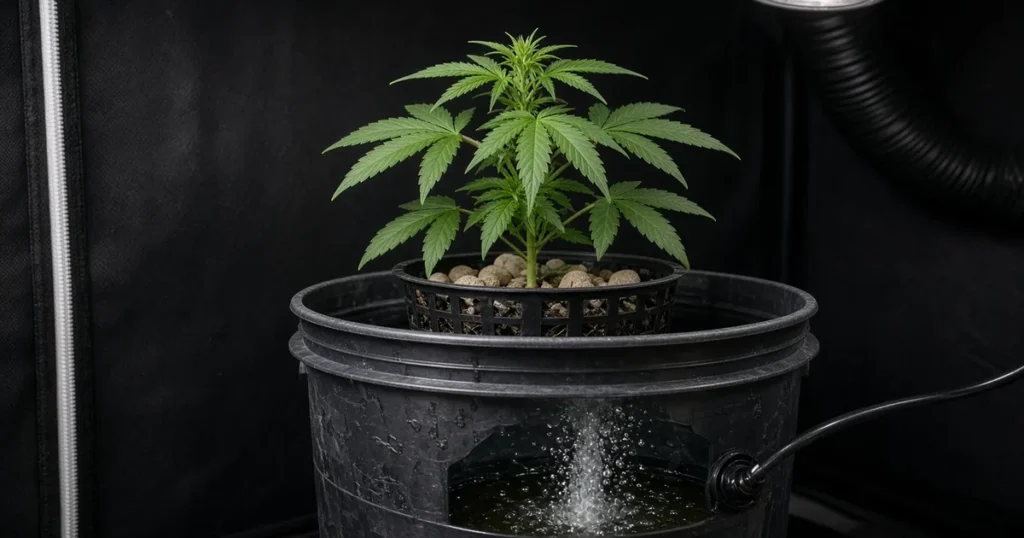
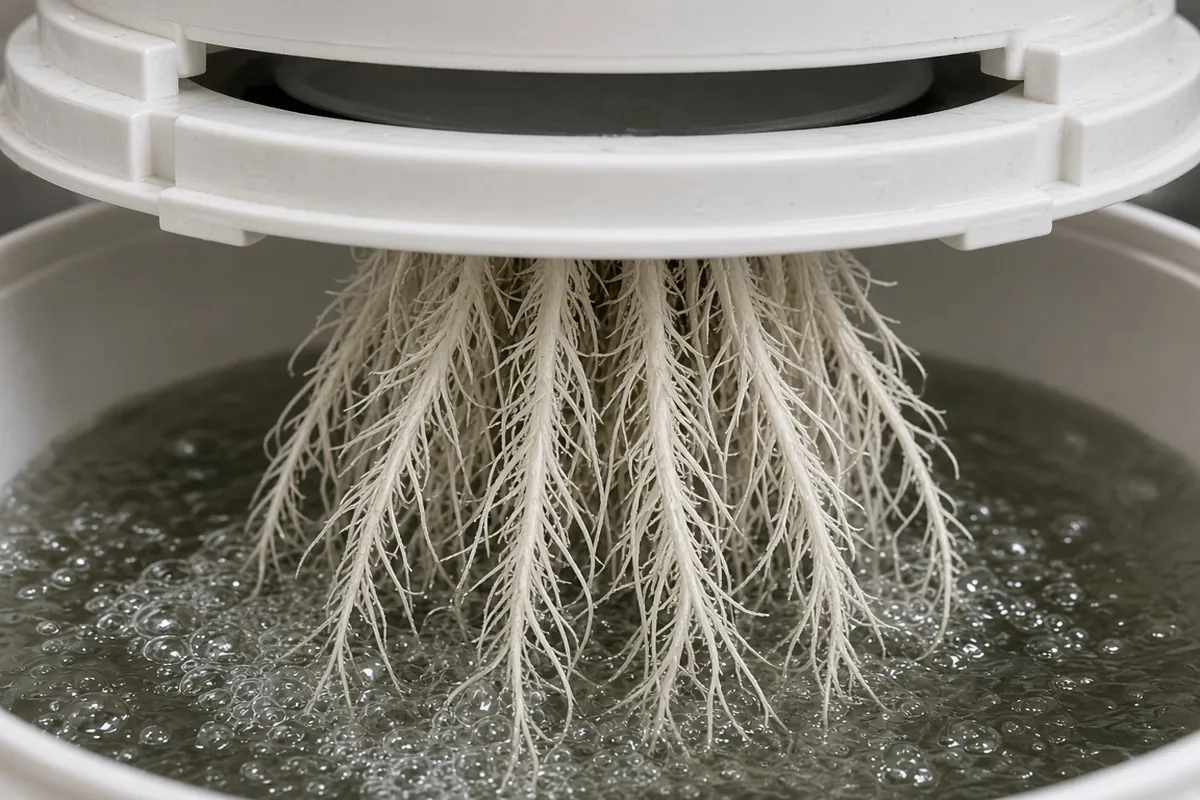
Deep water culture, or DWC, is one of the simplest ways to grow cannabis without soil. The plant sits in a net pot above a bucket of nutrient water, and its roots hang straight down into that water. An air pump pushes bubbles through an air stone at the bottom of the bucket so the roots get plenty of oxygen. With oxygen, water and nutrients all available at once, plants in DWC can grow very quickly. The tradeoff is that you have to watch the water closely, because problems also move fast. This guide walks through the setup, daily care and common mistakes for adults 21 and older growing where it is legal.
How DWC works
In soil, roots search for water and nutrients and get oxygen from air pockets in the mix. In DWC, everything is handed to them. The roots sit in a dark reservoir of water mixed with hydroponic nutrients. The air stone keeps the water full of dissolved oxygen, which stops the roots from drowning. Because the plant spends less energy hunting for food, it can put more into leaves, branches and eventually flowers.
DWC is often compared with the Kratky method, which is passive. Kratky uses no air pump and relies on an air gap that grows as the water level drops. That works well for small herbs and greens, but cannabis is large and thirsty, so most growers prefer active DWC with an air pump. Our Kratky guide covers the passive approach if you want to compare.
What you need
| Item | What it does | Tip |
|---|---|---|
| Opaque bucket with lid, 3 to 5 gallons | Holds the nutrient water | Must block all light to stop algae |
| Net pot, 5 to 6 inches | Holds the plant and medium | Fits a hole cut in the lid |
| Clay pebbles or rockwool | Supports the young plant | Rinse clay pebbles before use |
| Air pump | Pushes air into the water | Size it for more air than you think you need |
| Air stone and tubing | Spreads air into fine bubbles | Replace stones that clog |
| Hydroponic nutrients | Feeds the plant | Use a formula made for hydro, not soil |
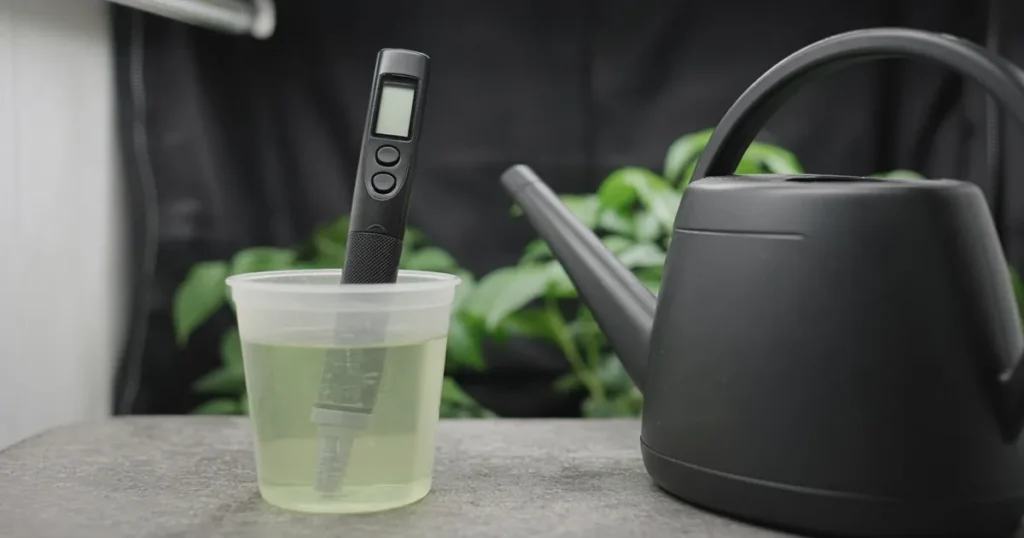
| pH meter and pH adjusters | Keeps pH in range | Calibrate the meter often |
| EC or PPM meter | Measures nutrient strength | Track readings daily |
Setting up a DWC bucket
- Prepare the bucket. Cut a hole in the lid for the net pot. If your bucket lets in any light, wrap it with foil tape or reflective material.
- Install the air stone. Place it at the bottom of the bucket and run the tubing out through a small hole near the top.
- Fill with water. Use clean water and fill until the bottom of the net pot just touches the surface.
- Mix nutrients. Add hydroponic nutrients at a light dose for young plants, then check strength with your meter.
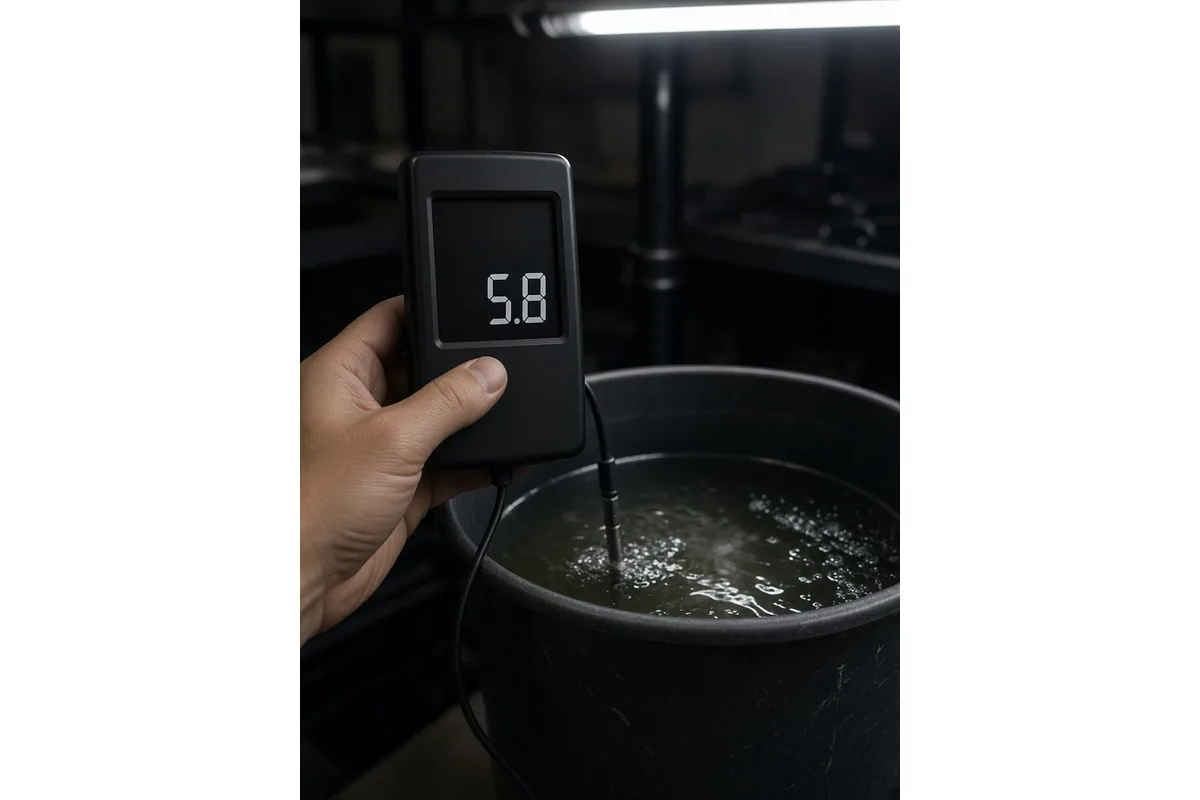
- Adjust pH. Most DWC growers keep pH between about 5.5 and 6.2. Our guide to pH for cannabis explains why this range matters.
- Start the air pump. Let it run constantly from day one.
- Add the plant. Start a seed in a rockwool cube or plug, then place it in the net pot surrounded by clay pebbles once roots show. Our guide on how to germinate cannabis seeds covers the first step.
Daily and weekly care
DWC is not a set and forget method. A few minutes each day keeps things on track.
Every day: check pH and nutrient strength, look at the roots, confirm the air pump is running and note the water level.
Every week: change the reservoir completely. Clean the bucket, mix fresh nutrients and adjust pH. Some growers top off with plain water between changes to keep strength steady as the plant drinks.
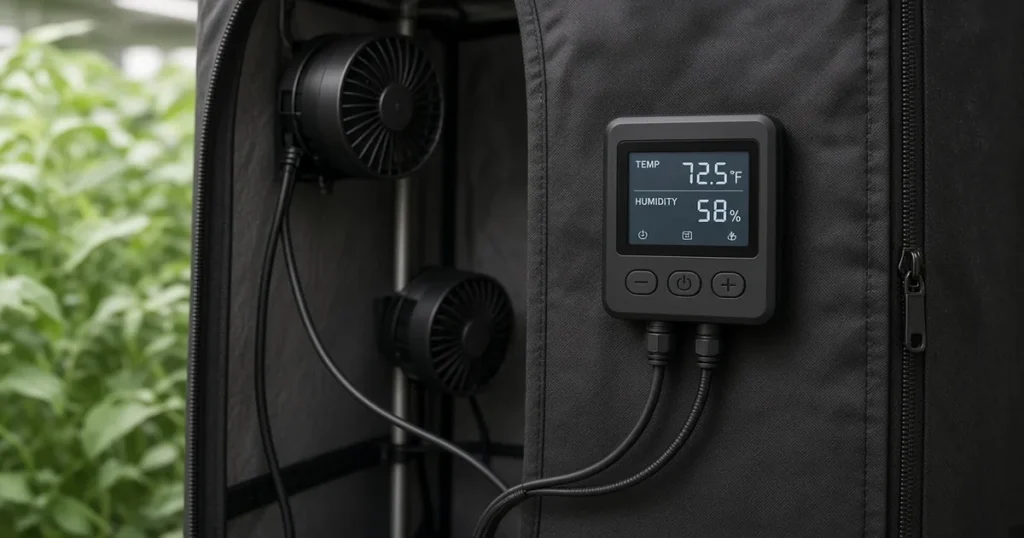
Water temperature: keep reservoir water cool, ideally around 65 to 70 degrees Fahrenheit. Warm water holds less oxygen and invites root rot. In a hot room, consider a water chiller or frozen water bottles swapped daily.
Nutrient strength and pH through the grow
Seedlings need very light feeding. As the plant grows, you can raise strength gradually. Read nutrient strength in PPM or EC, and watch how the plant responds rather than chasing a chart. If leaf tips burn, back off. If lower leaves fade early, the plant may need more. Our PPM guide for cannabis explains how to read and adjust those numbers.
pH tends to drift in DWC, often upward. Check it daily and adjust in small steps. Wild swings stress the plant more than slight drift.
Common DWC problems
Root rot. Brown, slimy, bad smelling roots are the number one DWC problem. Usual causes are warm water, too little oxygen or light leaks. Fix the cause, change the water and trim dead roots. Many growers add beneficial microbes made for hydroponics to help prevent it.
Algae. Green film in the bucket means light is getting in. Seal every gap.
Pump failure. If the pump stops, roots can suffocate within hours. Use a reliable pump and consider a backup.
Overfeeding. Fast growth makes it tempting to push nutrients. Do not. Burned tips and dark, clawed leaves are signs to dial back.
Training and plant size in DWC
DWC plants can get big quickly. Use training methods such as topping and low stress training to keep the canopy flat and within your light’s footprint. Plan for the stretch after you switch to flowering. Plants often double in height in the first few weeks of bloom.
Flowering and harvest in DWC
Once you flip to 12 hours of light and 12 of dark, keep the same routine. Many growers switch to a bloom nutrient formula and slightly lower nitrogen. Near harvest, some do a final period of plain pH adjusted water, though growers disagree on how much difference it makes. Judge harvest by the trichomes, not the calendar. Our cannabis trichomes 101 guide shows what to look for.
Is DWC right for you
DWC suits growers who like hands on routines and want fast growth. It is a poor fit if you travel often or cannot check your plants daily. If you are new to growing, consider running one soil plant alongside a DWC bucket for your first grow. You will learn how each method behaves and which one fits your schedule.
Grow legally and responsibly
Home cultivation is only legal in some states, and each state sets its own plant limits, locking rules and rules about whether plants can be visible from a public place. You must be 21 or older to buy seeds from Kind Seed Co, and you should grow only where your state and city allow it. Check your state rules in our guide to the legal requirements for growing weed plants in your state before you plant. Federal treatment of cannabis seeds is also changing, so read our December 11 2026 seed rule explainer before you order. Keep plants and harvested flower locked away from children, pets and visitors, and never drive after using cannabis. This article is general information. It is not legal advice and it is not medical advice.
Frequently asked questions
How often should I change the water in a DWC cannabis grow?
Most growers change the full reservoir about once a week and top off with plain water in between. Change it sooner if the water smells, looks cloudy or the pH swings hard.
What pH should DWC water be for cannabis?
A common target is about 5.5 to 6.2. Small drift within that range is normal. Avoid large sudden changes.
Can I use soil nutrients in DWC?
It is not recommended. Soil nutrients often rely on soil microbes and can leave residue in hydro systems. Use nutrients made for hydroponics.
Why are my DWC roots turning brown?
Brown roots can be stained by nutrients, which is harmless, but brown slimy roots that smell bad usually mean root rot. Check water temperature, airflow and light leaks.
Final thoughts
DWC cannabis growing gives roots direct access to water, nutrients and oxygen, which can mean fast, vigorous plants. It also demands daily attention to pH, nutrient strength, water temperature and air flow. Start with one bucket, keep it dark and cool, change the water weekly and watch the roots. Once you have a steady routine, DWC can be one of the most rewarding ways to grow indoors.
Ready to start
Browse the full range in the Kind Seed Co shop or go straight to indoor seeds. Kind Seed Co sells only to adults 21 and older. Always follow the cannabis laws where you live.