
Best pH meters for cannabis
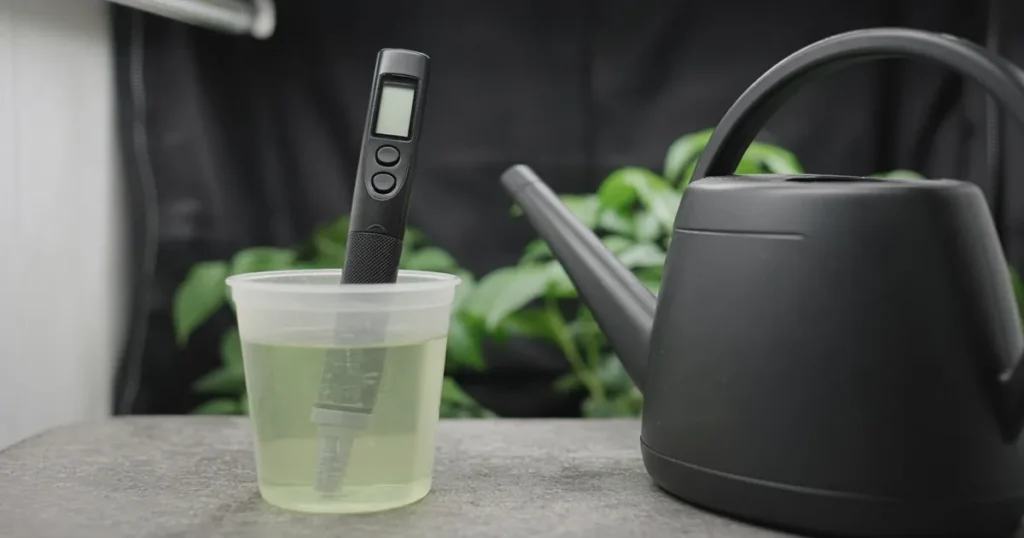
The best pH meter for cannabis is a digital meter with automatic temperature compensation, a replaceable glass probe, and easy two or three point calibration. For most home growers, a good pen style tester covers water and nutrient solution checks, while a handheld meter with a probe on a cable suits bigger hydro setups. Strips and drops are fine as a backup, and direct soil probes are a rough check only. Whatever you choose, accurate pH keeps nutrients available so the strong genetics in our indoor seeds can grow to their potential. This guide is for adults 21 and older growing where home cultivation is legal.
Why pH matters for cannabis
pH measures how acidic or alkaline a solution is, on a scale from 0 to 14. Cannabis roots take up nutrients best within a fairly narrow range. When the pH of your water or root zone drifts too far, some nutrients become harder to absorb even if they are present. Growers call this nutrient lockout, and it often looks like a deficiency.
Common target ranges used by home growers:
- Soil: about 6.0 to 7.0
- Coco coir: about 5.5 to 6.5
- Hydroponics: about 5.5 to 6.5
For the science behind these numbers, read our guide to understanding pH and how it affects cannabis plants. If your leaves show odd spotting or yellowing, see how to prevent and treat nutrient lockout.
Types of pH meters for cannabis
| Meter type | Best for | Pros | Cons |
|---|---|---|---|
| Pen style digital tester | Water and nutrient mixes in small grows | Compact, quick, easy to use | Probe wears out, needs regular calibration |
| Handheld meter with cable probe | Hydro reservoirs and bigger grows | More stable readings, probes often replaceable | Larger, more parts to care for |
| Combo pH and EC or PPM meter | Growers who track feed strength too | One tool, two readings | Both sensors need care |
| Continuous monitor | Hydro and DWC reservoirs | Watches pH around the clock | More setup, probe still needs calibration |
| Direct soil probe | Spot checks in soil beds | Reads soil without mixing a slurry | Often rough, varies by moisture |
| Test strips or drops | Backup and travel | Cheap, no batteries, no calibration | Color reading is approximate |
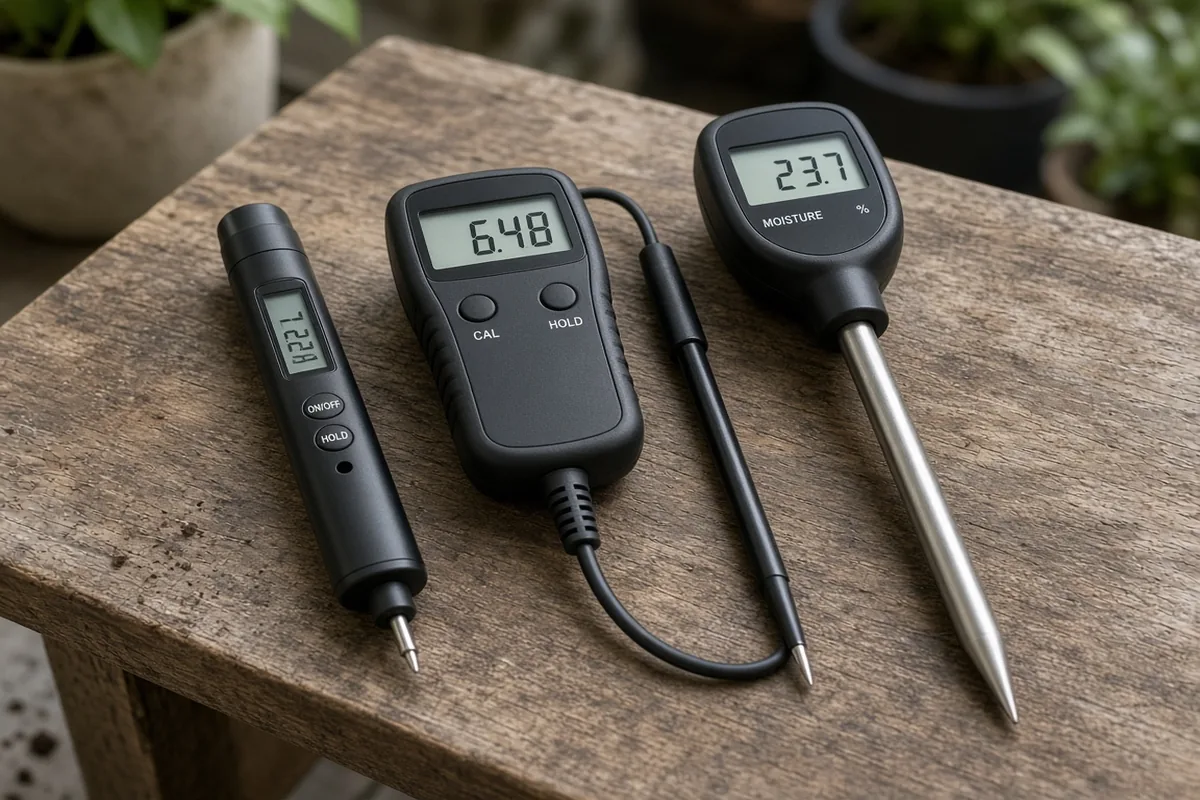
Pen style digital testers
Pen testers are the go to choice for most tent growers. You dip the tip in your mixed water, wait a few seconds for the number to settle, and adjust. Look for one with automatic temperature compensation (ATC), a reading to at least one decimal place, and a probe you can replace when it ages.
Handheld meters with a cable probe
These separate the display from the probe. The probe tends to be larger and more stable, and it is often easy to swap. They make sense when you check several reservoirs or want a more lab style tool.
Combo pH and EC meters
Many growers track both pH and feed strength. A combo unit saves space, but both sensors need cleaning and calibration. If you are new to feed strength readings, our PPM for cannabis guide explains what to aim for.
Continuous monitors
A monitor that stays in your reservoir lets you see drift as it happens. That is helpful in recirculating hydro, where pH can move quickly. It does not remove the need for calibration.
Soil probes, strips and drops
Direct soil probes can be useful in garden beds but often read differently depending on moisture. Strips and drops give an approximate color reading. They are a good backup if your digital meter fails, but most growers want a digital meter as their main tool.
Features to look for
- Automatic temperature compensation. Water temperature affects readings, and ATC adjusts for it.
- Easy calibration. Two point (pH 7 and pH 4) is the minimum. Three point adds pH 10.
- Replaceable probe. Glass probes age. A replaceable probe extends the life of the meter.
- Resolution and stated accuracy. A reading to 0.1 is enough for growing. Check the stated accuracy on the box.
- Water resistance. Spills happen in grow rooms.
- Hold and auto off. Small features that save frustration and battery.
- Clear display. Backlit screens help in dim rooms or under green work lights.
How to use a pH meter on cannabis
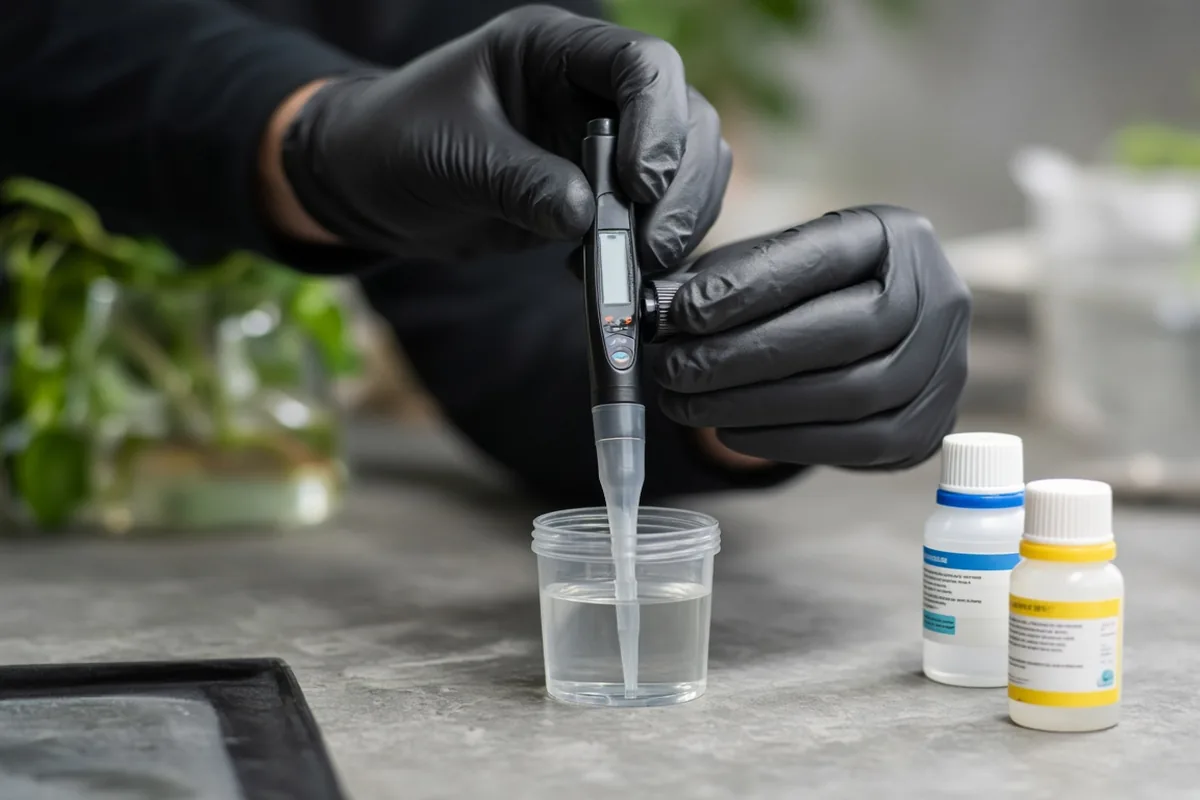
- Calibrate. Follow the meter’s instructions with fresh buffer solution. Our pH meter calibration guide walks through it step by step.
- Mix nutrients first. Add nutrients to your water, stir, then measure. Nutrients change pH, so adjusting before mixing can throw you off.
- Measure and wait. Let the reading settle before you act on it.
- Adjust slowly. Add small amounts of pH up or pH down, stir, and measure again.
- Rinse the probe. Rinse with clean water after each use and return it to storage solution.
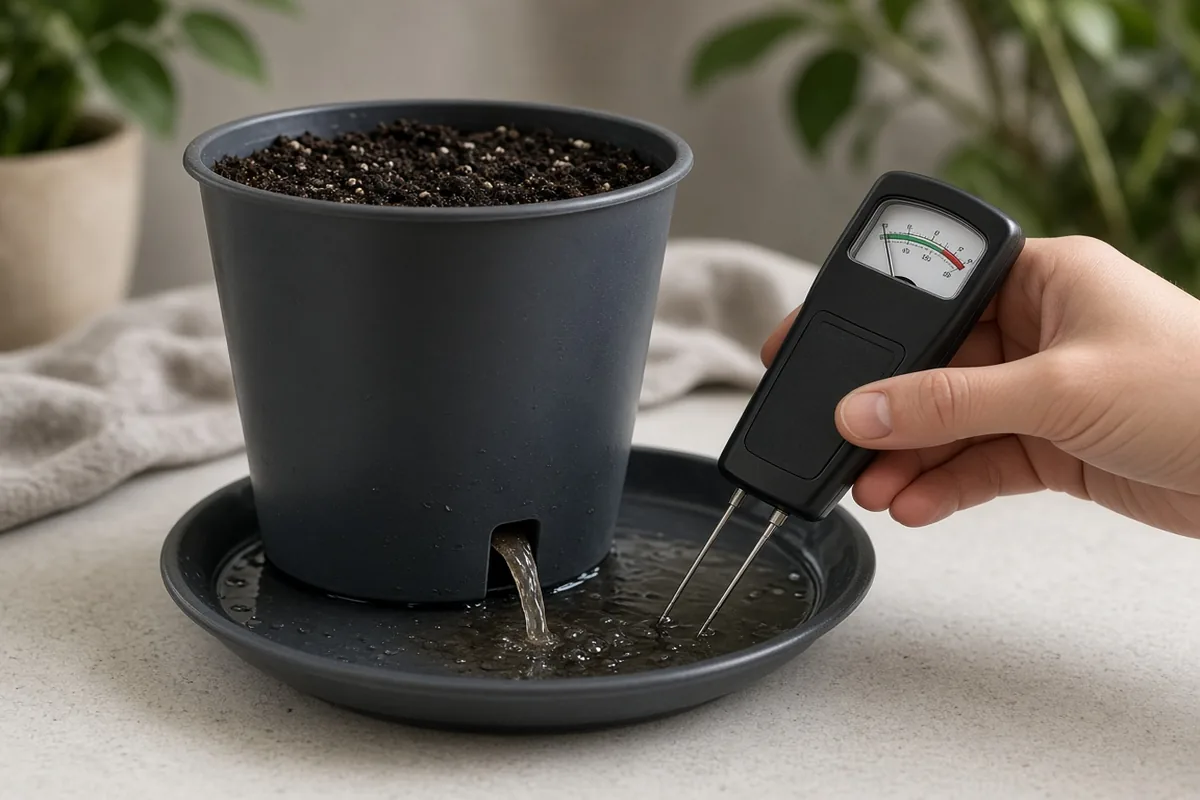
Checking runoff
Some growers also measure runoff, the water that drains from the bottom of the pot. Runoff can hint at what is happening in the root zone. Learn more in our guide to cannabis runoff. Treat runoff numbers as a clue, not an exact reading of the root zone.
How to care for a pH meter
- Keep the probe wet. Store it in proper storage solution. A dry probe can give slow or wrong readings.
- Do not store it in distilled or RO water. Pure water can pull ions out of the probe over time.
- Clean it gently. Rinse after each use. If readings get slow, use a probe cleaning solution as the maker suggests.
- Calibrate on a schedule. Many growers calibrate weekly, and always after the meter has sat unused.
- Replace buffers. Old or contaminated buffer solution leads to bad calibration.
- Replace the probe when needed. If the meter will not calibrate or drifts constantly, the probe may be worn.
Common pH meter problems
| Problem | Likely cause | Fix |
|---|---|---|
| Reading keeps drifting | Dirty or aging probe | Clean, recalibrate, replace probe if needed |
| Will not calibrate | Old buffers or worn probe | Use fresh buffers, then check the probe |
| Very slow to settle | Dry or dirty probe | Soak in storage solution, then clean |
| Readings jump around | Low battery or bubbles on probe | Replace battery, tap off bubbles |
Choosing the right meter for your grow
- Small tent, soil or coco: a quality pen tester plus a spare set of buffers.
- Hydro or DWC: a handheld meter or a continuous monitor, with a pen as backup.
- Outdoor beds: a soil test kit for the season and a pen for your water.
- Tracking feed strength: a combo pH and EC meter.
Water source matters as well. Tap water with high alkalinity can push pH back up after you adjust it. If that is happening, see our guide to irrigation water alkalinity for cannabis or consider reverse osmosis for home growers.
Build a simple pH routine
The best meter is the one you actually use. Keep it, your buffers, pH up and pH down, and a rinse cup in one bin near your reservoir. Log each reading in a grow journal with the date and the stage of growth. Over a few weeks you will see how your water behaves and how much adjustment each feed needs, which makes every watering faster and more consistent.
Frequently asked questions
What pH should water be for cannabis?
Many growers aim for about 6.0 to 7.0 in soil and about 5.5 to 6.5 in coco or hydro. Follow the guidance from your nutrient maker as well.
How often should I calibrate a pH meter?
Weekly is a good habit for most growers. Calibrate any time readings look wrong or the meter has been stored for a while.
Are pH strips good enough?
Strips are fine as a backup, but they only give an approximate color reading. A digital meter gives a clearer number for adjusting nutrient mixes.
Should I check pH before or after adding nutrients?
After. Nutrients change pH, so mix them into the water first, then measure and adjust.
Why does my pH meter give different readings each time?
The most common causes are a dirty or aging probe, old buffer solution, temperature swings, or a low battery.
Start with strong genetics
A reliable pH meter takes the guesswork out of feeding, so your plants can put their energy into growth. Pair good tools with seeds bred for indoor tents. Browse our indoor seeds or explore the full Kind Seed Co shop. Kind Seed Co sells only to adults 21 and older. Always follow the home grow laws where you live.