
Fabric Pots for Cannabis: How to Choose and Use Them
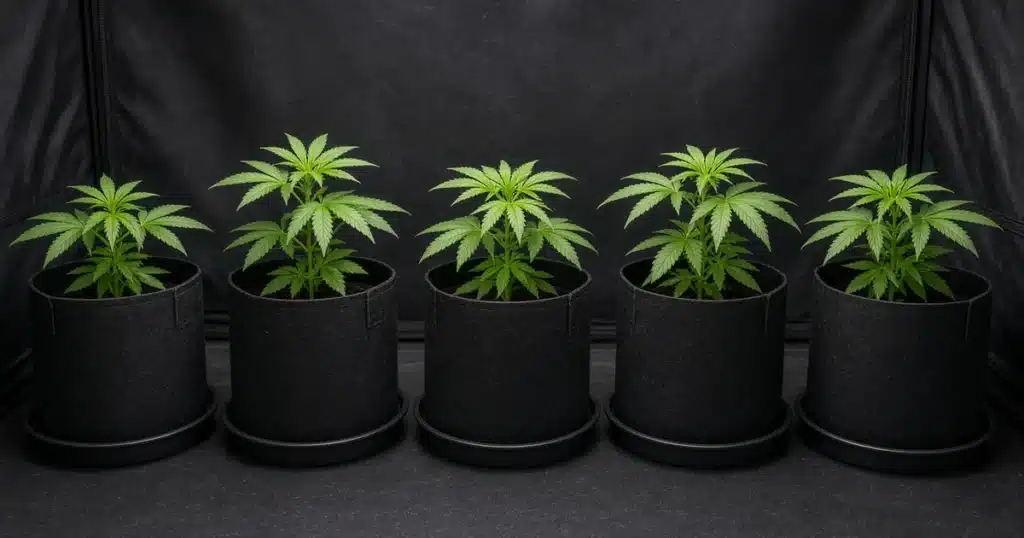
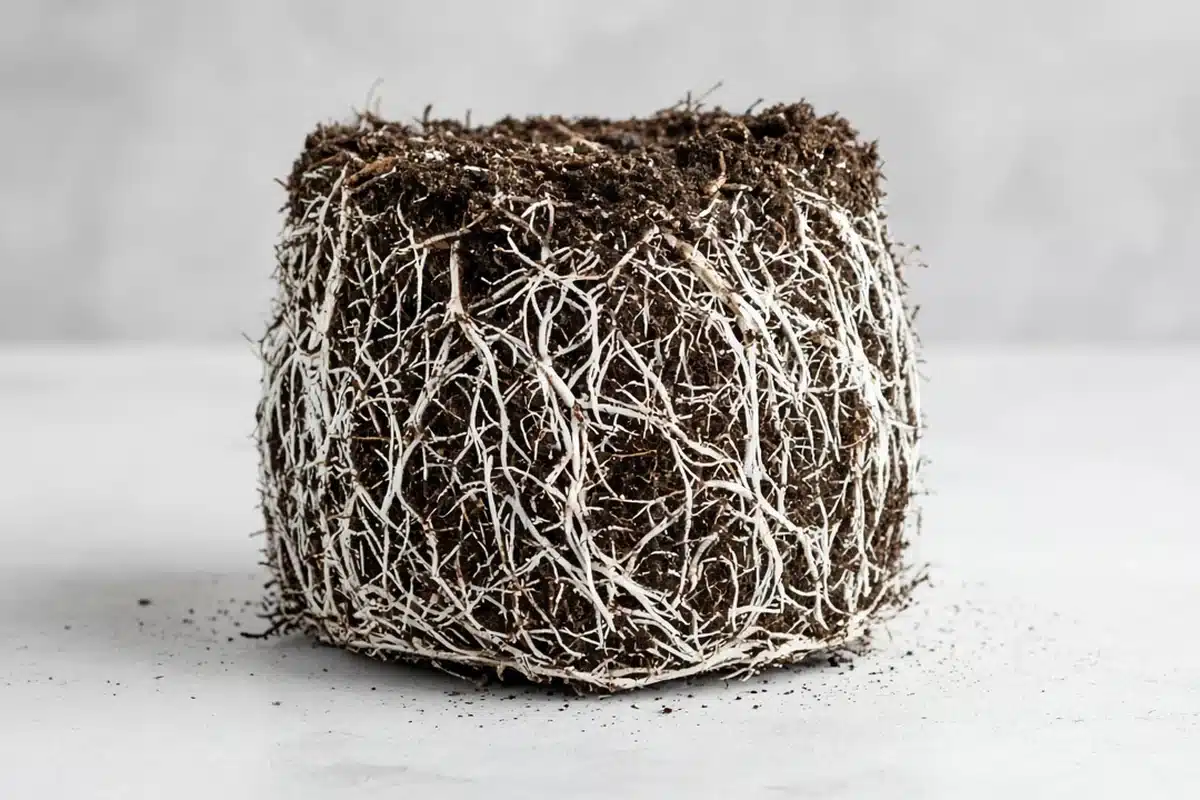
Fabric pots for cannabis are soft, breathable containers that let air and water pass through the sides. When a root tip reaches the fabric and meets open air, it stops growing longer and branches instead, which growers call air pruning. The result is a dense, fibrous root ball rather than a few long roots circling the wall. The tradeoff is water. Fabric loses moisture through its sides, so these pots dry faster than plastic and need closer attention. Kind Seed Co compares every container type in cannabis growing containers.
What happens to roots in a fabric pot?
In a solid plastic pot, a root that hits the wall keeps growing along it. Over weeks, those roots wrap the outside of the root ball. University of Maryland Extension describes the fabric alternative this way: roots that reach open air at the edge of the bag stop growing in length and branch into a denser, fibrous system that stays inside the potting mix.
Research on nursery containers backs up the temperature side too. In multi-state trials run by university researchers in Kentucky, Michigan, Mississippi and Texas, substrate in black plastic pots ran about 36 °C on average, roughly 6 °C hotter than in fabric, wood pulp and coir pots. Keratin pots, another porous type in the trial, ran about as hot as plastic, so a porous pot is not automatically a cooler one. The same team found sidewall water loss was greatest in fabric, and that this evaporation is what kept the root zone cooler. They also noted the faster drying could call for more water, more often.
Lab tests by the same team ranked the containers. Root-zone temperature was highest in plastic and keratin, in between in wood pulp, and lowest in fabric and coir. Sidewall water loss ran the other way, greatest in fabric and lowest in plastic and keratin. The authors concluded that water evaporating through the sidewall has a major influence on cooling the mix, and that porous pots reduced heat stress and improved plant survival in hot summer conditions.
| Trait | Fabric pot | Black plastic pot |
|---|---|---|
| Root shape at the wall | Tips air prune and branch | Roots keep growing and circle |
| Root-zone heat in sun | Cooler, about 6 °C lower in nursery trials | Hotter, about 36 °C average in the same trials |
| Water loss through sides | Highest | Lowest |
| Watering need | More frequent | Less frequent |
Sources: University of Maryland Extension, and Nambuthiri et al., HortTechnology, 2015 (nursery crops, not cannabis).
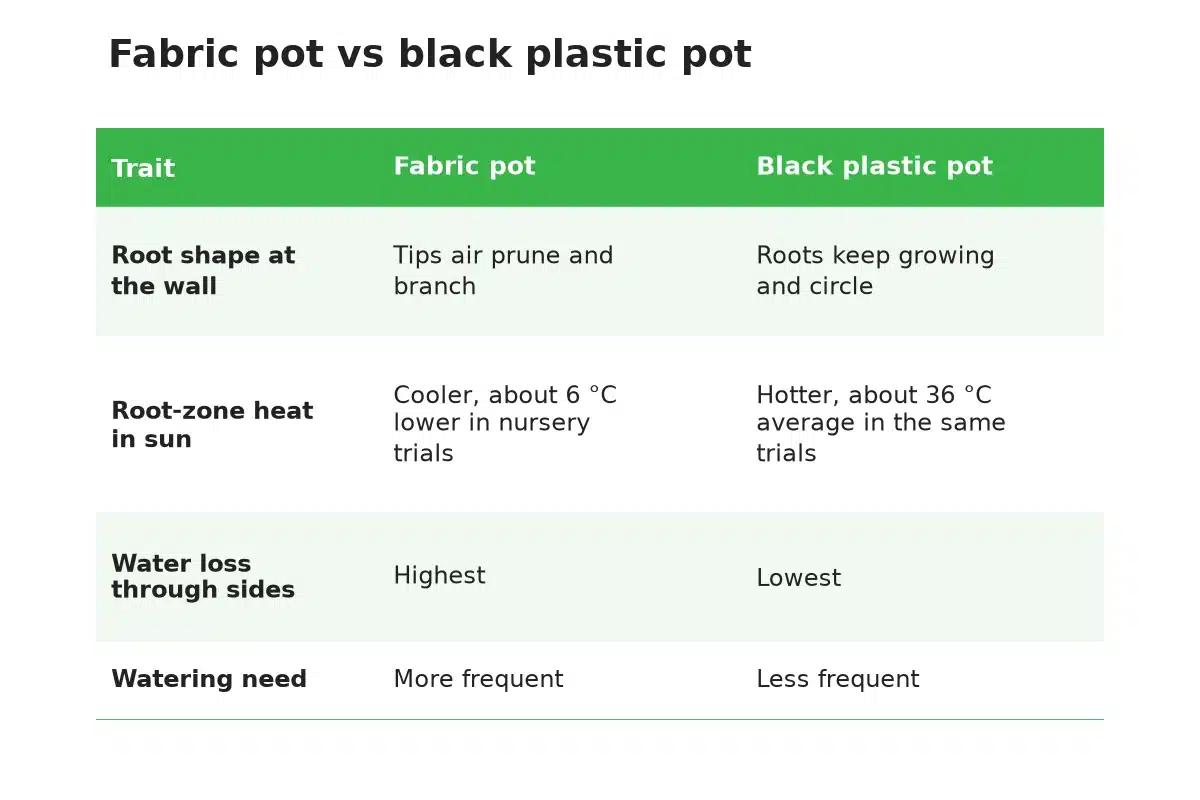
These trials used ornamental shrubs, not cannabis, so read them as a guide to how the container behaves rather than a promise about yield.
How do you choose a fabric pot?
Start with size, then material, then the details.
Size. Match the pot to how big the plant will get and how long it will grow. University of Maryland Extension warns that pots too small restrict roots, which limits top growth, and that small pots fill with roots faster, swing more in temperature and dry out sooner. Fabric does not change that rule. A plant that will spend months in one pot needs more volume than one that will be moved up soon.
Shape. The same extension page points out that a 5-gallon container wider than it is tall is less top-heavy and steadier in a breeze than a tall, narrow one of the same volume. Tall plants in light pots can tip over, so wider fabric pots make sense outdoors or near fans.
Weight when full. An empty fabric pot weighs almost nothing, but wet mix does not. A 20-inch-wide container of moist potting mix and plants can weigh 100 pounds, per University of Maryland Extension. Pick pots with sturdy sewn handles if you plan to move them, or set big ones on a wheeled caddy before you fill them.
Fabric weight and color. Thicker fabric tends to hold its shape longer, so check the weave and seams before you buy. University of Maryland Extension notes that grow bags are made from natural fibers, synthetic fabric or a blend of the two, and that they are reusable. Dark containers can raise mix temperature in direct sun, which the extension notes can injure tender roots, so lighter colors or shading help outdoors.
Mix volume. As a rough guide from University of Maryland Extension, a 2-cubic-foot bag of potting mix fills about three 5-gallon grow bags. Buy mix with that in mind before planting day.
How do you set up and fill a fabric pot?
- Pick a level spot and decide on saucers, a tray or pot feet before filling.
- Moisten dry mix in a tub first, especially peat-based mix, until it feels like a wrung-out sponge.
- Fill loosely, without packing, to about an inch below the rim so water can pool and soak in.
- Plant at the same depth the seedling grew before, then water gently until a little drains out.
- Raise the pot slightly on feet or bricks if it sits on a hard floor, so the base can breathe and drain.
Skip gravel or broken pot shards in the bottom. University of Maryland Extension explains they raise the water table inside the pot and can leave the mix waterlogged.
How do you water fabric pots?
Fabric pots reward slow, even watering. Pour gently in a circle around the whole surface until a little runs out of the base. Water dumped in the center can run straight through, while the edges stay dry against the fabric.
Judge by weight, not the calendar. Lift the pot right after watering and again when the mix feels dry an inch or two down. Once you know both weights, a quick lift tells you when to water. University of Maryland Extension recommends checking containers daily until you learn how fast they dry, especially in summer, and avoiding a fixed schedule.
If a pot dries out completely, the mix can shrink from the wall. The next watering then pours down the gap and out the bottom. To fix it, set the pot halfway into a tub of water and let it soak up from below until the surface turns moist.
Frequent watering also washes nutrients out of the pot. University of Maryland Extension advises feeding container plants regularly for that reason, whatever mix you use, so plan feeds around how often your fabric pots need water.
How do needs change by stage?
Seedlings. A small plant in a large fabric pot leaves most of the mix untouched by roots, so it stays wet longer than you expect. Water a small circle around the stem and let the rest of the pot catch up as roots spread.
Vegetative growth. Roots start reaching the fabric and air pruning begins. Water use climbs with plant size, so check pots daily. This is the stage to move up a size if roots are filling the pot early. See root-bound cannabis for the signs.
Flowering. A full canopy and a pot packed with fine roots can drink the mix dry quickly, especially under strong lights. Small fabric pots are hardest to keep even at this stage. Many growers group pots or add a saucer to catch runoff, then empty it.
Outdoors in summer. Sun, wind and heat all speed up drying. Porous fabric helps keep roots cooler, but the trial results above show it costs water. Mulch on top of the mix slows evaporation and keeps root-zone temperatures more even, a tip University of Maryland Extension gives for large grow bags.
What problems do fabric pots cause, and how do you fix them?
| Symptom | Likely cause | Fix |
|---|---|---|
| Plant wilts by afternoon | Pot too small or drying too fast | Water more often, move up a size, group pots, add mulch |
| Water runs straight out the base | Mix shrank from the fabric after drying | Bottom-soak in a tub, then water slowly in circles |
| Edges dry, center soggy | Watering only at the stem | Spread water across the whole surface |
| Stains or damp floor | No saucer or tray | Use saucers or a tray and empty them after watering |
| Salt crust on the fabric | Minerals left behind as water evaporates through the sides | Water to a little runoff and rinse pots between grows |
Drawn from everyday fabric pot care and University of Maryland Extension advice on container watering.
Wilting needs care. The same extension page notes plants can wilt when too dry and when kept too wet, so check the mix by feel or weight before adding water.
What are common mistakes?
- Choosing a small fabric pot for a long grow, then fighting daily wilting.
- Setting pots straight on carpet or wood with no tray.
- Watering only the center so the edges stay dry.
- Letting saucers sit full, which keeps the base wet and can draw mosquitoes outdoors.
- Packing mix tightly, which fills the air spaces roots need.
- Expecting fabric to fix a pot that is too small. Air pruning reduces circling, but it does not add root space.
If daily watering is hard for your schedule, compare self-watering pots. Before buying many pots, test one size in your own space for a full grow.
How do you clean and store fabric pots?
Empty the pot after harvest, knock off loose mix and pull out old roots. Rinse or soak the fabric, then let it dry fully before folding it away, since stored damp fabric can grow mold. Check the seams, handles and base before each new grow. A full pot puts real weight on all three.
Sources
- University of Maryland Extension. Growing Vegetables in Containers and Salad Tables (J. Traunfeld, 2026). https://extension.umd.edu/resource/growing-vegetables-containers-and-salad-tables
- Nambuthiri S, Geneve RL, Sun Y, Wang X, Fernandez RT, Niu G, Bi G, Fulcher A. 2015. Substrate Temperature in Plastic and Alternative Nursery Containers. HortTechnology 25(1): 50-56. https://digitalcommons.usu.edu/psc_facpub/845/
FAQ
Are fabric pots better than plastic for cannabis?
Neither wins every time. Fabric pots air prune roots and kept the root zone about 6 °C cooler than black plastic in university nursery trials. Plastic holds water longer, so it suits growers who cannot water often. Fabric works best where you can check pots daily.
How often do you water cannabis in fabric pots?
More often than plastic, because the sides lose water. Small pots in a warm tent may need water daily, larger pots less often. Lift the pot to judge weight and water when it feels light, rather than following a fixed schedule. Check daily until you learn the pattern.
Can you reuse fabric pots?
They can. Empty them, knock off the old mix, rinse or soak them, and let them dry fully before storing. Thicker fabric holds its shape and lasts more seasons. Check seams, handles and the base for wear before each new grow, since a full pot puts weight on all three.
Do fabric pots stop plants from getting root-bound?
They reduce circling roots through air pruning, but a pot that is too small can still limit a plant. Pick a size that fits how big the plant will get and how long it will grow, and move up if roots fill the pot early.


