
Thrips on Cannabis: How to Spot Silver Leaf Damage and Stop It
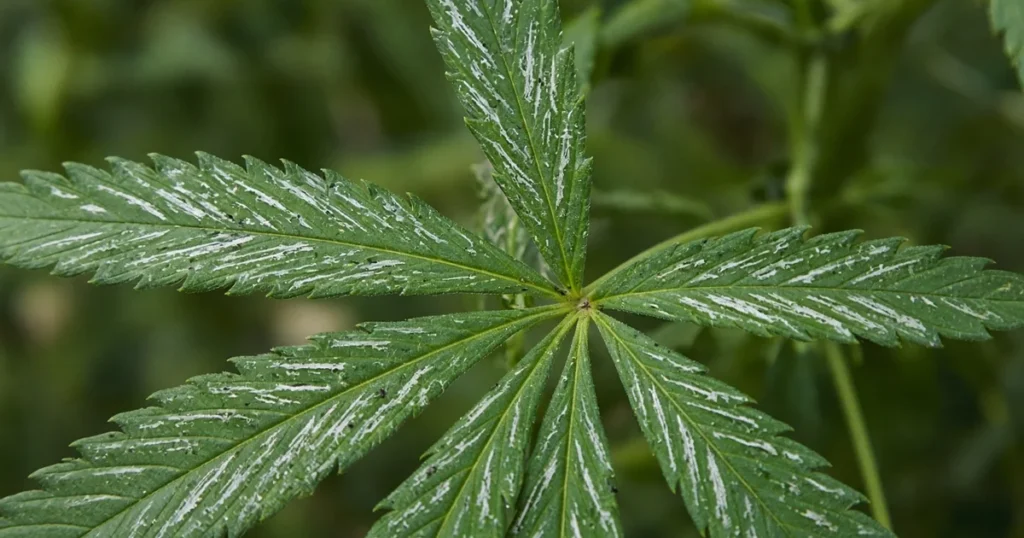
Quick answer: Thrips are tiny, slender insects that scrape leaf cells and suck out the contents, leaving silvery streaks and black specks on cannabis leaves. Confirm them by tapping a branch over white paper, then combine several steps: blue or yellow sticky cards, removing badly hit leaves, weed control, steady watering without excess nitrogen and, in veg only, a thorough spray of insecticidal soap, horticultural oil or spinosad.
What Are Thrips?
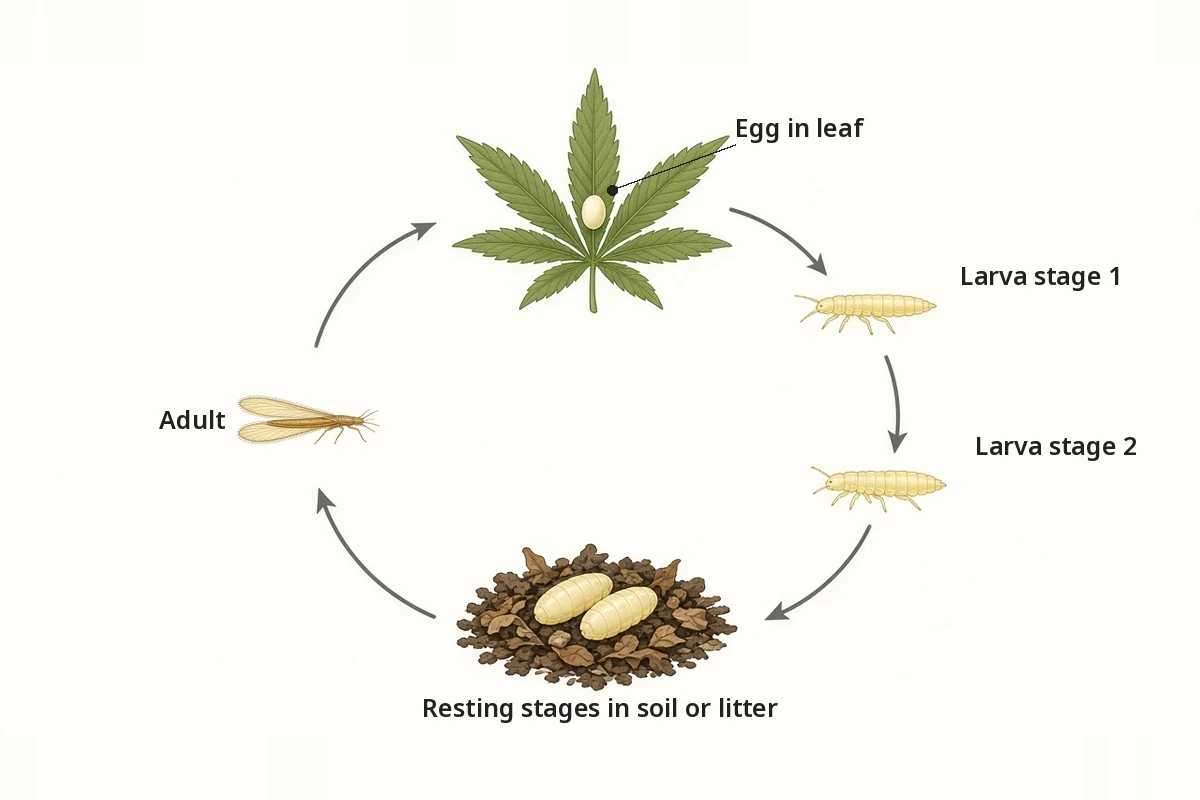
Thrips are insects less than 1/20 inch long, according to the UC Statewide IPM Program. Iowa State University describes adults as narrow and shaped like a grain of rice, usually yellow, tan, brown or black, with fringed wings that are hard to see without a lens. Young thrips look like small, pale, wingless adults.
They hatch from eggs, pass through two feeding larval stages, then two resting stages before becoming adults. UC IPM notes the resting stages often happen in soil or leaf litter. That detail matters, because it means the pot surface and the floor around plants are part of the problem.
Not every thrips is a pest. UC IPM points out that some species are predators that feed on mites and other small insects. Positive identification to species takes an expert, but the damage pattern on cannabis is distinctive enough to act on.
What Does Thrips Damage Look Like on Cannabis?
Thrips damage shows as silvery or bronze streaks dotted with tiny black specks. Look at the upper side of fan leaves first. Common signs include:
- Streaks and patches in silver, gray or bronze, left where cells were sucked empty
- Tiny black specks of excrement scattered across the patches
- Leaves that curl or twist as they expand
- Slow growth on heavily hit plants
Iowa State notes that gardeners often see the damage before they ever see the insects. UC IPM adds that damage may not show until tissue grows and expands, so a leaf that looked fine last week can look scarred today.
Several other problems cause similar marks. Spider mites leave fine pale dots and webbing. Sun scald and heat stress bleach upper leaves without black specks. The paper test below sorts them out.
Which Thrips Show Up on Cannabis?
UC IPM names greenhouse thrips and western flower thrips as two of the most common pest species in home landscapes. Western flower thrips are a frequent problem in indoor gardens because they breed quickly in warm rooms and feed while hidden in buds and shoot tips, a habit UC IPM describes for most pest thrips. UC IPM lists greenhouse thrips mostly on plants with thick, broad leaves, where they leave bleached areas with black excrement. You do not need the exact species to get started. UC IPM notes most thrips respond to the same core controls, such as exclusion, cleaning and monitoring. Knowing the habit simply tells you where to look first: new tips and bud sites, then the upper surface of older fan leaves.
How to Check Cannabis for Thrips

- Hold a sheet of white paper or a white plate under a branch.
- Tap the branch sharply two or three times.
- Watch the paper for tiny moving slivers. Thrips run fast and some fly.
- Use a 10x hand lens to look for fringed wings.
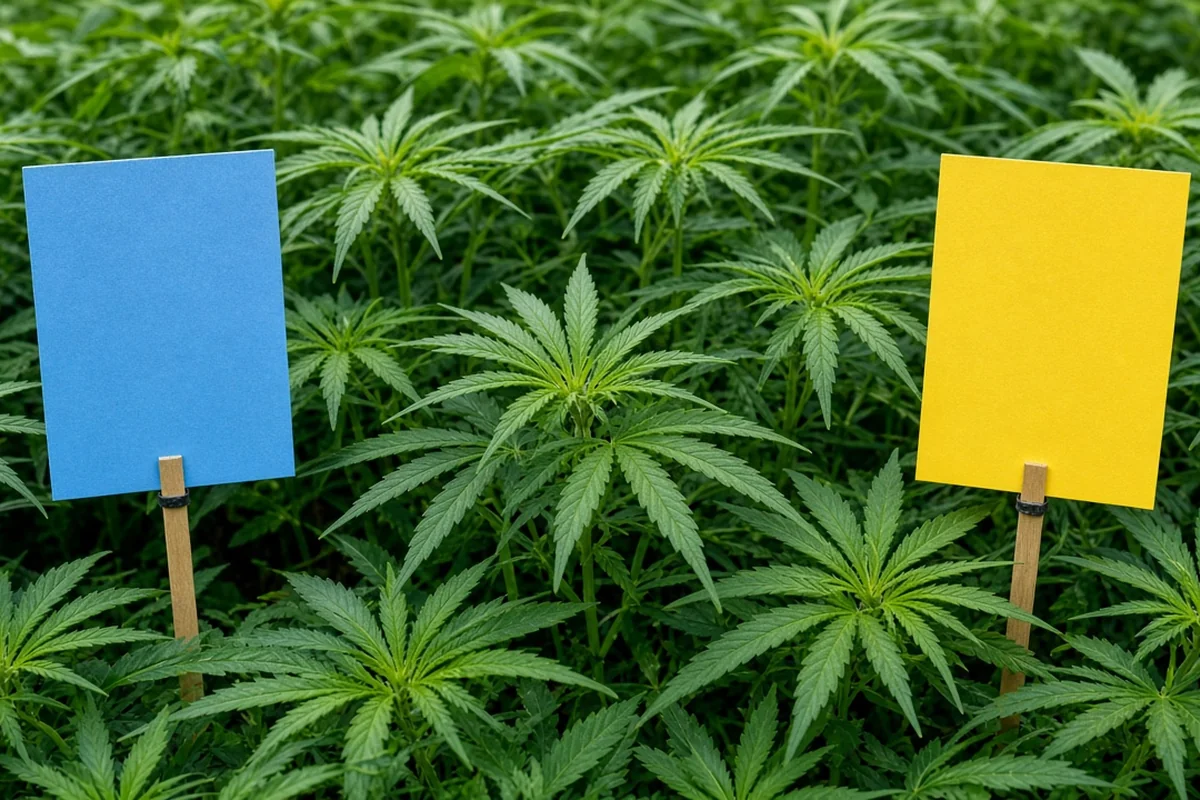
- Hang blue or bright yellow sticky cards just above the canopy. UC IPM recommends these to detect flying adults.
- Check cards weekly and write down the count so you can tell if numbers are rising or falling.
Our guide to sticky traps for a grow room covers card placement indoors.
Steps to Clear Thrips From Cannabis
UC IPM says thrips are hard to control and that combining methods gives the best results. Here is a step by step plan for home growers.
- Isolate. Move an infested potted plant away from others. Iowa State notes that isolating houseplants slows the spread.
- Prune the worst leaves. Remove leaves that are mostly silver and bag them before carrying them out of the room.
- Rinse. A strong stream of water can knock off some insects, according to Iowa State. Rinse in the morning so leaves dry before night.
- Clean the floor and pot surface. Since resting stages hide below plants, sweep up leaf litter and refresh the top layer of the pot if it is full of debris.
- Control weeds. Iowa State says many weeds act as host plants, so mow or pull them around outdoor beds.
- Ease off nitrogen and excess water. UC IPM notes that overwatering and nitrogen fertilizer can increase thrips numbers.
- Spray in veg if needed. Insecticidal soaps, horticultural oils and spinosad can help when applied thoroughly to all leaf surfaces, says Iowa State. UC IPM adds that pesticides alone rarely give good control. Read the label, confirm the product is allowed on your crop where you live, and do not spray once buds have formed.
- Repeat. Iowa State notes repeat applications may be needed because thrips breed fast and some stages are protected inside plant tissue.
See insecticidal soap for cannabis for mixing and coverage tips.
Can Beneficial Insects Control Thrips?
Yes, in many grows. UC IPM recommends skipping long lasting pesticides so the predators and parasites that attack thrips can survive. UC IPM lists predatory mites among the natural enemies of thrips. Outdoors, minute pirate bugs and lacewings help. Our list of the best bugs for a cannabis grow covers the common options.
How to Prevent Thrips
- Inspect every new plant or clone with a lens before it joins the room, as Iowa State advises.
- Keep a weed free strip around outdoor beds.
- Put cages or row covers over small plants. UC IPM lists both as a way to keep thrips and other flying insects off.
- Outdoors, UC IPM notes that reflective mulch can repel flying thrips while foliage covers less than half the soil.
- Hang sticky cards from day one so you catch a problem early.
Troubleshooting Thrips
Silver patches keep spreading after spraying. Scarred leaves will not turn green again. UC IPM notes plants stay damaged until injured tissue drops or new growth appears. Judge progress by new leaves.
Sticky cards stay full. Adults may be coming in from outside. Check nearby weeds and other host plants, which Iowa State says can harbor thrips.
Spray seems to do nothing. Coverage may be poor. Thrips hide in folds and under leaves, so spray tops and undersides until wet, then repeat on schedule.
Plants are in flower. Skip sprays. Remove bad leaves, keep cards up, and lean on predators and cleaning.
Damage but no insects on the paper. It may be mites or a nutrient problem. Look for webbing or check our guide to common cannabis plant problems.
Sources
- UC Statewide IPM Program, University of California, Thrips, Home and Landscape: https://ipm.ucanr.edu/home-and-landscape/thrips/
- Iowa State University Extension and Outreach, Yard and Garden Encyclopedia, Thrips: https://yardandgarden.extension.iastate.edu/encyclopedia/thrips
FAQ
Are thrips harmful to cannabis?
Light feeding is mostly cosmetic, but heavy feeding reduces leaf area, distorts new growth and slows the plant. Iowa State also notes thrips can spread some plant viruses.
What color sticky trap is best for thrips?
UC IPM recommends blue or bright yellow sticky traps for detecting flying thrips. Many growers hang both.
Can I spray thrips during flowering?
No. Spray residue can stay on buds. Use cleaning, pruning, traps and beneficial insects once flowers form.
Where do thrips come from?
They drift on wind, ride in on new plants and move from nearby weeds. UC IPM notes thrips can travel long distances on the wind.
Do thrips live in the soil?
Some resting stages occur in soil or leaf litter under plants, so keeping the pot surface and floor clean helps break the cycle.


