
Greenhouse Flooring for Cannabis: Gravel, Concrete and Fabric
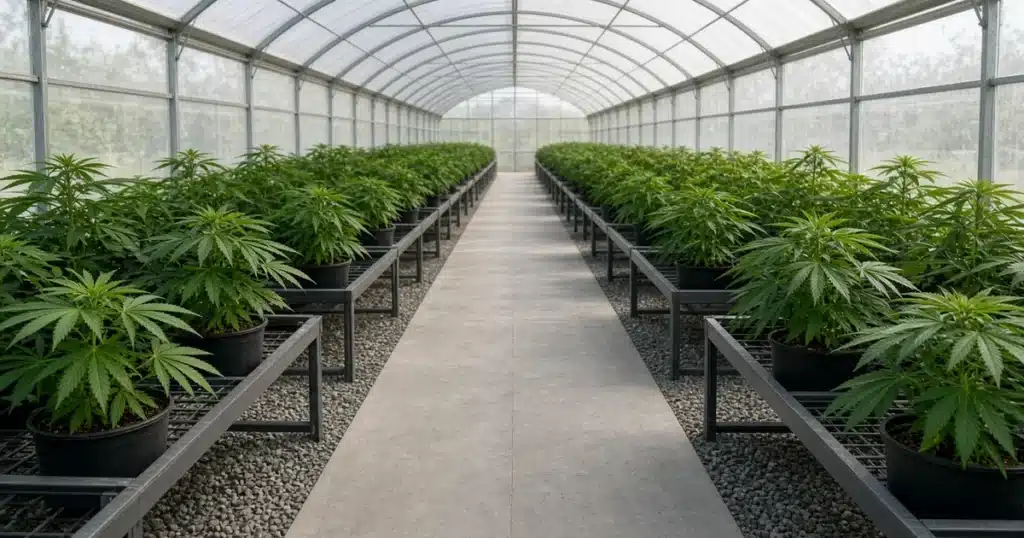
Quick answer: The most common greenhouse floors are concrete and gravel, often combined. Oklahoma State Extension says standard concrete handles heavy loads but drains poorly in growing aisles, while porous concrete drains well and still blocks weeds. University of Tennessee Extension adds that gravel costs less and drains well but is harder to clean and keep free of weeds. Many growers settle on gravel under the benches with concrete walkways. For a cannabis greenhouse, pick a floor that drains fast, stays clean between crops and lets you move carts with ease.
Why Does the Floor Matter in a Cannabis Greenhouse?
A greenhouse floor does more than hold you up. It decides where irrigation runoff goes, how quickly the air dries after watering and how easily you can clear out debris between crops.
Standing water after watering keeps the house damp. The UConn IPM page on algae advises keeping floors level so they drain properly and do not collect puddles. A floor that holds water also grows algae, which makes walkways slick.
Cleanliness matters too. Weeds, spilled soil and plant scraps on the floor can shelter insects and disease from one crop to the next. The green house growing guide covers how structure choices shape the growing environment, and the floor is a big part of that.
What Are Your Main Flooring Options?
The University of Tennessee publication Selecting and Designing Small Scale Greenhouses names concrete and gravel as the two most common choices. It describes concrete as a firm working surface that cleans easily and can even be painted to soak up heat or bounce light back toward plants.
The Oklahoma State fact sheet on greenhouse floors and benches goes further and splits concrete into two types.
Standard concrete is strong, rated around 2,500 pounds per square inch, which suits mixing areas and spots where heavy equipment rolls. The fact sheet discourages it for growing aisles between benches when possible, since it does not drain well.
Porous concrete is made without sand, so water passes through. Oklahoma State says it helps prevent puddling while still acting as a weed barrier. It is about one fourth as strong as standard concrete, so it suits foot traffic and light carts, not heavy machines.
Gravel or bare soil is the cheapest. Tennessee notes that gravel drains water well but is harder to clean, harder to keep weed free and rougher for carts to cross.
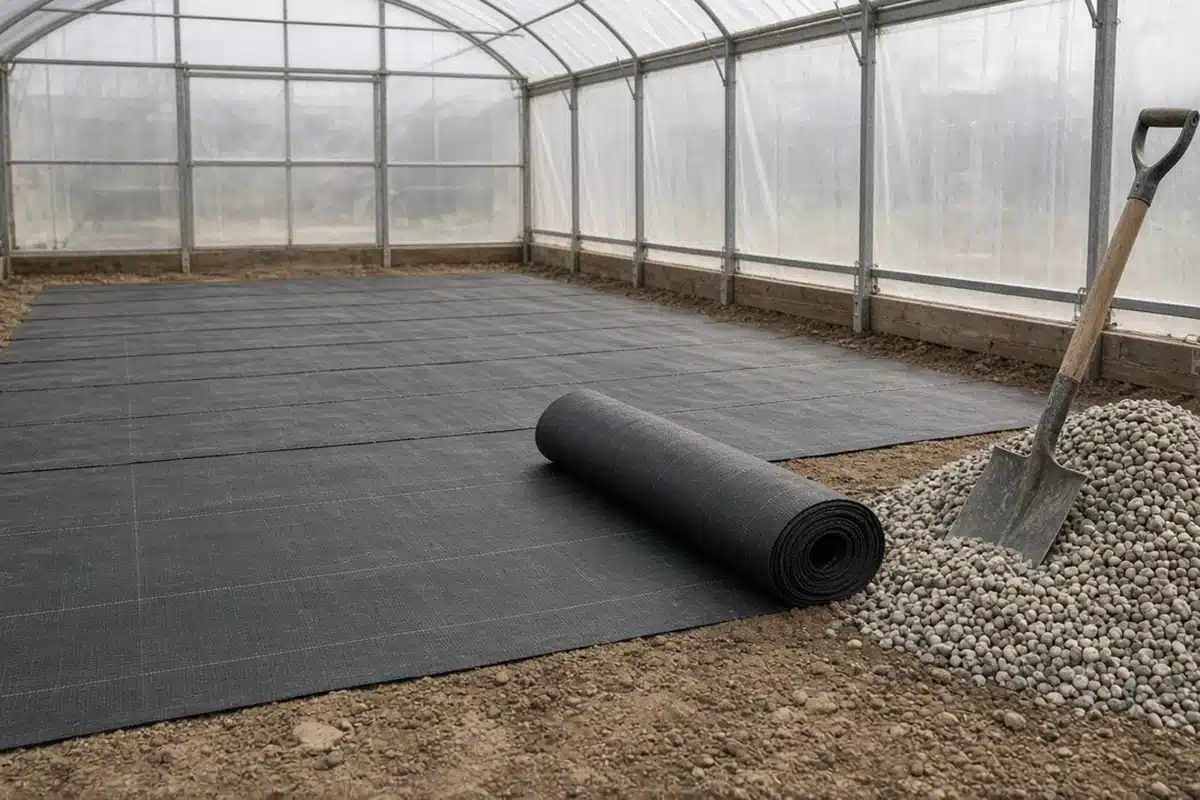
Weed fabric is a woven ground cover laid over soil or under gravel. The UMass Extension cleaning guide recommends physical weed mat barriers on bare dirt or gravel floors and notes that they make weeds and algae easier to manage.
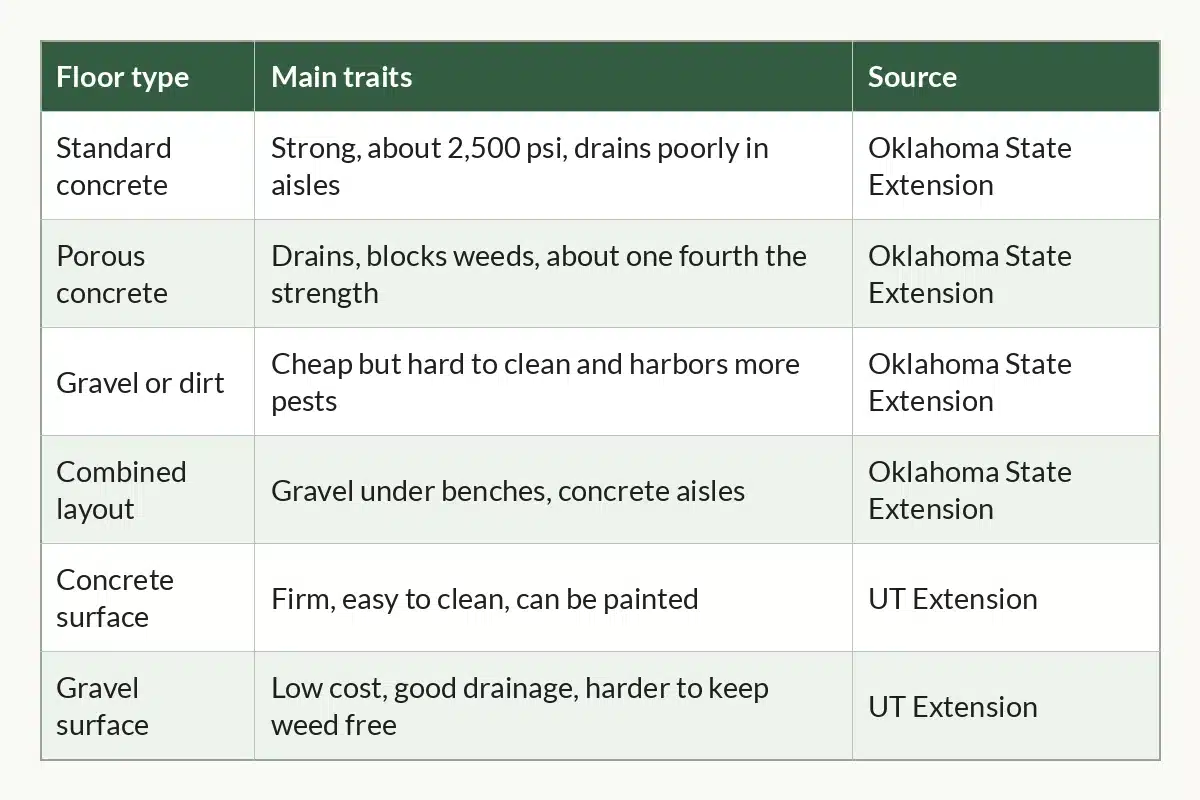
Greenhouse Flooring at a Glance
| Floor type | Main traits | Source |
|---|---|---|
| Standard concrete | Strong, about 2,500 psi, drains poorly in aisles | Oklahoma State Extension |
| Porous concrete | Drains, blocks weeds, about one fourth the strength | Oklahoma State Extension |
| Gravel or dirt | Cheap but hard to clean and harbors more pests | Oklahoma State Extension |
| Combined layout | Gravel under benches, concrete aisles | Oklahoma State Extension |
| Concrete surface | Firm, easy to clean, can be painted | UT Extension |
| Gravel surface | Low cost, good drainage, harder to keep weed free | UT Extension |
Is Gravel Good Enough for a Small Greenhouse?
For many hobby growers, yes, with limits. Gravel costs little, drains well and goes down in an afternoon.
Oklahoma State is blunt about the drawbacks. It warns that the money saved on a gravel or dirt floor often is not worth it, because they cannot be properly cleaned and disinfected and tend to harbor more pests. With frequent watering they can stay muddy.
Fabric makes a difference here. Lay a durable weed barrier over level soil before spreading gravel. UMass cautions against putting stone on top of a weed mat where it can trap soil and moisture, which gives weeds, insects and algae a foothold. A thin layer you can sweep, or bare fabric under benches, stays cleaner.
If you grow cannabis in containers on benches, gravel under the benches is rarely a problem, since plants never touch it. Under the benches, drainage and weed control count for more than looks.
Why Do Many Growers Combine Gravel and Concrete?
Both extension publications land on the same compromise. Oklahoma State suggests gravel over dirt with concrete aisles to save money while keeping many of the benefits of concrete. Tennessee says many greenhouses use gravel floors with concrete aisles for drainage, some weed control and easier movement of carts.
The reasoning is easy to follow. You walk and push loads along the aisles, so a smooth, cleanable surface pays off there. Under benches, water drips through the plants, so drainage matters most, and gravel or porous concrete handles it at lower cost.
Poor drainage under a bed can cause trouble for in ground plants too. Our guide to running a soil drainage test for cannabis beds shows how to check how fast water moves through native soil.
Can You Grow Cannabis Straight in the Ground?
Some home growers skip a hard floor under the plants entirely and grow cannabis in native soil or raised beds inside the greenhouse. That works fine, and roots get far more room than they would in a pot. In that case the floor question shrinks to the aisles, which still benefit from fabric, gravel or pavers to keep mud down.
Oklahoma State describes another approach used in commercial houses, where a level porous concrete floor serves as the growing surface itself, sometimes paired with floor heating. Plants sit directly on the floor instead of on benches. The fact sheet notes that it lowers cost by skipping bench frames, but it also points out the strain of bending and working low all day. For a hobby grower with a bad back, waist high benches may be worth the extra spend.
If you plan in ground beds, test the soil before you build, because the structure will sit on that spot for years. The greenhouse benefits article describes how a protected bed changes the season.
How Much Does Each Floor Cost?
Prices swing widely by region, so think in relative terms. Bare soil costs nothing. Weed fabric is cheap per square foot and quick to roll out. Gravel adds material and hauling but no special skill. Concrete costs the most because it needs forms, a base, finishing and often a contractor. Porous concrete needs a careful mix and pour, since Oklahoma State warns that tamping destroys its drainage.
Mixing the two keeps costs down, since concrete goes only where you walk. For a narrow hobby greenhouse, that may be a single center aisle, with fabric and light gravel on both sides.
Do not leave upkeep out of the budget either. Concrete needs only sweeping and a wash between crops. Gravel collects spilled potting mix and leaves, and fabric needs patching when it tears. Count the hours as well as the dollars before you choose.
How to Install a Greenhouse Floor
- Plan aisles and benches. Mark where people walk and where plants sit.
- Level and grade the base. UConn advises a level floor that drains so water does not pool.
- Choose aisle material. Standard or porous concrete for main walkways, or pavers for a small house.
- Lay weed fabric under bench areas. Overlap seams and pin them down.
- Add gravel sparingly. A thin layer keeps fabric in place without trapping soil.
- Avoid tamping porous concrete. Oklahoma State warns that compressing the mix destroys the pores that drain water.
- Keep soil off porous surfaces. Loose particles can clog the pores over time, so sweep often.
- Hire a contractor for large pours. Oklahoma State recommends consulting qualified concrete contractors for specialty floors.
Troubleshooting Greenhouse Floor Problems
Water pools in the aisles. The floor is not level or the concrete is not porous. Regrade or add a drain line.
Weeds push up through gravel. No barrier was laid or the fabric is torn. Pull weeds and patch the mat.
Green slime on walkways. Algae is growing on wet surfaces. Water less, improve drainage and scrub the area.
Porous concrete stopped draining. Soil and media have clogged it. Pressure wash the surface and keep potting mix off the floor.
Carts get stuck. Loose gravel resists wheels. Pour a concrete or paver path along the main route.
Sources
- Oklahoma State University Extension, Greenhouse Floors and Benches (HLA 6703): https://extension.okstate.edu/fact-sheets/print-publications/hla/greenhouse-floors-and-benches-hla-6703.pdf
- University of Tennessee Extension, Selecting and Designing Small Scale Greenhouses to Fit Your Needs (W935 B): https://uthort.tennessee.edu/wp-content/uploads/sites/228/2023/11/W935-B.pdf
- UMass Extension, Cleaning and Disinfecting the Greenhouse: https://www.umass.edu/agriculture-food-environment/greenhouse-floriculture/fact-sheets/cleaning-disinfecting-greenhouse
- UConn Integrated Pest Management, Managing Algae in the Greenhouse: https://ipm.cahnr.uconn.edu/managing-algae-in-the-greenhouse/
FAQ
Which floor suits a small cannabis greenhouse?
Gravel under benches with a concrete or paver aisle balances cost, drainage and cleaning.
Is porous concrete worth it?
It drains and blocks weeds, but it is weaker than standard concrete and can clog with soil.
Can I leave a dirt floor?
You can, but Oklahoma State notes that dirt floors cannot be properly cleaned and tend to harbor more pests.
Should I put gravel on top of weed fabric?
Only a thin layer. UMass warns that stone over fabric can trap soil and moisture.
Does flooring affect humidity?
Yes. A floor that drains fast leaves less standing water to evaporate into the air.


